

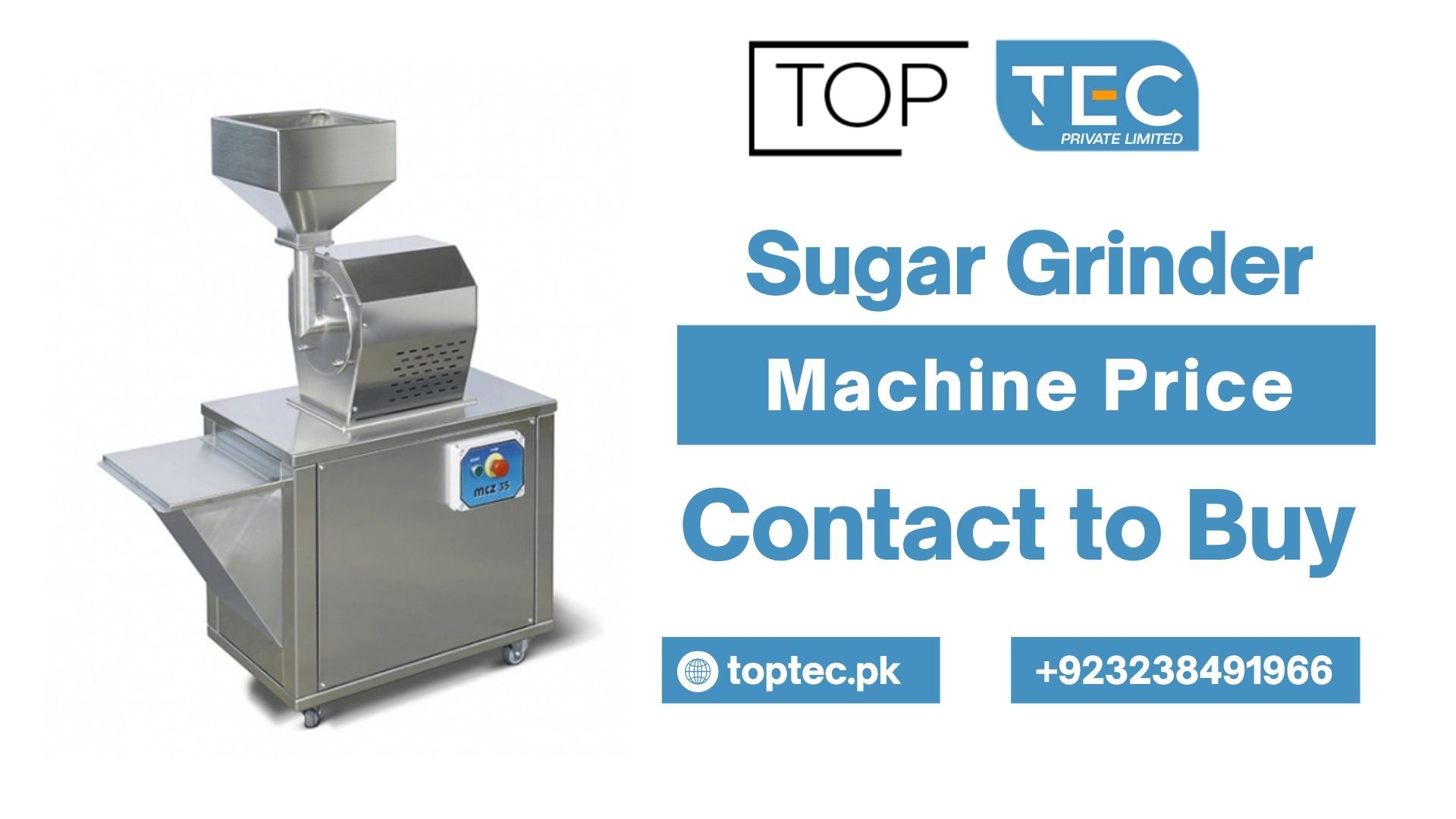
A Sugar Grinder isn’t just a luxury for commercial bakeries anymore – it’s become essential for anyone serious about consistent quality in confectionery work. Let me share what I’ve learned from years of grinding different sugar types.
I remember the first time we tried making royal icing with regular granulated sugar. The texture was gritty, awful really, and completely ruined what should’ve been beautiful cake decorations. That’s when we realized we needed proper equipment.
Understanding Sugar Particle Sizes
Why Particle Size Actually Matters
Regular granulated sugar measures around 500 microns in crystal size. That’s way too coarse for most professional applications where you need smooth textures.
Powdered sugar (also called confectioner’s sugar) sits around 100 microns, while ultra-fine icing sugar goes down to 50 microns or less. The difference might sound minimal but your tongue definitely notices it in finished products.
Different Applications Need Different Fineness
For buttercream frosting, you can get away with standard powdered sugar. But royal icing for detailed decorating work? You absolutely need ultra-fine or you’ll be dealing with clogged piping tips and rough finishes.
Fondant work requires specific particle sizes too – too coarse and it won’t achieve that porcelain-smooth finish, too fine and it becomes difficult to work with. A quality Sugar Grinder lets you dial in exactly what you need.
Types of Sugar Grinding Equipment
Blade-Type Grinders
These use high-speed rotating blades similar to what you’d find in a heavy-duty blender. They’re the most affordable option and work fine for small batches.
The downside is inconsistent particle size and heat generation that can melt sugar slightly during grinding. Not ideal for professional use but okay for home bakers experimenting with custom sugar textures.
Hammer Mill Grinders
Hammer mills use swinging hammers to pulverize sugar crystals against a screen. They’re faster and more consistent than blade grinders.
A decent Sugar Grinder using hammer mill technology can process 50-100 kg per hour depending on size. Heat generation is still an issue though you need to run them in intervals to prevent the sugar from clumping.
Pin Mill Systems
This is where you get into serious equipment. Pin mills use two discs with intermeshing pins rotating at high speeds to shear sugar crystals.
The advantage is extremely consistent particle size distribution and minimal heat generation. A professional Sugar Grinder with pin mill design produces the most uniform ultra-fine sugar but costs significantly more upfront.
Jet Mill Technology
Jet mills use compressed air to create collisions between sugar particles, grinding them without any moving parts touching the product. This eliminates contamination and produces the finest possible particle sizes.
These are top-tier systems used by large commercial operations. The Sugar Grinder units using jet technology can achieve particle sizes below 20 microns consistently, but you’re looking at serious investment – we’re talking industrial-scale budgets here.
How Sugar Grinders Work
The Basic Grinding Process
Sugar enters through a hopper and moves into the grinding chamber where mechanical force breaks crystal bonds. The broken particles then pass through screens that separate finished powder from larger pieces needing more grinding.
Air flow is crucial in most Sugar Grinder designs – it helps cool the process and moves ground sugar away from grinding surfaces. Without proper airflow, you get clumping and inconsistent results.
Cooling Systems Matter
Sugar melts at relatively low temperatures, so heat management during grinding is critical. Better systems incorporate cooling jackets or refrigerated air injection.
I’ve seen production runs ruined because the Sugar Grinder overheated and turned a batch into hard lumps instead of powder. Temperature monitoring isn’t optional if you’re doing any significant volume.
Screen Size Selection
Interchangeable screens control final particle size – finer screens produce finer powder but slow down processing. You’ll typically have options from 200 mesh (74 microns) down to 400 mesh (37 microns).
Some Sugar Grinder models use progressive screening where sugar passes through multiple screens of decreasing size. This improves efficiency and produces more uniform particle distribution.
Choosing the Right Sugar Grinder
Capacity Considerations
For a home or small bakery operation, 5-10 kg per hour capacity is usually sufficient. Mid-size commercial operations need 50-100 kg per hour to keep up with production demands.
Large industrial facilities require 500+ kg per hour throughput. The Sugar Grinder you choose should handle your peak demand with some headroom, not just average usage.
Power Requirements
Small units run on standard household electrical (220-240V single phase). Commercial grinders typically need three-phase power and draw significant amperage.
Check your facility’s electrical capacity before buying a Sugar Grinder – I’ve seen businesses purchase equipment they literally couldn’t plug in because their electrical service wasn’t adequate.
Build Quality and Materials
Food-grade stainless steel construction is non-negotiable for components contacting sugar. Lower-quality materials can contaminate your product or rust over time.
The Sugar Grinder housing can be regular steel or even heavy-duty plastic, but anything touching the sugar pathway needs to be stainless steel, preferably 304 or 316 grade.

Maintenance Accessibility
Equipment that’s difficult to clean or service will cost you more in downtime than you saved on purchase price. Look for designs with easy access panels and simple disassembly.
A well-designed Sugar Grinder should allow complete cleaning in under 30 minutes. Some of the cheaper units I’ve dealt with required half a day to properly clean and sanitize.
Operating a Sugar Grinder Efficiently
Feed Rate Optimization
Don’t just dump sugar in at maximum speed hoping for faster processing. Overfeeding causes inconsistent grinding and can stall or damage the motor.
Most Sugar Grinder units have a recommended feed rate – stick to it even if it feels slow. Consistent feeding at proper rates produces better results than rushing.
Pre-Grinding Preparation
Make sure your sugar is completely dry before grinding. Any moisture will cause clumping during the grinding process and gum up your equipment.
Sifting sugar before it enters the Sugar Grinder removes clumps and foreign objects that could damage grinding surfaces. It’s an extra step but saves repair costs down the line.
Temperature Management
Monitor the output temperature throughout your grinding session. If ground sugar feels warm to touch, you’re running too hot and need to slow down or let the equipment cool.
Some operators run Sugar Grinder equipment in 15-minute cycles with cooling breaks in between for continuous operations. It’s slower but produces better quality powder.
Safety Considerations
Dust Explosion Hazards
Fine sugar dust is actually explosive under the right conditions. Proper ventilation and dust collection aren’t just for cleanliness – they’re essential safety measures.
Any Sugar Grinder installation needs appropriate dust extraction equipment rated for combustible dust. Don’t cut corners here; sugar dust explosions are real and devastating.
Personal Protective Equipment
Operators should wear dust masks or respirators when working around grinding equipment. Sugar dust might seem harmless but prolonged inhalation causes respiratory issues.
Safety glasses protect against flying particles if something breaks loose inside the grinder. Hearing protection is necessary for larger industrial Sugar Grinder units that generate significant noise.
Lockout/Tagout Procedures
Never reach into grinding equipment while it’s running or even plugged in. Establish lockout procedures for cleaning and maintenance.
I know a guy who lost two fingers to a Sugar Grinder because he tried clearing a jam without properly shutting down. These machines have serious torque and zero sympathy for human body parts.
Producing Different Sugar Types
Standard Powdered Sugar
This is your basic confectioner’s sugar at around 100 microns. Most Sugar Grinder units produce this easily with standard screens and moderate grinding times.
You’ll typically add about 3% cornstarch to prevent caking during storage. Mix this in after grinding for best distribution throughout the powder.
Ultra-Fine Icing Sugar
Getting down to 50 microns or finer requires multiple grinding passes or specialized equipment. The Sugar Grinder needs to run cooler and slower to achieve these particle sizes.
Professional decorators pay premium prices for ultra-fine sugar because it creates smoother icings and doesn’t clog fine piping tips. The extra grinding time is worth it for specialty applications.
Specialty Textures
Between regular granulated and powdered, there’s a whole range of useful textures. Medium-grind sugar (around 200-300 microns) is perfect for certain baking applications where you want some texture but faster dissolution than granulated.
Coarse-ground sugar for specialty applications like rimming cocktail glasses or topping baked goods requires different screens in your Sugar Grinder. The versatility of screen options makes one machine suitable for multiple product types.
Maintenance and Cleaning
Daily Cleaning Routine
After each production run, disassemble accessible components and brush out any sugar residue. Sugar left inside will absorb moisture and harden into concrete-like masses.
Wipe down all surfaces with a dry cloth – never use water directly on the Sugar Grinder unless the manufacturer specifically says it’s okay. Moisture and sugar create sticky situations that are miserable to clean up.
Weekly Deep Cleaning
Once a week, do a complete disassembly and cleaning of all components. Check for wear on grinding surfaces, screens, and seals.
This is when you’d sanitize everything if you’re in a commercial setting with health inspections. The Sugar Grinder components can usually handle mild sanitizing solutions, but check your manual first.
Scheduled Maintenance
Bearings need lubrication on a schedule specific to your equipment – usually monthly or quarterly depending on usage hours. Use only food-grade lubricants on any component that could contact sugar.
Motors should be inspected annually by qualified technicians. Belt-driven Sugar Grinder models need belt tension checks and eventual replacement when wear becomes apparent.
Common Problems and Solutions
If you’re getting inconsistent particle sizes, check screen integrity first. Damaged screens let oversized particles through and ruin your batch.
When the Sugar Grinder starts making unusual noises, stop immediately and inspect for loose parts or foreign objects. Continuing to run with mechanical problems almost always makes the damage worse.
Clumping in the output usually means either moisture contamination in your sugar or overheating during grinding. Address the root cause instead of just pushing clumped powder through again.
Commercial Applications
Bakery Operations
Commercial bakeries go through enormous quantities of powdered sugar for frostings, fillings, and dusting. Having an in-house Sugar Grinder saves money versus buying pre-ground sugar and lets you customize particle size for specific applications.
The freshness factor matters too – sugar ground on-demand has better flow properties than powder that’s been sitting in bags for months.
Confectionery Manufacturing
Candy makers need various sugar textures for different products. Hard candies, fondants, and specialty confections all have specific requirements.
A versatile Sugar Grinder lets confectioners experiment with textures and develop proprietary products that competitors can’t easily replicate. The grinding parameters become part of your recipe.
Food Service and Hospitality
Large hotels and catering operations can save substantially on powdered sugar costs by grinding their own. The payback period on commercial equipment is surprisingly short at high volumes.
Restaurant dessert programs benefit from ultra-fine sugar for plating decorations and sauces. The Sugar Grinder becomes a tool for competitive advantage in high-end establishments.
Cost-Benefit Analysis
Initial Investment vs Long-Term Savings
Small commercial grinders start around $2,000-5,000. Mid-size professional units run $10,000-25,000. Industrial systems exceed $50,000 easily.
Compare that to the markup on pre-ground sugar versus granulated – usually 50-100% more expensive for powdered. A Sugar Grinder pays for itself through material cost savings in 6-24 months depending on usage volume.
Labor Considerations
Operating and maintaining grinding equipment requires staff time. However, it’s typically less labor intensive than you’d expect – mostly just loading hoppers and packaging output.
The Sugar Grinder usually runs semi-automatically once set up, freeing operators for other tasks. Labor cost isn’t a major factor in the overall calculation.
Quality and Consistency Value
Being able to control particle size precisely has value beyond direct cost savings. Consistent quality reduces waste from batches that don’t meet specifications.
Professional operations often find the quality improvements alone justify the Sugar Grinder investment even if direct material savings are modest.
Where to Purchase Equipment
Buy Laboratory Furniture items from TOPTEC PVT. LTD a company in Pakistan which manufactures these items in Pakistan. They produce quality grinding equipment suitable for laboratory and commercial applications.
When sourcing equipment, compare specifications carefully – don’t just go by price. A cheaper machine that can’t handle your volume or produces inconsistent results costs more in the long run.
Look for suppliers offering good warranty coverage and accessible service support. A Sugar Grinder breaking down mid-production is costly – having fast repair support matters.
Import Considerations
If you’re importing equipment, factor in shipping costs, import duties, and potential delays. Sometimes paying more for local supply is worth it for faster delivery and easier service access.
Verify electrical compatibility before ordering from international suppliers. Voltage and frequency mismatches require expensive transformers or equipment modifications.
Used Equipment Options
The used market offers significant savings on commercial Sugar Grinder equipment. Industrial operations upgrading their lines often sell perfectly functional machines at fraction of new prices.
Just inspect thoroughly for wear and have any used equipment serviced before putting it into production. Hidden damage or deferred maintenance can turn a bargain into a headache.
Future Trends in Sugar Grinding
Automation and Control Systems
Newer equipment incorporates digital controls for precise adjustment of all grinding parameters. You can save recipes and reproduce exact results consistently.
Smart Sugar Grinder systems monitor particle size in real-time and automatically adjust grinding parameters to maintain specifications. This reduces operator skill requirements and improves consistency.
Energy Efficiency Improvements
Modern designs use less power for the same output compared to older equipment. Better motor efficiency and optimized grinding chamber designs reduce operating costs.
Variable frequency drives let Sugar Grinder motors run at optimal speeds for different sugar types and desired fineness levels. This saves energy and reduces wear on components.
Hygienic Design Evolution
Equipment manufacturers are increasingly adopting clean-in-place (CIP) designs from the dairy industry. Future Sugar Grinder models will feature automated cleaning cycles reducing manual labor.
Improved sealing and smooth surface finishes eliminate places where sugar can hide and contaminate subsequent batches. These design improvements simplify sanitation and reduce microbiological risks.
Conclusion and Recommendations
Investing in a quality Sugar Grinder makes sense once your operation reaches certain volume thresholds or requires specialized sugar textures unavailable commercially.
Start by accurately measuring your current powdered sugar usage and costs. Calculate what in-house grinding would cost including equipment, power, labor, and maintenance. The numbers either make sense or they don’t – be honest with your analysis.
For small operations just starting out, renting equipment or using co-packer services might bridge the gap until volumes justify purchasing your own Sugar Grinder. There’s no shame in outsourcing until the economics work in your favor.
Whatever you decide, prioritize quality and safety over initial cost savings. Cheap equipment that produces inconsistent results or poses safety risks isn’t actually saving you money. Buy once, buy right, and a good Sugar Grinder will serve your operation for many years of reliable production.
