

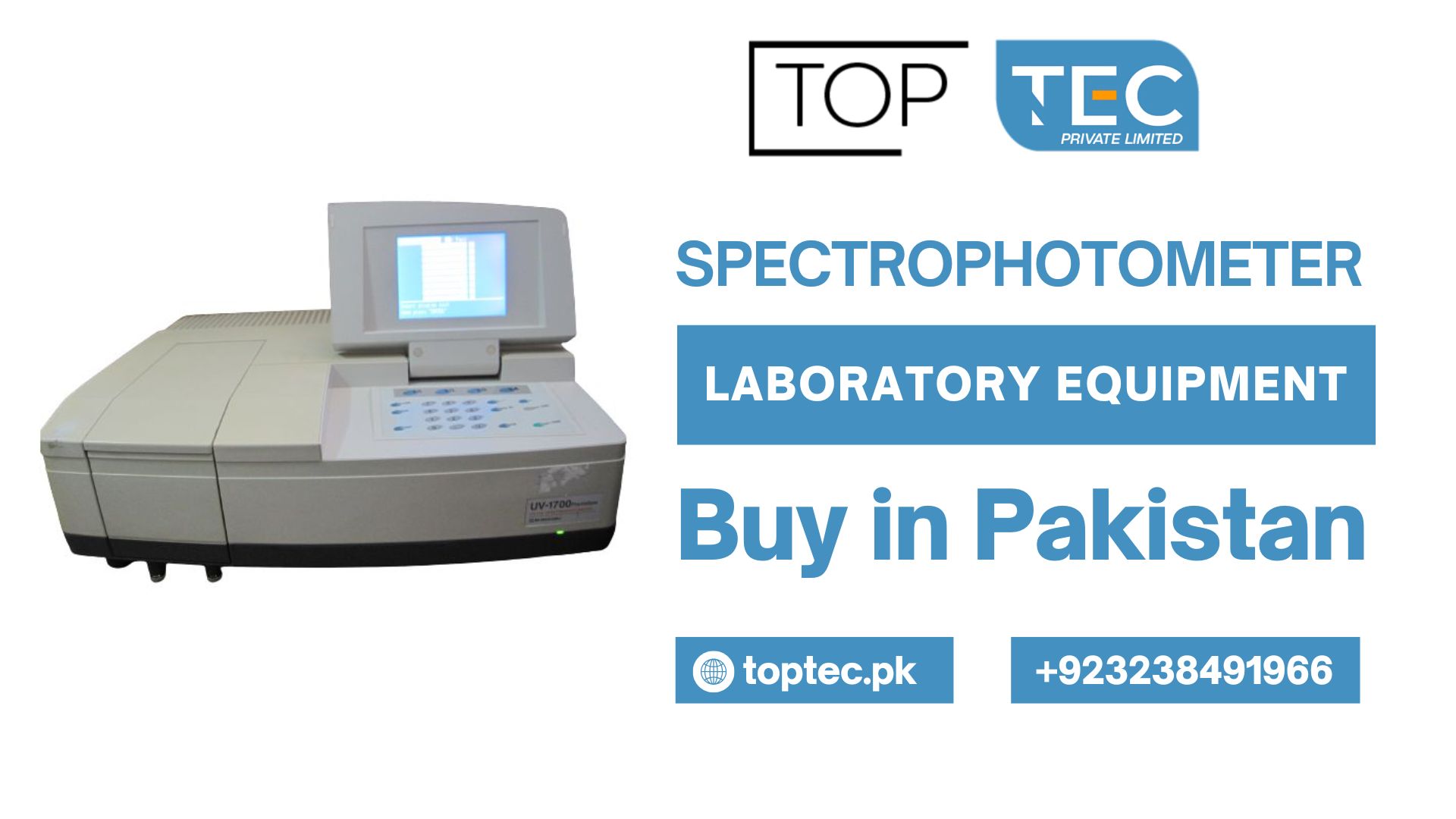
Are you looking for Spectrophotometer Price in Pakistan? Look, I’ll be straight with you. Last week I was sitting in a cramped university lab office in Lahore, watching a department head practically pull his hair out trying to make sense of spectrophotometer quotes. He had five different vendors giving him wildly different prices for what seemed like the same equipment. One quote was in dollars, another in rupees, and one guy was just… vague about everything.
“How much should this thing actually cost?” he asked me, shoving a stack of papers across the desk.
That’s the million-rupee question, isn’t it? If you’re trying to figure out the spectrophotometer price in Pakistan right now, you’re probably running into the same mess. The market’s all over the place. Exchange rates are doing their usual rollercoaster thing. Import policies keep changing. And everyone’s got an opinion on which brand is “worth it.”
So let me save you the headache I’ve watched too many lab managers go through. This isn’t going to be some boring price list copied from a catalog. I’m going to tell you what things actually cost in 2026, what drives those costs, and—more importantly—how to avoid getting ripped off or buying the wrong equipment.
First Things First—What Kind of Spectrophotometer Do You Actually Need?
Before we even talk about money, let’s make sure you’re shopping for the right thing. I can’t tell you how many times I’ve seen labs drop serious cash on equipment they don’t need. Just last month, a small water testing lab bought a fancy double-beam UV-Vis because the salesperson convinced them it was “what serious labs use.” They’re doing basic turbidity and color measurements. They needed something that costs literally half as much.
Here’s the breakdown without the sales pitch:
Visible Range Spectrophotometers
These work in the 400-700nm range. If you’re doing colorimetric assays, basic water quality testing, or running an educational lab, this is your sweet spot. They’re simple. Students can’t break them easily (well, not as easily). They do the job.
UV-Vis Single Beam
Now we’re getting into the real work. These go down to around 190nm in the UV range, which means you can measure proteins, nucleic acids, and a ton of pharmaceutical compounds. Single beam means you measure your blank first, then your samples. Takes a bit longer, but honestly? For most routine QC work, it’s perfectly fine.
UV-Vis Double Beam
The fancy option. It measures your sample and reference simultaneously. The advantage? Better baseline stability over long runs, better for kinetics, and less drift. The downside? Way more expensive. When people ask me about the spectrophotometer price in Pakistan for these units, I always ask: “Do you really need it, or did someone just tell you it’s better?”
Microvolume/Nano Systems
If you’re in molecular biology and working with precious DNA/RNA samples, these are game-changers. You use literally 1-2 microliters. No cuvettes. Just wipe the pedestal clean between samples. My friend running a genomics startup swears by his. Says it paid for itself in saved samples within six months.
What’s Actually Happening With Prices in 2026?
The spectrophotometer price in Pakistan isn’t just some random number a vendor pulls out of thin air. Well, sometimes it is, but there are real factors at play.
The Dollar Dance
Most high-end spectrophotometers are still imported. Shimadzu from Japan, Thermo Fisher from the US, Hach from wherever Hach is these days. And that means you’re playing the currency game.
I was talking to an importer last month. He showed me his costs from January versus March. Same instrument. The landed cost difference? Nearly 200,000 rupees just from exchange rate fluctuation and a slight change in import duty classification. When you’re trying to budget for the spectrophotometer price in Pakistan, this volatility is a nightmare.
Some vendors quote in dollars and make you absorb the exchange risk. Others quote in rupees but adjust prices quarterly. Neither option is fun, but at least know what you’re getting into.
The Local Manufacturing Push
Here’s something positive though. There’s been a serious push for local assembly and even manufacturing of lab equipment. Now, I’m not saying Pakistan is producing cutting-edge research-grade spectrophotometers yet. But mid-range instruments? Absolutely.
I visited a facility in Karachi that’s assembling UV-Vis systems under license. The optical components and electronics come from China, but everything else is local. Quality control looked solid. And the price? Significantly lower than importing a comparable system.
Feature Bloat Is Real
Every new model comes with more features. Touchscreens. Built-in printers. WiFi connectivity. Cloud data storage. Scanning apps for your phone.
And I’m sitting here thinking… do you actually need your spectrophotometer to send you push notifications? Probably not.
A pharma QC manager I know bought a basic model from 2018 surplus for half the price of a new one. Same optical performance. No fancy screen. Connects to a regular PC. Works perfectly. Sometimes older is just… smarter shopping.
After-Sales Support Matters More Than You Think
This is huge. I’ve watched labs buy spectrophotometers at “amazing prices” from vendors who basically vanish after installation. When the lamp dies six months later, they’re scrambling to find replacement parts.
The spectrophotometer price in Pakistan should include the value of local support. A vendor who has actual technicians in-country, stocks spare parts, and answers the phone when you call? That’s worth paying extra for. Trust me on this.
Real Numbers for 2026—What You’ll Actually Pay
Alright, let’s talk actual money. These are real-world ranges I’m seeing right now. Your mileage may vary depending on who you’re buying from and how well you negotiate.
Visible Light Spectrophotometers
Price Range: PKR 150,000 to PKR 400,000
I know that’s a big spread. Here’s why: at the low end, you’re getting basic Chinese or locally assembled units. Single wavelength, manual operation, simple as it gets. Around 150k-200k.
Mid-range (250k-300k) gets you digital displays, maybe some preset methods, better build quality. Brands like Jenway or Labindia sit here.
Top of this category (350k-400k) includes semi-automatic models with multiple wavelengths and basic software. These are solid for teaching labs or routine water quality work.
Real talk from a water testing lab owner in Faisalabad: “I paid 185,000 for a basic visible spec three years ago. Same model now? About 240,000. But it’s never broken down once. Sometimes boring reliability is worth more than fancy features.”
Single Beam UV-Vis Spectrophotometers
Price Range: PKR 400,000 to PKR 900,000
This is where most university and routine pharma labs end up. The spectrophotometer price in Pakistan for single-beam UV-Vis has actually become more competitive lately thanks to more distributors bringing in Asian brands.
Lower end (400k-550k): You’re looking at basic Chinese brands with decent optics. They work. They’re not going to blow your mind, but for routine analysis of known compounds, they’re fine.
Mid-range (600k-750k): Better brands. Japanese or European optics with Chinese assembly. Better wavelength accuracy, lower stray light, more reliable. This is the sweet spot for most applications.
Higher end (800k-900k): Premium Asian brands or entry-level European models. Better software, better specs, better support.
A pharma QC friend running dissolution tests told me: “We paid 680,000 for our single-beam UV-Vis two years ago. It runs all day, every day. Never regretted it. The guy down the hall bought the 400k model to save money. He’s replaced it once already.”
Double Beam UV-Vis Spectrophotometers
Price Range: PKR 1,200,000 to PKR 3,000,000+
Yeah, we’re into serious money now. But if you need double-beam, you probably already know why.
Entry double-beam (1.2M-1.6M): Usually Asian brands. Shimadzu clones, basically. They work, but buyer beware on long-term support.
Mid-range (1.8M-2.3M): This is where the real Shimadzu, Thermo Scientific, and Agilent models start. When people seriously research the spectrophotometer price in Pakistan for pharmaceutical applications, they end up here. Validated methods, good software, regulatory compliance features.
High-end (2.5M+): Top-tier research instruments. Peltier temperature control, multiple detector options, automated accessories. Unless you’re doing serious method development or research, this is probably overkill.
A pharmaceutical QC manager in Karachi told me: “We paid 2.1 million for our Shimadzu double-beam. Expensive? Yes. But in three years, it’s had zero downtime. For a facility running 24/6, that reliability is worth every rupee.”
Microvolume/Nano Spectrophotometers
Price Range: PKR 600,000 to PKR 1,800,000
These are specialized instruments, mostly for molecular biology. The spectrophotometer price in Pakistan for nano models depends heavily on the brand and features.
Basic models (600k-800k): Measure nucleic acids and proteins. Simple software. Gets the job done for basic molecular biology work.
Mid-range (900k-1.2M): Better accuracy, more measurement modes, better software integration. Can handle dyes and labeled proteins.
Premium (1.3M-1.8M): Thermo NanoDrop or equivalent. These are the gold standard. Temperature control, full spectrum scanning, excellent reproducibility.
Here’s a story: A biotechnology startup in Islamabad bought a 650k nano spec. Six months later, they realized it couldn’t accurately measure their low-concentration samples. Ended up buying a 1.2M unit. Net result? Wasted money and six months of questionable data. Buy right the first time.
The Costs Nobody Tells You About
This is where lab managers get blindsided. You budget for the instrument, then reality hits.
Cuvettes Aren’t Cheap
Glass cuvettes for visible work? Maybe 5,000-10,000 rupees for a decent set. Fine.
But UV work requires quartz. A single quartz cuvette can run 8,000-15,000 rupees. A full matched set? Easily 60,000-100,000 rupees. I’ve seen people negotiate the spectrophotometer price in Pakistan down to the last rupee, then get shocked when they need to drop another 75k on cuvettes.
Lamps Die. It’s What They Do.
Deuterium lamps for UV work last maybe 1,000-2,000 hours if you’re lucky. Tungsten lamps a bit longer. Replacement costs?
Deuterium lamp: 80,000-150,000 rupees depending on brand
Tungsten lamp: 40,000-80,000 rupees
Run your instrument 8 hours a day? You’re looking at lamp replacement every 6-12 months. Budget for it.
Software Licensing Can Be Sneaky
Some vendors include software. Others charge separately. And a few—this drives me crazy—charge annual licensing fees.
I watched a university department buy a spectrophotometer, then discover the advanced data processing software was an additional 150,000 rupees and needed annual renewal at 30,000 rupees. They hadn’t budgeted for it. Guess whose advanced features sit unused?
Calibration Isn’t Optional
If you’re in a regulated industry, annual calibration by a certified technician is mandatory. Even if you’re not regulated, it’s smart.
Cost for annual calibration: 25,000-50,000 rupees depending on your location and the service provider.
Miss calibration? Your data becomes suspect. Your accreditation gets questioned. Don’t skip this.
Maintenance Contracts
Some vendors push annual maintenance contracts (AMC). Cost? Usually 8-15% of the instrument’s purchase price per year.
Worth it? Depends. If you have in-house expertise and can source parts, maybe not. If you’re remote and downtime is expensive, absolutely yes.
Lab Furniture—The Foundation Everyone Forgets
Here’s where I see labs make a massive mistake. They’ll spend 1.5 million rupees on a beautiful double-beam spectrophotometer, then stick it on a 15,000 rupee office desk.
I’m not kidding. I’ve actually seen this.
Spectrophotometers are sensitive instruments. Vibrations affect your baseline. Temperature fluctuations mess with your readings. Poor lighting creates operator errors. And if you spill acetonitrile on a cheap wooden desk? Good luck with that damage.
When you’re planning your budget and researching the spectrophotometer price in Pakistan, also budget for proper lab furniture. This isn’t optional. It’s essential.
This is where TOPTEC PVT. LTD comes into the picture.
TOPTEC manufactures laboratory furniture right here in Pakistan. They’re not importing generic lab benches and slapping a markup on them. They’re actually building furniture designed for Pakistani labs, by people who understand what analytical equipment needs.
Why does this matter?
Vibration Control: A proper analytical bench from TOPTEC has vibration dampening built in. Your spectrophotometer baseline stays stable instead of looking like an earthquake readout.
Chemical Resistance: Their countertops are manufactured to handle harsh solvents. Spill your mobile phase? Wipe it up, move on with your day. No permanent damage, no warping, no panic.
Proper Height and Ergonomics: Working at the wrong height causes operator fatigue. Fatigue causes errors. TOPTEC designs benches at proper heights with consideration for Pakistani average heights, not European standards.
Integrated Storage: Where are you keeping your cuvettes? Your standards? Your reagents? TOPTEC includes smart storage solutions that keep everything organized and within reach.
Local Customization: Every lab is different. TOPTEC can customize dimensions, configurations, and features to fit your exact space and workflow. Try getting that from an imported catalog.
Responsive Support: Something needs adjustment? They’re here in Pakistan. They speak your language. They understand local conditions. They can actually send someone to help.
I talked to a lab manager in Multan who initially balked at spending 200,000 rupees on a proper analytical bench from TOPTEC. He was going to buy a cheap alternative for 50,000.
His vendor convinced him otherwise. Six months later, he told me: “Best decision we made. The instrument performs better, our technicians aren’t complaining about back pain, and we haven’t had a single spill incident cause damage. That cheap bench would have cost us way more in the long run.”
The reality is this: vendors know that a properly set up lab means fewer warranty claims. Environmental damage (vibration, temperature, spills) voids most warranties. When you approach vendors about the spectrophotometer price in Pakistan and you can show them you’re setting up a proper lab with quality furniture from TOPTEC, you’re in a better negotiating position. They know their equipment will be well cared for.
How to Actually Get a Good Deal
You’re ready to buy. You’ve done your research on the spectrophotometer price in Pakistan. Now what?
Don’t Accept the First Quote
Ever. I don’t care how good it seems. Get at least three quotes from different vendors. The variation will surprise you.
I watched a university lab get quotes for the same Shimadzu model from three different vendors. The spread? 400,000 rupees. Same instrument, same warranty, wildly different prices.
Bundle Everything
If you need a spectrophotometer, cuvettes, standards, and lab furniture, buy it all together. Vendors will discount to win the larger order.
When you’re negotiating the spectrophotometer price in Pakistan, tell them you’re also furnishing the lab. Ask if they can coordinate with TOPTEC PVT. LTD for a complete package. Some vendors have existing relationships with furniture manufacturers and can bundle better deals.
Question the Warranty
What’s actually covered? For how long? Does it include the lamp (usually no)? What’s the response time? Is on-site service included or extra?
A colleague bought a spectrophotometer with a “comprehensive two-year warranty.” Turned out, the lamp was excluded, on-site service was extra, and the response time was “as soon as possible” which meant three weeks when he had a problem.
Demand a Real Demo
Not with their perfect, pre-made standards. Bring actual samples from your lab. Messy, real-world samples.
If they can’t run your samples successfully during the demo, walk away. I don’t care how good the price is.
Training Is Non-Negotiable
Make on-site training for your staff part of the deal. At least one full day, preferably two. This should be included in your negotiated spectrophotometer price in Pakistan, not an add-on.
Untrained operators will misuse even the best instruments. You’ll get bad data, damage equipment, and waste time.
Consider Certified Refurbished
If budget is tight, ask about certified refurbished units. Universities and companies upgrade equipment. That “old” spectrophotometer might be three years old and barely used.
Key word: CERTIFIED. Refurbished by the manufacturer or authorized dealer. With warranty. Fresh lamp. Calibrated.
I know a research lab that bought a certified refurbished Thermo UV-Vis for 60% of new price. Five years later, it’s still running perfectly.
Ask About Trade-Ins
Have old equipment? Some vendors offer trade-in value. It’s usually not much, but every bit helps.
Payment Terms Matter
Some vendors offer installment plans. Others give discounts for full upfront payment. Figure out what works for your cash flow.
Brand Discussions—Without the Sales Pitch
People always ask: “Which brand should I buy?”
The honest answer? It depends on your application, budget, and support availability.
Shimadzu:
Excellent reputation in pharma. Good support network in Pakistan. Premium pricing. If you’re doing regulated work and can afford it, solid choice.
Thermo Fisher:
Similar to Shimadzu. Great instruments, well-supported, expensive. Their NanoDrop is the gold standard for microvolume work.
Agilent:
Less common in Pakistan but gaining ground. Good instruments, but support can be spotty depending on location.
Labindia:
Indian brand with decent presence here. More affordable, acceptable performance for routine work. Support has improved significantly.
Chinese Brands (Various):
Massive quality variation. Some are genuinely good value. Others are disasters. Buy from established distributors who stand behind the product.
When evaluating the spectrophotometer price in Pakistan across brands, don’t just look at the number. Factor in local support, parts availability, and how critical downtime is for your operation.
What About Used Equipment?
The used market for spectrophotometers in Pakistan is… interesting.
Universities upgrading equipment, labs closing down, companies liquidating assets—there’s decent equipment available. But buyer beware.
Red flags:
- No service history
- Seller can’t demonstrate it working
- No mention of recent lamp replacement
- Price seems too good to be true
- Seller is vague about why they’re selling
Good signs:
- Complete service records
- Recent calibration certificate
- Seller demonstrates it working with known standards
- Realistic pricing (usually 40-60% of new price depending on age)
- Includes accessories and manuals
If you’re considering used equipment to save money on the spectrophotometer price in Pakistan, bring someone who knows what to check. Or pay for a third-party inspection. A few thousand spent on inspection can save you from buying expensive junk.
Regional Price Variations
Prices aren’t uniform across Pakistan.
Karachi and Lahore generally have more competitive pricing due to more vendors and distribution centers. Islamabad is mid-range. Smaller cities often pay a premium due to limited vendor presence and higher service costs.
That said, most vendors will ship nationwide. Don’t assume you have to buy local. Get quotes from major city vendors even if you’re not there.
Future-Proofing Your Purchase
Technology changes. Methods evolve. Will your spectrophotometer be useful in five years?
Things to consider:
- Can the software be updated?
- Are accessories and upgrades available?
- Will the vendor still support it in five years?
- Does it have enough flexibility for new methods?
Buying the absolute cheapest model that barely meets today’s needs is short-term thinking. Spending a bit more for flexibility and upgradeability makes sense for most labs.
Final Real Talk
Figuring out the spectrophotometer price in Pakistan in 2026 isn’t just about finding the lowest number. It’s about understanding what you need, what you’re actually getting, and what it’ll cost to operate over the years.
The cheapest option rarely ends up being the most economical. The most expensive option is often overkill. The sweet spot is somewhere in the middle—good enough performance, reliable vendor support, proper installation on quality furniture.
Don’t rush this decision. Talk to people who actually use the equipment you’re considering. Get demos. Read the fine print. And for the love of science, set up your lab properly.
Before you finalize anything based solely on spectrophotometer price in Pakistan, talk to TOPTEC PVT. LTD about your lab setup. A spectrophotometer is only as good as the environment it operates in. TOPTEC’s locally manufactured laboratory furniture will ensure your investment is protected, your data is reliable, and your team can work efficiently.
