

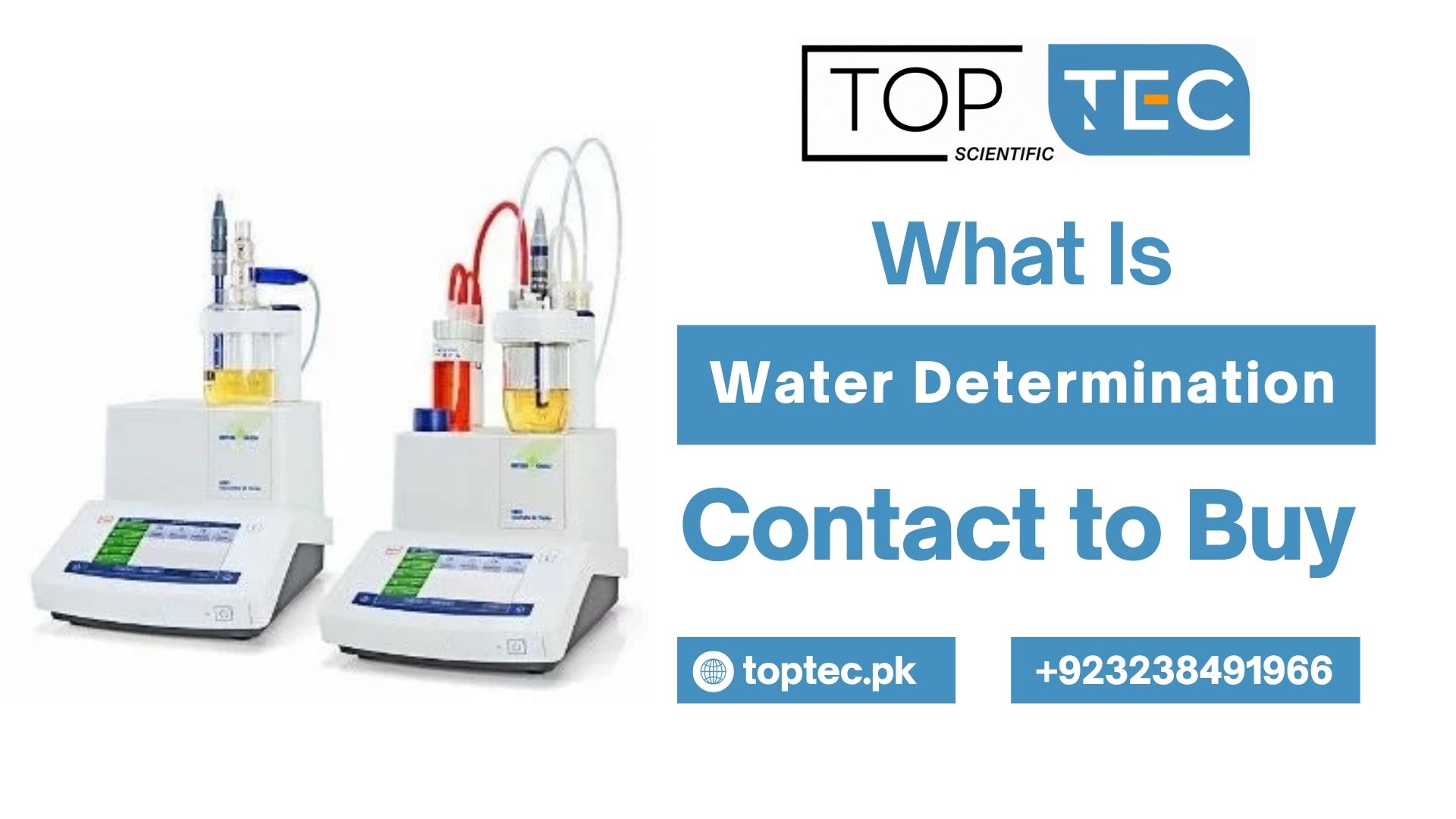
Explore water determination methods including Karl Fischer titration, loss on drying, and azeotropic distillation. Learn the principles, applications, and differences between volumetric and coulometric KF techniques for pharmaceutical, food, and chemical testing. Get method selection guidance.
Water content. It sounds almost too basic to be a significant analytical challenge. Water is everywhere — in the air, in raw materials, in finished products, in packaging materials. We’re so accustomed to its presence that it’s easy to underestimate how much damage an unexpected few tenths of a percent of moisture can do to a pharmaceutical product, a food formulation, a chemical compound, or an industrial material.
But ask any formulation chemist, quality control analyst, or pharmaceutical production manager, and they’ll tell you quickly — water content is one of the most consequential analytical parameters in their work. Too much moisture in a tablet formulation and your product degrades ahead of its shelf life. Too much water in a hygroscopic API and your potency calculations are wrong before the formulation even starts. Too much moisture in packaging film and your barrier properties fail. The consequences range from product failures and recalls to compromised patient safety.
This is why water determination is a core analytical function in pharmaceutical, food, chemical, and materials testing laboratories worldwide. And it’s why understanding the methods available — particularly Karl Fischer titration, Loss on Drying, and the ISO standards that govern both — is genuinely important for anyone responsible for laboratory analytical capability.
At TOPTEC Scientific, we manufacture and supply laboratory equipment and furniture in Pakistan, including instruments for water content analysis. If you’re looking to Buy Water Determination instruments for your laboratory, or planning to Buy Laboratory Furniture and complete your lab setup from a trusted local Pakistani manufacturer, this guide is the right starting point. We’re going to cover everything — the chemistry, the methods, the standards, the instrumentation, and how to make smart procurement decisions.
Let’s get into it properly.
Why Water Content Analysis Is More Critical Than Most People Realize
Before we get into the methods themselves, it’s worth establishing the stakes. Why does a few hundredths of a percent of moisture content matter enough to warrant dedicated analytical instrumentation, validated methods, and international ISO standards?
The answer comes down to the fundamental role water plays in chemical and biological processes. Water is not an inert passenger in most materials — it actively participates in degradation reactions, affects physical properties, supports microbial growth, influences dissolution behavior, and alters thermodynamic stability.
In pharmaceutical products specifically, water content affects chemical stability — moisture accelerates hydrolysis reactions that degrade active pharmaceutical ingredients. It affects physical stability — hygroscopic tablets can soften, cake, or lose their geometric integrity in humid conditions. It affects microbiological safety — water activity above approximately 0.6 supports microbial growth in otherwise controlled products. And it affects dosage accuracy — a tablet that contains more water than its specification allows contains less active ingredient per unit mass than it should.
Water activity and moisture content measurements are critical quality parameters in pharmaceutical manufacturing, as they directly impact product stability, efficacy, and safety. These measurements are essential for ensuring that pharmaceutical products meet their specifications and remain stable throughout their shelf life.
In food manufacturing, moisture content affects texture, shelf life, and microbial safety — and in many food categories, moisture specification compliance is a regulatory requirement as well as a quality parameter. In chemical manufacturing, water content affects reaction efficiency, product purity, and the accuracy of concentration calculations. In materials testing, moisture content affects mechanical properties, dimensional stability, and performance characteristics.
The breadth of industries where moisture content is a critical quality parameter explains why there are multiple well-established analytical methods for its determination — each optimized for different accuracy requirements, moisture concentration ranges, and sample types. When you Buy Water Determination instruments for your laboratory, understanding which method — and which instrument — matches your analytical needs is the most important decision you’ll make.
The Three Primary Methods of Water Determination
There are three primary analytical approaches to water determination that are referenced in pharmacopeial standards, ISO standards, and regulatory guidelines worldwide:
- Karl Fischer Titration — The gold standard for precise, specific water content measurement
- Loss on Drying (LOD) — The classical gravimetric approach measuring total mass loss on heating
- Thermogravimetric Analysis (TGA) — An advanced gravimetric approach with temperature-controlled mass loss profiling
Each has its applications, its strengths, its limitations, and its appropriate regulatory contexts. And understanding how they differ — fundamentally and practically — is what allows you to match the right method to your analytical challenge.
Karl Fischer Titration: The Gold Standard Explained
Let’s start with Karl Fischer titration — the method that, for most pharmaceutical and precision chemical applications, is the definitive answer to the question “how much water is in this sample?”
The History Behind the Chemistry
Karl Fischer titration was developed by German chemist Karl Fischer in 1935 — making it one of the older established analytical chemistry methods still in active use. The fact that it’s been the analytical standard for water determination for nearly ninety years speaks to its fundamental analytical reliability. The core chemistry has evolved and been refined over the decades, but the principle remains essentially what Fischer developed in the 1930s.
The Karl Fischer method is based on a specific chemical reaction between water and a reagent system comprising iodine, sulfur dioxide, a base (typically imidazole), and an alcohol solvent (typically methanol). The reaction is highly specific to water — iodine is reduced by sulfur dioxide in the presence of water, and the stoichiometry of this reaction allows precise quantification of the water that participated.
The Karl Fischer method is based on a redox reaction where iodine is reduced by sulfur dioxide in the presence of water. The original reaction described by Karl Fischer involves the reaction of water with iodine and sulfur dioxide in the presence of a base and a solvent.
The key word in the previous paragraph is “specific.” This is what distinguishes Karl Fischer titration from gravimetric methods like Loss on Drying — it measures water specifically and selectively, not any volatile component that happens to be present in the sample. This specificity is enormously valuable in samples that contain volatile organic solvents, thermally labile compounds, or other components that would be lost on heating and confuse a gravimetric result.
The Chemistry in More Detail
The overall reaction in modern Karl Fischer titration can be written as:
H₂O + I₂ + SO₂ + 3 Base + MeOH → 2 Base·HI + Base·H(OSO₂OMe)
For every mole of water present, one mole of iodine is consumed. This 1:1 stoichiometric relationship between water and iodine is the quantitative foundation of the Karl Fischer method — measure how much iodine is consumed and you know precisely how much water was present.
The Karl Fischer method is based on the quantitative reaction of water with iodine. In the presence of water, iodine and sulfur dioxide react with each other; this reaction is quantitative and specific for water. The reaction is complete in the presence of an appropriate base and solvent, which together with iodine and sulfur dioxide make up the Karl Fischer reagent.
The stoichiometric ratio of water to iodine in the Karl Fischer reaction is approximately 1:1 — one mole of iodine reacts with one mole of water, providing the quantitative basis for water content calculation from iodine consumption data.
Volumetric Karl Fischer Titration: For Moderate to High Water Content
When most people think of Karl Fischer titration, they’re thinking of volumetric Karl Fischer — the classical form of the method. In volumetric KF, a Karl Fischer reagent of known iodine concentration is dispensed from a burette into the titration vessel containing the sample and a suitable solvent. The reagent is added until all the water has reacted — this endpoint is detected electrochemically.
Volumetric Karl Fischer titration is the method of choice for water content determination in the range of approximately 0.1% to 100% water — samples with moderate to high water content. Typical applications include raw material testing for solid dosage form manufacturing, bulk pharmaceutical chemical water specification testing, and food moisture content determination for samples with higher moisture levels.
Volumetric Karl Fischer titration is suitable for samples with water content above 0.1%, with high precision and accuracy in this range. The method uses Karl Fischer reagent solutions of defined concentration, typically expressed in water equivalent (mg water per mL reagent). The titration endpoint is detected using a dual platinum electrode system, which provides a reliable and reproducible endpoint indication.
The key practical advantage of volumetric Karl Fischer titration is its simplicity and the wide range of readily available, well-characterized reagents. Modern volumetric Karl Fischer titrators are automated instruments with motorized burettes, digital endpoint detection, automatic calculation of water content, and data management systems — but the underlying principle is straightforward and accessible.
Coulometric Karl Fischer Titration: For Trace Water Content
For samples with very low water content — trace moisture at the ppm level — volumetric Karl Fischer titration doesn’t have the sensitivity required. This is where coulometric Karl Fischer comes in, and it represents a genuinely elegant analytical approach.
In coulometric Karl Fischer titration, iodine is generated electrochemically within the titration cell by oxidation of iodide at the anode, rather than dispensed from an external burette. The quantity of iodine generated is precisely controlled by the electrical current applied — and because of Faraday’s law, the relationship between charge (coulombs) and moles of iodine generated is exact and doesn’t depend on any reagent concentration measurement.
The Karl Fischer method in coulometric mode generates iodine from the reagent mixture by applying an electrical current. The amount of iodine generated is directly calculated from the electrical charge applied — based on Faraday’s law of electrolysis — eliminating the need for a standardized reagent and providing extremely high sensitivity for water determination.
Coulometric Karl Fischer is the method of choice for trace water content determination — typically in the range of 1 ppm to 5% water content. This makes it the standard method for anhydrous solvent water testing, residual moisture in lyophilized pharmaceutical products, moisture in oils and lubricants, and trace water in electronic materials.
The sensitivity advantage of coulometric over volumetric Karl Fischer titration is substantial — coulometric instruments routinely measure water content at the microgram level, in samples that may be only 0.1 to 1 gram of material. This sensitivity level simply cannot be achieved with volumetric approaches.
Endpoint Detection in Karl Fischer Titration
Both volumetric and coulometric Karl Fischer titration use electrochemical endpoint detection — and understanding the detection principle helps in understanding instrument performance and troubleshooting.
The most widely used endpoint detection system uses a dual-platinum-wire electrode immersed in the titration vessel. The endpoint is detected when a small, constant current flows between the two platinum wires — a phenomenon called “dead-stop” detection or “bipotentiometric” detection. Before the endpoint, iodine is consumed by water as fast as it’s added, and the current is very small. At the endpoint, a small excess of iodine is present and the current jumps dramatically — signaling the endpoint to the instrument’s control system.
This electrochemical endpoint detection is considerably more reliable and reproducible than colorimetric endpoint detection, and it allows fully automated titration without operator intervention for endpoint judgment. Modern Karl Fischer titration instruments achieve endpoint detection with high precision — enabling the sub-microgram water content measurements that coulometric instruments are capable of.
Karl Fischer Titration in Pharmaceutical Analysis: What the Pharmacopeias Say
For pharmaceutical laboratories, the authority on Karl Fischer titration methodology comes from the major pharmacopeias — USP, Ph. Eur., and IP — whose monographs and general chapters specify the method requirements for water determination in pharmaceutical substances.
The United States Pharmacopeia (USP) addresses water determination in General Chapter <921> Water Determination. This chapter covers both Karl Fischer Titration (Method I, which covers both volumetric and coulometric approaches) and Loss on Drying (Method II). For pharmaceutical substances where water determination is specified in the individual monograph, the pharmacopeial method — typically the Karl Fischer method — is the regulatory standard against which compliance is assessed.
The European Pharmacopoeia (Ph. Eur.) addresses water determination in its own water content chapter, which also specifies Karl Fischer titration as the primary method for specific water content determination, distinguishing between volumetric and coulometric approaches based on expected water content of the sample.
For pharmaceutical manufacturers in Pakistan operating under DRAP regulation, WHO GMP guidance on pharmaceutical quality control specifies that water content testing should be performed using validated analytical methods — and Karl Fischer titration is universally recognized as meeting this requirement.
The practical implication: if your pharmaceutical quality control laboratory tests water content in drug substances, drug products, excipients, or in-process materials, and your testing must meet pharmacopeial specifications, Karl Fischer titration is the method you need. When you Buy Water Determination equipment for pharmaceutical QC applications, a Karl Fischer titrator — volumetric, coulometric, or both — is the core instrument.
Loss on Drying (LOD): The Classical Gravimetric Approach
Loss on Drying is the older, simpler approach to moisture content assessment — and despite the superior specificity of Karl Fischer titration, it remains widely used for good reasons. Understanding when LOD is appropriate — and when it isn’t — is essential for making the right method selection for your laboratory.
The Principle of Loss on Drying
The principle of Loss on Drying is as straightforward as analytical chemistry gets: weigh your sample, heat it under defined conditions (specified temperature, duration, and sometimes atmospheric conditions), weigh it again, and calculate the percentage mass loss.
Loss on drying is a procedure commonly used in the pharmaceutical industry to measure the moisture content and volatile matter present in a sample. A sample of the substance is weighed before and after drying, and the difference represents the moisture content or the water content, along with other volatile substances.
The LOD test measures the total loss of volatile components — which includes water but also includes any other volatile substances present in the sample that evaporate under the test conditions. For samples that contain only water as a volatile component, LOD equals water content. For samples that also contain residual solvents, processing aids, or other volatile compounds, LOD may systematically overestimate the true water content.
This is the fundamental limitation of LOD compared to Karl Fischer titration — it lacks specificity. If you need to know specifically how much water is present, rather than how much of anything volatile is present, LOD may not give you the right answer.
Standard LOD Equipment
The standard equipment for Loss on Drying testing includes:
Drying Oven with Analytical Balance: The classical approach — the sample is placed in a tared weighing dish, dried in a calibrated oven at the specified temperature (commonly 100-105°C for general pharmaceutical applications, but varying significantly by substance), removed, cooled in a desiccator, and reweighed until constant mass is achieved.
Halogen Moisture Analyzer (Moisture Balance): A more rapid, integrated approach where the sample is placed directly in the instrument, which simultaneously heats the sample using a halogen infrared lamp and weighs it continuously, displaying the real-time moisture loss and automatically calculating and displaying the LOD result. Halogen moisture analyzers provide results in minutes rather than hours and are widely used for routine in-process moisture monitoring in pharmaceutical and food manufacturing.
Vacuum Drying Oven: For heat-sensitive compounds where standard oven temperatures would cause thermal decomposition rather than just moisture removal, vacuum drying allows moisture to be removed at lower temperatures by reducing the vapor pressure of water. This allows moisture content determination without thermal degradation artifacts.
Infrared Drying Balance: Similar in principle to halogen moisture analyzers but using infrared heating elements, these instruments are particularly well-suited for rapid moisture testing of powders and granules in pharmaceutical manufacturing environments.
When to Use LOD Instead of Karl Fischer
Despite its limitations in specificity, LOD has genuine advantages in certain application contexts:
Simplicity and Low Equipment Cost: Standard oven drying and halogen moisture analyzers are considerably less expensive than Karl Fischer titration instruments. For routine in-process monitoring where approximate moisture content is sufficient for manufacturing control decisions, LOD provides a cost-effective answer.
High Water Content Samples: For samples with high moisture content — wet granulations at 10-15% moisture, food products with 20-30% moisture — halogen moisture analyzers using LOD principles are faster and more practical than Karl Fischer approaches.
Regulatory Acceptance for Routine Testing: Many pharmaceutical monographs specify Loss on Drying as the official method for water content testing — particularly for substances where water is the predominant volatile component and the specificity advantage of Karl Fischer titration isn’t necessary for accurate results.
Manufacturing Environment: Halogen moisture analyzers are robust, easy to operate, and don’t require the reagent handling that Karl Fischer titration instruments need. In a manufacturing environment where tests need to be run quickly and frequently by production staff rather than analytical scientists, LOD instruments are often more practical.
The Karl Fischer method is more specific and accurate for water determination in samples with low moisture content or where volatile components other than water may be present, while LOD is more commonly used for general moisture determination in samples with higher water content or where a simpler, faster method is adequate.
ISO Standards for Water Determination: What You Need to Know
The international standardization landscape for water determination methods is well-developed — and navigating it correctly is important for laboratories that need their methods to align with specific regulatory or customer requirements.
ISO 760: Determination of Water — Karl Fischer Method (General)
ISO 760 provides the general framework for Karl Fischer titration as an analytical method for water determination. It covers the reagents, apparatus, procedures, and calculations applicable to the Karl Fischer method in its volumetric form, and provides guidance on method applicability across different sample types.
ISO 8534: Animal and Vegetable Fats and Oils — Determination of Water Content (Karl Fischer Method)
For the food industry — particularly producers and testers of edible oils and fats — ISO 8534 specifies the Karl Fischer method for water determination in these specific matrices. Fat and oil matrices present specific challenges for water determination — they’re immiscible with the aqueous Karl Fischer reagent system — and ISO 8534 addresses these challenges with appropriate procedural modifications.
ISO 15489: Plastics — Determination of Water Content (Karl Fischer Method)
For polymer and plastics testing — relevant to pharmaceutical packaging materials, medical device components, and industrial plastics — ISO 15489 specifies the Karl Fischer method with appropriate extraction or dissolution procedures for releasing bound water from polymer matrices.
ISO 6869: Animal Feeding Stuffs — Determination of Contents of Calcium, Copper, Iron, Magnesium, Manganese, Potassium, Sodium, Phosphorus, and Zinc
While not exclusively about water determination, ISO feeding stuff standards include moisture content specifications that interact with Karl Fischer and LOD methodology when testing animal nutrition products.
ASTM E203: Standard Test Method for Water Using Volumetric Karl Fischer Titration
ASTM E203 is the ASTM International standard for volumetric Karl Fischer titration — widely referenced in North American regulatory and quality contexts and increasingly globally. It provides detailed procedural requirements, reagent specifications, and calculation methods.
USP <921> Water Determination
USP General Chapter <921> is the pharmacopeial reference for water determination in pharmaceutical applications — covering Method I (Karl Fischer Titration, both volumetric and coulometric) and Method II (Loss on Drying). For pharmaceutical manufacturers in Pakistan whose products are registered against USP specifications, <921> is the primary regulatory reference for water testing methods.
When you Buy Water Determination equipment for a regulated laboratory, confirming which specific standard(s) your method needs to comply with — and verifying that the instrument you’re purchasing is suitable for compliance with those standards — is a critical step in the procurement decision.
Volumetric vs. Coulometric Karl Fischer: A Practical Comparison
When clients come to TOPTEC Scientific looking to Buy Water Determination instruments, one of the most common decision points is the choice between volumetric and coulometric Karl Fischer titration. Here’s a clear, practical comparison:
| Parameter | Volumetric Karl Fischer | Coulometric Karl Fischer |
|---|---|---|
| Working Range | 0.1% to 100% water | 1 ppm to 5% water |
| Sensitivity | ~1 mg water | ~1 μg water |
| Precision | ±0.1-0.5% relative | ±0.5-2% relative |
| Iodine Source | External reagent (burette) | Electrochemically generated |
| Reagent Handling | Karl Fischer reagent + solvent | Anolyte + catholyte |
| Sample Size | 0.1-5 g typically | 0.01-1 g typically |
| Typical Applications | Raw materials, excipients, food | APIs, residual moisture, solvents |
| Instrument Cost | Moderate | Higher |
| Complexity | Moderate | Moderate-High |
| Pharmacopeial Reference | USP <921> Method I (a) | USP <921> Method I (b) |
| ISO Reference | ISO 760 | ISO 760 |
Choosing Volumetric Karl Fischer:
- Your samples have water content above 0.1%
- You test raw materials, excipients, and bulk pharmaceutical chemicals
- Your analytical range aligns with the moderate-to-high sensitivity of volumetric KF
- Budget is a consideration and coulometric sensitivity isn’t required
Choosing Coulometric Karl Fischer:
- Your samples have trace water content — residual moisture in lyophilized products, anhydrous solvents, oils
- You need ppm-level detection capability
- You test finished pharmaceutical products where water specification is very tight
- You test moisture in non-aqueous matrices like organic solvents and petroleum products
Choosing Both:
- Your laboratory handles a diverse range of sample types across the full moisture content range
- You test both raw materials (typically higher moisture) and finished products (typically lower moisture)
- You need the flexibility to use the optimal Karl Fischer method for each sample type
At TOPTEC Scientific, when clients tell us they want to Buy Water Determination instruments for a pharmaceutical QC laboratory, we typically recommend starting with a high-quality volumetric Karl Fischer titration system for raw material testing and adding coulometric capability when the analytical demands of finished product and API testing require it.
Sample Introduction Techniques in Karl Fischer Titration
One aspect of Karl Fischer titration that doesn’t always get enough attention in introductory discussions is sample introduction — how you actually get your sample into the titration vessel in a way that gives accurate and reproducible results.
Direct Dissolution
The simplest approach — dissolve the sample directly in the anhydrous methanol or other appropriate solvent in the titration vessel and titrate directly. Works well for samples that are freely soluble in Karl Fischer solvents and don’t contain components that interfere with the Karl Fischer reaction.
Extraction
For samples that aren’t soluble in Karl Fischer solvents — polymers, powders, certain foods — the sample is extracted with an anhydrous extraction solvent, and the extract is transferred to the titration vessel. The efficiency of the extraction step is critical for accurate results.
Karl Fischer Oven (Headspace) Technique
For samples where direct titration is problematic — solid materials, samples with chemical interferents, samples that react with Karl Fischer reagent — the Karl Fischer oven technique is a highly effective alternative. The sample is placed in a closed vial and heated in a temperature-controlled oven. The evaporated moisture from the sample is swept by a dry carrier gas into the coulometric Karl Fischer titration cell, where it’s titrated directly.
The Karl Fischer oven method — also called the headspace KF method or KF evaporation method — is particularly valuable for solid pharmaceutical dosage forms (tablets, capsules), polymer materials, and samples that contain carbonyl groups or other functional groups that interfere with direct Karl Fischer titration.
The Karl Fischer method with oven technique allows the determination of water in samples that would otherwise interfere with the direct titration — such as samples containing aldehydes, which can react with Karl Fischer reagents and produce false results. The oven technique separates water from the sample by controlled heating and transfers only the water vapor to the titration cell.
This interference issue with aldehydes and other carbonyl-containing compounds is worth emphasizing — for samples containing reducing sugars, aldehydes, or ketones, direct Karl Fischer titration can give erroneously high results because these compounds reduce iodine just as water does. The oven technique sidesteps this interference entirely.
Method Validation for Karl Fischer Titration: What’s Required
If you’re implementing Karl Fischer titration in a regulated pharmaceutical, food, or chemical testing laboratory, method validation is not optional. It’s a fundamental requirement of good analytical laboratory practice and a regulatory expectation.
Method validation for the Karl Fischer method typically addresses the following parameters:
Specificity
Demonstrating that the Karl Fischer method as implemented in your laboratory measures water specifically — that is, that other components of your samples don’t contribute to the iodine consumption and produce falsely elevated results. For direct titration, this includes identifying any potential interferents in your specific sample matrices and demonstrating that their effect is negligible or correcting for it.
Linearity
Demonstrating that the instrument response — iodine consumption as measured by burette volume or generated charge — is linearly proportional to water content across the analytical range relevant to your samples. Typically established by analyzing multiple water standards across the working range.
Accuracy (Trueness)
Demonstrating that your Karl Fischer titration method gives the correct result — typically by analyzing certified reference materials (water standards of known water content) or by comparing results to a reference method. Accuracy is the most fundamental validation requirement for a quantitative analytical method.
Precision
Demonstrating the repeatability (same analyst, same day) and intermediate precision (different analysts, different days) of the Karl Fischer method as implemented in your laboratory. Precision is typically expressed as %RSD (relative standard deviation) of replicate measurements on the same sample.
Limit of Detection and Limit of Quantitation
For coulometric Karl Fischer titration specifically, the LOD and LOQ define the lowest water content levels that can be reliably detected and quantitated respectively. These are important specifications for applications involving very low moisture content.
Robustness
Assessing the sensitivity of the Karl Fischer method to small deliberate variations in method parameters — sample size, titration speed, reagent volume, temperature — to understand the method’s vulnerability to uncontrolled variation in routine use.
Reagent Standardization and Titer Determination
For volumetric Karl Fischer titration, the concentration of the Karl Fischer reagent — expressed as its water equivalent — must be determined regularly (typically at the beginning of each analytical session) by titrating a water standard of known composition. This titer determination is a critical quality control step that directly affects the accuracy of all subsequent water content measurements.
Practical Factors That Affect Karl Fischer Titration Results
Even with a well-validated method and a high-quality instrument, practical factors in the day-to-day operation of Karl Fischer titration can affect result quality. Understanding these factors — and managing them — is what separates reliable from unreliable Karl Fischer data.
Atmospheric Moisture
Karl Fischer titration measures the water in your sample. It will also measure any atmospheric moisture that gets into your titration vessel during sample introduction or reagent addition. This is why Karl Fischer titration vessels are designed to be closed systems with desiccant-dried nitrogen blanket gas, and why sample introduction through septa — using syringes for liquid samples — is preferred over direct open addition.
Even a brief exposure of the titration vessel to laboratory air can introduce enough atmospheric moisture to measurably affect results, particularly in coulometric titrations where the detection limit is in the microgram range.
Reagent Quality and Stability
Karl Fischer titration reagents — both the titrant for volumetric KF and the anolyte/catholyte for coulometric KF — have limited shelf lives once opened and can be affected by atmospheric moisture contamination if storage practices aren’t rigorous. Use dedicated dry storage, keep reagent containers capped when not in use, and follow the manufacturer’s shelf life recommendations.
Sample Handling and Homogeneity
Moisture content in many materials is not perfectly homogeneous — moisture gradients exist, particularly near surfaces and in granular materials. Sample preparation — including appropriate particle size reduction, mixing, and aliquoting — is important for ensuring that the sample portion introduced into the Karl Fischer cell is representative of the bulk material.
Temperature
The Karl Fischer reaction rate and the diffusion of moisture from solid samples are both temperature-dependent. Most Karl Fischer titrations are performed at ambient laboratory temperature, but for reproducibility, the laboratory temperature should be reasonably stable during analysis. Some applications — particularly oven method titrations — use precisely controlled elevated temperatures for defined periods to ensure complete moisture extraction.
Interfering Compounds
As mentioned in the discussion of the oven method, certain chemical functional groups can interfere with direct Karl Fischer titration. Beyond aldehydes and ketones, other potential interferents include peroxides, strong oxidizing agents, and certain metal salts. If your samples contain any of these, interference testing should be part of your method development before finalizing your Karl Fischer method protocol.
Water Determination in Pharmaceutical Manufacturing: A Practical Workflow
For pharmaceutical QC and production laboratories, water determination isn’t a single analysis — it’s a series of tests at multiple points in the manufacturing process. Understanding where Karl Fischer and LOD fit into this workflow helps in planning your instrument requirements.
Raw Material Testing
Incoming raw materials — APIs, excipients, packaging materials — are tested for water content as part of incoming quality control. For most solid pharmaceutical materials, specifications set upper limits on water content to ensure stability during storage and consistent performance in formulation. Volumetric Karl Fischer titration is typically the method of choice for raw material water testing.
In-Process Testing (Granulation and Drying)
During tablet manufacturing, wet granulation followed by drying is a critical process step. The moisture content of the granulation must be brought to specification before further processing — too wet and the granulation won’t compress properly, too dry and tablet friability increases. Rapid LOD testing using a halogen moisture analyzer is the preferred approach here — the speed of the analysis supports real-time manufacturing decisions.
Finished Product Testing
For finished pharmaceutical products — tablets, capsules, injectables, lyophilized products — water content testing against pharmacopeial specification is a release testing requirement. Depending on the product type and specification, either volumetric or coulometric Karl Fischer titration may be specified.
When you Buy Water Determination equipment for a pharmaceutical QC laboratory in Pakistan, the full picture of your testing workflow — raw material testing, in-process testing, and finished product testing — should inform your instrument selection. A well-equipped pharmaceutical QC lab typically needs both a volumetric Karl Fischer titration system for raw material testing and a halogen moisture analyzer for in-process testing, with coulometric KF capability added if residual moisture testing in finished products is required.
Karl Fischer Titration and Loss on Drying: Side-by-Side in Real Applications
Let’s make the Karl Fischer vs. LOD comparison concrete with some real application examples from the pharmaceutical and laboratory world:
Example 1: Lactose Monohydrate (Excipient)
Lactose monohydrate contains approximately 5.3% bound water as water of crystallization. USP monograph for Lactose Monohydrate specifies water content testing by the Karl Fischer method (USP <921> Method I).
Why not LOD? Because heating lactose to temperatures required to remove the water of crystallization also begins to cause thermal decomposition — LOD would undercount because the water isn’t fully removed before decomposition complicates the picture. The Karl Fischer method gives the specific water content without this ambiguity.
Example 2: Lyophilized Injectable Product
A lyophilized pharmaceutical product has a residual moisture specification of ≤ 1.0%. Testing is required by coulometric Karl Fischer titration because:
- The low moisture level (sub-1%) requires the sensitivity of coulometric KF
- Thermal analysis (LOD) would require heating that could affect the reconstituted product’s stability profile
- Volumetric Karl Fischer titration lacks the sensitivity for this concentration range
Example 3: Tablet Granulation (In-Process)
A wet granulation batch needs to be dried to 2.0-3.0% moisture before compression. Testing frequency: every 15-30 minutes during drying. Method: halogen moisture analyzer (LOD principle).
Why not Karl Fischer titration? Speed. A halogen moisture analyzer gives a result in 3-5 minutes. A Karl Fischer titration run takes 10-15 minutes minimum. When you’re monitoring a drying process in real time, the speed of LOD with a halogen balance is what makes manufacturing decisions practical.
Example 4: Anhydrous Solvent for Pharmaceutical Manufacturing
A pharmaceutical manufacturer uses anhydrous methanol as a processing solvent and needs to confirm water content is below 50 ppm before use. Method: coulometric Karl Fischer titration.
This is precisely what coulometric Karl Fischer titration was designed for — trace water determination in non-aqueous solvents. No other method comes close to the sensitivity and accuracy required for this application.
Example 5: Food Moisture Content (Bakery Products)
A food quality control laboratory tests moisture in bakery products with expected moisture range 10-35%. Method: halogen moisture analyzer or oven LOD.
At this moisture level, LOD by halogen moisture analyzer is fast, accurate, and entirely appropriate. Karl Fischer titration would be impractical at these high moisture levels — large sample volumes would consume enormous quantities of reagent, and the instruments aren’t optimized for this concentration range.
Buying Karl Fischer Instruments: What to Look for
When you’re making the decision to Buy Water Determination instruments for your laboratory — specifically Karl Fischer titration equipment — the instrument selection criteria deserve careful attention. Not all Karl Fischer titrators are equal, and the differences between instrument quality tiers are meaningful for analytical performance and long-term reliability.
Endpoint Detection System Quality
The quality of the electrochemical endpoint detection system is the most fundamental performance characteristic of a Karl Fischer titrator. Look for instruments with high-quality platinum electrode systems, stable polarization electronics, and sensitive endpoint detection algorithms that give sharp, reproducible endpoints rather than drifting or indistinct ones.
Titration Speed Control
For accurate Karl Fischer results, the titration speed needs to be controlled appropriately — fast addition far from the endpoint to reduce analysis time, slow addition near the endpoint to avoid overshooting. Instruments with adaptive titration speed control — which automatically adjusts addition rate based on proximity to the endpoint — give better accuracy than simple constant-rate addition.
Software and Data Management
For regulated pharmaceutical laboratories, the instrument software is not just a convenience feature — it’s a compliance requirement. Look for instruments with:
- 21 CFR Part 11 compliant data management (for FDA-regulated environments)
- Audit trail functionality
- User management with individual logins and access levels
- Secure data storage and export
- Method storage with password protection
- Calibration and standardization tracking
Reagent Compatibility
Not all Karl Fischer titrators are compatible with all KF reagent formulations. Ensure that the instrument you’re evaluating is compatible with the reagent system appropriate for your sample types — including single-component reagents (Hydranal Composite or equivalent), two-component systems, and pyridine-free reagents for applications where pyridine-containing reagents aren’t acceptable.
After-Sales Support and Calibration Services
Karl Fischer titrators require periodic calibration, electrode maintenance, and occasionally component replacement. In Pakistan, the availability of local after-sales support and calibration services should be a significant factor in instrument selection. When you Buy Water Determination instruments from TOPTEC Scientific, you get local technical support rather than depending on overseas service schedules.
The Complete Water Determination Laboratory: What You Need
Setting up a complete water determination capability in a pharmaceutical or analytical laboratory requires thinking beyond just the primary analytical instrument. Here’s what a complete water determination laboratory setup looks like:
Primary Instruments
- Volumetric Karl Fischer Titrator — For routine raw material and excipient water content testing
- Coulometric Karl Fischer Titrator — For trace moisture, finished product testing, solvent testing
- Halogen Moisture Analyzer — For rapid in-process moisture monitoring
Accessories and Consumables
- Karl Fischer reagents — Titrant, solvent (anhydrous methanol), anolyte/catholyte for coulometric
- Water standards — Certified reference standards for titer determination and calibration
- Molecular sieves/desiccant — For drying nitrogen or air used as purge gas
- Sample introduction equipment — Syringes, septa-sealed vials, oven vials for headspace method
- Replacement electrodes — Platinum indicator and reference electrodes
- KF oven accessory — For headspace/evaporation method applications
Supporting Laboratory Infrastructure
This is where the connection to your broader laboratory environment becomes relevant — because the accuracy of your Karl Fischer titration results depends on more than just the instrument. The laboratory environment itself needs to support moisture-sensitive analytical work.
The laboratory should have controlled temperature and humidity — excessive laboratory humidity increases the background moisture burden in your KF system and makes accurate low-level measurements more challenging. Laboratory benching — the workbench surface where your Karl Fischer titrator is placed — should be stable, vibration-free, and of appropriate height for comfortable instrument operation. Chemical storage for KF reagents (which are flammable and moisture-sensitive) needs appropriate dedicated storage solutions.
When clients come to us to Buy Laboratory Furniture alongside their analytical instruments, these environmental and infrastructure considerations are part of the design conversation. At TOPTEC Scientific, we manufacture laboratory benches, chemical storage cabinets, and supporting furniture that are designed to integrate with analytical instrument requirements — not just generic furniture that happens to be placed in a lab setting.
Why Buy from TOPTEC Scientific in Pakistan?
The decision of where to Buy Water Determination instruments and where to Buy Laboratory Furniture in Pakistan has practical implications that go well beyond the initial purchase transaction. Here’s why TOPTEC Scientific should be your first conversation when setting up or upgrading your water determination analytical capability.
Local Technical Expertise
Our team understands Karl Fischer titration methodology, pharmaceutical analytical requirements, DRAP compliance expectations, and the practical realities of laboratory work in Pakistan. When you Buy Water Determination instruments from us, you’re not just getting a product — you’re getting access to local technical expertise that helps you select the right instrument, implement the right method, and maintain the instrument correctly over its operational life.
No Import Delays or Duties
Laboratory instruments sourced from overseas suppliers come with extended lead times — often 8 to 16 weeks — and import duties that add significantly to the landed cost. TOPTEC Scientific supplies laboratory instruments and furniture from local stock and local manufacturing, with delivery timelines measured in weeks, not months, and without the import cost premium.
Complete Laboratory Solution
When you Buy Laboratory Furniture and laboratory instruments from TOPTEC Scientific, you can source your entire laboratory fit-out from a single trusted Pakistani manufacturer. Our range includes laboratory benches, fume hoods, biosafety cabinets, cleanroom furniture, storage systems, and laboratory instruments including water determination equipment — everything a pharmaceutical, food, chemical, or research laboratory needs.
Competitive Local Pricing
International-standard laboratory instruments and furniture at competitive Pakistani local prices. The total cost advantage versus imported alternatives — when lead time costs, import duties, and after-sales support costs are included — consistently favors TOPTEC Scientific.
GMP Documentation Support
For regulated pharmaceutical laboratories, the instruments you purchase need to be supported by appropriate technical documentation — specifications, calibration certificates, and compliance statements. TOPTEC Scientific provides full technical documentation with every instrument and furniture item, supporting your quality system and audit readiness.
Long-Term After-Sales Partnership
We’re a local manufacturer with a permanent presence in Pakistan’s laboratory equipment market. When your Karl Fischer titrator needs electrode replacement, reagent replenishment, calibration, or technical service, TOPTEC Scientific is a local phone call — not an international service ticket with a 6-week response timeline.
When you Buy Water Determination instruments or Buy Laboratory Furniture from TOPTEC Scientific, you’re choosing a long-term laboratory infrastructure partner — not just a one-time supplier.
Building a Water Determination Capability: A Step-by-Step Approach
For laboratory managers and QC supervisors who are building water determination capability from scratch — or upgrading an existing capability that isn’t meeting current analytical needs — here’s a practical step-by-step approach:
Step 1: Define Your Analytical Requirements
What samples will you test? What water content ranges do you expect? What specifications do you need to comply with (USP, Ph. Eur., ISO, internal specs)? What throughput do you need — samples per day? What regulatory oversight applies to your laboratory? This requirements analysis drives every subsequent decision.
Step 2: Select Your Primary Method
Based on your sample types, moisture ranges, and regulatory requirements, select your primary analytical approach. Karl Fischer titration for specific water content in pharmaceutical applications. LOD by halogen moisture analyzer for rapid in-process testing. Coulometric Karl Fischer titration for trace moisture. Or a combination based on your full testing menu.
Step 3: Select Your Instrument
Based on your method selection and volume requirements, specify the appropriate instrument(s). Consider the technical specifications, software compliance requirements, reagent compatibility, and local support availability. Contact TOPTEC Scientific to discuss your requirements and get recommendations on instruments appropriate for your application before you Buy Water Determination equipment.
Step 4: Establish Your Laboratory Infrastructure
The laboratory environment for water determination needs appropriate benching, chemical storage for KF reagents, and controlled temperature and humidity. When you Buy Laboratory Furniture from TOPTEC Scientific, specify furniture designed for analytical laboratory use — stable, vibration-free benching at appropriate working height, with chemical storage integrated into the design.
Step 5: Validate Your Method
Before using your Karl Fischer method for regulated testing, complete the method validation activities required by your quality system and the regulatory frameworks you operate under. Document all validation data and file it in your quality system.
Step 6: Train Your Analysts
Karl Fischer titration is a precision analytical technique that rewards careful, trained practice. Invest in proper analyst training — not just button-pushing familiarity with the instrument, but a genuine understanding of the chemistry, the potential error sources, and the troubleshooting approaches for common problems.
Step 7: Implement Ongoing Instrument Qualification
Establish a planned maintenance and calibration program for your Karl Fischer titrator — electrode inspection and replacement schedule, daily reagent titer determination, periodic instrument performance verification, and annual calibration by a qualified service provider.
Frequently Asked Questions About Water Determination
Q: What is the difference between water content and water activity?
A: Water content — measured by Karl Fischer titration or LOD — expresses the total quantity of water in a sample as a percentage of sample mass. Water activity (aw) measures the availability of water for chemical and microbial processes — it’s the ratio of vapor pressure of water in the sample to that of pure water. Both are important in pharmaceutical and food analysis, but they measure fundamentally different things. A sample can have high water content but low water activity (bound water in a crystalline lattice), or low water content but high water activity (free, unbound moisture).
Q: Why does Karl Fischer titration give different results from Loss on Drying for the same sample?
A: This difference is expected and methodologically meaningful. Karl Fischer titration measures only water. LOD measures all volatile components — water plus any other substance that evaporates under the drying conditions. If the sample contains volatile organic components, LOD will give a higher result than KF. If the sample contains water of crystallization that doesn’t completely release under standard LOD conditions, KF may give a higher result. Understanding which method is appropriate for your sample is the key to interpreting results correctly.
Q: How often should Karl Fischer reagents be standardized?
A: For volumetric Karl Fischer titration, the reagent titer (water equivalent per mL of reagent) should be determined at the beginning of each analytical session — or more frequently if the session is long. KF reagents absorb atmospheric moisture and their titer changes over time. For coulometric KF, the reagents don’t have a titer per se (iodine is generated electrochemically), but the reagent condition should be verified regularly by analyzing a water standard.
Q: Where can I Buy Water Determination instruments in Pakistan without importing?
A: TOPTEC Scientific supplies Karl Fischer titration instruments and complete laboratory equipment locally in Pakistan. Contact our team to discuss your specific analytical requirements and get a competitive local quote.
Q: Does TOPTEC Scientific supply Karl Fischer reagents and consumables?
A: Yes — when you Buy Water Determination instruments from TOPTEC Scientific, we can supply the associated reagents, consumables, and replacement components to support ongoing operation of your Karl Fischer titration system. Contact our team for reagent availability and pricing.
Q: When I Buy Laboratory Furniture from TOPTEC Scientific, can I also source my analytical instruments from the same supplier?
A: Absolutely. When you Buy Laboratory Furniture and analytical instruments from TOPTEC Scientific together, you get coordinated delivery, integrated project support, consistent documentation, and the significant practical convenience of a single local supplier for your complete laboratory fit-out.
Final Thoughts: Getting Water Determination Right Matters
Water determination might not be the most glamorous analytical discipline — there are no complex separations, no sophisticated spectroscopic instrumentation, no elaborate sample preparation protocols. It’s fundamentally straightforward chemistry. But the straightforwardness of the concept masks how important the accuracy of the result is to the downstream decisions it informs.
A wrong water content result in pharmaceutical QC leads to release decisions based on incorrect assumptions about active ingredient content, stability, or microbiological safety. A wrong result in food safety testing allows moisture levels that compromise shelf life or support microbial growth. A wrong result in chemical manufacturing leads to concentration errors that propagate through entire production batches.
Karl Fischer titration — in its volumetric and coulometric forms — provides the specific, accurate, validated measurement that these critical decisions deserve. Loss on Drying provides the speed and simplicity that routine manufacturing process control requires. Together, and supported by appropriate ISO and pharmacopeial standards, these methods form the analytical foundation of moisture control across industries.
When you’re ready to build or upgrade your water determination capability — whether you need to Buy Water Determination instruments for a new pharmaceutical QC laboratory, expand an existing analytical capability, or equip a complete laboratory from benches to instruments — TOPTEC Scientific is Pakistan’s trusted local laboratory equipment manufacturer and supplier.
When you Buy Laboratory Furniture and laboratory instruments from TOPTEC Scientific, you’re choosing local manufacturing expertise, international analytical standards, and a team that’s genuinely invested in helping your laboratory perform.
Reach out to TOPTEC Scientific today. Let’s build your water determination capability right.
