

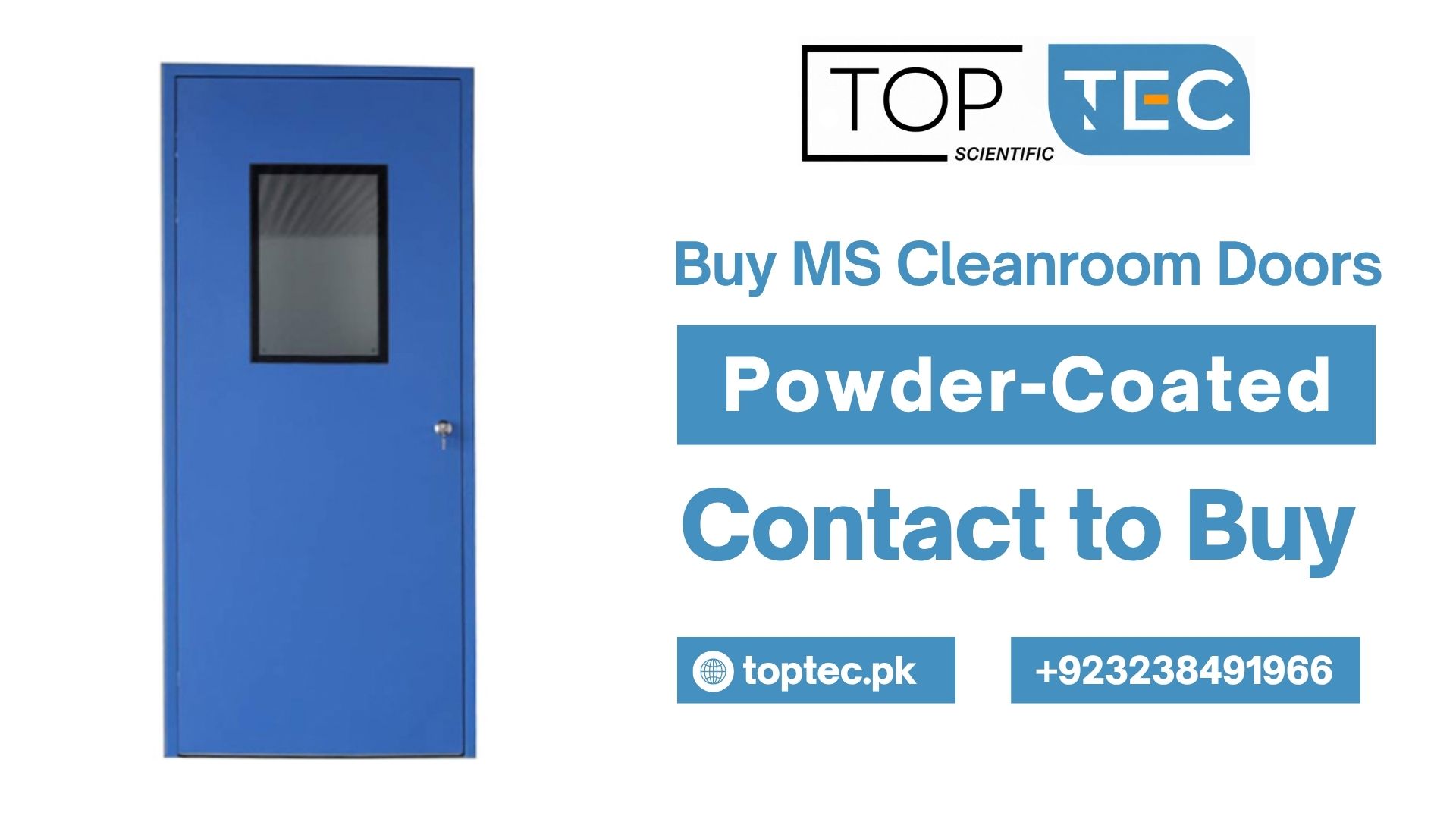
Buy MS cleanroom doors for your facility. Powder-coated, GMP-compliant, and airtight designs. Compare models and request a free quote today.
Look, I’ve been working with pharmaceutical facilities and controlled environment labs across Pakistan for years now, and I can tell you that cleanroom doors are one of those things that get overlooked way too often. Everyone focuses on the fancy air handling systems and HEPA filters, but honestly, if your doors aren’t working properly, all that expensive equipment is compromised. I’ve walked into facilities with top-tier cleanroom infrastructure that’s been undercut by poor door choices.
When I started helping facility managers with Buy MS Cleanroom Doors decisions, I realized there’s a lot of confusion about materials and finishes. MS stands for mild steel, and a lot of people think it’s inferior to stainless steel. That’s actually not true if you do it right. Mild steel with proper powder coating is cost-effective, performs excellently, and is the practical choice for most pharmaceutical operations in Pakistan.
So I’m putting together this complete guide about gmp cleanroom doors made from mild steel with powder coating. I’m going to explain why this material choice makes sense, how powder coating works, what you need to know about specifications, and why choosing a quality manufacturer like TOPTEC Scientific matters when you Buy Laboratory Furniture. If you’re setting up or upgrading a cleanroom, this is essential reading.
Understanding MS Cleanroom Doors
Let me start with what MS actually is. Mild steel is just regular steel – iron with a small amount of carbon. It’s not stainless steel, which has chromium and nickel added for corrosion resistance. MS is simpler, less expensive, and honestly, more than adequate for cleanroom applications when properly finished.
Here’s what I’ve learned from experience. MS doesn’t work well bare – it rusts, especially in pharmaceutical environments where humidity and cleaning with various solutions happen regularly. But when you add proper powder coating, it becomes durable, professional-looking, and performs great.
When you Buy MS Cleanroom Doors, you’re getting cost-effectiveness without sacrificing performance. That matters for facility budgets, especially when you need multiple doors.
I consulted at a pharmaceutical facility once that was debating between stainless steel and properly coated MS doors. They went with MS because of budget. That was five years ago. Those doors are still performing flawlessly. Same facility compared to another that went stainless steel – the performance is identical, but the MS facility spent about 40% less money.
Powder Coating Technology for Cleanroom Doors
Powder coating is the key to making MS doors work in controlled environments. It’s not just paint – it’s a specialized finishing process.
Here’s how powder coating actually works. Dry powder particles are electrically charged and sprayed onto the door surface. The powder sticks because of the electrical charge. Then the door goes into an oven where heat fuses the powder into a smooth, hard coating. This creates a finish that’s incredibly durable.
For cleanroom doors for pharma, powder coating offers several advantages:
- Smooth finish that doesn’t harbor particles
- No drips or runs like liquid paint might create
- Uniform thickness across all surfaces
- Excellent adhesion to the steel
- Resistant to common disinfectants and chemicals
- Easy to maintain and clean
I’ve seen cleanroom doors with standard paint finish that started peeling within a couple years. Powder coating doesn’t do that. It bonds to the steel and stays put.
When you Buy MS Cleanroom Doors with powder coating, you’re getting a finish engineered for pharmaceutical environments, not just a pretty color.
GMP Compliance and MS Doors
GMP – Good Manufacturing Practice – doesn’t specify that you must use stainless steel. It specifies that surfaces must be smooth, non-porous, easy to clean, and maintain integrity. MS doors with proper powder coating meet all these requirements.
Here’s what GMP actually requires for cleanroom infrastructure:
Surface integrity – the surface shouldn’t degrade or shed particles. Properly powder-coated MS absolutely meets this requirement.
Cleanability – surfaces must be easily cleaned with standard disinfectants. Powder coating is designed for this. It resists most pharmaceutical disinfectants without damage.
Non-porosity – surfaces shouldn’t trap particles or microorganisms. Powder-coated finishes are non-porous.
Durability – the material should last for extended periods without deterioration. Quality powder-coated MS doors last 10-15+ years.
When you Buy Laboratory Furniture doors for GMP operations, properly finished MS meets all requirements. Regulatory inspectors won’t fail you for choosing MS instead of stainless, as long as the door system performs its function.
I’ve been through regulatory inspections at facilities using MS cleanroom doors. Never once did inspectors object. They care about whether doors seal, whether they’re clean, whether they’re maintained – not what material they’re made from.
When you Buy MS Cleanroom Doors that are properly specified and maintained, you’re supporting GMP compliance.
Cost-Effectiveness of MS vs Other Materials
This is where Buy MS Cleanroom Doors really makes sense financially.
Comparing materials for cleanroom doors:
Mild Steel with Powder Coating – typically 100% of baseline cost (this is the reference point)
Stainless Steel – typically 150-200% of MS cost
Aluminum – typically 120-140% of MS cost
Wood with plastic laminate – typically less expensive but not suitable for pharma environments
Over a facility with 10-15 cleanroom doors, choosing MS instead of stainless saves 30-40% on material cost. That’s significant money that can go toward other facility needs.
Maintenance costs are actually similar between properly finished MS and stainless. Both need regular cleaning. Both last a long time. The main difference is the material cost.
When you Buy MS Cleanroom Doors instead of stainless, you’re making a practical financial decision without compromising performance.
I worked with a pharmaceutical manufacturer that was planning a major cleanroom expansion. They compared MS with powder coating vs stainless steel. On 20 cleanroom doors, the MS option saved approximately 600,000 PKR while providing identical performance. They went with MS and invested the savings into better environmental monitoring systems. Smart choice.
Powder Coating Specifications for Pharma
Not all powder coating is created equal. For pharmaceutical cleanrooms, specifications matter.
Quality powder coating systems for gmp cleanroom doors should include:
Primer coat – usually epoxy-based, provides corrosion resistance and adhesion. Minimum 50-75 microns thickness.
Topcoat – polyester or epoxy topcoat, provides color, appearance, and chemical resistance. Minimum 75-100 microns thickness.
Total system thickness – should be 150-200 microns total. This thickness provides durability and protection.
Color – typically white or light colored. White shows contamination, is psychologically associated with cleanliness, and is easier to keep clean than dark colors.
Finish – should be smooth and glossy or semi-glossy. Glossy finishes resist particles better than matte.
When you Buy MS Cleanroom Doors, insist on proper powder coating specifications. Don’t accept generic powder coating – it needs to be specified for pharmaceutical use.
TOPTEC Scientific uses specialized powder coating systems designed for pharmaceutical environments, not standard commercial coating.
Door Construction and Design
The underlying construction of MS cleanroom doors is important.
Steel Gauge and Thickness
Quality cleanroom doors for pharma use:
- Minimum 1.2mm steel for main door panels
- Reinforcement around hinges and hardware mounting points
- Frame material of equal or greater thickness
- Proper welding for structural integrity
Thin steel feels flimsy and can flex when opened, compromising sealing. Quality doors use adequate material thickness.
Frame Design
The frame should:
- Be properly squared and reinforced
- Have provisions for gasket mounting
- Be designed to mount securely to the wall structure
- Include stops that ensure proper door alignment
- Support hinges securely
Frame design is often overlooked but critical for door performance.
Door Panel Construction
The door panel should:
- Be flat and true (not warped)
- Have reinforcing ribs or internal structure for strength
- Support gasket compression without deformation
- Be designed for the specific door size
Large doors need better reinforcement than small doors to prevent flexing.
Gasket Systems for MS Doors
The gasket is what actually provides sealing in a cleanroom door. Material choice matters.
Quality gaskets for gmp cleanroom doors are typically:
Silicone – excellent chemical resistance, temperature resistance, used in most pharmaceutical applications
EPDM – good for humidity resistance, commonly used
Neoprene – good overall performance, good chemical resistance
Cheap doors use basic rubber that degrades quickly. Quality doors use elastomers specifically selected for pharmaceutical environments.
Gasket design should include:
- Multiple seal points (not just a single line)
- Proper compression to maintain sealing over time
- Replaceable gaskets (you can replace them without replacing the door)
- Design that prevents the gasket from being pushed out
When you Buy MS Cleanroom Doors, examine the gasket specification. It’s a key component affecting performance.
Hardware and Mechanisms
The hardware on MS cleanroom doors needs to be appropriate for controlled environments.
Hinges
Should be:
- Stainless steel or powder-coated steel
- Heavy-duty for smooth, quiet operation
- Properly aligned for door sealing
- Cleanable and low-maintenance
Door Closer
Most cleanroom doors need automatic closers that:
- Close the door smoothly without slamming
- Maintain consistent closing speed
- Prevent doors from being left open
- Hold the door closed with sufficient force for sealing
A poor door closer that slams is annoying and disrupts air pressure in the cleanroom.
Observation Window
If included, should be:
- Tempered glass (not plastic, which can degrade)
- Properly sealed so it doesn’t leak
- Sized appropriately for visibility
- Durable and easy to clean
Lock Mechanism
Should:
- Provide security for controlled access
- Integrate with facility access systems if needed
- Be easy to operate
- Support emergency egress requirements
Installation of MS Cleanroom Doors
Proper installation is critical. Even a perfectly designed door won’t work if installed poorly.
Preparation
Before installation:
- Verify the opening dimensions are correct
- Check that the wall structure is sound and square
- Plan for any utilities (electrical, air handling) that need to be routed
- Ensure the installation area is clean
Frame Mounting
The frame must be:
- Installed perfectly plumb and square
- Secured solidly to the building structure
- Sealed at all edges to prevent air leakage
- Integrated with any air handling systems
Out-of-square frame installation is a common cause of sealing failure. I’ve seen doors that couldn’t seal properly because the frame was installed crooked.
Gasket Installation
Gaskets should be:
- Properly compressed when the door closes
- Not pinched or damaged during installation
- Positioned so they compress evenly
- Protected during installation
Testing
After installation, the system should be tested for:
- Pressure differential (if part of air handling)
- Particle leakage (if required for your cleanroom class)
- Door operation smoothness
- Hardware function
- Visual inspection of sealing
Testing before acceptance catches problems early.
Maintenance of MS Cleanroom Doors
Your Buy MS Cleanroom Doors investment needs proper maintenance to provide long-term performance.
Cleaning Procedures
Regular cleaning keeps doors performing:
- Daily wiping with appropriate disinfectant
- Weekly more thorough cleaning
- Monthly detailed inspection
Use disinfectants compatible with your powder coating. Avoid harsh solvents that might damage the finish.
Gasket Care
Gaskets need:
- Regular inspection for degradation
- Cleaning to maintain flexibility
- Occasional light lubrication with appropriate materials
- Replacement when showing wear (typically 3-5 years)
Worn gaskets are the primary cause of sealing failure in older doors.
Hardware Inspection
Regularly check:
- Hinges for smooth operation
- Door closer function
- Lock mechanism operation
- Handle tightness
Tighten loose hardware. Lubricate hinges if needed. Replace worn components before they fail.
Seal Testing
Periodically test:
- Pressure differential (if applicable)
- Door sealing integrity
- Air leakage around edges
Annual testing is typical for compliance.
Powder Coating Durability
How long does powder coating last on MS doors?
With proper maintenance, powder coating on cleanroom doors typically lasts 10-15 years or more. I’ve seen well-maintained powder-coated doors that are 15+ years old and still look good.
Factors affecting durability:
- Quality of the coating system
- Cleanroom environment (humidity, chemicals)
- Cleaning procedures (using compatible disinfectants)
- Physical damage (preventing impact damage)
If coating becomes damaged or worn, it can be repaired or the door can be re-coated. This is much cheaper than replacing the entire door.
Comparing MS to Stainless Steel Practically
Yes, I’ll be honest about both options.
MS with Powder Coating:
- Lower cost (40% less than stainless typically)
- Excellent performance when properly finished
- Easy to repair or re-coat if needed
- Requires more attention to maintenance
- Excellent for most pharmaceutical applications
Stainless Steel:
- Higher cost
- Superior corrosion resistance in harsh environments
- Lower maintenance
- Better for coastal or very humid facilities
- Often overkill for typical pharmaceutical operations
For most Pakistani pharmaceutical facilities, MS with proper powder coating is the smart choice. For coastal facilities or extremely humid environments, stainless might justify the extra cost.
When you Buy MS Cleanroom Doors, you’re making a practical choice that’s cost-effective without sacrificing performance.
ISO Cleanroom Standards
Depending on your cleanroom classification, door requirements vary.
ISO Class 5 cleanrooms (strictest) require:
- Very tight sealing
- Minimal air leakage
- Premium gasket systems
- Possibly double-door pass-throughs
ISO Class 6-7 cleanrooms (common for pharma) require:
- Good sealing
- Controlled door operation
- Proper gaskets
- Integration with air handling
ISO Class 8 cleanrooms (general controlled):
- Basic sealing
- Standard door operation
- Simple gaskets
Most gmp cleanroom doors you see are for ISO Class 6 or 7, where MS with powder coating is completely adequate.
Specification Development
Before purchasing, develop clear specifications.
Should include:
- Door size and thickness
- Single or double swing configuration
- Observation window requirements
- Hardware specifications
- Powder coating system and thickness
- Gasket material and compression
- Testing requirements
- Maintenance requirements
Clear specifications ensure you get what you need.
Common Issues and Solutions
Issue: Door won’t seal properly
- Check gasket for degradation or compression issues
- Verify frame is square and aligned
- Check that hinges are supporting door properly
- May need gasket replacement
Issue: Door is hard to open
- Check hinges for binding
- Verify door closer adjustment
- Check for warping of door panel
- May need hinge lubrication
Issue: Paint/coating is chipping
- Inspect for impact damage
- If minor, can be touched up
- If extensive, may need re-coating
- Identify cause of damage and prevent recurrence
Issue: Squeaking or noise
- Usually hinge issue
- Lubricate hinges
- Check hinge alignment
- May need hinge replacement
Environmental Monitoring Integration
Modern cleanrooms often have environmental monitoring. Doors should:
- Integrate with air handling monitoring
- Support pressure differential sensors
- Not interfere with environmental monitoring systems
- Allow easy access for sensor placement
When you Buy Laboratory Furniture doors, consider how they’ll integrate with your monitoring systems.
Why Choose TOPTEC Scientific
When you Buy MS Cleanroom Doors for your pharmaceutical facility, manufacturer choice matters.
TOPTEC Scientific manufactures MS cleanroom doors in Pakistan, specifically designed for pharmaceutical and controlled environment use.
Here’s why they’re worth considering:
Local manufacturing – no import markups, equipment optimized for Pakistan’s climate
GMP understanding – they manufacture for regulated facilities and understand requirements
Quality powder coating – specialized coating for pharmaceutical use, not generic commercial
Proper construction – adequate steel gauge, proper reinforcement, quality welding
Local support – installation, training, and maintenance support available
Competitive pricing – quality equipment without international costs
Documentation – specifications and testing support for compliance
Staff Training and Procedures
Your team needs to know how to operate and maintain doors properly.
Training should cover:
- Proper door opening and closing (not slamming)
- Why sealing matters and how it works
- Cleaning and maintenance procedures
- What to watch for in door condition
- When to request service
Well-trained staff extends door life and maintains performance.
Regulatory Inspection Readiness
When inspectors visit, they’ll check:
- Are doors sealing properly?
- Are they clean and well-maintained?
- Do they support contamination control?
- Is documentation available?
- Are staff trained on proper use?
Quality doors from reputable manufacturers, properly installed and maintained, support regulatory compliance.
Planning for Facility Expansion
When you Buy MS Cleanroom Doors, think about the future.
Questions to consider:
- Can additional doors be added if the facility expands?
- Will the door design work for different cleanroom configurations?
- Are spare parts available long-term?
- Can the manufacturer provide ongoing support?
Planning ahead prevents expensive modifications later.
Conclusion
MS Cleanroom Doors with proper powder coating are a cost-effective, high-performance solution for pharmaceutical cleanrooms.
They meet GMP requirements. They work with all ISO cleanroom classifications. They perform as well as more expensive materials when properly specified and maintained.
When you Buy MS Cleanroom Doors instead of stainless, you’re making a practical financial decision without compromising performance.
Proper powder coating specification, quality construction, appropriate hardware, and good installation ensure your doors work reliably.
TOPTEC Scientific manufactures quality gmp cleanroom doors from MS with professional powder coating specifically for Pakistani pharmaceutical facilities.
Choose quality equipment. Install properly. Maintain diligently. Your cleanroom doors will provide reliable contamination control for years.
When you Buy Laboratory Furniture doors for your cleanroom, MS with powder coating is the smart, cost-effective choice that delivers performance without the premium price tag.
