

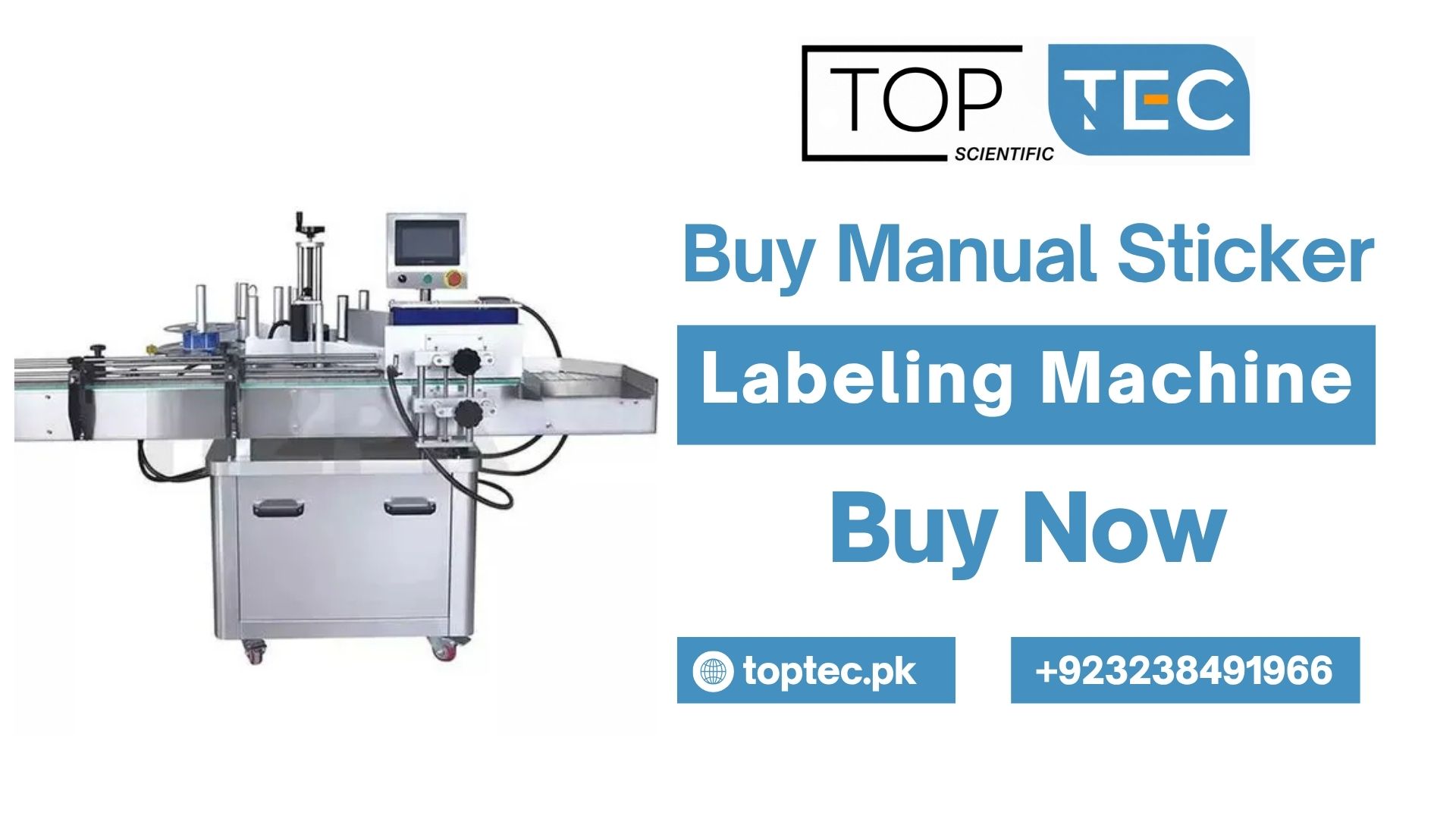
Manual sticker labeling machine for quick, accurate labeling of bottles, jars, and containers. Compact design, easy setup, and great for small-scale production.
I remember visiting a small pharmaceutical packaging unit outside Lahore a couple of years ago. The production line itself was decent — filling, capping, sealing all running smoothly. Then I got to the labeling station and watched three operators manually peeling stickers off backing sheets, squinting at bottles, and trying to get the labels straight. Two out of every five labels had visible air bubbles or were slightly crooked. The floor supervisor shrugged and said, “It’s fine, the customer won’t notice.”
And the thing is, a basic Manual Sticker Labeling Machine would fix almost all of this in a single afternoon. But nobody bought one because they didn’t know what specs to look for, or they saw a spec sheet online that might as well have been written in another language, or they assumed it would cost way more than it actually does.
So I figured I’d write this out properly. Not the usual generic “here are 10 things to consider” list that you find on every equipment blog — an actual practical breakdown of what matters when you’re trying to figure out where to buy a manual labeling machine in Pakistan and how to make sure you don’t end up with something that sits in a corner collecting dust.
Let’s Start With the Specs That Actually Matter
I’m going to skip the stuff that sounds impressive on paper but doesn’t change anything in real use. You don’t need to know the tensile strength of the roller shaft. You need to know whether your bottles will fit in the thing.
Container diameter. This is the big one. Seriously, if you take away nothing else from this article, measure your bottles before you buy anything. I’ve watched a facility manager order a manual label applicator online based on a product photo that looked right, and when it arrived, his 120ml wide-mouth jar literally couldn’t fit between the guide rails. The machine was built for vials. He ended up giving it to his brother’s small cosmetics setup and buying a second one that actually fit his containers. Expensive lesson.
Most round-bottle labelers handle somewhere in the 20mm to 100mm diameter range. Some go wider. The point is, get a caliper — they cost like 500 rupees — and measure your actual containers. Not the size printed on the box from your bottle supplier. The physical thing sitting on your table.
Label dimensions. Same idea. Your label roll has a width and a length, and the machine’s feed mechanism can only handle so much. If your wrap-around label is 130mm wide and the machine tops out at 100mm, you’re stuck. Check the spec sheet for “maximum label width” and “maximum label length” and compare against what your label printer actually delivers.
Build material. Look, if you’re labeling boxes in a dry warehouse, a plastic-bodied labeler is probably fine. But if you’re in a pharmaceutical or food production area where someone is going to spray IPA on every surface at the end of every shift, plastic is going to get brittle and crack within a year or two. Stainless steel or at least anodized aluminum is what you want. It costs a bit more upfront but it actually lasts.
Speed claims — take them with a grain of salt. I’ve seen spec sheets for fully hand-operated labelers claiming 50 or 60 bottles per minute. Maybe. If your operator is an Olympic athlete and the stars align. In real life, a comfortable sustainable pace on a Manual Sticker Labeling Machine is more like 10 to 20 bottles per minute. That’s still way faster than hand application, so don’t feel like you’re losing out. Just don’t plan your production schedule around the optimistic number on the brochure.
Label roll core size. Boring but important. Most label rolls come on a 76mm (3-inch) core. Some come on smaller 25mm or 40mm cores. If the machine’s spindle doesn’t match your roll core, you’ll be improvising with cardboard tubes and tape, which is exactly as annoying as it sounds. Confirm this before ordering.
Where Do You Actually Buy One in Pakistan?
This is the part most people get stuck on, and I understand why. If you search online, you get a mix of Alibaba listings with questionable shipping terms, a few local trading companies marking up imported machines by 80 percent, and the occasional Daraz listing with no specs at all and a product photo that clearly belongs to a different machine.
None of those options are great.
Here’s what I’d actually recommend — and this might surprise some people because they know the company for a different product category. TOPTEC Scientific is a Pakistani manufacturer that most people in the pharma and research space associate with laboratory furniture. Fume hoods, laminar flow cabinets, cleanroom wardrobes, lab benches, that kind of thing. They’ve been manufacturing locally for years and their stuff is in a lot of facilities across the country.
What fewer people know is that TOPTEC also supplies production equipment — including manual labeling machine units for small and medium operations. And honestly, this makes a lot of practical sense when you think about how facilities actually get set up.
When a new pharmaceutical unit or a QC lab is being built out, the procurement list is long. You need furniture, you need cleanroom equipment, you need small production tools. If you’re buying from five different suppliers — one for furniture, one for the labeler, one for mixing tanks, one for storage, one for random bits off the internet — you end up with a coordination nightmare. Different delivery dates, different warranty terms, different people to call when something breaks.
When you Buy Laboratory Furniture and production equipment from a single local manufacturer, all of that simplifies. One invoice. One delivery. One technical team that actually knows what’s in your facility because they put most of it there.
I’ve talked to facility managers who sourced their entire setup through TOPTEC — from the stainless steel workbenches to the manual label applicator at the end of the packaging line — and the thing they mention most often isn’t even the price (though that’s a factor). It’s the fact that when something needs attention, they can actually get someone on the phone who understands their setup. Try doing that with a machine you bought off a trading company that imported it from a factory in Guangzhou they’ve never visited.
A Few Things I’d Do Differently If I Were Buying Again
I’m not going to pretend I’ve never made a bad equipment purchase. I have. And watching other people make the same mistakes over the years has given me some opinions that might save you time.
Don’t buy based on the product photo. I know it’s tempting. The machine looks clean, stainless steel, professional. But photos don’t tell you whether the guide rails will actually open wide enough for your containers or whether the label feed mechanism handles your specific label stock without jamming. Ask for a video demonstration at minimum. Better yet, if the supplier is local — and TOPTEC is — go see the machine in person with your actual bottles and labels. Ten minutes of hands-on testing tells you more than any spec sheet.
Be honest about your volume. A Manual Sticker Labeling Machine is perfect for a few hundred to maybe two or three thousand units per day. It’s not designed for 20,000 bottles per shift. If that’s your volume, you need a semi-auto or fully automatic system, and trying to make a manual machine keep up will just frustrate your operators and create a bottleneck. On the flip side, if you’re labeling 200 bottles a day, don’t let someone talk you into a semi-automatic system that costs five times more than you need to spend.
Think about label material. This one catches people off guard. Standard paper labels apply easily on most machines. But if you use clear transparent labels (which are popular for cosmetics and premium pharma products), they’re much harder to apply without visible air bubbles. Some labelers handle this better than others. Metallic labels and thick vinyl labels also behave differently. Tell your supplier exactly what label material you’re using before you finalize the order.
Ask about spare parts. Rollers wear out. Springs lose tension. Guide rails get knocked out of alignment. When this happens six months from now, you want to know that replacement parts are available locally and not sitting in a warehouse in Shenzhen with a four-week shipping estimate. This is another area where buying from a local manufacturer like TOPTEC has a real practical advantage over importing.
The Lab Connection (Because It’s More Relevant Than It Sounds)
You might be wondering why a company known for laboratory furniture is selling labeling machines. And the answer is actually pretty straightforward once you think about how labs work day to day.
Every sample in a stability study needs a label. Every reagent bottle on a shelf needs identification. Every reference standard in cold storage needs batch numbers and expiry dates that stay legible for months. In a QC lab preparing for ISO 17025 accreditation or a regulatory inspection, the quality of your labeling is part of the overall impression of how well the lab is managed. Handwritten labels that are peeling off vials don’t exactly inspire confidence.
A small manual label applicator in the lab solves this quietly and effectively. It’s a minor line item in the context of a full lab setup — probably less than what you’d spend on a single analytical column — but it eliminates a daily frustration and makes the facility look more professional during audits.
Facilities that Buy Laboratory Furniture from TOPTEC for a new lab buildout often add a labeling machine to the same order. It makes logistical sense, and bundling purchases usually gets you better pricing than buying everything separately.
Some Questions People Actually Ask Me
“Is it worth buying a manual machine or should I just keep labeling by hand?”
If you’re doing fewer than maybe 50 labels a day, honestly, hand application is probably fine. The investment isn’t worth it at that volume. But once you’re past a few hundred labels daily, the time savings and quality improvement from a manual labeling machine are noticeable within the first week. Your operators will thank you.
“How much should I expect to spend?”
This depends on the model and specifications, but locally manufactured manual labelers in Pakistan are significantly cheaper than imported equivalents — often 40 to 60 percent less once you factor in the import costs that get baked into the price of foreign machines. For a specific quote based on your container and label specs, reach out to TOPTEC directly. They’ll give you a number that actually makes sense for the local market.
“Will it work with my weird-shaped bottles?”
Maybe. Round and flat-sided containers are straightforward. Oval, tapered, or irregular shapes are trickier and may need custom guides or a different machine type entirely. This is exactly the kind of thing to test in person before buying. Bring your weirdest bottle to the demonstration and see what happens.
“How long do these machines last?”
A well-built stainless steel manual labeler with basic maintenance should easily last five to ten years. There’s not much to break — it’s a mechanical device with rollers and springs, not a computer. Keep the adhesive residue cleaned off the rollers, don’t drop it, and it’ll outlast a lot of the more expensive equipment in your facility.
Bottom Line
Look, a Manual Sticker Labeling Machine isn’t the most exciting piece of equipment you’ll ever buy. Nobody puts one on the cover of their company brochure. But it solves a real, daily, annoying problem that affects your product quality and your compliance standing more than most people realize.
The key is buying the right one for your specific situation — correct container range, correct label size, appropriate build quality for your environment — and buying it from a source that can actually support you after the sale.
For anyone in Pakistan, TOPTEC Scientific is worth a conversation. They manufacture locally, they understand the regulatory environment that Pakistani facilities operate in, and when you Buy Laboratory Furniture or production equipment from them, you’re dealing with a team that’s physically accessible rather than separated by twelve time zones and a customs clearance process.
Measure your bottles. Check your label dimensions. Be realistic about your volume. And don’t overthink it — this is one of those purchases that pays for itself faster than almost anything else on your equipment list.
