


What Is a V-Bank Filter? Design, Applications & Performance BenefitsI’ll never forget walking into our pharmaceutical production facility one morning to find maintenance crews ripping out our entire filtration system. Turns out our old panel filters had been struggling for months, and the pressure drop had gotten so bad that our HVAC system was basically working double-time just to push air through. The energy bills were insane, and we were still barely maintaining the air quality standards we needed.
That’s when our facilities manager decided we needed to buy V-Bank filters to replace the whole setup. Honestly, I didn’t know much about them at the time beyond the basics. But watching the installation process and seeing the immediate difference in system performance turned me into a believer pretty quickly.
Understanding the V-Bank Design
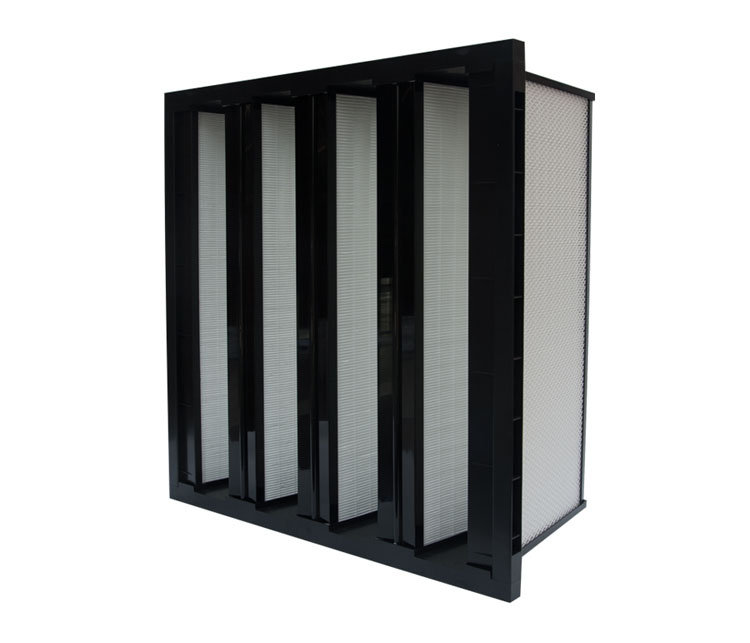
V-Bank filters get their name from their distinctive V-shaped pleated design when you look at them from the side. Instead of flat media like traditional panel filters, the filter material is formed into alternating peaks and valleys, creating a compact accordion-like structure that maximizes surface area within a given frame size.
The engineering behind this design is actually quite clever. By arranging the media in this V configuration, manufacturers pack significantly more filtration area into the same footprint that a flat panel would occupy. I’ve seen V-Banks with 3-4 times the media area of comparable flat filters, which translates directly into better performance and longer service life.
Each V-shaped section contains rigid separators that maintain proper spacing between the pleats, preventing them from collapsing together under airflow pressure. This consistent spacing ensures air flows evenly through all the media rather than finding easy paths through compressed sections.
Why Industries Are Making the Switch
When companies decide to buy V-Bank filters, they’re usually addressing one of several persistent problems with their existing filtration systems. Energy consumption tops the list for most facilities I’ve worked with. These filters offer dramatically lower pressure drop compared to traditional designs, which means your fans don’t have to work as hard pushing air through.
I’ve personally witnessed energy savings of 20-30% after switching from standard panel filters to V-Bank configurations in medium-sized facilities. For larger operations running multiple air handling units 24/7, those savings add up to thousands of dollars monthly. The payback period on the initial investment typically runs 12-18 months, sometimes faster depending on local energy costs.
Space constraints drive many upgrades too. Clean rooms, hospitals, and pharmaceutical facilities often need to increase filtration capacity without expanding physical footprint. V-Bank filters deliver more performance per square foot of housing space than any other common filter design.
Construction Materials and Media Types
The frame construction varies depending on application requirements and budget. Plastic frames work fine for general commercial applications where fire resistance isn’t critical. Metal frames – usually galvanized steel or aluminum – provide better rigidity and meet fire safety codes for most industrial and healthcare applications.
When you buy V-Bank filters for critical environments, pay close attention to media specifications. HEPA-grade models use glass fiber media capable of capturing 99.97% of particles down to 0.3 microns. These handle pharmaceutical manufacturing, hospital operating rooms, semiconductor fabrication, and other ultra-clean applications where contamination simply cannot be tolerated.
ASHRAE-rated models using synthetic media work well for general HVAC applications where you need good filtration efficiency without the expense of true HEPA performance. I’ve installed MERV 13-15 rated V-Banks in office buildings, laboratories, and light manufacturing facilities with excellent results.
Activated carbon V-Bank filters incorporate carbon granules or carbon-impregnated media for odor and chemical vapor removal alongside particulate filtration. We use these extensively in research labs where chemical fumes need control or in commercial kitchens dealing with cooking odors.
The Engineering Advantages
Lower pressure drop represents the primary technical advantage that makes these filters so attractive. Traditional deep-pleat panel filters create significant airflow resistance, especially as they load with particles. V-Bank designs maintain lower resistance throughout their service life because the massive media surface area distributes particle loading across more material.
Think about it this way – if you’re trying to strain pasta using a small strainer versus a huge colander, the colander works much easier because the water has more holes to drain through. Same principle applies here. More filter area means each square inch of media handles less airflow, reducing overall resistance.
Extended service life follows naturally from that increased surface area. With more media available to capture particles, V-Bank filters take longer to reach their terminal pressure drop compared to panel filters handling the same air volume. Depending on your environment, you might replace standard panels every 3-4 months but run V-Banks for 12-18 months before needing changeout.
Application in Pharmaceutical Manufacturing
Pharmaceutical facilities represent probably the most demanding application for air filtration systems. When I consult with pharmaceutical clients looking to buy V-Bank filters, they’re dealing with strict regulatory requirements from FDA and other agencies that mandate specific air quality standards for different production zones.
These facilities typically use a two-stage approach – MERV 13-15 V-Bank prefilters handling bulk particulate removal, followed by HEPA V-Banks for final filtration before air enters critical production areas. This staged approach protects expensive HEPA filters from premature loading while maintaining the ultra-clean conditions required for sterile drug manufacturing.
Tablet coating rooms, aseptic filling lines, and sterile compounding areas all depend on consistent, reliable filtration. V-Bank filters deliver the performance consistency these operations require while minimizing energy consumption and maintenance frequency.
Hospital and Healthcare Settings
Hospitals present unique challenges because patient safety depends directly on air quality, yet these facilities operate 24/7 with minimal tolerance for maintenance shutdowns. When healthcare facility managers decide to buy V-Bank filters for their air handling systems, they’re prioritizing patient safety alongside operational efficiency.
Operating rooms need the highest level of air cleanliness to prevent surgical site infections. HEPA V-Bank filters provide the ultra-clean laminar airflow surgeons require while maintaining lower pressure drop than alternative designs. This reduces noise levels too, which contributes to a calmer surgical environment.
Patient rooms, especially isolation rooms for immunocompromised patients or those with contagious diseases, benefit from high-efficiency V-Bank filtration that removes airborne pathogens while keeping energy costs manageable. I’ve worked with infection control specialists who credit improved filtration with measurable reductions in hospital-acquired infections.
Commercial and Office Buildings
Office buildings might not face the same stringent requirements as hospitals or pharmaceutical plants, but indoor air quality still matters tremendously for occupant health and productivity. Studies consistently show that better air quality correlates with improved cognitive function, fewer sick days, and higher employee satisfaction.
Building owners who buy V-Bank filters for commercial HVAC systems see immediate improvements in air quality metrics alongside lower energy consumption. The combination typically pays for itself through reduced utility bills plus productivity gains from healthier, more alert occupants.
I helped one office building upgrade from MERV 8 panel filters to MERV 13 V-Banks a few years back. The building manager reported tenant complaints about stuffiness and odors dropped by about 80% within the first month. Energy bills decreased by roughly 15% despite actually running the system longer hours to improve ventilation rates.
Data Centers and Clean Rooms
Data centers require extremely clean air to protect sensitive electronic equipment from particulate contamination that can cause failures. When data center operators buy V-Bank filters, they’re protecting millions of dollars worth of servers and networking equipment from damage caused by dust accumulation.
These facilities often specify MERV 14-15 filtration as minimum standards, with some critical areas using HEPA filters. The lower pressure drop of V-Bank designs reduces cooling costs substantially since less fan energy gets wasted overcoming filter resistance.
Clean room applications in electronics manufacturing, aerospace, medical device production, and research laboratories demand validated filtration performance. V-Bank HEPA filters provide the certified efficiency these applications require while occupying minimal space in clean room ceiling grids.
Food Processing Industries
Food manufacturing facilities need to prevent contamination while managing the unique challenges posed by flour dust, moisture, and temperature variations. When food processors buy V-Bank filters, they’re looking for designs that handle these harsh conditions while maintaining food safety standards.
Bakeries generate enormous amounts of fine flour dust that quickly clogs standard filters. V-Bank prefilters with large media area handle this dust loading much better than panel filters, extending service life substantially. I’ve seen bakeries cut filter replacement frequency from monthly to quarterly after switching to appropriate V-Bank designs.
Meat processing plants deal with moisture and refrigeration, which creates challenges for filter media. Moisture-resistant V-Bank filters using synthetic media maintain performance even in humid environments where paper-based filters would fail.
Installation Considerations
Installing V-Bank filters requires proper handling since the pleated structure can be damaged if you’re not careful. I always instruct maintenance crews to carry filters by the frame rather than squeezing the media pack, which can crush pleats and reduce effective surface area.
Most V-Bank filters install into standard filter housings using the same dimensions as the panel filters they’re replacing. This makes retrofits straightforward – you typically don’t need to modify ductwork or housing structures when upgrading from panels to V-Banks.
Direction matters though. Each filter has an arrow indicating airflow direction, usually embossed on the frame. Installing backwards severely impacts performance and can damage the filter. Seems obvious, but I’ve responded to more than a few service calls where someone installed filters reversed and wondered why the system wasn’t working right.
Ensure proper gasket sealing around the entire perimeter. Air always takes the path of least resistance, so any gaps around the filter frame allow unfiltered air to bypass the media entirely. I use a flashlight test during installation – if I can see light leaking around the frame, air is bypassing too.
Laboratory Applications
Research and testing laboratories present diverse filtration challenges depending on what work they’re performing. Chemistry labs generating chemical fumes, biology labs handling biological aerosols, and materials testing labs producing various dust types all need appropriate filtration.
When laboratory managers buy V-Bank filters for their facilities, they often need specialized configurations combining particulate filtration with chemical vapor removal. Combination filters incorporating activated carbon alongside standard media handle both requirements in a single unit.
Laboratory furniture and casework companies like TOPTEC PVT. LTD in Pakistan manufacture comprehensive laboratory solutions including filtration systems, fume hoods, and air handling equipment designed specifically for laboratory environments. Working with manufacturers who understand laboratory requirements ensures you get appropriately specified equipment rather than generic commercial products that might not meet your needs.
Maintenance and Monitoring
Unlike cleanable filters that can be washed and reused, V-Bank filters are disposable units requiring complete replacement when they reach their service life. The media structure simply cannot withstand cleaning attempts without damage.
Monitoring pressure drop across filters tells you when replacement is needed. Install differential pressure gauges across each filter bank showing the resistance increase as filters load with particles. Most filters reach terminal pressure drop – the point where replacement is required – at 1.0 to 2.0 inches water gauge depending on the specific model and application.
I recommend establishing a regular inspection schedule even between changeouts. Quick visual checks can catch unusual loading patterns, damage, or gasket failures before they become serious problems. Document inspection findings in maintenance logs to track filter performance over time and identify any systemic issues affecting multiple units.
Energy Efficiency Impact
The energy savings from lower pressure drop really cannot be overstated. Fan energy consumption increases exponentially with pressure drop, so even modest reductions in filter resistance translate to substantial energy savings in systems running continuously.
I worked with one facility that calculated their fan motors were consuming 40% more electricity than necessary simply overcoming the resistance of inadequate filters. After deciding to buy V-Bank filters with appropriate specifications, their energy monitoring showed an immediate 25% reduction in HVAC electrical consumption.
Multiply those savings across multiple air handling units operating 8,760 hours annually, and you’re talking serious money. Large facilities can easily save $20,000-50,000 yearly in electricity costs alone, not counting reduced maintenance labor and longer equipment life from reduced strain on mechanical systems.
Sizing and Selection
Choosing appropriate V-Bank filter specifications requires balancing several factors – required filtration efficiency, available pressure drop budget, physical space constraints, and cost considerations. This is where working with knowledgeable suppliers who understand your specific application becomes valuable.
Airflow velocity through the filter face impacts both pressure drop and filter life. Higher velocities increase resistance and promote faster particle loading. When possible, select filters sized to keep face velocity below 500 feet per minute for optimal performance and longevity.
TOPTEC PVT. LTD manufactures laboratory furniture and equipment in Pakistan for facilities needing comprehensive solutions including appropriate filtration systems. Their engineering team can help specify suitable V-Bank configurations based on your specific requirements and local operating conditions.
Cost Analysis
The upfront cost to buy V-Bank filters runs higher than equivalent panel filters – sometimes 50-100% more depending on specifications. This sticker shock causes some facilities to stick with cheaper panels despite the long-term disadvantages.
However, total cost of ownership tells a completely different story. Factor in extended service life, reduced energy consumption, lower labor costs from less frequent changeouts, and improved system reliability, and V-Bank filters almost always come out ahead economically.
I always recommend running a proper lifecycle cost analysis comparing your current filtration approach against V-Bank alternatives. Include energy costs, filter costs, labor for changeouts, and any production disruption costs if applicable. The analysis typically shows V-Banks paying for themselves within 12-24 months, then delivering ongoing savings for years afterward.
Quality Considerations
Filter quality varies significantly between manufacturers, and this is definitely not a place to cut corners. Cheap filters using inferior media, weak frames, or poor construction rarely deliver their rated performance and often fail prematurely.
Look for filters tested and rated according to recognized standards like ASHRAE 52.2 for general HVAC applications or IEST for HEPA filters. Independent testing provides confidence that filters actually perform as specified rather than relying on manufacturer claims.
When you buy V-Bank filters from reputable suppliers, verify they can provide test certificates documenting performance. HEPA filters especially should include individual test results showing they meet efficiency requirements. I’ve encountered counterfeit HEPA filters that looked legitimate but tested at only MERV 11-12 efficiency – potentially catastrophic in critical applications.
Environmental Impact
Disposable filters create waste, and V-Bank filters are no exception. However, their extended service life means fewer total filters consumed over time compared to standard panels requiring more frequent replacement.
Some manufacturers offer recycling programs for used filters, separating frames for metal recycling and disposing of contaminated media appropriately. Ask about these programs when sourcing filters if waste reduction is a priority for your organization.
The energy savings from lower pressure drop carries environmental benefits too. Reduced electricity consumption means lower carbon emissions from power generation. For facilities committed to sustainability, efficient filtration represents a relatively easy win with measurable environmental benefits alongside cost savings.
Regulatory Compliance
Various industries face specific regulations governing air filtration requirements. Pharmaceutical manufacturing must comply with FDA guidance on air quality in production areas. Hospitals follow guidelines from organizations like FGI and ASHRAE covering healthcare ventilation.
When you buy V-Bank filters for regulated applications, verify they meet applicable standards. Documentation becomes crucial during audits or inspections – you need to demonstrate not just that appropriate filters are installed, but that they’re maintained properly and performing as required.
I’ve helped several facilities prepare for regulatory inspections by organizing filter documentation, establishing proper maintenance procedures, and training staff on correct changeout protocols. The auditors always appreciate seeing organized, professional filtration programs with complete records.
Training Maintenance Staff
Proper training ensures your team handles filters correctly and maintains optimal system performance. I’ve seen expensive HEPA filters destroyed by maintenance technicians who didn’t understand proper handling techniques.
Cover these key points in training: correct filter orientation, proper sealing procedures, pressure drop monitoring, documentation requirements, and safe disposal of contaminated filters. Hands-on practice under supervision builds competence better than just reading procedures.
For facilities with multiple buildings or shifts, designate filter changeout as a specialized task performed by trained technicians rather than general maintenance staff. This consistency ensures filters get handled properly every time.
Common Installation Mistakes
Beyond reversed installation and poor sealing mentioned earlier, I’ve encountered several other common errors that compromise performance. Installing filters with damaged frames or crushed pleats reduces effective filtration area substantially. Always inspect filters carefully before installation and reject any showing visible damage.
Mixing different filter types or efficiencies in the same bank creates uneven airflow distribution. Air naturally flows more readily through the path of least resistance, so lower-efficiency filters in a mixed bank handle disproportionate airflow while higher-efficiency sections barely get used.
Forcing oversized filters into undersized housings damages frames and creates bypass gaps. Always verify exact dimensions match before attempting installation. If filters don’t slide in smoothly with minimal effort, something’s wrong – forcing it will cause problems.
Performance Monitoring
Implementing systematic monitoring helps optimize filter replacement timing and identify system problems early. Beyond pressure drop measurement, periodic air quality testing downstream of filters verifies they’re performing as expected.
Particle counters provide quantitative data on filtration efficiency by measuring particle concentrations before and after filters. This testing is essential in critical applications like pharmaceutical manufacturing or hospital operating rooms where filtration failures could have serious consequences.
I recommend annual performance testing as minimum for critical applications, with more frequent testing after filter changeouts or system modifications. Document all test results as part of your facility’s quality management system.
Comparing V-Bank to Alternative Designs
Box filters offer somewhat similar benefits to V-Banks with their large media area in compact housings. However, V-Bank designs typically provide slightly lower pressure drop and easier handling due to their rigid frame construction. Box filters excel in ceiling grid applications where their uniform depth works better geometrically.
Bag filters use a different approach with media formed into cylindrical or conical pockets. They work well for certain applications but generally don’t achieve the same media density as V-Bank configurations, meaning larger housings for equivalent performance.
Panel filters remain the most common type due to low cost and universal availability. They work adequately for non-critical applications with frequent maintenance access. However, when you buy V-Bank filters to replace panels in demanding applications, the performance and efficiency improvements typically justify the added expense.
Future Developments
Filter technology continues advancing with new media materials offering improved efficiency, lower pressure drop, or better durability. Nanofiber media represents one promising development, using extremely fine fibers to capture particles with less resistance than traditional glass fiber media.
Smart filters incorporating embedded sensors that monitor pressure drop, contamination levels, or even specific pollutants are becoming available. These enable predictive maintenance approaches where filters get replaced based on actual condition rather than fixed schedules.
Antimicrobial treatments applied to filter media help prevent biological growth on filters in humid environments. This technology benefits healthcare settings and tropical climates where mold growth on filters can become problematic.
Working with Pakistani Manufacturers
Companies like TOPTEC PVT. LTD in Pakistan manufacture comprehensive laboratory furniture and equipment solutions for facilities throughout the region. Working with local manufacturers offers several advantages over importing equipment from distant suppliers.
Faster delivery times mean less inventory required and quicker project completion. When you buy V-Bank filters or other laboratory equipment from nearby manufacturers, shipping typically takes days rather than months. This matters especially for replacement parts or emergency situations requiring quick turnaround.
Local technical support provides another significant benefit. Rather than coordinating with overseas suppliers across time zones and language barriers, you can work directly with engineers who understand local conditions and can visit your facility if needed. TOPTEC PVT. LTD maintains technical staff who assist with equipment selection, installation support, and troubleshooting.
Supporting domestic manufacturing strengthens local economies and creates jobs in your region. The money spent on equipment stays in the country rather than flowing overseas, generating broader economic benefits beyond the immediate transaction.
Customization Possibilities
Standard catalog filters work fine for most applications, but sometimes you need something unique. Custom V-Bank filters can incorporate special dimensions, unusual media types, combination filtration approaches, or unique frame materials to meet specific requirements.
I’ve specified custom filters combining HEPA efficiency with activated carbon for laboratory applications needing both particulate removal and chemical vapor control. Others incorporated moisture-resistant construction for high-humidity environments or special sealant materials for chemical compatibility.
Lead times for custom products obviously run longer than standard items, so plan accordingly. However, the ability to get exactly what your application needs rather than compromising with available catalog products can justify the wait for critical applications.
Making the Business Case
Convincing management to invest in higher-quality V-Bank filters requires presenting clear financial justification. I’ve developed business case presentations for numerous facilities, and the winning approach focuses on total cost of ownership rather than just purchase price.
Gather your current filter costs including purchase price, changeout labor, disposal fees, and energy consumption data. Compare this against projected costs using V-Bank filters with their higher purchase price but extended life and lower energy use. Include any production downtime costs if filter changes require system shutdowns.
The spreadsheet usually shows payback within 1-2 years followed by ongoing savings of 20-40% compared to baseline costs. Adding qualitative benefits like improved air quality, reduced maintenance frequency, and better regulatory compliance strengthens the case further.
Final Recommendations
If you’re currently using standard panel filters and facing any of the common problems – high energy bills, frequent changeouts, space constraints, or inadequate air quality – seriously consider whether it’s time to buy V-Bank filters as replacements. The technology has proven itself across virtually every industry and application.
Start with a pilot installation in one air handling unit to verify projected benefits before committing to facility-wide upgrades. Monitor energy consumption, pressure drop, and filter life carefully during the trial period to generate data supporting broader implementation.
Work with knowledgeable suppliers who can provide proper specifications for your specific application rather than just selling whatever they have in stock. Companies like TOPTEC PVT. LTD in Pakistan that manufacture laboratory furniture and filtration equipment understand the requirements of critical applications and can provide appropriate guidance.
Invest in proper training for maintenance staff to ensure filters get handled correctly and perform as designed. The best filters in the world won’t deliver their potential benefits if installed improperly or maintained inadequately.
Document everything – installation procedures, maintenance schedules, performance data, and cost tracking. This documentation supports continuous improvement efforts and provides evidence of proper facility management during audits or inspections.
The air filtration industry has evolved tremendously over recent decades, and V-Bank filters represent one of the most significant advances in practical, cost-effective performance improvement. Whether you’re managing a pharmaceutical plant, hospital, laboratory, or commercial building, understanding when and how to buy V-Bank filters gives you powerful tools for optimizing both air quality and operational efficiency.
