

Let’s Talk About What You’re Actually Breathing Deep Pleated HEPA Filter: Here’s something most people don’t think about. You walk into a lab, everything looks spotless, and you assume the air must be clean too. But it’s not — at least not without serious filtration working behind the scenes. Tiny particles, bacteria, mould spores, and chemical residues are floating around constantly. You can’t see them, but they’re there. And in a lab setting, they can ruin everything from a simple culture plate to months of painstaking research.
That’s where deep pleated HEPA filters come in, and honestly, they don’t get the credit they deserve.
So What Makes a HEPA Filter “Deep Pleated”?
HEPA stands for High-Efficiency Particulate Air. You’ve probably heard that term thrown around a lot. But the “deep pleated” part is what really sets these filters apart from the flat or shallow options you’ll find in cheaper systems.
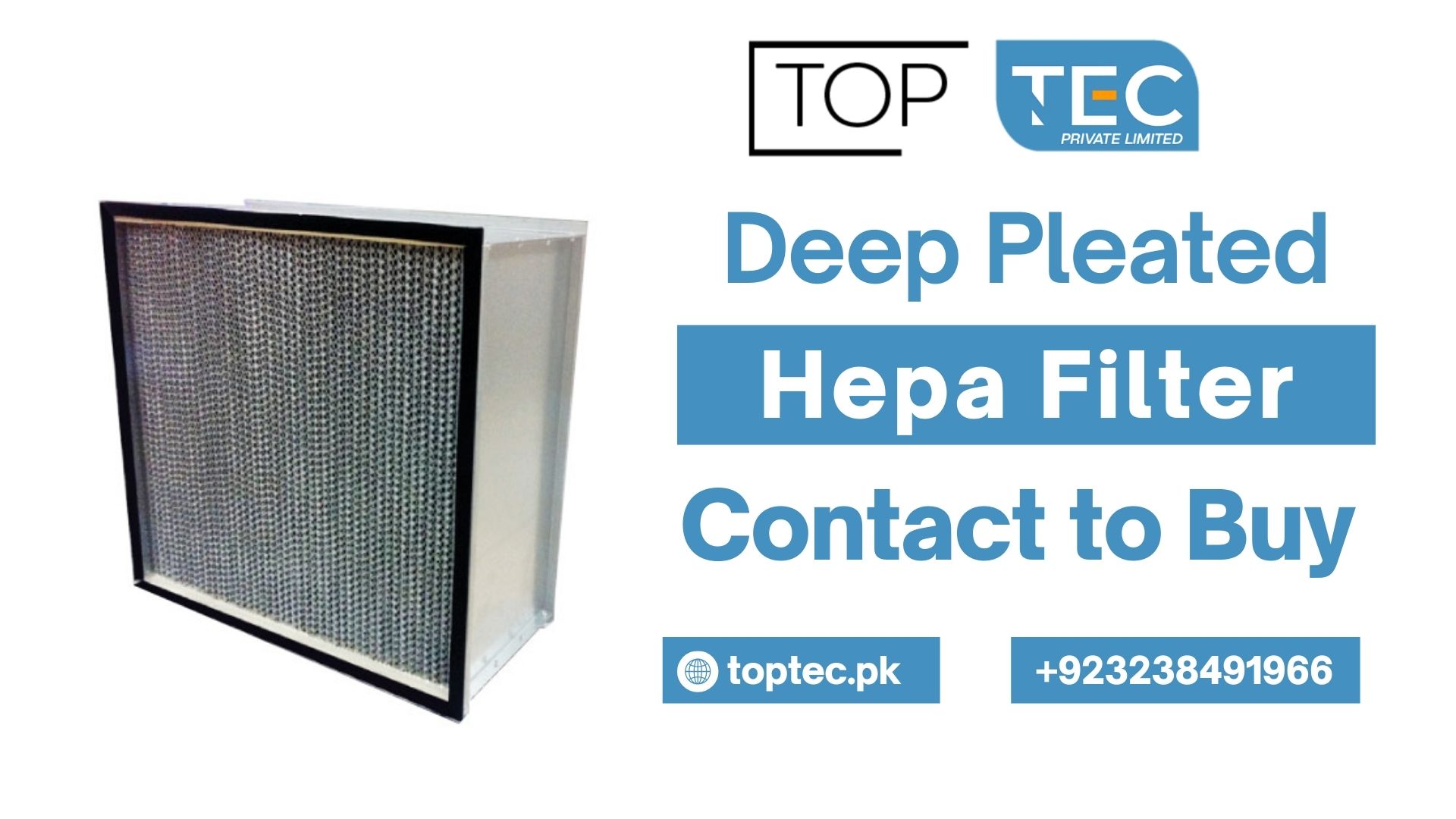
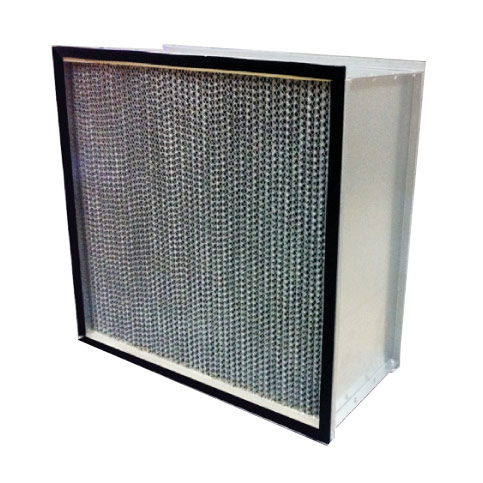
Picture a sheet of filter paper folded back and forth dozens of times — almost like an accordion — and packed tightly into a rigid frame. All those folds create a huge surface area inside a compact space. More surface area means more room to trap particles, which means the filter lasts longer and handles higher volumes of air without choking.
When you buy Deep Pleated HEPA Filter units that meet genuine HEPA standards, you’re getting something that catches 99.97% of particles down to 0.3 microns. To put that in perspective, 0.3 microns is about 300 times thinner than a strand of your hair. We’re talking about filtration at a level that’s genuinely hard to wrap your head around.
Why Not Just Use a Regular Filter?
I get asked this a lot, and the answer is pretty straightforward. Regular filters — the kind you might stick in a home air conditioner — just aren’t built for serious work. They’ll catch dust bunnies and pet hair, sure. But they let the really dangerous stuff sail right through.
In a pharmaceutical lab, a hospital operating theatre, or a semiconductor cleanroom, “good enough” filtration isn’t good enough. One stray particle in the wrong place can contaminate a drug batch, infect a surgical patient, or destroy an entire silicon wafer worth thousands of dollars. The stakes are just too high for half-measures.
The Pleats Are Doing More Than You Think
I want to spend a minute on why the pleating matters so much, because it’s one of those engineering details that makes a massive practical difference.
A flat filter is like a single-lane road during rush hour. Traffic backs up fast because there’s only one path for everyone. Deep pleats are like opening up a twelve-lane highway. Air moves through with far less resistance, particles spread out across all that extra surface area, and the filter keeps performing well for much longer before it needs replacing.
This also means your air handling system doesn’t have to work as hard. Less resistance equals less energy consumption, which equals lower electricity bills. It’s one of those rare situations where the better option also happens to be the more economical one over time.
Where Do People Actually Use These Things?
Pretty much anywhere that contaminated air could cause serious problems. Here’s a rundown of the most common settings:
Pharmaceutical and biotech labs are probably the most obvious one. Drug development and testing require insanely pure air. A single contaminant particle landing in the wrong place can invalidate months of work. Lab managers who understand this reality buy Deep Pleated HEPA Filter systems rated for the tightest possible tolerances because the cost of contamination is always worse than the cost of prevention.
Hospitals rely on HEPA filtration in operating theatres, isolation wards, and anywhere immunocompromised patients are being treated. Airborne pathogens are a real and constant threat, and deep pleated HEPA filters are the front line of defence.
Electronics manufacturing takes place in cleanrooms where specifications make pharmaceutical labs look relaxed by comparison. A particle smaller than a red blood cell can wreck a microchip, so the filtration has to be absolutely bulletproof.
Food processing plants use HEPA filtration to keep mould spores and bacteria out of production zones. Regulatory bodies don’t mess around with food safety standards, and HEPA filters are typically a core part of meeting those requirements.
Not All “HEPA” Filters Are Actually HEPA
This one drives me crazy, and I see it all the time. Some manufacturers slap the word “HEPA” on their packaging even when their product doesn’t meet the real standard. You’ll see terms like “HEPA-type” or “HEPA-style” or “HEPA-like” — and none of those mean the same thing as actual HEPA.
A true HEPA filter is tested and certified to capture 99.97% of particles at 0.3 microns under standards like EN 1822. If a supplier can’t show you documentation proving their filter meets that threshold, walk away. When you buy Deep Pleated HEPA Filter products, always ask for the test certificate. Any legitimate manufacturer will hand it over without hesitation.
Under EN 1822, HEPA filters are classified as H13 or H14, with H14 being the more efficient of the two. For most laboratory applications, either class works well. ULPA filters go even further with classes U15 through U17, but those are typically reserved for the most demanding cleanroom environments.
The Hidden Cost of Buying Cheap
I’ve seen labs try to save money by purchasing no-name HEPA filters from the cheapest source they can find. It almost never works out the way they hoped.
Cheap filters tend to clog up faster because the media quality is inconsistent. The frames warp under pressure, breaking the seal between the filter and its housing. The gaskets deteriorate quickly, letting unfiltered air leak around the edges. And sometimes the filter media itself doesn’t actually capture particles at the rate the seller claims.
When you add up the cost of premature replacements, wasted energy from increased pressure drops, and the potential damage from contamination events, the “cheap” option ends up costing significantly more than buying quality from the start.
What to Look For in a Quality Filter
A few things separate good deep pleated HEPA filters from mediocre ones, and they’re worth paying attention to:
The frame should be built from anodised aluminium, stainless steel, or moisture-resistant MDF depending on the application. If the frame feels flimsy or bends easily, that’s a red flag. Frames need to hold their shape under the pressure differentials inside an air handling system. If they don’t, the seal fails and your expensive filter becomes useless.
The gasket is another critical component. Look for neoprene, silicone, or polyurethane gaskets that compress evenly when the filter is clamped into its housing. An uneven or poorly made gasket creates gaps, and gaps mean unfiltered air sneaking through.
The filter media itself should be certified and traceable. Reputable manufacturers use media from established suppliers with documented performance characteristics. Random media from unknown sources is a gamble you don’t want to take.
TOPTEC PVT. LTD — A Pakistani Manufacturer Worth Knowing About
Now, if you’re in Pakistan and you need laboratory equipment, I want to talk about TOPTEC PVT. LTD. They’re a Pakistani company that manufactures laboratory furniture and filtration equipment right here in the country — not importing and reselling, actually manufacturing.
I bring them up because the default assumption for many lab managers in Pakistan has been that good laboratory equipment has to come from abroad. And while there are certainly excellent international manufacturers, importing comes with a whole stack of headaches. Shipping costs are steep. Customs clearance is unpredictable. Lead times stretch from weeks to months. And if something arrives damaged or incorrect, getting it sorted out with a supplier on the other side of the world is a nightmare.
TOPTEC PVT. LTD eliminates all of that. They manufacture locally, which means shorter lead times, easier communication, and none of the import hassle. And their quality stands up against international brands — they build to the same standards using certified materials and proper quality control processes.
They Do More Than Filters
One thing I appreciate about working with a company like TOPTEC is that they understand the full laboratory environment. They manufacture fume hoods, biosafety cabinets, laminar flow cabinets, lab benches, storage units, and of course, deep pleated HEPA filters.
This matters because laboratory components don’t exist in isolation. Your laminar flow cabinet needs a HEPA filter that fits perfectly and performs to spec. Your biosafety cabinet needs HEPA filtration on both the supply and exhaust sides. When the same company manufactures both the cabinet and the filter, compatibility isn’t a question — it’s a guarantee.
So when you buy Deep Pleated HEPA Filter products from TOPTEC PVT. LTD, you’re not just getting a filter. You’re getting a component that’s been designed and built to integrate seamlessly with the rest of their equipment line.
Getting the Installation Right
I can’t stress this enough — installation matters just as much as the quality of the filter itself. I’ve seen perfectly good HEPA filters perform terribly because someone didn’t install them properly.
The filter needs to sit squarely in its housing with the gasket compressing evenly on all four sides. Even a small gap lets unfiltered air bypass the media entirely, and at that point you’ve essentially got an expensive piece of paper sitting in your ductwork doing nothing useful.
After installation, every HEPA filter in a regulated environment needs to be leak-tested using DOP or PAO aerosol. This isn’t optional or nice-to-have. It’s a mandatory verification step that proves your filter is actually sealing properly and capturing particles at the rated efficiency. Skip this step and you’re essentially flying blind.
When Should You Replace Your Filter?
People always want a simple answer to this question, and unfortunately, there isn’t one. It depends on too many variables — how dirty the incoming air is, how many hours the system runs, what level of cleanliness you need to maintain, and how good your pre-filtration is.
That said, most deep pleated HEPA filters in a typical laboratory setting last somewhere between one and three years. But rather than working off a calendar, the smart approach is monitoring the pressure drop across the filter. As particles accumulate in the media, resistance to airflow increases. When the pressure drop hits the maximum recommended by the manufacturer, it’s time for a change.
Don’t wait until you can physically see reduced airflow or notice contamination issues. By that point, your filter has been underperforming for weeks or months, and whatever it was supposed to be protecting has probably already been compromised.
Pre-Filters Are Your HEPA Filter’s Best Friend
Here’s a tip that will save you real money: take care of your pre-filters. These sit upstream of your HEPA filter and catch the larger particles — dust, lint, bigger debris — before they can reach the expensive deep pleated media.
Think of pre-filters as bodyguards. They take the hits so your HEPA filter doesn’t have to deal with the heavy stuff. A decent pre-filter costs a fraction of what a HEPA filter costs, and changing it regularly can extend your HEPA filter’s life dramatically. I’ve seen cases where proper pre-filtration nearly doubled the lifespan of the downstream HEPA filter. That’s significant savings.
Handling Used Filters Safely
Used HEPA filters from laboratory environments aren’t regular waste. They’ve spent months or years trapping potentially hazardous biological and chemical particles, and all of that material is sitting in the filter media waiting to be disturbed.
Always wear appropriate PPE when handling used HEPA filters. Follow your facility’s waste management protocols. And for high-risk environments dealing with dangerous pathogens or toxic chemicals, consider bag-in bag-out housing systems that allow filter changes without any exposure to the contaminated media. TOPTEC PVT. LTD can help you set up these systems when you buy Deep Pleated HEPA Filter units for containment applications.
The Total Cost of Ownership Argument
I mentioned earlier that cheap filters cost more in the long run, and I want to come back to that with a bit more detail.
When you evaluate a filter purchase, the sticker price is only one piece of the puzzle. You also need to consider how long the filter will last before replacement, how much energy your system uses to push air through it, whether you’ll face any contamination events due to performance failures, and how much downtime a filter change requires.
A quality deep pleated HEPA filter from a manufacturer like TOPTEC PVT. LTD might cost more upfront than a bargain-bin alternative. But it’ll last longer, maintain lower pressure drops throughout its life, perform more reliably, and come with proper documentation for your quality management system. Add all of that up and the total cost of ownership is almost always lower with the quality option. That’s just practical reality.
Custom Sizes and Specifications
Not every facility uses standard filter dimensions. Older buildings, custom-built cleanrooms, and retrofitted labs often have housings that don’t match off-the-shelf filter sizes. This is where working directly with a manufacturer makes a huge difference.
TOPTEC PVT. LTD can produce deep pleated HEPA filters in custom dimensions to fit your existing housings. No awkward adapter frames, no air gaps around the edges, no compromises. You tell them what you need and they build it. Try getting that level of flexibility from an overseas supplier and see how far you get.
Getting the Right Advice Before You Commit
Selecting the right HEPA filter involves more variables than most people realise. Filter class, dimensions, airflow capacity, temperature rating, humidity tolerance, gasket type, frame material — get any of these wrong and you end up with a filter that doesn’t perform as expected.
This is another area where TOPTEC PVT. LTD stands out. Their technical team can walk you through the selection process, ask the right questions about your application, and make sure you buy Deep Pleated HEPA Filter products that genuinely match your requirements. It’s not just a sales conversation — it’s a technical consultation that protects you from expensive mistakes.
Planning a New Laboratory?
If you’re in the planning stages of a new lab build, please don’t treat air filtration as an afterthought. I’ve seen too many projects where the budget gets allocated to flashy equipment first, and then everyone scrambles to figure out filtration with whatever money is left over. That approach is backwards.
Air quality underpins literally everything else in the lab. Your expensive analytical instruments, your carefully prepared samples, your researchers’ health — all of it depends on clean air. Plan your filtration system from day one and give it the budget it deserves.
And while you’re at it, consider sourcing your entire lab fit-out from a single manufacturer. TOPTEC PVT. LTD can furnish a complete laboratory with benches, cabinets, fume hoods, filtration systems, and storage — all designed and manufactured to work together as an integrated system. It simplifies procurement, ensures compatibility, and gives you a single point of contact for support.
Supporting Local Industry
There’s a broader point worth making here. Every time a Pakistani institution decides to buy Deep Pleated HEPA Filter products from a local manufacturer instead of importing, it’s doing more than just saving on shipping costs. It’s supporting domestic industry, creating skilled manufacturing jobs, and building technical capacity within the country.
Pakistan has the talent and capability to produce world-class laboratory equipment. Companies like TOPTEC PVT. LTD are proving that every day. Choosing local doesn’t mean settling for less — it means investing in a manufacturing ecosystem that benefits everyone.
Staying Compliant With Regulations
Whether you’re working under GMP, ISO, or any other regulatory framework, your air filtration system needs proper documentation. Auditors and inspectors want to see test certificates, installation records, maintenance logs, and replacement schedules. They want evidence that your HEPA filters meet the claimed specifications and that you’re maintaining them according to the manufacturer’s recommendations.
TOPTEC PVT. LTD provides the documentation you need — test reports, material certificates, performance specifications, and traceability information. When audit time comes around, having all of that readily available makes the process infinitely smoother than scrambling to reconstruct records from memory.
What’s Coming Next in Filtration Technology
Filter technology isn’t standing still. Media manufacturers are developing materials that capture more particles with less airflow resistance, which means future HEPA filters will likely last longer and use less energy than current designs. Frame and gasket materials are improving too, with better durability and resistance to challenging environments.
Manufacturers like TOPTEC PVT. LTD stay on top of these developments and incorporate improvements into their products as they become available. When you buy Deep Pleated HEPA Filter units from a manufacturer that’s actively investing in their product line, you’re not locked into yesterday’s technology.
The Bottom Line
Look, air filtration isn’t glamorous. Nobody walks into a lab and admires the HEPA filters. But those filters are quietly doing one of the most important jobs in the entire facility — keeping the air clean enough for your work to be valid, your products to be safe, and your people to stay healthy.
If you take one thing away from this article, let it be this: don’t cut corners on filtration. Buy Deep Pleated HEPA Filter units from a manufacturer you can trust, install them correctly, test them after installation, monitor them during operation, and replace them before they fail. It’s not complicated, but it does require taking air quality seriously.
Ready to Get Started?
If you’re in Pakistan and you need deep pleated HEPA filters or any other laboratory furniture and equipment, reach out to TOPTEC PVT. LTD. They manufacture everything locally to international standards, they know their products inside and out, and they’ll help you find exactly what your facility needs without the hassle and expense of importing.
Whether you’re building a new lab from scratch or upgrading the filtration in an existing one, a conversation with their technical team is a solid first step. You’ll walk away knowing exactly what you need, what it costs, and when you can have it — and that kind of clarity is worth its weight in gold when you buy Deep Pleated HEPA Filter systems for your facility.
