


What Is a Biological Safety Cabinet? I’ve spent enough time around laboratories to know that the equipment people understand the least is often the equipment that matters the most. Biological safety cabinets fall squarely into that category. People work inside them every day, sometimes for hours, and yet if you asked most lab technicians to explain the actual differences between Class I, Class II, and Class III cabinets — you’d get a lot of hesitation and vague answers.
That’s a problem. Because when you’re about to buy biological safety cabinet equipment for your lab, clinic, or research facility, understanding what you’re actually purchasing isn’t optional. It’s the difference between genuine protection and a false sense of security.
This article breaks down everything you need to know — plainly, practically, and without unnecessary jargon. And if you’re in Pakistan looking for a reliable manufacturer, stick around because TOPTEC PVT. LTD deserves to be on your shortlist.
So What Exactly Is a Biological Safety Cabinet?
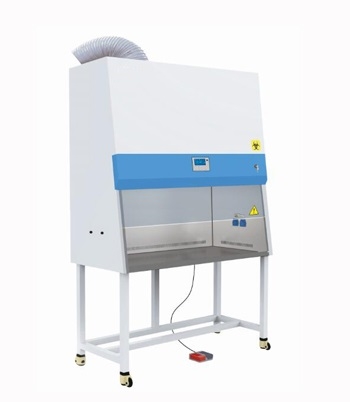
A biological safety cabinet — commonly abbreviated as BSC — is a ventilated laboratory workspace designed to protect three things:
- The operator — the person doing the work
- The sample or product — whatever biological material is being handled
- The laboratory environment — the surrounding space and other people in it
It achieves this through controlled airflow patterns and HEPA (High-Efficiency Particulate Air) filtration. Air is pulled through HEPA filters that trap particles as small as 0.3 microns with 99.97% or higher efficiency. The direction and speed of airflow inside the cabinet creates either containment, product protection, or both — depending on the class and type of BSC.
Now here’s what a biological safety cabinet is NOT. It’s not a fume hood. Fume hoods protect against chemical vapors and fumes. They don’t use HEPA filtration, and they don’t protect the product inside. If you’re working with biological agents — bacteria, viruses, cell cultures, clinical specimens — you need a BSC, not a fume hood. Getting this wrong is more common than you’d think, and it’s dangerous.
If your work involves any biological hazard, the decision to buy biological safety cabinet equipment is fundamentally a safety decision, not just a procurement one.
Why Biological Safety Cabinets Are Non-Negotiable in Certain Settings
Before we get into the classes, let’s ground this in reality. Here are the settings where BSCs aren’t optional — they’re either legally required, professionally mandated, or practically essential:
Clinical microbiology labs — handling patient specimens that may contain infectious agents
Virology and bacteriology research labs — working with pathogenic organisms at BSL-2, BSL-3, or BSL-4 levels
Pharmaceutical manufacturing — sterile compounding, cell-based manufacturing, vaccine production
Hospital pharmacies — preparing IV admixtures, chemotherapy drugs, sterile preparations
Veterinary diagnostic labs — processing animal tissue and fluid samples
Molecular biology labs — PCR setup areas where sample protection from contamination is critical
Blood banks and tissue banks — processing and testing biological materials
In every one of these settings, if you don’t have the right BSC — or worse, you have the wrong class for your application — you’re creating a risk that can affect human health. When you buy biological safety cabinet units, matching the cabinet class to your actual hazard level isn’t just best practice. In most regulatory frameworks, it’s a compliance requirement.
Biological Safety Cabinet Classes — The Full Breakdown
Alright, let’s get into the meat of this article. BSCs are classified into three main classes — I, II, and III. Each offers a different combination of personnel protection, product protection, and environmental protection. Class II further subdivides into Types A1, A2, B1, and B2.
Let me walk you through each one.
Class I Biological Safety Cabinet
What it does:
A Class I BSC provides personnel protection and environmental protection. It does NOT provide product protection.
How it works:
Room air is drawn into the cabinet through the front opening, across the work surface, and then passes through a HEPA filter before being exhausted — either back into the room or ducted to the building’s exhaust system.
Because unfiltered room air flows directly over the work surface, whatever you’re working on is exposed to ambient air particles. That means contamination of your sample is possible. The operator, however, is protected because air flows inward — away from them — and is HEPA-filtered before exhaust.
When to use it:
- Working with low-to-moderate risk biological agents (BSL-1 and BSL-2)
- When product protection is not a concern
- When you need basic personnel containment without sterile working conditions
- As a simple, cost-effective containment solution
When NOT to use it:
- Cell culture work where contamination must be prevented
- Sterile pharmaceutical compounding
- Any application where product sterility matters
Practical note:
Class I cabinets are increasingly uncommon in modern labs because most applications require at least some degree of product protection. However, they still have their place — particularly in teaching labs, general microbiology work, and situations where you’re simply trying to keep aerosols contained during processing.
If your requirements are limited to personnel protection and you want to buy biological safety cabinet equipment at a lower price point, Class I might be appropriate. But be honest about whether product protection matters for your work. Most of the time, it does.
Class II Biological Safety Cabinet
What it does:
A Class II BSC provides personnel protection, product protection, AND environmental protection. This is the workhorse of laboratory biosafety and the most widely used class globally.
How it works:
Class II cabinets use a combination of inflow air and downflow (laminar) air to create a protective curtain at the front opening while simultaneously bathing the work surface in HEPA-filtered clean air. The inflow protects the operator. The downflow protects the product. Exhaust air passes through HEPA filtration before being released — protecting the environment.
This dual-protection design is what makes Class II the default choice for the majority of biological work.
Now, Class II has four subtypes. This is where it gets specific, and honestly, this is the part most people gloss over. Don’t. Because these subtypes have practical differences that affect installation, cost, and capability.
Class II, Type A1
- Minimum inflow velocity of 75 feet per minute (fpm) through the front opening
- 70% of air is recirculated through HEPA filters back into the cabinet
- 30% is exhausted through a HEPA filter
- Can be exhausted into the room or connected to a canopy exhaust
- NOT suitable for work with volatile toxic chemicals or radionuclides
This is the most basic Class II configuration. It handles routine microbiological work well, but the recirculation of air means it can’t deal with chemical vapors effectively.
Class II, Type A2
- Minimum inflow velocity of 100 fpm
- Similar recirculation pattern to A1 but with higher containment performance
- Contaminated positive-pressure plenums are surrounded by negative-pressure plenums (or the plenums are under negative pressure to the room)
- Can handle minute quantities of volatile chemicals if properly exhausted through a canopy connection
- Most popular subtype globally for research and clinical labs
When most people think about buying a biological safety cabinet, the Type A2 is usually what they’re imagining — even if they don’t know the specific designation. If you’re ready to buy biological safety cabinet equipment for a standard microbiology, cell culture, or clinical lab, the Type A2 is almost certainly your starting point.
Class II, Type B1
- 30% air recirculation, 70% air exhaustion
- Must be hard-ducted to the building exhaust system
- Suitable for work with minute quantities of volatile chemicals and trace radionuclides
- More complex installation due to ducting requirements
- Higher ongoing operational cost because of increased exhaust volume
Type B1 cabinets sit in a middle ground — you need some chemical handling capability but not the full exhausting capacity of a Type B2. They’re less common than A2 or B2 models.
Class II, Type B2 (Total Exhaust)
- 100% of air is exhausted through HEPA filters — no recirculation whatsoever
- Must be hard-ducted to a dedicated building exhaust system
- Suitable for work with volatile toxic chemicals and radionuclides alongside biological agents
- Most expensive to install and operate
- Requires careful building HVAC integration
Type B2 is the cabinet you need when you’re working with biological hazards AND significant chemical hazards simultaneously. Think about labs handling chemotherapy drug preparation with biological samples, or research involving volatile carcinogens in cell culture work.
A practical word of caution: I’ve seen labs that buy biological safety cabinet units of the B2 type because they think “total exhaust must be the best.” It’s not always the best — it’s the most appropriate for specific applications. B2 cabinets require significant building infrastructure investment. If your work doesn’t actually involve volatile chemicals, an A2 cabinet gives you all the biological protection you need at significantly lower installation and operating costs.
Choosing the wrong subtype wastes money. Choosing too low a subtype creates safety risks. Get this decision right.
Class III Biological Safety Cabinet
What it does:
A Class III BSC provides maximum containment. It’s a completely enclosed, gas-tight cabinet that provides the highest level of personnel, product, and environmental protection.
How it works:
The entire cabinet is sealed. The operator works through heavy-duty glove ports — rubber gloves that are permanently attached to the front of the cabinet. All air entering the cabinet passes through a HEPA filter. All air leaving passes through two HEPA filters in series, or through a HEPA filter and then incineration (in some configurations).
Materials enter and exit through a dunk tank, pass-through chamber, or double-door autoclave that maintains the containment barrier at all times.
When to use it:
- BSL-4 (Biosafety Level 4) work with agents that cause severe or fatal disease with no available treatment
- Handling agents like Ebola virus, Marburg virus, or other Risk Group 4 pathogens
- Any application requiring maximum containment
When NOT to use it:
- Routine microbiological work (massive overkill)
- Standard cell culture or clinical specimen processing
- Applications where you need manual dexterity that glove ports can’t provide
Practical note:
Class III cabinets are relatively rare. Most laboratories in Pakistan and worldwide don’t handle BSL-4 agents. But for those that do — national reference laboratories, high-security research facilities, and certain defense-related labs — Class III cabinets are the absolute containment solution.
If your application genuinely requires Class III containment and you need to buy biological safety cabinet equipment at this level, you need a manufacturer that understands the specifications completely. TOPTEC PVT. LTD works with clients across the spectrum of BSC classes and can consult on the appropriate level for your specific requirements.
Quick Comparison Table
| Feature | Class I | Class II | Class III |
|---|---|---|---|
| Personnel Protection | Yes | Yes | Yes |
| Product Protection | No | Yes | Yes |
| Environmental Protection | Yes | Yes | Yes |
| HEPA-Filtered Supply Air | No | Yes | Yes |
| HEPA-Filtered Exhaust | Yes | Yes | Yes (double) |
| Front Opening | Open | Open with air curtain | Sealed (glove ports) |
| Common Applications | Basic containment | Research, clinical, pharma | BSL-4, maximum containment |
| Relative Cost | Low | Moderate to High | Very High |
Factors to Consider When You Buy Biological Safety Cabinet Equipment
So you’ve identified the class and type you need. Now what? Here’s what separates a good purchasing decision from a regrettable one.
1. Size and Internal Work Area
BSCs come in various widths — typically 4-foot (1.2m), 5-foot (1.5m), and 6-foot (1.8m) models. Choose based on your actual work requirements. A cabinet that’s too small forces crowded work practices that compromise both safety and sample integrity. A cabinet that’s too large wastes lab space and energy.
2. Noise Level
This matters more than most people realize. Lab staff working next to a BSC for hours notice the noise. Better cabinet designs use vibration-dampened fan assemblies and optimized airflow paths to keep operational noise below 65 dB. When you buy biological safety cabinet equipment, ask for noise specifications. Your team will thank you.
3. Lighting
Internal fluorescent or LED lighting should provide adequate illumination across the entire work surface. Shadows create practical problems during detailed work. Good BSC design addresses this with properly positioned light fixtures.
4. Filter Access and Replacement
HEPA filters have a finite lifespan. How easy is it to access and replace them? Are replacement filters readily available from the manufacturer? This is a long-term cost and maintenance consideration that gets overlooked at the time of purchase.
5. Certification and Testing
A BSC must be field-certified after installation and annually thereafter. Certification includes airflow velocity testing, HEPA filter integrity testing (using DOP or PAO aerosol challenge), and cabinet integrity checks. Confirm that your manufacturer provides certification support or can recommend qualified certification professionals.
Why TOPTEC PVT. LTD Is Pakistan’s Manufacturer of Choice
Let me be straightforward about this. When you’re in Pakistan looking to buy biological safety cabinet equipment, you generally have two options — import from international manufacturers or buy locally. Both options have their place, but here’s why TOPTEC PVT. LTD has built a strong reputation as the local choice.
They Actually Manufacture in Pakistan
TOPTEC isn’t a trading company that slaps their label on imported units. They manufacture laboratory furniture and equipment within Pakistan. That has real implications for pricing, lead times, customization, and support.
Pricing That Reflects Local Manufacturing
No import duties. No international freight costs. No currency conversion markups. When you buy biological safety cabinet units from TOPTEC, the pricing reflects manufacturing costs — not a chain of distributor margins stacked on top of each other.
Customization Based on Your Lab’s Reality
Pakistani laboratories come in all sizes and configurations. Ceiling heights, power supply specifications, HVAC integration requirements, and space constraints all vary. Working with a local manufacturer means your BSC can be tailored to your actual lab conditions, rather than forcing your lab layout to accommodate a standard imported unit.
After-Sales Support Without International Delays
Filters need replacing. Fans eventually require service. Electrical components age. When your BSC needs attention, you need a response that happens in days — not weeks. TOPTEC’s local presence means technical support, spare parts, and service are all accessible without international logistics headaches.
Comprehensive Product Range
TOPTEC manufactures a full range of laboratory furniture alongside biological safety cabinets:
- Laboratory workbenches
- Fume hoods
- Laminar flow cabinets
- Clean room furniture
- Storage cabinets for chemicals and specimens
- Pass boxes
- And more
This means if you’re outfitting an entire laboratory, you can source multiple items from a single manufacturer. Consistency in quality, simplified procurement, and a single point of accountability.
Common Mistakes People Make When They Buy Biological Safety Cabinet Units
I’ve seen enough labs to know that mistakes happen. Here are the ones I encounter most frequently:
Confusing BSCs with laminar flow cabinets. Laminar flow hoods provide product protection only. They blow HEPA-filtered air toward the operator. They provide ZERO personnel protection. If you’re working with infectious materials inside a laminar flow hood, you are exposed. This mistake has caused actual infections in real labs.
Buying based on appearance rather than performance. A BSC that looks modern and sleek but doesn’t maintain proper inflow velocity or has poor HEPA filter sealing is worse than useless — it’s actively misleading. Always verify performance specifications.
Placing the BSC in a bad location. Airflow at the cabinet face is delicate. Placing a BSC near doors, walkways, air supply diffusers, or other equipment that creates air currents disrupts the protective air curtain. Location planning should happen before you buy biological safety cabinet equipment, not after.
Skipping annual certification. A BSC that was working perfectly last year might not be working perfectly today. Annual certification by qualified professionals is not optional — it’s a safety requirement.
Not training operators properly. Even the best BSC in the world can’t protect someone who uses it incorrectly. Arm movements, material placement, burner use, and work practices all affect containment performance.
Installation Considerations
When you buy biological safety cabinet equipment, installation planning needs to happen early — not as an afterthought.
Electrical requirements: BSCs require dedicated electrical circuits. Confirm voltage, frequency, and amperage requirements with the manufacturer before installation day.
Clearance requirements: Most BSCs need a minimum clearance above the cabinet for exhaust filter access and proper air circulation. Some require rear clearance for exhaust connections.
Ducting (for Type B cabinets): If you’re installing a Type B1 or B2 cabinet, building exhaust ducting must be designed and installed before the cabinet arrives. This involves coordination between the cabinet manufacturer, your HVAC contractor, and your facility management team.
Structural support: BSCs are heavy. Some lab benches are not designed to support them. Verify that your installation surface can handle the weight, or plan for a dedicated stand or base cabinet.
TOPTEC PVT. LTD provides installation guidance and technical documentation to help laboratories plan correctly from the start.
Regulatory Context in Pakistan
Pharmaceutical and healthcare laboratories in Pakistan are increasingly aligning with international standards. DRAP (Drug Regulatory Authority of Pakistan) requirements for pharmaceutical manufacturing facilities include provisions for appropriate containment equipment. Hospital accreditation standards also reference laboratory safety requirements that include proper containment for biological specimen handling.
When you buy biological safety cabinet equipment that meets international performance standards (NSF 49, EN 12469, or equivalent), you’re positioning your facility for both current compliance and future regulatory requirements that are likely to become more stringent over time.
Maintenance — What to Expect Over the Life of Your BSC
A well-maintained biological safety cabinet should last 15 to 20 years. Here’s what maintenance looks like:
Daily: Wipe down interior surfaces with appropriate disinfectant after use. UV decontamination cycle if equipped.
Weekly: Check airflow alarm systems. Inspect front opening for obstructions. Clean exterior surfaces.
Semi-annually: Verify airflow velocities with an anemometer. Check HEPA filter pressure drop.
Annually: Full certification by a qualified technician — airflow testing, HEPA filter integrity testing, electrical safety checks, and cabinet integrity assessment.
As needed: HEPA filter replacement (typically every 3-5 years depending on usage and environment), fan motor service, UV lamp replacement, electrical component replacement.
TOPTEC supports maintenance requirements for their BSC products with available spare parts and technical guidance — another advantage of buying locally.
How to Start the Process with TOPTEC PVT. LTD
If you’re ready to buy biological safety cabinet equipment, or if you’re in the planning stages and need to make informed decisions, TOPTEC PVT. LTD is set up to help you through the process:
- Define your requirements — What biological agents are you working with? What biosafety level? Do you also handle volatile chemicals? What size work surface do you need?
- Consult with TOPTEC — Their team can help match your requirements to the appropriate BSC class and type.
- Review specifications and pricing — Get detailed technical specifications and a quotation based on your specific configuration.
- Plan installation — Coordinate electrical, HVAC, and structural requirements before delivery.
- Receive, install, and certify — TOPTEC delivers with documentation, and certification can be arranged to confirm performance before the cabinet goes into service.
Wrapping This Up
Biological safety cabinets are not just another piece of laboratory furniture. They’re engineered containment systems that stand between laboratory workers and biological hazards every single day. Understanding the difference between Class I, Class II (and its subtypes), and Class III isn’t academic trivia — it’s essential knowledge for anyone responsible for laboratory safety, procurement, or management.
If you’re in Pakistan and you need to buy biological safety cabinet equipment that’s manufactured locally, competitively priced, properly supported, and built to meet international performance standards — TOPTEC PVT. LTD is a manufacturer worth talking to.
Don’t compromise on containment equipment. Don’t guess at the class or type you need. And don’t assume that all BSCs are equal because they look similar from the outside. Get the right cabinet for your specific application, from a manufacturer that stands behind their product.
