


Do you want to buy Biological Safety Cabinet? There’s a moment that every microbiologist, virologist, or cell culture technician knows well. You’re about to open a flask containing something potentially hazardous — a primary patient sample, a viral vector, a bacterial culture — and before you do anything, you check that the cabinet is running, the sash is at the right height, and the airflow indicator looks normal.
It’s almost automatic after a while. But behind that routine is a piece of equipment that, when it’s working correctly and being used properly, is genuinely protecting you, your colleagues, and your work.
That equipment is the biological safety cabinet. And despite being absolutely central to safe laboratory practice, it’s also one of the most misunderstood and misused pieces of lab equipment out there.
This guide covers everything: what biological safety cabinets actually do, the meaningful differences between Class I, II, and III, how to use them safely, what to look for when you decide to buy Biological Safety Cabinet equipment, and — for labs in Pakistan — where to source quality units and the supporting lab infrastructure to go with them.
Let’s work through this properly.
What Is a Biological Safety Cabinet and What Does It Actually Do?
Let’s start from first principles because the terminology in this space gets genuinely confusing, even for experienced lab professionals.
A biological safety cabinet — often abbreviated BSC — is a ventilated enclosure designed to provide protection in three possible directions:
- Personnel protection — protecting the person working at the cabinet from exposure to biological aerosols and particles generated during manipulation of hazardous materials
- Product protection — protecting the work (cell cultures, sterile preparations, samples) from contamination by the environment
- Environmental protection — preventing biological hazards from escaping into the laboratory and building
Not every BSC provides all three of these protections. This is the single most important thing to understand when evaluating which type to buy Biological Safety Cabinet for your application — and it’s where the Class I / Class II / Class III distinction becomes critical.
The Basics: How HEPA Filtration Makes It Work
Before getting into the class distinctions, understanding the core technology helps.
HEPA filters — High Efficiency Particulate Air filters — are the heart of every biological safety cabinet. A genuine HEPA filter removes 99.97% of particles at 0.3 micrometers in diameter (the most penetrating particle size). For biological applications, this means virtually complete removal of bacteria, fungal spores, and most viral particles from the airflow.
In a BSC, HEPA filters are used to:
- Filter the air flowing over the work surface (protecting the product)
- Filter the exhaust air before it returns to the room or exits the building (protecting personnel and environment)
- In some classes, create a continuous downward flow of clean air over the work surface
The condition of these HEPA filters — and the integrity of their installation and sealing — is what determines whether the cabinet is actually protecting anyone. A BSC with a compromised HEPA filter is potentially more dangerous than no BSC at all, because it creates a false sense of security.
Class I Biological Safety Cabinets
What It Is
A Class I BSC is the simplest configuration. It draws room air inward through the open front of the cabinet, across the work surface, and out through an exhaust HEPA filter. The exhaust air is cleaned before it either returns to the room or vents to the building exhaust system.
What It Protects
- Personnel: YES — The inward airflow prevents aerosols from escaping out the front
- Product: NO — Unfiltered room air flows over the work surface, so the work is exposed to whatever’s in the room air
- Environment: YES — Exhaust is HEPA-filtered
When to Use Class I
Class I cabinets are appropriate for work with lower-risk biological materials where product protection is not required. They’re also used for procedures that generate aerosols but don’t involve cell culture or sterile work — for example, working with certain chemical carcinogens that also have biological risk, or procedures where the biological risk is primarily to the user.
Honestly, Class I cabinets are relatively uncommon in modern labs. Most labs that decide to buy Biological Safety Cabinet equipment end up choosing Class II because of its additional product protection capability.
Class II Biological Safety Cabinets: The Most Common Choice
This is where the majority of biological safety cabinet purchases fall, and where the specification options get significantly more complex.
The Basic Principle
Class II BSCs provide all three protections: personnel, product, and environment. They do this by:
- Drawing room air in through the front opening (protecting the operator from what’s inside)
- Circulating HEPA-filtered air downward over the work surface in a laminar flow pattern (protecting the product)
- HEPA-filtering exhaust air before it leaves (protecting the environment)
The downward laminar airflow is the key feature that Class I lacks. It creates a clean air environment over the work surface while simultaneously preventing room air from reaching the working area.
Class II Type A1
The original Class II design. Recirculates 70% of cabinet air back into the work zone; exhausts 30% through HEPA filter back into the room.
Suitable for: BSL-1 and BSL-2 work not involving volatile chemicals or radionuclides
Not suitable for: Work with volatile toxic chemicals (they recirculate in the cabinet)
Exhaust: Back to room air (after HEPA filtration)
Class II Type A2
The most common BSC type in most laboratories worldwide. Like A1 but with higher face velocity (0.1 m/s minimum compared to A1’s lower threshold) and the exhaust plenum is maintained under negative pressure relative to the room.
Suitable for: BSL-1, BSL-2, and limited BSL-3 work; minute amounts of volatile chemicals if directly connected to building exhaust
Exhaust: To room (standard configuration) or hard-ducted to building exhaust (canopy connection)
Why it’s popular: It’s the most versatile option for general microbiology, cell culture, and pharmaceutical work
When most labs look to buy Biological Safety Cabinet for general purpose use, a Class II Type A2 is usually the right answer.
Class II Type B1
Exhausts 70% of cabinet air to the building exhaust system through a HEPA filter; recirculates 30% over the work surface.
Suitable for: Work with small amounts of volatile chemicals that need dedicated exhaust
Requires: Hard-duct connection to building exhaust — this is a significant installation requirement
Less common because: The B2 (below) is preferred for chemical work, and A2 is preferred for biological-only work
Class II Type B2
Total exhaust cabinet — 100% of air is exhausted to the building, with no recirculation. Supply air comes from the room and through HEPA filtration.
Suitable for: Work involving volatile toxic chemicals and radionuclides alongside biological materials
Requires: Hard-duct connection, and significant building ventilation capacity
Important consideration: Because all exhaust goes to the building, failure of the building exhaust system renders this cabinet non-functional — interlock systems are essential
If you’re deciding to buy Biological Safety Cabinet for work involving chemotherapy drug preparation, volatile radionuclides, or other chemical hazards combined with biological risk, a Type B2 is likely required.
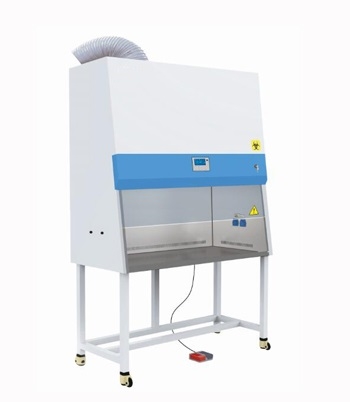
Class III Biological Safety Cabinets
What It Is
A Class III BSC — also called a glove box or maximum containment cabinet — is a completely sealed, gas-tight enclosure. The operator interacts with materials through built-in rubber gloves. All materials enter and exit through double-door pass-through chambers with interlocks.
Supply air is HEPA filtered. Exhaust passes through two HEPA filters in series, or through one HEPA and an incineration system.
What It Protects
- Personnel: MAXIMUM — Complete physical separation between operator and material
- Product: YES — HEPA-filtered supply air
- Environment: MAXIMUM — Double HEPA exhaust and gas-tight construction
When You Need Class III
BSL-4 agents — Ebola, Marburg, variola (smallpox), and a handful of other agents with high fatality rates and no available treatment. In Pakistan, very few facilities operate at BSL-4. If you encounter a requirement for Class III equipment, you’re in a very specialized situation.
BSL-1 Through BSL-4: Understanding the Risk Classification
The Biosafety Level (BSL) system classifies biological work by risk, and it determines which class of BSC you need. This is fundamental to the decision when you buy Biological Safety Cabinet equipment.
BSL-1
Agent type: Not known to cause disease in healthy adults
Examples: Non-pathogenic E. coli strains, Bacillus subtilis
BSC requirement: None required (open bench work acceptable), but Class I or II sometimes used for aerosol control
BSL-2
Agent type: Associated with human disease; routes of exposure include percutaneous injury, ingestion, mucous membrane contact
Examples: MRSA, Salmonella, Hepatitis B and C, HIV
BSC requirement: Class II Type A2 recommended for procedures with aerosol potential
BSL-3
Agent type: Indigenous or exotic agents that may cause serious or lethal disease; often have inhalation route of transmission
Examples: Mycobacterium tuberculosis, Coxiella burnetii, SARS-CoV, West Nile virus
BSC requirement: Class II Type A2 (with hard duct exhaust) or Class II Type B2
BSL-4
Agent type: Dangerous/exotic agents posing high risk of life-threatening disease; no vaccine or therapy available
Examples: Ebola, Marburg, Lassa fever
BSC requirement: Class III, or Class II with positive pressure personnel suit
Key Features to Evaluate When You Buy Biological Safety Cabinet Equipment
If you’re in the process of evaluating suppliers and specifications, here are the features that actually matter — and which ones are genuine differentiators versus marketing language.
HEPA Filter Efficiency and Testing
Any BSC worth purchasing should use genuine HEPA filters tested to EN 1822 or equivalent standard. When you receive the cabinet, it should come with a factory test certificate showing the filter was tested in-situ after installation.
Ask for:
- Filter efficiency certification (99.97% @ 0.3 μm minimum, 99.99% for ULPA if required)
- Factory in-situ test results
- Filter model number and replacement availability
Airflow Velocity and Balance
Inflow velocity (the air drawn in through the front sash opening) and downflow velocity (the HEPA-filtered air flowing downward over the work surface) must both be within specified ranges. For a Class II A2 cabinet, inflow velocity is typically 0.53 m/s or 100 FPM.
Cabinets should have:
- Electronic airflow monitoring
- Audible and visual alarms for airflow deviation
- Readable display of current airflow status
UV Light
Most BSCs include a UV-C germicidal lamp. This is useful for decontaminating the work surface between work sessions, but it’s important to understand its limitations:
- UV effectively decontaminates exposed surfaces only
- It doesn’t penetrate materials or reach shaded areas
- Lamp effectiveness decreases over time — most UV lamps should be replaced annually regardless of visible output
- UV is a supplement to, not a replacement for, chemical decontamination
Noise Level
This matters more than people realize for a piece of equipment that analysts may sit in front of for hours. Well-designed cabinets operate at 65 dB or below. Louder cabinets contribute to analyst fatigue and — importantly — can mask audible alarms.
Interior Configuration
- Work surface material: stainless steel (304 or 316) is standard. Check for coved corners for easier cleaning.
- Number and position of blower access panels: important for serviceability
- Interior lighting: adequate illumination without creating glare
- Pass-through openings: some cabinets include side pass-through ports for gas lines or equipment cables
Ergonomics
Analysts work at these cabinets for extended periods. Evaluate:
- Sash height range and ease of adjustment
- Work surface height (fixed or adjustable)
- Wrist rest quality
- Knee clearance for seated work
Energy Efficiency
Modern BSCs increasingly use EC (electronically commutated) motors that are significantly more efficient than older AC motor designs. This matters because BSCs run continuously — often 24 hours a day in active labs. A more efficient motor reduces operating costs over the equipment’s lifetime.
NSF/ANSI 49 Certification: Why It Matters
NSF/ANSI Standard 49 is the benchmark standard for Class II biological safety cabinets in North America, and it’s widely referenced internationally as the quality standard for BSC performance.
When you buy Biological Safety Cabinet equipment that carries NSF/ANSI 49 certification, you’re getting independent verification that:
- The cabinet was tested by an accredited testing body
- It meets specified performance requirements for inflow/downflow velocity, HEPA filter efficiency, aerosol containment, and personnel/product/cross-contamination protection
- The manufacturer’s claims about performance are backed by actual test data
Other relevant standards include:
- EN 12469 — European standard for microbiological safety cabinets
- AS 2252 — Australian standard
- WHO Laboratory Biosafety Manual specifications
For pharmaceutical applications, USP <1116> provides guidance on microbiological environments and references BSC performance requirements.
When evaluating where to buy Biological Safety Cabinet equipment, ask specifically whether the unit has been tested to these standards and request the test report.
Proper Installation: Getting This Right Matters
Even the best cabinet will underperform if it’s installed incorrectly. Installation considerations that genuinely affect performance:
Room Location
BSCs should not be:
- Positioned in high-traffic pathways where people walking past will disrupt the airflow curtain at the cabinet face
- Directly in the path of air conditioning supply vents or fans — room air currents as low as 0.1 m/s can disrupt the front air curtain
- Placed so that the sash opening faces a door that’s frequently opened and closed
BSCs should be:
- At least 30cm away from side walls and adjacent equipment
- At least 30cm away from the wall behind the cabinet (for exhaust clearance in room-recirculating models)
- In a location where the analyst’s back is to the wall rather than to foot traffic
Ducted vs. Room Recirculating
For Type A2 cabinets with optional canopy exhaust, the decision between room recirculation and hard-duct connection has real implications:
Room recirculating:
- Simpler installation, no building modification required
- Building HVAC doesn’t affect cabinet operation
- Appropriate for biological-only work without volatile chemicals
Hard-ducted (canopy connection):
- Required if any volatile chemicals are used
- Building exhaust system must maintain adequate negative pressure at the connection point
- Failure of building exhaust = failure of BSC containment (interlock required)
Electrical Supply
BSCs typically require dedicated electrical circuits. Sharing a circuit with high-draw equipment can cause voltage fluctuations that affect blower motor speed and therefore airflow balance. In Pakistan’s power environment, a voltage stabilizer or UPS is strongly recommended.
Clearance for Service Access
HEPA filters need to be changed periodically (typically every 3-5 years in normal use, or when differential pressure indicates loading). Make sure the installation location allows adequate overhead or front access for filter change procedures without compromising decontamination protocols.
How to Use a Biological Safety Cabinet Safely
Once you’ve managed to buy Biological Safety Cabinet equipment and get it installed and certified, using it correctly is obviously critical. Here are the practices that actually matter.
Before You Start Working
Check the airflow alarm — Every BSC should have an audible/visual alarm for low airflow. Verify it’s not in alarm condition before you start.
Let the cabinet run — If the cabinet was switched off, run it for at least 5 minutes before starting work to allow airflow to stabilize and purge room air from the work zone. Many labs leave cabinets running continuously — this is actually better practice than repeatedly switching them on and off.
Decontaminate the work surface — Wipe the work surface and side walls with 70% IPA or appropriate disinfectant. Let it evaporate before introducing materials.
Gather everything you need before starting — Reaching in and out repeatedly disrupts the airflow pattern. Arrange all materials inside the cabinet before beginning work.
Position materials correctly — Work at least 10-15cm inside the front grille. Items placed on or blocking the front grille disrupt airflow and compromise containment.
During Work
Never obstruct the front grille — This is probably the most commonly violated rule. Papers, notebooks, hands resting on the grille — all of these disrupt the critical airflow at the cabinet face.
Minimize rapid movements — Quick movements in and out of the cabinet disrupt the air curtain. Move arms in and out slowly and deliberately.
Work from clean to dirty — Organize your work so that clean materials (sterile media, clean equipment) are on one side and contaminated materials are on the other. This prevents you from carrying contamination across the work zone.
Keep your mouth and nose away from the sash opening — When looking into the cabinet, maintain a position where your face is above the sash, not below it.
Don’t use open flames — Bunsen burners inside BSCs are actually bad practice. The heat disrupts the HEPA-filtered downflow, creating turbulence that compromises both product and personnel protection. Use a touch-plate microincinerator if you need to flame loops, or better yet, use pre-sterilized disposable loops.
Use appropriate PPE — A BSC is not a substitute for PPE. Wear appropriate gloves, lab coat, and eye protection. Gloves should cover your cuffs, not leave a gap between glove and sleeve cuff.
After Work
Decontaminate before removing materials — All materials leaving the cabinet that have been in contact with biological agents should be decontaminated before removal (surface wipe with appropriate disinfectant, or autoclave if appropriate).
Clean the work surface — Wipe down all surfaces with appropriate disinfectant. Include the side walls and rear wall.
Run the cabinet briefly after work — Allow the cabinet to run for a few minutes after finishing work to purge any residual aerosols from the work zone.
UV decontamination — Some labs run the UV lamp after the work session. Close the sash fully, ensure no one is in the room or has eyes exposed to the UV source, and run for appropriate time (typically 15-30 minutes). This decontaminates the work surface but remember — it doesn’t sterilize, and it’s not a substitute for chemical decontamination.
Log your usage — Maintain a usage log for the cabinet. This is important for GMP compliance and helps track hours toward filter replacement decisions.
Common Mistakes That Compromise BSC Safety
Even experienced lab workers sometimes develop habits that quietly undermine BSC performance.
Mistake 1: Using the Cabinet as Storage
A BSC is a controlled airflow device, not a cupboard. Items stored inside the cabinet — especially large items — disrupt airflow patterns. Keep only what you’re actively using inside the cabinet.
Mistake 2: Blocking the Rear Exhaust Grille
Items pushed to the back of the cabinet can block the rear exhaust grille. This severely disrupts the airflow pattern and can create zones of contamination within the cabinet.
Mistake 3: Centrifuging or Vortexing Inside
High-speed centrifuges and vortex mixers generate significant aerosols. Using them inside a BSC seems logical but the motion can disrupt airflow. Always use sealed containers and verify your centrifuge has a safety rotor before centrifuging biological materials.
Mistake 4: Pipetting Technique Issues
Allowing liquid to drip from pipettes onto the work surface, rather than into containers, creates biological contamination on the work surface. Always pipette into containers, not across open spaces.
Mistake 5: Ignoring Sash Position Markings
Most BSCs have a mark indicating the correct operational sash height. Working with the sash lower than marked reduces operator protection. Working with it higher than marked compromises containment. The sash position marking is there for a reason — respect it.
Mistake 6: Not Getting Annual Certification
A BSC that hasn’t been certified recently is essentially an unvalidated piece of equipment. Airflow can drift, HEPA filters can develop leaks, and the internal balance between inflow and downflow can shift. Annual certification by a qualified field tester is not optional for a cabinet used with hazardous biological materials.
BSC Certification and Maintenance Schedule
When you buy Biological Safety Cabinet equipment, you’re not just buying a one-time purchase — you’re committing to an ongoing maintenance and certification schedule.
At Installation (Primary Certification)
Before first use, a trained field certifier should perform:
- HEPA filter integrity test (DOP/PAO challenge test)
- Inflow velocity measurement
- Downflow velocity measurement
- Airflow smoke pattern test (visualization of containment)
- Alarm function test
- UV lamp intensity test (if applicable)
- Noise level measurement
You should receive a full certification report that becomes the baseline document for ongoing maintenance comparison.
Annual Recertification
The same tests should be repeated annually (or more frequently if required by your SOPs or regulatory requirements). Annual recertification is required by NSF/ANSI 49 for cabinets to be considered in certified condition.
After Any of the Following Events
Recertification is also required after:
- Relocation of the cabinet (even moving across the same room)
- HEPA filter replacement
- Blower motor replacement or adjustment
- Any maintenance that could affect airflow or filter integrity
- Decontamination of the cabinet (e.g., formaldehyde or vaporized hydrogen peroxide decontamination after a spill or before filter change)
Decontamination Before Service
Before any internal maintenance work can be performed on a BSC used for hazardous biological work, the cabinet must be decontaminated. The standard method is gaseous formaldehyde fumigation or vaporized hydrogen peroxide (VHP) treatment. This must be performed by trained personnel and requires air monitoring to verify safety before the cabinet is opened for service.
In Pakistan, ensure that whoever you rely on for BSC service and certification is properly trained for decontamination procedures. This is not a standard HVAC maintenance task.
Buying Biological Safety Cabinets in Pakistan: Market Overview
For labs in Pakistan looking to buy Biological Safety Cabinet equipment, the market includes several sourcing options.
Imported Brands Available Through Local Distributors
Esco (Singapore)
Esco is probably the most widely available BSC brand in Pakistan’s market. Their Biosafe and Labculture series Class II A2 cabinets are widely used in pharmaceutical companies, hospitals, and research institutions. Decent quality, reasonable local support through their Pakistani distributor network.
Thermo Fisher Scientific (USA)
The MSC Advantage and 1300 Series cabinets from Thermo are considered high-quality instruments with good NSF 49 certification documentation. More expensive than Asian manufacturers, with longer import lead times.
Eppendorf (Germany)
Good quality, well-regarded internationally, but limited local distributor presence in Pakistan means service support can be challenging.
Nuaire (USA)
Popular in pharmaceutical settings globally, good regulatory documentation, but high price point and limited local support.
Biobase (China)
Lower price point than the above options. Quality varies — some users report good experiences, others have had reliability issues. Documentation for validation is less comprehensive than established international brands.
What to Ask Any Supplier
Before you buy Biological Safety Cabinet from any supplier in Pakistan:
- Request the NSF/ANSI 49 or EN 12469 test certificate for the specific model
- Ask for the factory test report for that specific unit (serial number)
- Get written confirmation of what the warranty covers and where service is performed
- Ask for references from other Pakistani labs using the same equipment
- Verify spare parts (especially HEPA filters) are available locally or have reasonable import lead times
TOPTEC PVT. LTD: Supporting Your BSC Lab Setup in Pakistan
Now, while TOPTEC PVT. LTD isn’t manufacturing Biological Safety Cabinets themselves, they manufacture something that’s just as important for labs that operate BSCs — the entire supporting laboratory infrastructure.
And honestly, this is something that gets overlooked consistently when labs buy Biological Safety Cabinet equipment. They spend weeks carefully evaluating cabinet brands and specifications, then set the cabinet up on a cheap imported table in a room that hasn’t been properly designed for BSC operation. The result is compromised performance, frustrated analysts, and potential safety issues.
TOPTEC PVT. LTD manufactures high-quality laboratory furniture in Pakistan — actually manufactured here, not imported and resold — and for BSC-equipped labs specifically, they can provide:
BSC Support Tables and Dedicated Benches
A biological safety cabinet needs a stable, vibration-resistant surface at the right height. Standard office or kitchen-style furniture isn’t appropriate. TOPTEC manufactures laboratory workbenches with:
- Heavy-gauge steel frame construction for stability
- Chemical-resistant surfaces appropriate for lab cleaning agents
- Correct height for ergonomic BSC operation (typically 70-80cm bench height, combined with the cabinet’s own legs, brings the work surface to appropriate working height)
- Adequate load-bearing capacity for the weight of BSCs (which can be 100-300kg depending on size)
Pre-Plumbing and Electrical Integration
TOPTEC can fabricate bench systems with integrated electrical outlets, gas line routing, and vacuum line accommodation — reducing the cable and line management issues that often compromise BSC placement decisions.
Surrounding Work Area Benches
Labs don’t just need a surface for the BSC itself. They need:
- Prep benches adjacent to the BSC for sample preparation
- Clean areas for media preparation
- Decontamination areas for materials leaving the cabinet
TOPTEC can design and fabricate a complete integrated bench system for your biosafety lab zone.
Storage Solutions
- Dedicated cabinets for PPE (gloves, gowns, face protection)
- Chemical storage for disinfectants and decontamination agents
- Secure storage for biological agents and reference materials
- Waste management stations (sharps containers, biohazard waste bins with appropriate supporting furniture)
Sink Units for BSL-2 and BSL-3 Labs
WHO and CDC guidelines require dedicated handwashing sinks inside BSL-2 and above laboratories. TOPTEC manufactures laboratory sink units appropriate for biosafety lab requirements.
The Local Manufacturing Advantage
When you’re setting up a biosafety laboratory in Pakistan — an inherently time-sensitive process when it involves regulatory approvals, equipment qualification, and operational deadlines — working with a local furniture manufacturer like TOPTEC has real practical advantages:
No import delays — TOPTEC’s furniture is made in Pakistan. You’re not waiting 10-12 weeks for a shipping container to clear customs.
Custom dimensions — BSC installation positions need to respect airflow clearance requirements, room layout, and traffic flow patterns. TOPTEC can fabricate benches to the exact dimensions your room layout requires.
Pakistani power and environmental conditions — Furniture designed and built locally accounts for the reality of Pakistani lab environments, not some international standard that may or may not translate.
Direct manufacturer support — If something needs modification after delivery, you’re talking to the team that built it, not going through an international distributor chain.
Designing a Complete Biosafety Lab: An Infrastructure Checklist
For labs that have decided to buy Biological Safety Cabinet equipment and need to design the complete surrounding space, here’s what a properly equipped biosafety lab needs:
Containment Zone Design:
- ☐ BSC positioned away from doors, HVAC supply vents, and high-traffic areas
- ☐ Clearance maintained on all three sides (30cm minimum)
- ☐ Dedicated electrical circuit with voltage stabilization
- ☐ Ducted exhaust connection if Type B cabinet or volatile chemicals involved
Work Surfaces (TOPTEC):
- ☐ BSC support bench at correct height and load rating
- ☐ Preparation bench adjacent to BSC
- ☐ Clean area bench for media and sterile material handling
- ☐ Decontamination surface near exit
Services:
- ☐ Dedicated handwashing sink (BSL-2 minimum requirement)
- ☐ Eyewash station
- ☐ Emergency shower (BSL-2 and above, depending on agents)
- ☐ Autoclave access (within lab or adjacent)
Storage (TOPTEC):
- ☐ PPE storage cabinet near entry point
- ☐ Chemical storage for disinfectants
- ☐ Biological material storage (appropriate refrigeration and freezer equipment)
- ☐ Waste management stations
Safety and Documentation:
- ☐ Biohazard signage at all entry points
- ☐ SOP display area
- ☐ Incident reporting materials accessible
- ☐ BSC usage log and maintenance records filing
Price Guide: What to Budget for BSC Equipment in Pakistan
When labs in Pakistan are ready to buy Biological Safety Cabinet equipment, realistic pricing helps with budget planning.
Class II Type A2 — 1.2m (4ft) width:
- Entry-level Asian brands: PKR 400,000 – 700,000
- Mid-tier (Esco, Biobase established models): PKR 700,000 – 1,200,000
- Premium international brands: PKR 1,500,000 – 2,500,000
Class II Type A2 — 1.8m (6ft) width:
- Entry-level: PKR 600,000 – 1,000,000
- Mid-tier: PKR 1,000,000 – 1,800,000
- Premium: PKR 2,000,000 – 3,500,000
Class II Type B2 (total exhaust):
- Add approximately 20-40% premium to comparable A2 prices
- Installation costs (ducting, interlocks) are additional
Annual certification costs:
- PKR 15,000 – 45,000 per cabinet depending on location and certifier
HEPA filter replacement (every 3-5 years typically):
- PKR 25,000 – 80,000 per filter depending on cabinet size and filter specification
Always factor ongoing costs into your total cost of ownership calculation, not just the initial purchase price.
Final Thoughts: Getting This Right Matters
Biological safety cabinets are genuinely life-safety equipment. I don’t mean that dramatically — I mean it practically. When someone is working with Mycobacterium tuberculosis, or BSL-2 bloodborne pathogens, or viral vectors in a gene therapy workflow, the cabinet between them and the aerosols those procedures generate is what keeps them safe. Getting the class selection right, the installation right, the certification right, and the day-to-day use right — all of it matters.
The decision to buy Biological Safety Cabinet equipment is worth taking seriously. Spend time on the specification. Understand what class you actually need for your specific agents and procedures. Don’t compromise on certification documentation. Verify local service support before purchasing, not after.
And then set it up properly — in a lab space designed for biosafety work, with appropriate bench furniture, storage, handwashing facilities, and waste management infrastructure. TOPTEC PVT. LTD manufactures exactly this supporting infrastructure in Pakistan, with the practical advantages of local manufacturing: realistic lead times, PKR pricing, customization capability, and local support from the team that built your furniture.
A well-chosen biological safety cabinet in a well-designed lab space, used by properly trained personnel following correct procedures — that’s what biosafety actually looks like in practice.
Contact TOPTEC PVT. LTD for Your Biosafety Lab Infrastructure
TOPTEC PVT. LTD is a Pakistan-based manufacturer of high-quality laboratory furniture and infrastructure solutions. For biosafety and microbiology laboratories, TOPTEC supplies and manufactures BSC support benches, laboratory workbenches, preparation benches, sink units, storage cabinets, and complete biosafety lab fit-out solutions — all manufactured locally in Pakistan.
Contact TOPTEC to discuss your laboratory furniture and infrastructure requirements. With local manufacturing capability and direct customer engagement, TOPTEC can deliver customized solutions that fit your specific lab layout, timeline, and budget requirements.
