

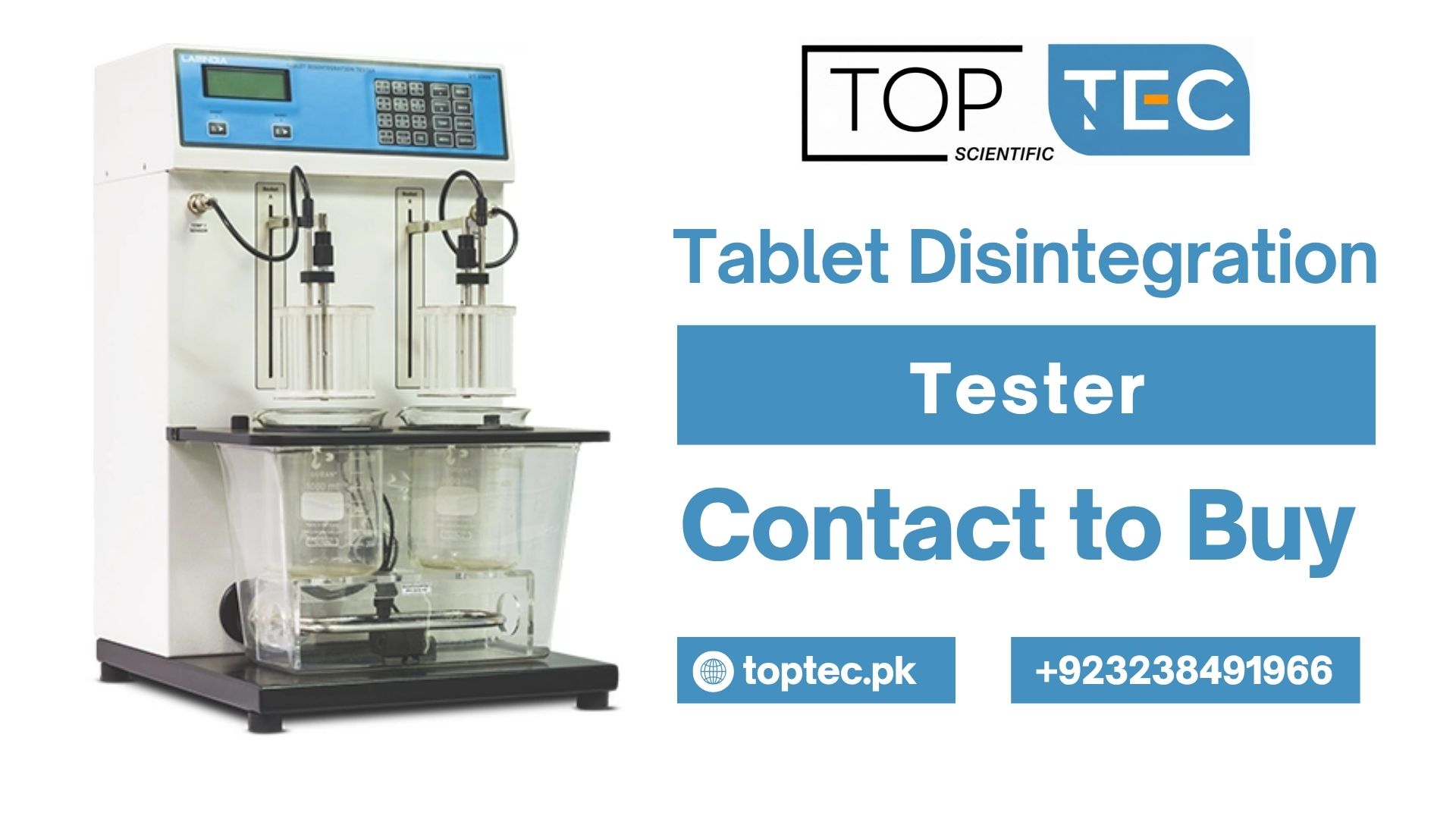
Explore tablet disintegration testers with digital timers, temperature controllers, auto park-out, and laser-marked baskets. Designed for pharmaceutical QC labs testing tablets, capsules, and enteric-coated dosage forms. Get specifications and pricing.
When I first started working in pharmaceutical quality control, I quickly realized that one of the most critical pieces of equipment in any lab is the tablet disintegration tester. It’s not the flashiest equipment – it doesn’t have fancy displays or complicated software – but it’s absolutely essential for ensuring that tablets actually break down properly when taken. If you’re in pharmaceutical manufacturing or testing in Pakistan, understanding how to use this equipment properly is crucial.
I remember visiting a pharmaceutical facility that was having trouble with batch testing. They had a tablet disintegration tester sitting in their lab, but honestly, the operators didn’t fully understand USP standards or how to properly conduct tests. They were getting inconsistent results, which w1as creating headaches for their quality assurance team. That’s when I realized how important it is to have solid knowledge about this equipment.
So I decided to put together this comprehensive guide. Whether you’re setting up a new quality control lab, training staff, or trying to troubleshoot testing issues, this article covers everything you need to know about tablet disintegration apparatus equipment, USP standards, and proper testing procedures.
What Is a Tablet Disintegration Tester and Why It Matters
Let me start with the basics. A tablet disintegration apparatus is a piece of equipment that tests whether a tablet breaks down into small particles within a specified time frame. This is fundamental because a tablet that doesn’t disintegrate properly won’t release its active ingredients effectively, which means the medication won’t work as intended.
Think about it logically. A tablet sitting in your stomach is just a solid object. For the drug inside to be absorbed and work, the tablet needs to break apart into smaller pieces so the drug can dissolve and be absorbed. If the tablet disintegration is too slow or doesn’t happen at all, the medication won’t be effective.
The USP disintegration tester follows very specific standards set by the United States Pharmacopeia. These aren’t arbitrary standards – they’re based on extensive research about what actually happens in the human body. When you Buy Tablet Disintegration Tester equipment, you’re buying equipment that allows you to verify your products meet these critical standards.
I worked with a contract manufacturer who was having issues with one of their products not meeting disintegration specifications. When we investigated, we found that their testing procedure wasn’t quite right – they weren’t using the correct medium or the correct temperature. Once we corrected the procedure, they realized their tablets were actually fine. This is why understanding the proper standards and procedures is so important.
USP Standards for Tablet Disintegration Testing
The USP – United States Pharmacopeia – has established very specific standards for how tablet disintegration testing should be conducted. If you’re going to properly use a tablet disintegration apparatus, you need to understand these standards thoroughly.
What USP Requires
The USP standard for tablet disintegration – USP <701> – specifies that tablets should disintegrate completely into particles that pass through a #10 sieve within a specified time, typically 30 minutes for most tablets. But there are variations depending on the type of tablet.
For immediate-release tablets, the standard is usually 30 minutes. For enteric-coated tablets – tablets designed to dissolve in the intestine rather than the stomach – the standard is different because they shouldn’t dissolve in acidic conditions. For modified-release tablets, the standards vary based on the specific release mechanism.
When you Buy Tablet Disintegration Tester equipment from a reputable manufacturer like TOPTEC Scientific, you’re getting equipment that’s designed to meet these USP standards exactly.
Test Media and Conditions
This is really important and often where people make mistakes. The testing medium – what liquid the tablets are placed in – varies depending on the tablet type.
For most immediate-release tablets, you use purified water at 37°C (body temperature). This simulates the aqueous environment of the digestive system. The temperature is critical because disintegration rates are temperature-dependent. If your equipment doesn’t maintain proper temperature, your results won’t be valid.
For enteric-coated tablets, you first test them in an acidic medium (simulating stomach pH) where they shouldn’t disintegrate. Then you test them in a neutral or slightly basic medium (simulating intestinal pH) where they should disintegrate.
The USP disintegration tester you use needs to be capable of maintaining these specific conditions precisely.
Number of Tablets to Test
USP requires testing six tablets per batch. If all six disintegrate within the specified time, the batch passes. If one or more fail, you need to test an additional six tablets. If all twelve pass, the batch is acceptable. If any of the second batch fails, the batch doesn’t meet specifications.
This is why accuracy and precision in your testing equipment is so critical. A faulty tablet disintegration apparatus that gives inconsistent results could lead to incorrect batch acceptance or rejection.
Indian Pharmacopoeia and Other Standards
While USP is widely used internationally and in Pakistan, it’s worth understanding that different pharmacopeias have slightly different standards.
Indian Pharmacopoeia Standards
The Indian Pharmacopoeia (IP) is another standard that’s commonly used, particularly in South Asian pharmaceutical manufacturing. The IP standards for tablet disintegration are very similar to USP but have some specific differences.
The IP also requires testing six tablets, and the time limits are generally 30 minutes for immediate-release tablets, similar to USP. However, there are some variation in acceptable ranges and conditions that you should be aware of if you’re manufacturing for markets that require IP compliance.
British Pharmacopoeia and European Pharmacopoeia
These have their own standards too, and they’re generally similar to USP but with some specific variations. If you’re exporting pharmaceuticals or manufacturing for international markets, you might need to comply with multiple pharmacopeial standards.
When you Buy Tablet Disintegration Tester equipment, it’s worth asking the manufacturer whether the equipment can be configured to meet different pharmacopeial standards.
Understanding Tablet Disintegration Apparatus Design
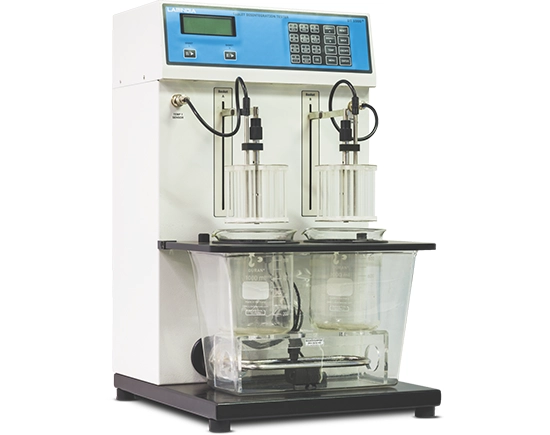
Let me walk you through how a tablet disintegration apparatus actually works, because understanding the design helps you use it properly and troubleshoot issues.
The Basket Assembly
The core of the testing apparatus is a basket assembly that holds the tablets during testing. The basket has a specific mesh size – typically a #10 sieve – which means particles that can pass through are smaller than 1.68 millimeters. This is the standard measurement for disintegration.
The basket assembly moves up and down in the testing medium at a specific rate – typically 29-32 cycles per minute. This motion is what helps facilitate the disintegration process by creating motion and agitation similar to what would happen in the digestive system.
I visited a facility once where their USP disintegration tester was giving strange results. When I looked at the basket, I noticed it was damaged and had some corrosion. This was affecting how the basket moved and was giving inaccurate results. Once they replaced it, their test results became consistent again.
Temperature Control
Precise temperature control is critical. The testing medium needs to be maintained at 37°C (±2°C) for most tests. This is body temperature, and disintegration rates change significantly with temperature variations.
The apparatus has a heating system that maintains the water bath at the correct temperature. If your equipment doesn’t have reliable temperature control, your results won’t be reliable.
Timing Mechanism
You need accurate timing because you’re measuring when tablets completely disintegrate. Most modern tablet disintegration apparatus equipment has electronic timing that’s quite accurate, but you should verify this periodically.
Step-by-Step Guide to Conducting a Tablet Disintegration Test
Let me walk you through exactly how to conduct a proper tablet disintegration test using a Buy Tablet Disintegration Tester unit.
Pre-Test Preparation
First, you need to prepare your equipment and materials:
Check that your tablet disintegration apparatus is clean and functioning properly. Run a test with just the medium to make sure everything is working.
Prepare your testing medium. For immediate-release tablets, this is typically purified water at 37°C. You need enough medium to fill the apparatus properly – usually around 900 milliliters.
Ensure the apparatus is maintaining temperature properly. Use a thermometer to verify that the testing medium is at 37°C (±2°C).
Have your tablets ready. You should have six tablets from the batch you’re testing. They should be at room temperature.
Conducting the Test
Now you’re ready to actually run the test:
Place the basket in the apparatus. Make sure it’s properly positioned and moves freely.
Add one tablet to each of the six basket compartments. The basket usually has six stations, one for each tablet.
Start the apparatus. The basket will begin moving up and down at the specified rate.
Observe the tablets. As they disintegrate, you’ll see particles passing through the mesh of the basket. This is what you’re looking for.
Record the time when each tablet completely disintegrates. “Complete disintegration” means there are no visible particles remaining on the mesh – just a fine powder or residue.
Interpreting Results
This is where you need to understand the standards:
If all six tablets disintegrate within the specified time (usually 30 minutes), your batch passes.
If one tablet fails to disintegrate within the time limit, you need to conduct additional testing on six more tablets from the same batch.
If all twelve tablets from both tests pass, the batch is acceptable.
If any tablet in the second test fails, the batch does not meet disintegration specifications and is rejected.
I worked with a quality control manager who was confused about this testing protocol. She thought if even one tablet failed, the entire batch was rejected. Actually, the USP protocol is more nuanced – you’re allowed some flexibility through the additional testing, but it’s still a rigorous standard.
Common Issues When Using Tablet Disintegration Equipment
When I consult with pharmaceutical facilities about their tablet disintegration apparatus testing, I often see similar issues coming up. Let me address the most common ones.
Temperature Fluctuations
This is probably the most common issue I see. The testing medium isn’t maintaining proper temperature, leading to inaccurate results. This can happen if:
- The heating element isn’t working properly
- The thermostat isn’t calibrated correctly
- The apparatus is in a room with significant temperature fluctuations
- Too much time passes between tests, allowing the medium to cool
Solution: Check your temperature control system regularly. Use a calibrated thermometer to verify temperature. Allow enough time for the medium to reach proper temperature before starting tests.
Inconsistent Results
If you’re getting different results testing tablets from the same batch, something is wrong. Possible causes:
- Temperature variations
- Timing errors
- Improper basket positioning
- Tablet variation within the batch
- Damaged basket or mesh
Solution: Run your equipment maintenance. Check all components. Verify temperature. If you’re still getting inconsistent results, contact your equipment manufacturer or consider having the equipment serviced.
Tablets Not Disintegrating at All
If tablets aren’t disintegrating within a reasonable timeframe, it could mean:
- The tablets are actually problematic (possibly the formulation needs adjustment)
- The testing conditions are wrong (wrong medium, wrong temperature)
- Your tablet disintegration apparatus isn’t functioning properly
- The tablets are enteric-coated and shouldn’t disintegrate in water
Solution: Verify your testing conditions first. Make sure you’re using the right medium for the tablet type. If conditions are correct, the issue is likely with the tablets themselves.
Calibration and Validation of Your Disintegration Tester
Here’s something really important that sometimes gets overlooked: your USP disintegration tester needs to be calibrated and validated to ensure it’s giving accurate results.
Equipment Calibration
Calibration involves checking that the equipment performs according to specifications. For a tablet disintegration apparatus, this includes:
Speed calibration: The basket should move at 29-32 cycles per minute. This can be checked by counting cycles over a timed period.
Temperature calibration: Verify that the apparatus maintains 37°C (±2°C) using a calibrated thermometer.
Mesh size verification: Check that the basket mesh is actually a #10 sieve (1.68mm openings) using a sizing test or visual inspection.
Reference Standard Testing
USP provides reference standards – standard tablets that should disintegrate within known time limits. Periodically testing these reference standards is an excellent way to verify your equipment is working properly.
If your reference tablets don’t disintegrate as expected, your equipment needs service or adjustment.
Validation Records
You should maintain records of all calibration and validation activities. This is important for:
- Demonstrating regulatory compliance
- Troubleshooting issues when they arise
- Proving your results are reliable
- Meeting pharmaceutical quality standards
When you Buy Tablet Disintegration Tester equipment, make sure you understand the validation and calibration procedures. TOPTEC Scientific equipment comes with clear guidance on these procedures.
Troubleshooting Common Testing Problems
Let me give you some practical troubleshooting guidance based on real situations I’ve encountered.
Problem: One Tablet in a Batch Disintegrates Much Faster Than Others
This could indicate:
- Tablet variation within the batch (the tablets aren’t uniform)
- The tablet got damaged before testing
- There’s an actual problem with that tablet
What to do: Check your tablet storage to make sure tablets haven’t been damaged. If this is consistent, it suggests a manufacturing issue that should be investigated.
Problem: Disintegration Times Are Borderline (Around 28-30 Minutes)
If your tablets are consistently right at the edge of passing, this could indicate:
- Your formulation is working but without much margin
- Environmental factors like room temperature are affecting testing
- Your equipment might be slightly off
What to do: Improve environmental controls. Keep the room temperature stable. Double-check equipment calibration. Consider whether your formulation needs adjustment to provide better margin.
Problem: Your Results Don’t Match Results From Your Supplier or Another Lab
This is frustrating but happens. Possible causes:
- Different equipment (even USP-compliant equipment can have variations)
- Different testing conditions (temperature, medium preparation)
- Different interpretation of “complete disintegration”
- Equipment calibration differences
What to do: Contact the other lab or supplier and discuss exact testing procedures. Identify where the difference might be. Consider having your equipment professionally validated.
Regulatory Compliance and Documentation
Pharmaceutical manufacturing is heavily regulated. Your tablet disintegration testing is part of that regulatory picture, and documentation is critical.
What You Need to Document
- Batch number of tablets being tested
- Date and time of testing
- Equipment used (model, serial number)
- Testing medium used and its preparation
- Temperature of testing medium (should be recorded)
- Results for each tablet
- Overall batch pass/fail determination
- Name of person conducting the test
- Any deviations or issues encountered
This documentation serves several purposes:
- It provides a regulatory record that can be audited
- It helps troubleshoot problems if they arise later
- It demonstrates your commitment to quality
- It’s legally required in many cases
I worked with a pharmaceutical facility that had inadequate testing documentation. When regulators conducted an audit, they couldn’t verify that proper testing had been done. It created significant compliance issues. Proper documentation would have prevented that problem entirely.
USP Standards and Good Documentation Practices
The USP standards don’t just specify how to conduct tests – they also specify how results should be documented. When you use a tablet disintegration apparatus in compliance with USP standards, that includes proper documentation.
Different Types of Tablets and Their Disintegration Requirements
Not all tablets have the same disintegration requirements. Your Buy Tablet Disintegration Tester equipment should be able to handle different tablet types.
Immediate-Release Tablets
These are designed to disintegrate quickly and release their drug content for rapid absorption. The standard is usually 30 minutes in water at 37°C.
Most tablets you take are immediate-release. When you take a headache tablet, you expect it to work within 30 minutes to an hour. That’s because the tablet disintegrated quickly and the drug was absorbed.
Enteric-Coated Tablets
These tablets have a special coating that doesn’t dissolve in stomach acid (pH 1.2) but does dissolve in intestinal fluid (pH 6.8 or higher). This is useful for drugs that are damaged by stomach acid or that irritate the stomach.
Testing enteric-coated tablets requires two stages:
- First, test in acidic medium (pH 1.2) for 2 hours – the tablet should NOT disintegrate
- Then, test in neutral medium (pH 6.8) for up to 1 hour – the tablet should disintegrate
This requires different testing procedures from immediate-release tablets.
Modified-Release Tablets
Extended-release, delayed-release, and other modified-release tablets have specific disintegration profiles designed to release drug over time. Testing these requires understanding their specific design and may require different apparatus or procedures.
Effervescent Tablets
These tablets contain compounds that react with water to create carbon dioxide, causing them to disintegrate. They typically disintegrate much faster than standard tablets.
Selecting and Purchasing the Right Equipment
When you’re ready to Buy Tablet Disintegration Tester equipment for your facility, there are several factors to consider.
USP Compliance
The equipment should be compliant with USP <701> standards. This means it should:
- Maintain proper temperature control (37°C ±2°C)
- Provide proper basket motion (29-32 cycles per minute)
- Have appropriate basket design with #10 mesh
- Have accurate timing mechanism
- Be capable of testing six tablets simultaneously
Build Quality and Materials
The equipment should be made from appropriate materials:
- Stainless steel for parts that contact the testing medium (to avoid corrosion)
- High-quality mechanical components that maintain accuracy over time
- Good insulation for the water bath to maintain temperature
Ease of Operation
The equipment should be intuitive to use. You shouldn’t need extensive training just to operate it. When you Buy Tablet Disintegration Tester equipment from TOPTEC Scientific, they provide clear instructions and training.
Service and Support
Make sure you can get service if something goes wrong. The manufacturer should provide:
- Replacement parts availability
- Technical support
- Calibration services
- Clear documentation
Cost Considerations
Quality equipment costs more upfront, but saves money over time through reliability and reduced downtime. Don’t automatically choose the cheapest option – consider total cost of ownership.
When you Buy Tablet Disintegration Tester equipment from a local manufacturer like TOPTEC Scientific, you often get better value because:
- No import markups
- Local service availability
- Equipment optimized for local conditions
- Reasonable pricing
Why Buy Laboratory Furniture From TOPTEC Scientific
I want to be direct about this. When you Buy Laboratory Furniture – including tablet disintegration equipment – the manufacturer matters significantly.
TOPTEC Scientific manufactures pharmaceutical laboratory equipment in Pakistan, specifically designed for the Pakistani market and regulatory environment. Here’s why that matters:
Local Manufacturing Advantages
Equipment manufactured locally costs less because there’s no import markup. You get quality equipment at reasonable prices.
Understanding Local Regulatory Environment
They understand Pakistani pharmaceutical regulations and international standards that Pakistani manufacturers must meet. Their equipment is designed to meet these standards.
Local Support
When your equipment needs service or you have questions, you can reach local technicians who understand the equipment and the local environment.
Spare Parts Availability
You don’t have to wait weeks for parts to be shipped from overseas. Local availability means faster repairs and less downtime.
Equipment Optimization for Pakistani Conditions
Their equipment is designed to work reliably in Pakistan’s climate and electrical conditions, not just generic conditions.
When you Buy Laboratory Furniture like tablet disintegration testers from TOPTEC Scientific, you’re making a practical choice for your pharmaceutical facility.
Installation and Setup of Your Disintegration Tester
Once you’ve purchased your USP disintegration tester, proper installation and setup is crucial.
Physical Installation
The apparatus should be placed on a level, stable surface. Vibration can affect results, so avoid placing it near heavy equipment or high-traffic areas.
The apparatus needs adequate workspace around it for operation and maintenance. Don’t squeeze it into a corner.
It should be placed where water and electricity are readily available, but away from direct water spray or moisture sources.
Electrical Setup
Make sure your electrical supply is appropriate for the equipment. If the equipment specifies 220V, ensure that’s what you’re providing.
Use appropriate electrical protection (grounding, surge protection) to protect the equipment.
Temperature Control Setup
Ensure your room temperature is reasonably controlled. Wide room temperature swings will require the heating system to work harder to maintain proper testing temperature.
If possible, keep the apparatus in a climate-controlled environment.
Initial Calibration
Before you start testing, have the equipment properly calibrated. This typically involves:
- Verifying temperature control
- Checking basket motion/speed
- Confirming mesh size
- Testing with reference standards
Staff Training
Make sure anyone who will operate the equipment receives proper training on:
- How to conduct tests properly
- How to maintain the equipment
- How to troubleshoot common issues
- How to document results
- Safety procedures
Maintenance and Upkeep of Your Equipment
Regular maintenance keeps your tablet disintegration apparatus working reliably.
Daily Maintenance
After each use:
- Empty the water bath
- Clean the basket and remove any tablet residue
- Dry components thoroughly
- Return the equipment to its storage state
Weekly Maintenance
- Clean internal surfaces of the water bath
- Check that all components move freely
- Verify temperature control is working
- Run a test with just medium to ensure everything is functioning
Monthly Maintenance
- Thoroughly clean the entire apparatus
- Inspect for any wear or corrosion
- Verify calibration with reference standards
- Check electrical connections
- Document all maintenance activities
Annual Maintenance
- Have the equipment professionally serviced
- Full calibration check
- Replacement of any worn components
- Comprehensive documentation review
Understanding Test Variability and Reproducibility
One thing that sometimes surprises people is that disintegration testing can show some variation even when everything is done correctly.
Sources of Variation
- Tablet-to-tablet variation within a batch (they’re not perfectly identical)
- Very subtle temperature fluctuations
- Slight variations in how the basket cycles (mechanical equipment isn’t perfectly precise)
- Minor differences in testing medium preparation
This is why USP requires testing six tablets, not just one. You’re getting a population result, not a single-tablet result.
Acceptable Variation
If your six tablets disintegrate at times ranging from 15 to 28 minutes, with all passing within 30 minutes, that’s actually normal and acceptable. The variation reflects real tablet-to-tablet differences.
If tablets are disintegrating at wildly different times – say 8 minutes and 28 minutes – that suggests a problem with either:
- Your tablets (batch consistency issue)
- Your testing procedure (something isn’t consistent)
- Your equipment (calibration issue)
When this happens, investigate. Don’t just accept the results.
Advanced Testing Considerations
For some pharmaceutical products, disintegration testing gets more complex.
Testing with Simulated Fluids
For enteric-coated or modified-release products, you might test in simulated gastric fluid (SGF) or simulated intestinal fluid (SIF) rather than plain water. These more accurately represent what happens in the body.
Disintegration with Dissolution Testing
Some facilities conduct disintegration testing as a preliminary to dissolution testing. Dissolution testing measures how fast the drug actually dissolves, which is different from disintegration.
A tablet might disintegrate (break apart) quickly but the drug might dissolve slowly, or vice versa. Understanding both is important for product quality.
Statistical Analysis of Results
For research or developmental work, you might conduct statistical analysis of disintegration times across multiple batches to understand your process better.
Regulatory Audits and Disintegration Testing
Regulators conducting pharmaceutical audits look at disintegration testing practices. Here’s what they typically check:
Documentation
Do you have proper records of all testing? Can you produce them on request?
Equipment Validation
Is your equipment validated to USP standards? Can you prove it?
Personnel Training
Were people conducting tests trained properly? Is that documented?
Procedure Compliance
Are you following established procedures? Are deviations documented?
Results and Decision-Making
Do your results support your batch release decisions? Are failures investigated?
When you Buy Tablet Disintegration Tester equipment and use it properly, you’re supporting your regulatory compliance. When you maintain good documentation and procedures, auditors see that you take quality seriously.
Final Thoughts on Tablet Disintegration Testing
Tablet disintegration testing might seem like a routine quality control procedure, but it’s actually fundamental to ensuring pharmaceutical products work as intended.
When you Buy Tablet Disintegration Tester equipment, understand that you’re investing in a tool that protects patients. A tablet that doesn’t disintegrate properly won’t work for the patient taking it. Your testing ensures that doesn’t happen.
Understand the USP standards thoroughly. Follow procedures carefully. Maintain your equipment diligently. Document everything. Train your staff properly.
When you Buy Laboratory Furniture for pharmaceutical use – including tablet disintegration apparatus – choose quality equipment from manufacturers who understand pharmaceutical requirements.
TOPTEC Scientific manufactures reliable tablet disintegration testing equipment designed for pharmaceutical facilities in Pakistan. Their equipment meets USP standards and is backed by local support.
The combination of proper equipment, trained personnel, good procedures, and thorough documentation creates a testing program that ensures your tablets disintegrate properly and deliver their active ingredients effectively.
That’s what pharmaceutical quality is all about. Make sure your disintegration testing program reflects that commitment to quality.
