

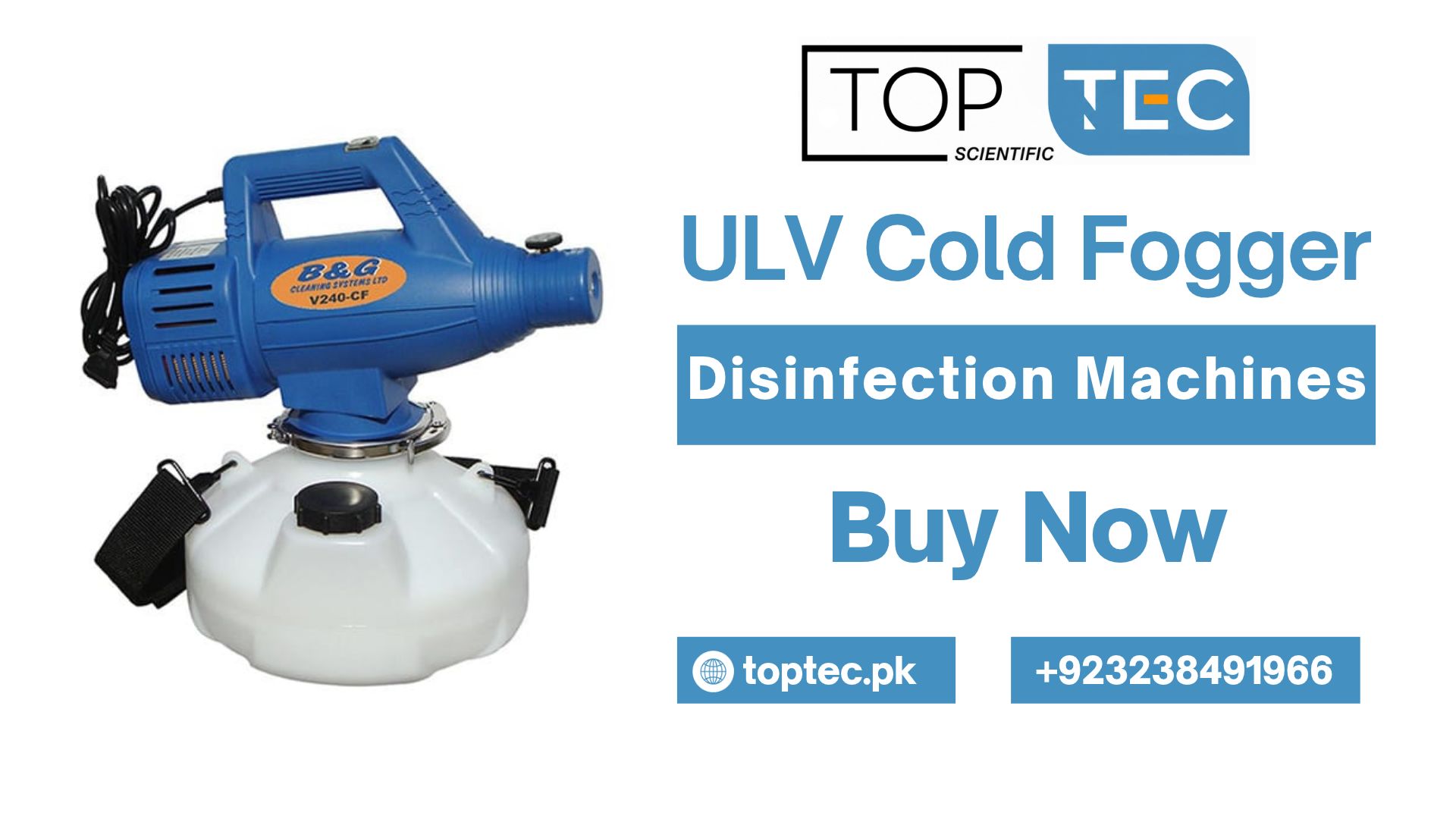
Achieve maximum coverage with a ULV cold fogger. Adjustable droplet sizes (5-50 microns) and chemical-resistant tanks for safe, efficient spraying. View specs.
A microbiology lab in Karachi’s Korangi Industrial Area has been cleaning its testing suite carefully, yet its environmental monitoring results keep showing mold. The floors are mopped, the benches are wiped, and the staff have checked the obvious places. Still, contamination appears near the ceiling return ducts.
It’s a frustrating situation, and it raises a useful question: what do you do when routine cleaning isn’t reaching the source of contamination?
The answer starts with an investigation, not a machine. The team may need to look at moisture, airflow, filters, hard-to-clean surfaces and cleaning practices. Depending on the findings, a validated fogging process might support the room’s disinfection program—but it won’t replace cleaning or fix a hidden leak.
If you’re considering a disinfectant fogger machine for a laboratory, pharmaceutical facility or industrial site, it helps to understand the difference between cold ULV fogging and thermal fogging. It’s also worth considering what the mist will land on, including the workbenches and cabinets in the room.
Why Consider Fogging Alongside Manual Cleaning?
Manual cleaning remains essential. A cloth or mop can remove visible dirt and residues that a fog cannot. But every room has awkward spots: the tops of light fixtures, gaps behind equipment and areas around pipework can be difficult to reach consistently.
A disinfectant fogger machine disperses a liquid formulation as small droplets. Depending on the equipment, disinfectant and room layout, this can help distribute the product through an enclosed area.
That doesn’t mean every surface receives the same dose. Equipment placement, airflow, droplet size and the product used all affect coverage. A visible mist is not proof that a room has been disinfected. For a regulated facility, the process needs to be assessed and validated for the intended use.
Contact time matters, too. Rather than relying on a general rule, follow the disinfectant manufacturer’s instructions for the target organisms, concentration, application method and required exposure time.
How Does a ULV Cold Fogger Work?
ULV stands for ultra-low volume. A ULV fogger uses an air stream or another atomizing mechanism to turn a liquid into fine droplets without relying on a heated barrel.
The size of those droplets varies by machine, nozzle and operating settings. Smaller droplets can remain airborne longer than larger ones, but their movement depends on the room’s ventilation, temperature and other conditions. They will not necessarily reach every hidden surface.
Cold fogging may be considered for laboratories, hospitals and production areas when the disinfectant is approved for that method and the room has a suitable, validated procedure. It has one practical advantage over a petrol-powered thermal unit: it doesn’t introduce engine exhaust into the room.
Even so, “cold” doesn’t automatically mean residue-free or harmless to equipment. Some formulations can leave deposits or affect sensitive materials. Check compatibility with instruments, seals, filters and room surfaces before use.
How Is a Thermal Fogger Different?
A thermal fogger uses heat to produce a visible fog from a suitable formulation. These machines are often associated with pest-control work in outdoor areas, warehouses and agricultural settings.
Thermal foggers come in different designs and use different products. Some formulations may leave residue, and heat can affect certain chemicals. A product intended for one machine or application should not be assumed suitable for another.
Petrol-powered equipment also produces combustion exhaust. It should not be operated in an enclosed laboratory or cleanroom. For any indoor application, the equipment, product, ventilation and safety controls must be assessed together by the facility’s responsible personnel.
ULV vs Thermal Fogging at a Glance
| Consideration | Cold ULV fogger | Thermal fogger |
|---|---|---|
| How it produces fog | Atomizes liquid without a heated barrel | Uses heat to produce a fog |
| Common applications | May be used for approved indoor disinfection processes | Often used for pest control and some approved industrial applications |
| Key checks | Product approval, coverage, residue and surface compatibility | Heat compatibility, residue, ventilation and combustion risks |
| Cleanroom use | Requires a validated process and suitable equipment | Petrol-powered units are unsuitable inside enclosed cleanrooms |
The right choice depends on the task. Fogging a warehouse perimeter for pest control is not the same job as disinfecting a pharmaceutical testing room.
What to Check Before Buying a Disinfectant Fogger Machine
Price matters, but a low initial cost can become expensive if the machine cannot handle your disinfectant or replacement parts are difficult to find. Before placing an order, ask the supplier about the following.
Chemical compatibility
Check every part that touches the solution: the tank, tubing, seals, valves and nozzle. Hydrogen peroxide, peracetic acid and other chemicals can damage materials that are not designed for them.
Stainless steel, PTFE and chemical-resistant plastics may be suitable in some applications, but compatibility depends on the formulation and concentration. Ask for confirmation from both the fogger and disinfectant suppliers.
Droplet and output specifications
Ask for documented droplet-size and output information under stated operating conditions. A control dial marked “fine” or “coarse” doesn’t tell you how the machine will perform in your room.
If possible, arrange a demonstration and discuss how the proposed application will be assessed. A quick visual test alone cannot establish disinfection effectiveness.
Controls and operator safety
For an unoccupied-room process, timed or remote operation may be useful. Also ask how the unit is started, stopped and maintained, and what happens if a cycle is interrupted.
Your site procedure should address restricted access, ventilation, exposure limits and safe re-entry. These controls depend on the chemical and equipment—not just the timer on the fogger.
Spare parts and service
A blocked nozzle or damaged seal can take a machine out of service. Before buying, check whether the supplier can provide replacement parts and technical support in Pakistan.
Don’t Overlook the Room Surfaces
Fogging is only one part of contamination control. The condition of the room matters just as much.
A peeling laminate worktop, rusty shelf or damaged cupboard can be difficult to clean thoroughly. Repeated exposure to moisture and chemicals may make those problems worse. That’s why, when you Buy Laboratory Furniture, it’s worth thinking beyond appearance and asking how each surface will be cleaned and disinfected.
TOPTEC Scientific manufactures laboratory furniture in Pakistan. If you’re planning a new lab or replacing worn workstations, contact the company to discuss your layout, intended materials and cleaning requirements.
Useful questions to ask include:
- Which worktop material is suitable for the chemicals used in the room?
- Are the joints and edges easy to clean?
- What dimensions will fit around existing equipment?
- Can the furniture withstand the site’s normal cleaning products?
- What documentation and after-sales support are available?
Stainless steel can be a practical choice for some laboratory environments, but it is not immune to every chemical. Grade selection and maintenance should be matched to the disinfectants you actually use.
Safe Habits Before and After Fogging
A fogger should be used as part of an approved site procedure. These are sensible points to discuss with your safety and quality teams before starting:
- Clean first. Remove visible soil and spills according to the facility’s procedure. Fogging is not a substitute for physical cleaning.
- Use an approved product. Confirm that the disinfectant is authorized for the intended application and compatible with the machine.
- Follow the validated ventilation plan. HVAC settings depend on the room and process. Do not switch off ventilation or cover fire detectors unless an approved procedure specifically authorizes it.
- Control access and re-entry. Keep people out during treatment and follow the product’s requirements for aeration, monitoring and safe re-entry.
- Maintain the machine as instructed. Emptying, rinsing and storage requirements vary. Follow the equipment and chemical manufacturers’ directions rather than assuming every unit should be flushed in the same way.
- Avoid unapproved flammable products. Do not fog alcohol or another flammable liquid unless the equipment and process are specifically designed and approved for it.
Final Thoughts
A disinfectant fogger can be useful, but it isn’t a shortcut around investigation, cleaning or validation. Start by understanding the contamination problem and the room itself. Then choose equipment and a disinfectant that are suitable for that specific application.
For indoor laboratories, a cold ULV system may be an option when properly assessed and validated. Thermal foggers have different uses and require their own safety controls. Whichever approach you consider, remember the surrounding surfaces: sound, easy-to-clean furniture is part of a well-planned laboratory too.
