

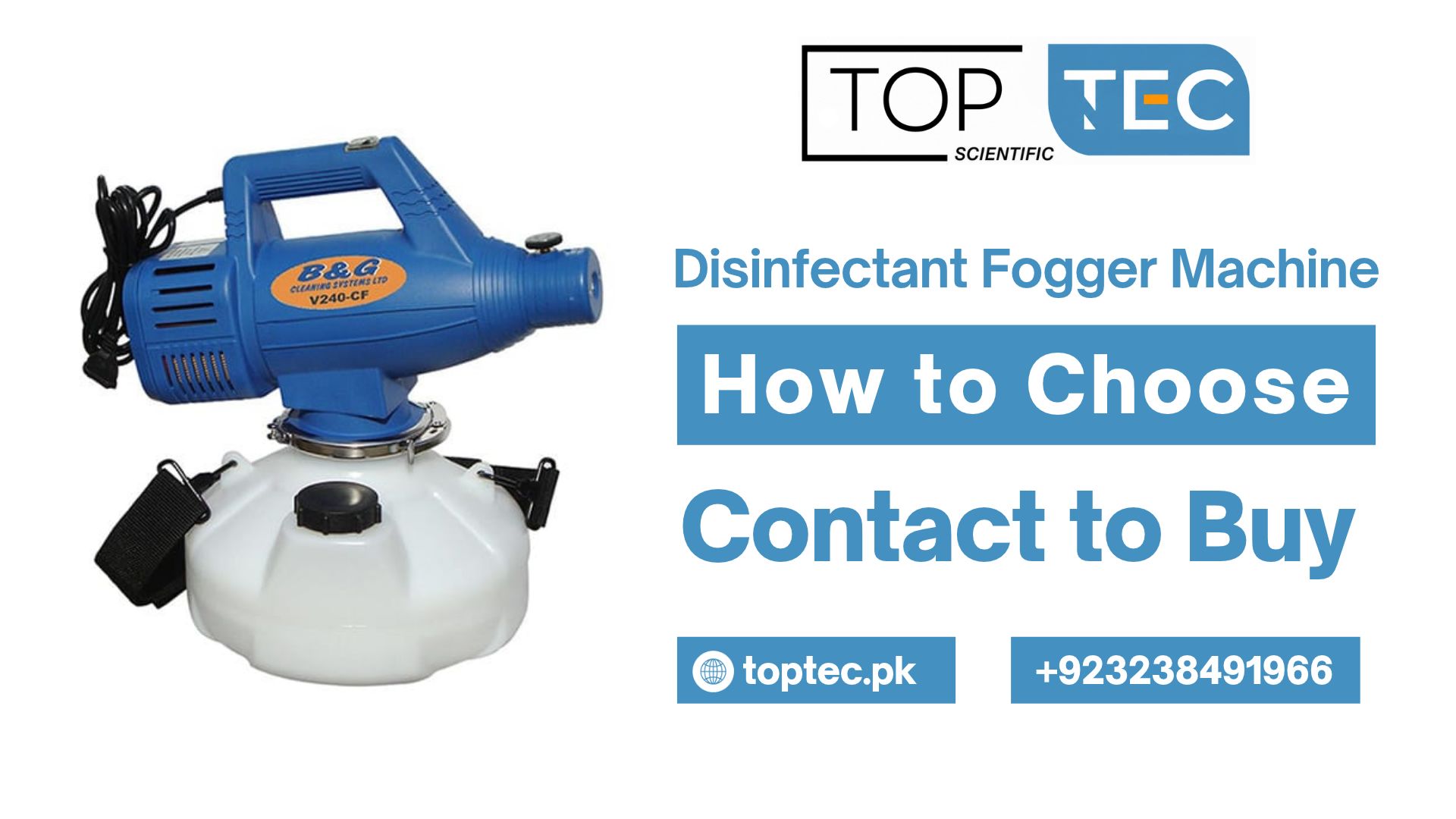
Discover top-rated disinfectant fogger machines for fast, effective sanitation. Compare ULV, thermal, and electrostatic models for any space. Request a quote.
A few summers ago, a lab manager in Karachi called me up practically in tears. Their sterile injectable suite was failing environmental monitoring — settle plates near the ceiling returns were growing mold during monsoon season. Her crew was mopping floors twice a shift, wiping walls with IPA, scrubbing every table till their arms dropped. The spore counts wouldn’t move.
I walked in and the problem was obvious in ten seconds. You can’t mop air. Plain and simple. Nobody gets under a ceiling grille or into the gaps behind pipes with a sponge.
So what did they need? A proper disinfectant fogger machine to fill the whole room, not just the bits a person can reach. We switched their weekly sanitation to a stainless-steel ulv fogger running a validated hydrogen peroxide and silver ion mix. Fungal counts dropped to zero after the first cycle. They also clocked that their old wooden cupboards were drinking up moisture and feeding the mold, so they decided to Buy Laboratory Furniture in 304 stainless steel. No pores, easy to wipe, and the damp problem couldn’t creep back.
Here’s the bit that still gets me. Before I got involved, a maintenance contractor had suggested an agricultural thermal fogger inside an ISO Class 6 cleanroom. If they’d gone with that, they’d have coated HEPA filters worth lakhs in soot.
There’s plenty of confusion about how room fumigation works and which specs matter. Let me break it down the way I’d explain it on site — what works on the floor, not in a brochure.
Why mops and buckets always miss something
Manual wiping stays your baseline in a pharma cleanroom, biosafety lab, hospital theatre or food line. You’ve still got to get rid of visible dirt and grime. No fogger does that job for you.
The catch is that manual cleaning has a blind spot: people are inconsistent. An operator at the tail end of a ten-hour shift in Lahore’s July heat misses a corner. And cloth-applied disinfectant dries too fast — often before it hits that ten-to-fifteen minute wet contact time needed to kill spores.
Run a disinfectant fogger machine and you take human reach right out of the equation. It turns liquid biocide into billions of tiny droplets that drift on air currents — more like a gas than a liquid, really. The mist slips behind incubators, settles on pass box tops, and hangs long enough to oxidize airborne pathogens.
Which mist you get depends on the machine. A cold ulv fogger or a heat-driven thermal fogger. Get it wrong and you either wreck your chemical before it leaves the nozzle, or soak your electronics in puddles. It’s the same logic people skip when they buy furniture: you don’t park a particle-board desk in a wet lab.
How it actually works
It all comes down to droplet size, measured in microns.
Squeeze a garden spray bottle and the droplets are chunky — 100 to 200 microns. Gravity hauls them straight down. They wet the ground in front of you and do nothing up in the air where the contamination actually lives.
The machine shears the liquid down to a tight 5 to 50 micron range. Once droplets get down around 10 to 20 microns, air resistance finally beats gravity. They hang, bouncing off air molecules, drifting through the room like a dry cloud for half an hour or more.
Getting liquid that small takes real energy, and manufacturers go one of two ways. Cold high-pressure air shearing. Or vaporization with intense heat. Two machines, two different jobs.
Cold fogging: inside the Disinfectant Fogger Machine
ULV stands for ultra-low volume, and the name isn’t marketing nonsense. These machines use a small amount of concentrate to cover a huge cubic volume, since splitting one millilitre into 15-micron droplets creates millions of contact points.
A cold unit has no heating element at all. A high-speed blower motor — often spinning at 18,000 to 25,000 RPM — shoves air through a Venturi nozzle. As the air races past the feed tube, it creates a vacuum that sucks the disinfectant from the tank and shears it into mist.
That no-heat business matters for labs and pharma plants. Almost every cleanroom-grade biocide — hydrogen peroxide, peracetic acid, hypochlorous acid, alcohol blends — is heat-sensitive. Boil peroxide in a hot barrel and you’ve broken it down into water and oxygen before it reaches a bacteria cell. A cold unit keeps the chemical at room temperature, so you keep the full oxidizing punch.
From what I’ve seen in Pakistani pharma plants, cold fogging is the only sensible call for ISO cleanrooms, sterile filling lines, microbiology and PCR labs, and hospital ICUs. It leaves no oily film on HEPA membranes.
Heat-driven fogging: where the thermal fogger fits
So why does anyone still use a thermal fogger when heat wrecks cleanroom peroxides?
It works differently. The machine heats a vaporization chamber with electric coils, butane cartridges, or a petrol engine. The disinfectant gets mixed with an oil-based or glycol carrier and fed into the hot tube, where it flashes into vapour. The instant that vapour hits cooler air, it condenses into thick white smoke of 0.5 to 10 micron droplets.
Because those droplets are small and visible, the cloud travels far outdoors and squeezes into cracks and pipes.
But a heat-driven unit has real trade-offs:
- **Chemical degradation.** Heat kills peroxides. You’re stuck with heat-stable disinfectants.
- **Slippery residue.** The glycol or oil carrier leaves a greasy film on floors and walls over time.
- **Fire alarms and noise.** A petrol unit sounds like a jet engine and pumps exhaust into the space. Even electric ones trip every smoke detector.
So these machines belong outside — warehouses, plant perimeters, dengue vector control around loading bays, grain silos. Places where thick visible smoke is useful. You wouldn’t run one near a QC lab with expensive balances.
Head-to-head: cold vs heat-driven
If you’re still torn about which style suits your SOPs, here’s how the two stack up day to day:
| Cold | Heat-driven | |
| Atomization | High-speed air shear, Venturi nozzle | Heat vaporization and condensation |
| Droplet size | 10–50 microns, adjustable | 0.5–15 microns |
| Visibility | Barely visible fine mist | Thick dense white smoke |
| Chemical compatibility | Peroxides, acids, quats, bleach | Heat-stable chemicals only |
| Carrier | Plain RO or distilled water | Glycol enhancer or oil carrier |
| Residue | Clean dry finish | Slightly slick film if over-applied |
| Best for | Cleanrooms, labs, hospitals | Warehouses, docks, pest control |
That’s why pharma QA teams pick cold fogging for indoor decontamination, while maintenance crews keep a heat unit out in the utility shed. Two separate programs.
How to pick a machine that won’t die in six months
Walk through any industrial market in Lahore or Karachi and you’ll spot cheap plastic foggers imported for a song. They look fine for three weeks, then the acid eats the brass nozzle, the tank cracks, or the motor conks out.
When you’re looking at a commercial unit, skip the box stickers and check these things.
Nozzle and tank metallurgy. Peracetic acid, stabilized peroxide and sodium hypochlorite are seriously corrosive. If the internal lines or nozzle are brass, copper or cheap mild steel, the chemical eats the metal and clogs the orifice inside a month. For pharma use, you want SS304 or SS316 stainless throughout.
Real droplet control, not just a flow valve. Half the cheap makers claim “adjustable micron control.” In reality it’s often just a plastic thumb valve pinching a silicone hose. A poorly machined nozzle still spits out heavy drops and leaves wet streaks. Test it with plain water against cardboard three feet away. Soaked in five seconds? Bad atomization.
Handheld or hands-free. Figure out whether you want an operator in a full respirator, or an automated cycle that runs itself. In a pharma cleanroom, you don’t want anyone breathing high-concentration peroxide vapour. Go for a stationary unit on a rotary turntable with a delayed-start timer — drop it in the middle of the room, set a two-minute exit delay, walk out, seal the door. It spins 360 degrees and fogs the room while everyone stays outside.
The full picture: TOPTEC Scientific
A disinfectant fogger machine is just one piece of the contamination-control puzzle.
You can run cold fogging every night and still fail a DRAP or ISO audit if the room is full of particle traps — chipped laminate tables, rusty mild-steel racks, pass boxes that don’t seal. The rest of your lab has to be built to stay clean.
TOPTEC Scientific is based right here in Pakistan. They make laboratory and cleanroom furniture for pharma plants, hospitals, universities and R&D centres. When you source furniture from them, you’re not dealing with a trading company marking up mystery imports. They fabricate locally using certified SS304 and SS316 stainless that stands up to daily fogging and GMP inspections.
Procurement is easier too. Custom sizing built to your floor plan in weeks, not months of port clearance, and an engineering team a phone call away for spares. For fogging equipment itself, ask TOPTEC directly — their core range is lab and cleanroom furniture, so get their straight answer on specs.
A basic SOP for fogging a cleanroom safely
Even a top-tier disinfectant fogger machine run carelessly gives poor kill rates, or worse, sends someone to the clinic. A written procedure isn’t optional under GMP. A checklist:
1. Clean dirty surfaces first. Fog doesn’t cut through thick dirt or grease. Wipe and mop first.
2. Shut down HVAC and exhaust. Running air handling pulls your disinfectant straight out of the room. Kill the ventilation and seal dampers.
3. Cover the smoke detectors. A high-output cold unit throws enough aerosol to fool the sensors. Cap them and log it.
4. Measure the room, dilute properly. Work out the cubic volume and stick to the biocide maker’s dosage. Doubling the chemical doesn’t sterilize twice as well.
5. Position the machine right. Stationary units go on a stainless cart in the middle of the room, or angled from a corner so the airstream circulates.
6. Respect the dwell time. Once the machine finishes its dose, keep the room sealed for 45 to 60 minutes. Let the droplets settle.
7. Ventilate, then flush. Bring the HVAC back up to purge the fumes before anyone re-enters. Then pour a litre of distilled water into the tank and run it two minutes to flush the pump and nozzle. That rinse doubles the machine’s life.
Mistakes that kill fogging equipment
I’ve walked into maintenance closets stacked with dead foggers, and nearly every one died from how it was handled, not bad luck.
Powder in a fine nozzle. Never pour imperfectly dissolved powders — raw calcium hypochlorite is the usual culprit — into a cold or heat-driven machine without filtering first. Undissolved grit acts like sandblasting media and clogs the intake instantly.
Acid left in the tank over the weekend. The Friday shift ends, someone switches the machine off with half a tank of peracetic acid inside, and by Monday the acid has swollen the O-rings. Rinse after every shift.
Ignoring the furniture. Fogging a room full of decaying, porous furniture is wasted effort. If your tables are chipping or rusting, replace them with furniture that belongs in a sterile room.
Quick FAQ
Can I fog alcohol? Never pure IPA or ethanol in a heat-driven machine — you’ve basically built a flamethrower. Even in an electric cold unit, fogging high-percentage alcohol indoors is an explosion risk from static or motor brushes. Stick to water-based peroxides or quats.
What micron size kills viruses and spores? For cleanroom air and surfaces, 10 to 20 microns from a cold machine is the sweet spot. Over 30 drops too fast. Under 5 bounces off surfaces without wetting a spore.
Where do we get reliable lab furniture in Pakistan? When you need furniture that stands up to cleanroom sanitation, TOPTEC Scientific makes lab benches, fume hoods, laminar flow cabinets and pass boxes right here in Pakistan.
Final thoughts
Keeping contamination out of a controlled space isn’t about buying the shiniest gadget. It’s about making sure every part of your sanitation process works together, with no gaps for mold and spores to sneak through.
A well-built disinfectant fogger machine bridges the gap between manual wiping and full-room biological control. For indoor sterile rooms, analytical labs and healthcare wards, invest in a corrosion-resistant cold unit. Save the high-output thermal one for loading docks and non-sterile warehouses, where thick smoke helps.
And remember — the best fogging routine only does as much as the surfaces inside the room. When you’re building a new lab, upgrading a suite, or hunting for furniture in Pakistan that’ll take years of sterilization without rusting, talk to TOPTEC Scientific. Locally made, GMP-grade stainless furniture plus a disciplined routine keeps settle plates clean, auditors happy, and batches safe.
