


The Airflow Thing Everyone Gets Confused About it. Honestly, airflow patterns are where this whole topic gets messy. But understanding them is the key to understanding why you can’t just swap these systems around.
Laminar Flow Hoods—The Conveyor Belt of Clean Air
Imagine a conveyor belt made of air. That’s laminar flow. Smooth, unidirectional, no turbulence.
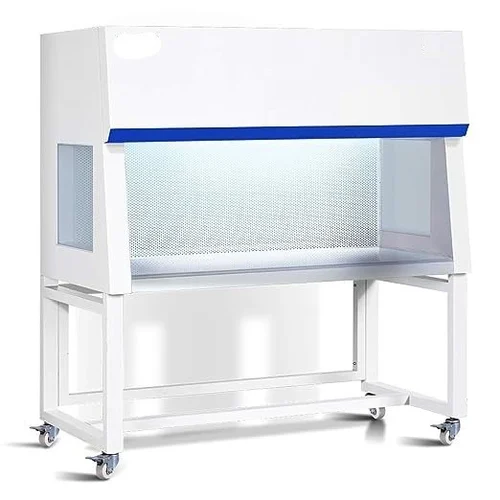
Horizontal flow hoods: Clean air comes from a HEPA filter at the back wall and flows straight toward the front—toward you. It’s great for electronics work because you’re not breathing on the components. It’s terrible for pretty much anything biological or chemical because you’re getting a face full of whatever you’re working with.
I knew a guy who set up a horizontal flow hood for mushroom cultivation. Sounds reasonable, right? Sterile work, need clean air. Except every time he worked in it, he’d end up with respiratory irritation. Turns out he was mildly allergic to mushroom spores, and the hood was concentrating them and blowing them straight into his breathing zone. Classic misuse.
Vertical flow hoods: Air comes from a HEPA filter on top, flows down over the work surface, then out the front toward the operator and down toward the floor. Better than horizontal for some applications, but still zero personnel protection.
When you Buy Laminar Air Flow cabinets and get them installed, you should verify the airflow with a cleanroom particle counter. This isn’t just a formality. I’ve seen hoods with HEPA filter leaks that nobody caught because they didn’t do proper particle count testing. The cleanroom particle counter would have found it immediately.
Biosafety Cabinets—The Protective Bubble
BSCs are more complex, and there are different types. Let me break it down:
Class I: Kind of like a fume hood with HEPA filtration. Room air gets sucked in through the opening, passes over your work, then gets HEPA filtered before exhaust. Protects you and the environment, but doesn’t protect your work—no sterile field.
Class II: This is what most labs have. It’s got downflow of HEPA-filtered air protecting your work (like a laminar flow hood), plus an air barrier at the opening pulling air away from you (personnel protection), plus HEPA-filtered exhaust (environmental protection).
Class II cabinets get divided into Types A1, A2, B1, and B2. The differences involve what percentage of air is recirculated versus exhausted and whether they connect to building exhaust. Type A2 is by far the most common.
Class III: Fully enclosed glove box for when you’re working with stuff that could literally end civilization. Most labs will never see one of these.
When a BSC gets certified, the tech uses a cleanroom particle counter to verify HEPA filter integrity and workspace cleanliness. The cleanroom particle counter data proves the filters are actually removing particles like they’re supposed to. I’ve watched certification techs find pinhole leaks in HEPA filters using a cleanroom particle counter that you’d never spot visually.
Fume Hoods—The Exhaust Fan’s Bigger Brother
Fume hoods are refreshingly simple compared to BSCs. Air comes in the front opening, flows across the work surface, goes through the back plenum, up the duct, and out the roof.
No recirculation. No HEPA filters (usually). Just “grab bad air, throw it outside.”
The key spec is face velocity—how fast air enters through the opening. Too slow and vapors escape. Too fast and you create turbulence that actually can pull vapors out into the room. Sweet spot is usually 80-120 feet per minute.
I watched a chemistry professor completely screw up an experiment because his fume hood’s face velocity was too high. The turbulence kept disturbing his reaction vessel. Slowed down the velocity, problem solved.
Filtration—Or Lack Thereof
This is simple but critical.
Laminar flow hoods: Always HEPA filtered. That’s the entire point. After you Buy Laminar Air Flow systems, the HEPA filters should be tested with a cleanroom particle counter to verify they’re achieving at least 99.97% efficiency at 0.3 microns. If they’re not, you don’t have a laminar flow hood—you’ve got an expensive fan.
Biosafety cabinets: Always HEPA filtered, both supply and exhaust. The cleanroom particle counter verification during certification proves the filters are intact and working. I’ve seen BSCs that looked fine but had compromised HEPA filters. Only caught it because the cleanroom particle counter showed elevated particle counts.
Fume hoods: No filtration. Just exhaust. Some specialized setups use carbon filters or scrubbers for specific chemicals, but standard fume hoods are just fans and ductwork.
This is why you absolutely cannot substitute one for another based on availability. “Oh, the BSC is busy, I’ll just use the laminar flow hood for my bacterial culture.” No. Just no. The laminar flow hood has no mechanism to protect you.
The Testing and Certification Maze
Each type has completely different certification requirements. This matters when you’re budgeting because these tests aren’t cheap.
Laminar Flow Hood Certification
After you Buy Laminar Air Flow equipment and get it installed, certification typically includes:
- HEPA filter integrity testing (they use DOP or PAO aerosol challenge)
- Airflow velocity measurements at multiple points
- Smoke tests to visualize the airflow pattern
- Particle counting with a cleanroom particle counter
- Checking lights, outlets, UV lamps (if equipped)
The cleanroom particle counter testing is crucial. It proves the workspace achieves the specified ISO class—usually ISO 5 (used to be called Class 100) for pharmaceutical and medical work.
I watched a certification fail once because the HEPA filter looked fine, but the cleanroom particle counter showed the workspace was barely meeting ISO 7. Turned out the filter housing had a gap. Visual inspection missed it. The cleanroom particle counter caught it.
Biosafety Cabinet Certification
This is more involved and governed by NSF/ANSI 49 standard. Required annually, and anytime you move the cabinet or change filters.
Testing includes:
- HEPA filter leak testing (using a cleanroom particle counter or aerosol photometer)
- Downflow velocity measurement
- Inflow (face) velocity measurement
- Airflow smoke visualization
- Personnel protection test (they release bacteria or spores and verify you don’t get exposed)
- Product protection test (verify the workspace stays sterile)
- Cross-contamination test (verify samples don’t contaminate each other)
Again, cleanroom particle counter data is essential for verifying HEPA performance. The certification report should include particle count data at various locations within the cabinet.
I knew a lab that skipped their annual BSC certification to save money. Two months later they had a contamination event that ruined six months of cell culture work. The investigation found a HEPA filter leak. Annual certification would’ve cost them maybe $400. The contamination cost them probably $50,000 in lost work and materials.
Fume Hood Testing
ASHRAE 110 is the standard. Tests include:
- Face velocity measurement across the entire opening
- Smoke tests to visualize airflow
- Tracer gas containment testing
- Exhaust volume measurement
No cleanroom particle counter needed—particulates aren’t the concern with fume hoods.
When People Use the Wrong Equipment (And Why It’s Terrifying)
Let me tell you about some disasters I’ve personally witnessed or investigated.
The Organic Chemistry Students
University lab. Students doing organic synthesis that involved chloroform and other lovely volatile solvents. Someone decided they needed a “clean environment,” so they were working in a horizontal laminar flow hood.
The hood was concentrating the solvent vapors and delivering them directly to the students’ faces. Multiple students reported headaches and dizziness. One passed out.
Investigation found they’d been working like this for weeks. The faculty member supervising them didn’t realize the problem because he’d never actually watched them work.
The fix was simple—move everything to the fume hoods that were sitting unused down the hall. But the fact that this happened in the first place? Terrifying.
The Pathology Lab
This one still makes me angry. A pathology lab was processing tissue samples that potentially contained tuberculosis bacteria. Where were they doing this work? In a vertical laminar flow hood.
Their reasoning: “We need a sterile field to prevent contaminating the samples.”
Okay, sure. But what about the TB bacteria you’re potentially aerosolizing and breathing?
When I pointed this out, the lab supervisor said, “Well, we’ve been doing it this way for years and nobody’s gotten sick.”
Yeah, and I’ve driven home drunk without getting in an accident. Doesn’t make it safe, does it?
We moved them to a Class II biosafety cabinet. Should have been there from day one.
The Compounding Pharmacy
Small compounding pharmacy making sterile preparations. They had one vertical laminar flow hood for all their work. Most of it was fine—routine IV nutrition, simple sterile preparations.
But they also occasionally compounded chemotherapy drugs. In the same laminar flow hood.
The pharmacist knew something was wrong—she’d feel nauseous after working with the chemo drugs. But she figured it was just stress or anxiety about working with toxic materials.
Nope. It was the toxic materials themselves, being blown directly at her by the laminar flow hood.
They needed a biological safety cabinet (specifically for chemo work, often called a compounding aseptic containment isolator). When you Buy Laminar Air Flow equipment for a pharmacy, you also need to plan for what happens when you’re working with hazardous drugs. Different equipment is required.
Making the Right Purchase Decision
So you’ve figured out what you actually need. Now comes the fun part—buying it without getting ripped off or ending up with inappropriate equipment.
Buying Laminar Flow Hoods
If you’re planning to Buy Laminar Air Flow systems, here’s what actually matters:
Horizontal or vertical? Depends entirely on your application. Horizontal gives better access and visibility but blows directly at you. Vertical provides some (minimal) personnel protection and is more flexible for different applications.
Work area size: Measure what you’ll actually be doing. I’ve seen people buy 4-foot hoods when they only needed 3 feet, and others buy 3-foot hoods for work that really needed 4 feet. Think about your largest procedure and make sure it fits comfortably.
HEPA vs. ULPA filters: HEPA is 99.97% efficient at 0.3 microns. ULPA is 99.999% efficient. Most applications don’t need ULPA, and the filters cost significantly more. Don’t overpay for specs you don’t need.
Features that matter:
- UV lights (useful but not essential—and they don’t sterilize as well as people think)
- Electrical outlets inside the workspace
- Gas connections if you need them
- Work surface material (stainless steel is standard)
- Base stand or bench-mounted (depends on your lab layout)
Questions to absolutely ask before you buy:
- What’s included in the price? (Installation? Certification? Training?)
- What certification documentation will I receive?
- What’s the warranty and what does it cover?
- What’s the lead time for filter replacements?
- Can you provide cleanroom particle counter verification after installation?
- What’s the filter replacement schedule and cost?
I watched a colleague Buy Laminar Air Flow equipment from a supplier who quoted a low price but charged separately for installation, certification, and training. By the time all the extras were added, it was more expensive than the competitor’s “higher” quote that included everything.
If You’re Buying a Biosafety Cabinet
BSCs are more complex and expensive. Do your homework.
Class and Type: Class II Type A2 handles most applications. Unless you’re working with highly toxic chemicals along with biologicals, this is probably what you need. B1 and B2 types require building exhaust connection and are more complex to install.
Ducted vs. recirculating: Type A2 can be ducted (connected to building exhaust) or recirculating (exhausts back into the room after HEPA filtration). Recirculating is simpler to install but not suitable if you’re working with any toxic chemicals.
Size: 4-foot is standard. 6-foot if you need extra space. 3-foot exists but feels cramped for most work.
Don’t cheap out on installation. BSCs are heavy (300-500 kg) and precise installation affects performance. This isn’t DIY territory.
Budget for annual certification. It’s not optional. Figure $300-$500 per year per cabinet.
If You Need a Fume Hood
Fume hoods have the widest range of options and prices.
Ducted vs. ductless: Ducted is always preferable if you have building exhaust available. Ductless hoods use carbon filters and recirculate air—they work for specific applications but have serious limitations.
Sash type: Vertical sliding is most common and gives good access. Horizontal sliding takes less space but can be awkward for some procedures.
Construction materials: Standard powder-coated steel is fine for most work. If you’re doing highly corrosive work, you might need epoxy coating, stainless steel, or polypropylene construction.
Face velocity controls: Older hoods have constant volume exhaust—wasteful when the sash is closed. Variable air volume (VAV) systems adjust exhaust based on sash position, saving energy and money.
The Lab Setup Nobody Thinks About
Here’s the thing nobody tells you when you’re shopping to Buy Laminar Air Flow cabinets or any containment equipment: you need somewhere to put them. And I don’t just mean empty floor space.
These things are big. A 4-foot laminar flow hood is actually about 5 feet wide with the side panels. It’s 2-3 feet deep. It weighs anywhere from 150-400 kg depending on the model. You can’t just stick it on any old table.
And you need workspace around it. Space to stage materials before you put them in the hood. Space to set things down when they come out. Space for the operator to actually work comfortably.
I’ve seen so many labs buy expensive equipment then realize they have nowhere appropriate to put it. They end up cramming it into a corner, or putting it in a high-traffic area where people walking by disrupt the airflow, or mounting it at the wrong height so operators get neck and back pain.
This is exactly why you should talk to TOPTEC PVT. LTD before you even finalize your equipment order.
TOPTEC manufactures laboratory furniture right here in Pakistan. They understand what it takes to properly support and integrate containment equipment into a functional lab space.
Here’s what they bring to the table:
Engineering that actually makes sense: A laminar flow hood sitting on a wobbly bench? The vibrations can disrupt the laminar flow pattern. TOPTEC designs support structures that are genuinely stable and can handle the weight. I’m talking proper engineering, not just “this looks sturdy enough.”
Workspace integration: You don’t just need a place to set the hood. You need adjacent counter space for materials prep, storage for supplies, maybe a place for a notebook or computer. TOPTEC can design an integrated workstation that actually supports your workflow instead of fighting it.
The right height matters: Standard lab bench height doesn’t necessarily work for every piece of equipment or every operator. TOPTEC can customize heights to match your specific equipment and your team’s ergonomics.
I watched a team struggle with a biosafety cabinet for months because the work surface was too high. Everyone was working with their shoulders hunched up, getting neck and shoulder pain. TOPTEC built them a custom platform that lowered the effective working height by 4 inches. Problem solved.
Chemical resistance: If you’re working anywhere near a fume hood or doing any chemical work, you need surfaces that won’t get destroyed by inevitable spills. TOPTEC’s countertops are built for lab environments where isopropyl alcohol, acetone, and various acids are facts of life.
Cleanroom compatibility: If you’re setting up a controlled environment where you’ll use laminar flow hoods, the furniture itself can’t be a contamination source. TOPTEC understands cleanroom requirements—smooth surfaces, minimal particle generation, easy to clean, no places for contamination to hide.
Actually local support: Here’s the big one. TOPTEC manufactures in Pakistan. That means:
- Delivery in weeks, not months
- You can actually talk to someone about what you need
- Custom modifications are possible, not “sorry, we only do catalog items”
- Prices that make sense without import duties and international shipping
- Someone you can call when you need changes or repairs
A pharmaceutical facility in Islamabad bought two vertical laminar flow hoods—spent probably 1.2 million rupees on the equipment. Then they put them on old lab benches that were never designed for this use. The benches sagged. The hoods vibrated. The whole setup looked unprofessional and performed poorly.
After consulting with TOPTEC and getting properly designed workstations built, the difference was night and day. The facility manager told me, “We should have done this from the beginning. Would have saved us months of headaches and probably prevented some compromised batches.”
When you’re investing serious money to Buy Laminar Air Flow equipment or biosafety cabinets, don’t sabotage that investment by cheaping out on the infrastructure that supports it. Talk to TOPTEC. Get a proper lab setup designed from the start.
The Ongoing Costs Nobody Warns You About
The purchase price is just where your spending begins. Let’s talk about what it actually costs to own and operate these systems.
Laminar flow hoods:
Filter replacement is the big one. HEPA filters don’t last forever. Depending on your environment and usage, you’re looking at replacement every 2-5 years. Costs vary wildly—could be PKR 30,000 for a small hood, could be PKR 100,000+ for a larger system with multiple filters.
Annual certification runs PKR 15,000-30,000 typically. Some facilities skip this to save money. Bad idea. The cleanroom particle counter testing during certification often catches problems before they ruin your work.
UV bulbs (if your hood has them) need annual replacement—maybe PKR 2,000-5,000. Not a huge cost but often forgotten.
Between official certifications, smart facilities do their own performance checks with a cleanroom particle counter. If you own one, it costs nothing but time. If you’re renting or borrowing one, factor that in.
Biosafety cabinets:
HEPA filter replacement: Every 3-7 years usually, PKR 40,000-150,000 depending on cabinet size and type.
Annual certification: PKR 25,000-50,000. More involved than laminar flow hood certification, so it costs more.
Decontamination before filter changes: You can’t just swap filters in a BSC that’s been used for biological work. It needs to be decontaminated first (usually formaldehyde or hydrogen peroxide gas). That’s another PKR 10,000-20,000.
Fume hoods:
No filters to replace (usually), but you’ve got other costs.
Annual airflow verification: PKR 15,000-25,000.
Exhaust fan maintenance: Variable, depends on your building’s HVAC setup.
Sash motors and cables eventually wear out and need replacement.
Energy costs are significant—fume hoods are exhausting conditioned air 24/7 in many labs. One fume hood can cost thousands per year in wasted heating/cooling.
Questions People Actually Ask Me
“Can I just use a biosafety cabinet for everything? It protects the product AND me, right?”
Technically yes, Class II BSCs provide sterile workspace. For non-hazardous work where you’d normally use a laminar flow hood, a BSC works fine. It’s just more expensive to buy and maintain.
But you can’t use a horizontal laminar flow hood as a BSC substitute—ever. The airflow patterns are completely wrong.
“What if I need to work with both chemicals and biological materials?”
You’ve got a few options:
- Use separate equipment (fume hood for chemical steps, BSC for biological steps)
- Get a Class II Type B2 biosafety cabinet designed for toxic chemicals
- Get a chemical/biological safety cabinet (specialized equipment, expensive)
Don’t try to make do with equipment that’s not designed for both. I’ve seen too many people get hurt that way.
“Do I really need to pay for certification every year? Can’t I just check it myself?”
If you’re in a regulated industry (pharma, healthcare, etc.), annual certification isn’t optional. Auditors will ask for it.
Even if you’re not regulated, professional certification is smart. The cleanroom particle counter testing, airflow measurements, and smoke visualization tests require proper equipment and expertise. DIY checks are better than nothing, but they’re not a substitute for proper certification.
“I found a used laminar flow hood for half the price of new. Should I buy it?”
Maybe. Get answers to these questions first:
- When were the HEPA filters last replaced?
- Can the seller demonstrate it working properly?
- Will it come with a current calibration certificate?
- What’s the model and can you still get parts/filters for it?
- Why are they selling it?
I’ve seen good deals on used equipment, and I’ve seen people buy expensive paperweights. Buyer beware.
Making Your Final Call
Look, there’s no universal “best choice” between laminar flow hoods, biosafety cabinets, and fume hoods. They’re designed for fundamentally different purposes.
The right equipment for you depends on:
- What hazards you’re working with (biological, chemical, particulate contamination)
- What you’re protecting (product, personnel, environment, or combinations)
- Your regulatory requirements
- Your budget (both purchase and ongoing)
- Your facility infrastructure
Don’t let anyone sell you equipment based on what they have in stock or what gives them the best commission. Figure out your actual needs, then match equipment to those needs.
And when you Buy Laminar Air Flow cabinets or any containment equipment, think beyond just the equipment itself. How will it integrate into your lab? What supporting infrastructure do you need? Talk to TOPTEC PVT. LTD about proper furniture and workspace design. Your expensive equipment deserves a proper home.
Get the right equipment, install it correctly, certify it professionally, maintain it properly. Your safety and the quality of your work depend on all of this working together.
