

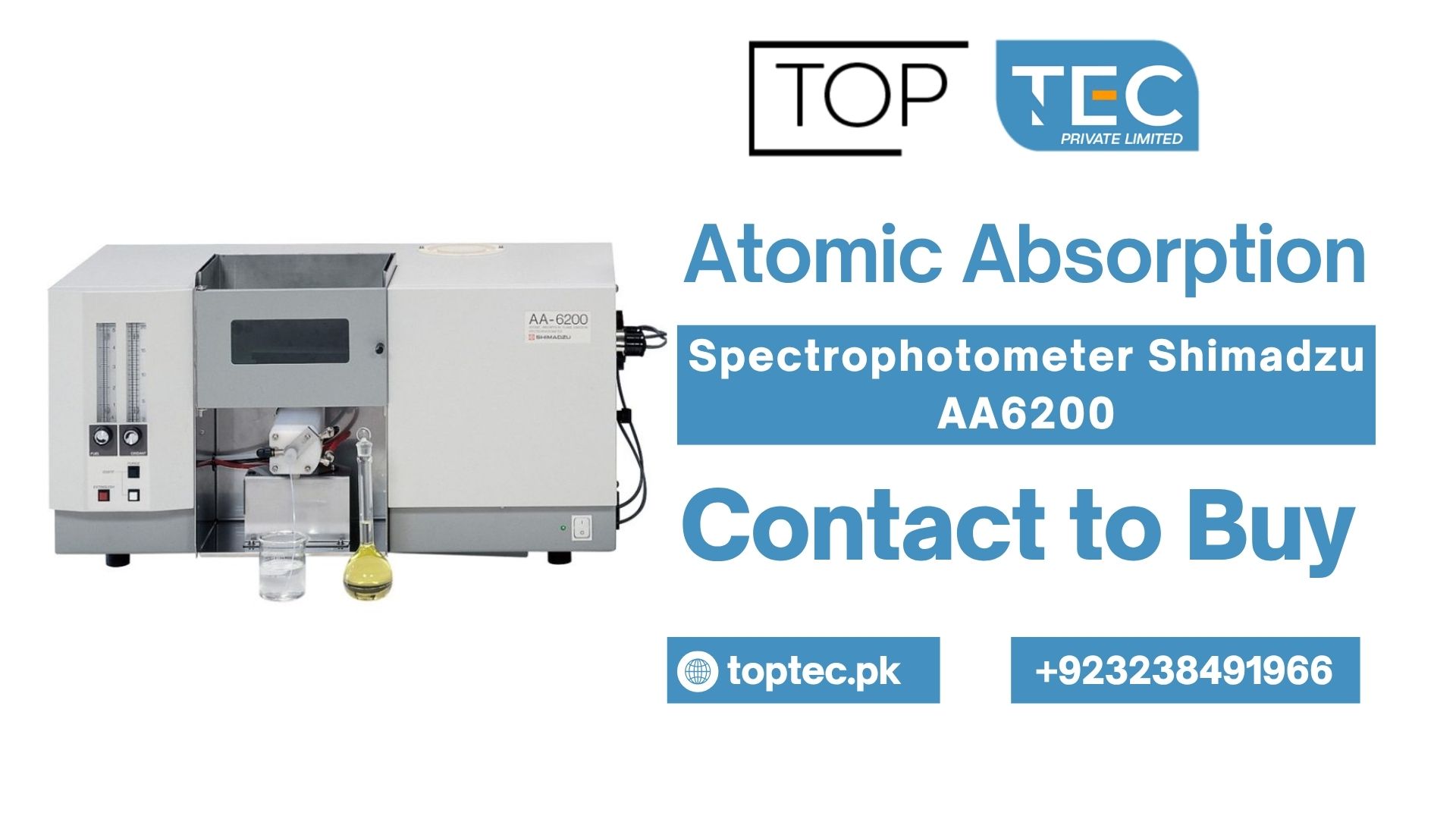
I want to explain why each specification matters and how it affects your daily work when you buy Atomic Absorption Spectrophotometer equipment in this category. I remember the first time I watched a Shimadzu AA-6200 being uncrated at a pharmaceutical testing lab in Lahore. The instrument itself looked unassuming — a compact beige box that hardly seemed worth the procurement battle the lab manager had fought for six months to win.
But once the installation engineer lit the flame and ran the first copper standard, the numbers on the screen told a different story. Clean absorbance peaks, tight replicate precision, and a calibration curve that looked like it had been drawn with a ruler. That machine went on to run trouble-free for nearly four years before it needed anything more than routine maintenance.
I share that story because specifications on a datasheet can feel abstract. Numbers only mean something when you understand how they translate into actual laboratory performance. So rather than just listing what the AA-6200 offers, I want to explain why each specification matters and how it affects your daily work when you buy Atomic Absorption Spectrophotometer equipment in this category.
The Optical System: Where Everything Begins
Every measurement the AA-6200 produces starts with light passing through a flame and reaching the monochromator. Shimadzu built this instrument around a Czerny-Turner mount monochromator with a 175 mm focal length. That focal length is a deliberate design compromise — long enough to achieve adequate spectral resolution, short enough to keep the overall instrument footprint compact.
The diffraction grating inside the monochromator is blazed to optimize efficiency across the instrument’s working wavelength range. You get 1,800 lines per millimeter, which delivers a reciprocal linear dispersion of roughly 1.3 nm per millimeter at the exit slit plane. In practical terms, this means the instrument can separate closely spaced spectral lines well enough to avoid most common interferences in flame atomic absorption work.
Slit widths are adjustable. Shimadzu provides settings at 0.2, 0.5, 1.0, and 2.0 nm. Choosing the right slit width for a given element is one of those small decisions that separates competent analysts from careless ones. A narrower slit gives you better spectral isolation but reduces light throughput and increases noise. A wider slit lets more light through for a stronger signal but risks letting in emission from adjacent lines or molecular bands. Most routine flame work on the AA-6200 uses the 0.5 nm setting, but elements with closely spaced absorption lines — like iron — sometimes benefit from dropping to 0.2 nm.
If you plan to buy Atomic Absorption Spectrophotometer hardware and you are relatively new to AAS, understanding slit width selection is one of the first things worth learning properly. Bad slit choices lead to poor calibration curves, and poor calibration curves lead to unreliable results that will eventually come back to haunt you during a proficiency test or regulatory audit.
Wavelength Range: 185 nm to 900 nm
The AA-6200 covers a wavelength range from 185 nm at the ultraviolet end to 900 nm at the near-infrared boundary. This range is significant because it encompasses the primary resonance lines of virtually every element measurable by flame atomic absorption.
At the low end, 185 nm lets you access the arsenic line at 193.7 nm and the selenium line at 196.0 nm — though in practice, these elements are almost always measured using vapor generation accessories rather than direct flame aspiration because their flame sensitivity is poor. Still, having access to those wavelengths means the monochromator can handle them if your method calls for it.
Moving up through the UV range, you cover the workhorse lines: zinc at 213.9 nm, cadmium at 228.8 nm, nickel at 232.0 nm, lead at 217.0 and 283.3 nm, cobalt at 240.7 nm, and manganese at 279.5 nm. These are the elements most Pakistani labs test for on a daily basis, whether they are checking drinking water against PCRWR standards, verifying pharmaceutical raw materials for DRAP compliance, or screening food products for contamination.
In the visible region, you pick up chromium at 357.9 nm, calcium at 422.7 nm, sodium at 589.0 nm, potassium at 766.5 nm, and lithium at 670.8 nm. The alkali and alkaline earth metals in this range are critical for agricultural soil testing and clinical diagnostics work.
The upper boundary of 900 nm is less commonly used in atomic absorption but provides headroom for certain specialized applications. Most labs that buy Atomic Absorption Spectrophotometer units never venture past 800 nm, but having the range available means you are not locked out if an unusual analytical requirement surfaces down the road.
Wavelength accuracy on the AA-6200 is specified at ±0.3 nm, and reproducibility sits at ±0.1 nm. These figures mean that once you set a wavelength, the monochromator returns to that exact position reliably every time. Wavelength accuracy matters more than many people realize — being off by even half a nanometer on a narrow absorption line reduces your absorbance signal and degrades sensitivity. The automatic wavelength correction feature in the WizAArd software helps maintain accuracy, but I still recommend verifying wavelength calibration manually at least once a quarter as part of your preventive maintenance routine.
The Lamp Turret: Six Positions, Automatic Selection
Hollow cathode lamps are the light source in atomic absorption spectroscopy, and the AA-6200 accommodates six of them simultaneously on a motorized turret. When you switch between elements in your method sequence, the turret rotates automatically to bring the correct lamp into the optical path. Alignment is handled by the instrument’s firmware — no manual tweaking required.
This sounds like a convenience feature, and it is, but the impact on productivity is substantial. Labs running multi-element methods on older instruments with manual lamp changes can easily lose ten to fifteen minutes per element switch. Over a day of heavy sample throughput, that adds up to an hour or more of dead time. The automatic turret eliminates virtually all of that.
Each lamp position accepts standard Shimadzu hollow cathode lamps, and the instrument also supports multi-element lamps if you want to consolidate. A calcium-magnesium combination lamp, for example, frees up a turret position for another element. The current control for each lamp is individually programmable through the software, so you can optimize lamp intensity for sensitivity without affecting the settings of other lamps in the turret.
One thing worth noting when you buy Atomic Absorption Spectrophotometer equipment: factor in your lamp inventory from the start. Running out of a critical lamp — especially one for a less common element — can ground your analytical work for days while you wait for a replacement shipment. I always advise labs to keep at least one spare for every element in their routine testing menu.
Burner Options: Flame Chemistry and Physical Configuration
This is where the AA-6200 gets genuinely interesting from an analytical chemistry perspective, and it is the area where I see the most confusion among labs setting up flame AAS for the first time.
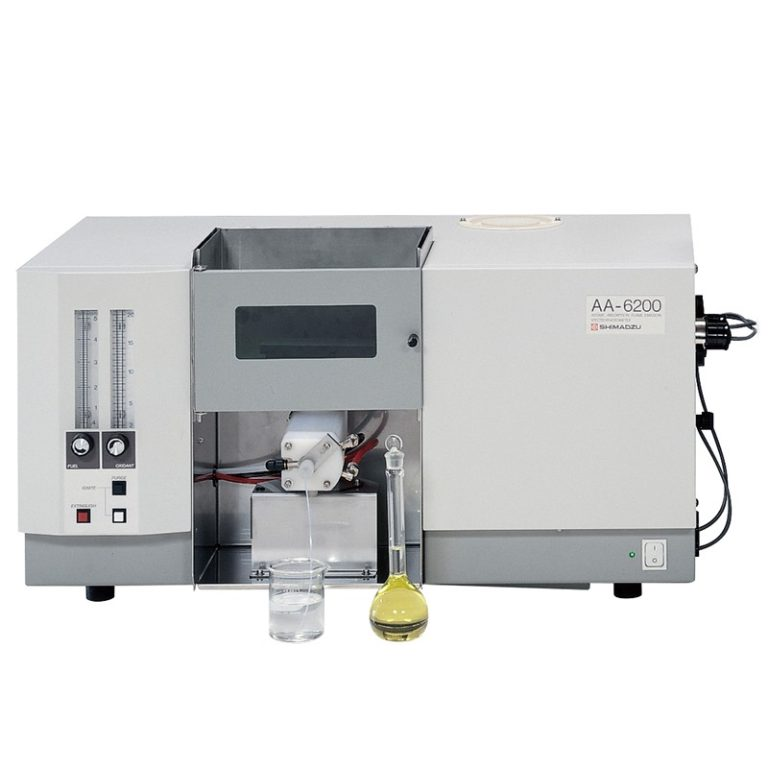
The instrument ships with a standard 100 mm air-acetylene burner head made from titanium. Titanium is the material of choice here because it resists the corrosive environment inside a flame far better than stainless steel. You get a longer service life before the burner slot starts to degrade, which is important because a corroded or warped burner slot produces an uneven flame that kills your analytical precision.
The 100 mm path length is optimized for air-acetylene work. A longer optical path through the flame means more opportunity for ground-state atoms to absorb light from the hollow cathode lamp, which translates directly into better sensitivity. For the majority of elements — copper, zinc, lead, cadmium, iron, manganese, nickel, cobalt, chromium, and many others — the air-acetylene flame provides adequate atomization energy, and the 100 mm burner is the right choice.
But some elements resist atomization in an air-acetylene flame. Aluminum, silicon, barium, titanium, vanadium, and several rare earth elements form refractory oxides that the relatively cool air-acetylene flame cannot break apart efficiently. For these elements, you need a nitrous oxide-acetylene flame, which burns significantly hotter — around 2,950°C compared to about 2,300°C for air-acetylene.
The nitrous oxide-acetylene burner head for the AA-6200 has a shorter 50 mm slot length. This is a safety consideration. The nitrous oxide-acetylene flame is more energetic and less stable than air-acetylene, so a shorter burner reduces the risk of flashback. The trade-off is reduced sensitivity compared to the 100 mm head, but since the hotter flame produces far more free atoms for the refractory elements, the net effect is still a massive improvement in detection capability for those specific analytes.
Switching between burner heads takes a few minutes of manual work — you remove one head, install the other, and re-align the burner position using the three-axis adjustment controls on the burner chamber. The spray chamber and nebulizer assembly remain in place during the swap. If your lab routinely runs both types of flame, having both burner heads on hand and keeping a set of spare O-rings for the burner mount is basic preparedness.
Before you buy Atomic Absorption Spectrophotometer hardware, think carefully about which elements your lab actually needs to measure. If your testing menu is entirely made up of elements that atomize well in air-acetylene — and for most water, food, and pharmaceutical labs in Pakistan, it is — you may never need the nitrous oxide burner. But if aluminum in pharmaceutical antacid formulations or silicon in geological samples is on your list, budget for it from the beginning.
The Nebulizer and Spray Chamber
The nebulizer is the component that converts your liquid sample into a fine aerosol before it enters the flame. The AA-6200 uses a glass concentric nebulizer as its standard configuration. A concentric design draws the sample through a central capillary while compressed air flows through an outer annulus, shattering the liquid stream into tiny droplets at the capillary tip.
Uptake rate is adjustable — typically between 3 and 7 mL per minute depending on the viscosity of your sample matrix and the desired sensitivity. Faster uptake means more sample reaching the flame, which generally improves absorbance signal strength. But it also means more matrix entering the burner, which can cause instability if you are dealing with high-dissolved-solids samples like brines, digested soil solutions, or concentrated acid digests.
The pre-mix spray chamber downstream of the nebulizer serves a critical function. It allows only the finest droplets — typically those below about 10 micrometers — to pass through to the burner. Larger droplets impact the chamber walls and drain away. This size selection is essential because large droplets do not atomize completely in the flame, creating noise and reducing analytical accuracy.
Drain management from the spray chamber matters too. The AA-6200 uses a simple gravity drain with a liquid trap. Make sure the drain tubing stays clear and the waste container does not overflow. A blocked drain changes the pressure dynamics inside the spray chamber and affects nebulization efficiency. It sounds mundane, but I have personally troubleshot sensitivity problems in three different labs that turned out to be nothing more than kinked drain tubing.
For labs that frequently handle aggressive sample matrices, Shimadzu offers chemically resistant nebulizer options. When you buy Atomic Absorption Spectrophotometer units for environmental testing where samples may contain high concentrations of hydrofluoric acid from silicate digestions, investing in an HF-resistant nebulizer and spray chamber insert is not optional — it is essential.
Detector: The Photomultiplier Tube
The AA-6200 employs a photomultiplier tube as its detector. I know some people look at this and wonder why Shimadzu did not use a more modern solid-state detector. The answer is straightforward: for sequential flame AAS, a high-quality PMT is still the best tool for the job.
PMTs offer extremely high sensitivity to low light levels, fast response times, and excellent signal-to-noise performance across the UV-visible range. The AA-6200’s PMT is a side-on type with a spectral response that covers the full 185-900 nm working range. Gain is automatically adjusted by the instrument’s electronics to optimize dynamic range for each element and concentration level.
PMT lifespan is finite. Over thousands of hours of operation, the photocathode gradually loses sensitivity. A failing PMT manifests as increasing baseline noise, declining absorbance readings, and eventually an inability to achieve satisfactory calibration. Replacement PMTs for the AA-6200 are available through Shimadzu’s parts network, and swapping one out is a service engineer task that takes about an hour.
When evaluating whether to buy Atomic Absorption Spectrophotometer equipment new or refurbished, the PMT condition is one of the most important things to assess. On a refurbished unit, ask the dealer for the PMT’s operating hours and dark current measurement. A PMT with excessive dark current will compromise your detection limits from the moment you turn the instrument on.
Software: WizAArd and What It Actually Does
The AA-6200 runs on Shimadzu’s WizAArd software platform. I will be honest — nobody buys this instrument because of its software. They buy it despite the software, which is functional but not exactly elegant. That said, WizAArd does everything you need it to do, and it does it reliably, which counts for more than a slick user interface.
The software runs on Windows — officially supported on Windows 7, 8, and 10 at the time of the AA-6200’s primary production run. Many labs have successfully run it on Windows 11 as well, though Shimadzu’s official support documentation may lag behind on this. The PC connects to the instrument via a USB interface, replacing the older RS-232 serial connections used on previous-generation Shimadzu AAS systems.
Method development in WizAArd is wizard-driven — you select your element, the software pre-loads recommended parameters including wavelength, slit width, lamp current, and flame conditions. You can accept these defaults or customize them. For routine work, the defaults are a perfectly sensible starting point. For non-standard matrices or when pushing detection limits, custom optimization is worth the effort.
Calibration options include linear, first-order, second-order, and third-order polynomial fits, as well as a method of additions (standard additions) mode for matrix-matched calibration. The software calculates correlation coefficients, displays residuals, and flags calibration points that deviate beyond user-defined acceptance criteria. This kind of automated quality check is genuinely valuable in high-throughput labs where an analyst processing a hundred samples might otherwise overlook a drifting calibration.
Data output supports printed reports, CSV export, and PDF generation. The reporting templates are customizable, so you can format results to match your lab’s LIMS requirements or client reporting standards.
For GMP-regulated environments — pharmaceutical labs in particular — the software offers user access control with individual logins, electronic signatures, and audit trail functionality. Every parameter change, recalibration, and data modification is logged with a timestamp and user identity. This is not just nice to have; it is a regulatory requirement under DRAP’s GMP guidelines and international standards like 21 CFR Part 11. If you plan to buy Atomic Absorption Spectrophotometer equipment for a pharmaceutical QC lab, confirm that the software version included with your purchase has these compliance features enabled. Not all configurations ship with them activated by default.
Hardware requirements for the PC running WizAArd are modest by modern standards. You need a machine with at least 4 GB of RAM, a dual-core processor, and about 10 GB of free hard drive space. Any decent office-grade computer sold in Pakistan today will comfortably exceed these minimums. I would suggest dedicating a PC solely to instrument control rather than sharing it with email, internet browsing, and other applications. Instrument control software does not play well with Windows updates that restart the PC in the middle of a sample run, and antivirus scans that suddenly consume CPU resources can cause communication timeouts between the PC and the spectrometer.
Background Correction: Deuterium Lamp System
The AA-6200 includes a deuterium lamp background correction system. This addresses a fundamental challenge in atomic absorption spectroscopy — molecular absorption and light scattering can produce false positive readings that inflate your results if not compensated for.
The deuterium lamp emits a broad-spectrum continuum of light. By alternately measuring absorbance with the hollow cathode lamp (which gives you atomic plus background absorption) and the deuterium lamp (which gives you background absorption only), the instrument mathematically subtracts the background contribution to yield a corrected atomic absorption signal.
This system works well for most routine applications, particularly in the UV region below 350 nm where molecular absorption from flame gases is most pronounced. Its effectiveness diminishes somewhat at longer wavelengths and in situations where the background absorption has fine spectral structure rather than a smooth continuum — but these situations are uncommon in standard flame AAS work.
Higher-end instruments from Shimadzu and other manufacturers offer Zeeman background correction, which handles structured backgrounds better. However, the deuterium system on the AA-6200 is entirely adequate for the vast majority of applications that labs encounter when they buy Atomic Absorption Spectrophotometer equipment at this price point. If your work involves complex matrices that routinely produce severe background interferences, you might need to step up to a model with Zeeman correction. But for standard water, food, pharmaceutical, and environmental samples, the deuterium system gets the job done.
Safety Features Built Into the Design
Flame atomic absorption involves burning flammable and oxidizing gases, so safety engineering is not an afterthought.
The AA-6200 monitors gas pressures continuously. If the acetylene supply pressure drops below a safe threshold, the instrument automatically shuts off the flame and closes the gas solenoid valves. The same applies to the air or nitrous oxide supply. This prevents fuel-rich conditions that could lead to flashback.
The flame ignition sequence follows a specific protocol — oxidant flow starts first, then fuel is introduced and ignited by an automatic piezoelectric igniter. The reverse shutdown sequence — fuel off first, then oxidant — ensures the flame extinguishes cleanly without residual fuel in the burner. If the flame unexpectedly goes out during operation, the gas supply cuts automatically within seconds.
A drain interlock monitors the liquid trap at the spray chamber drain. If the trap runs dry, the instrument prevents ignition because an empty drain trap would allow flame gases to travel backward through the drain line — a serious explosion hazard. This particular interlock is the one I see tripped most often in real labs, usually because someone forgot to fill the drain trap with water before starting up for the day. It is a minor annoyance that prevents a potentially catastrophic failure.
Labs planning to buy Atomic Absorption Spectrophotometer systems need to match these built-in safety features with appropriate external infrastructure. Gas cylinder storage should comply with local safety codes — acetylene cylinders stored upright, secured with chains, and separated from oxidizer cylinders. Gas line materials should be compatible with the gases they carry — stainless steel or copper for acetylene, never PVC or rubber tubing that might degrade. A fire extinguisher rated for gas fires should be within arm’s reach of the instrument, and every analyst who operates the AAS should know where it is and how to use it.
Accessories and Add-Ons Worth Knowing About
When you initially buy Atomic Absorption Spectrophotometer equipment, you might start with a basic flame configuration. But knowing what accessories are available helps you plan for future expansion without needing an entirely new instrument.
The autosampler compatible with the AA-6200 — Shimadzu’s ASC-6100 — holds up to 180 sample positions. For labs running large batches of water samples or performing routine quality control on dozens of pharmaceutical raw materials per shift, an autosampler transforms throughput. The analyst loads samples, starts the sequence, and the instrument handles aspiration, measurement, rinsing, and data logging for the entire run unattended.
The GFA-6500 graphite furnace atomizer adds electrothermal atomization capability. This extends detection limits by one to three orders of magnitude compared to flame work. If your lab needs to measure trace-level arsenic, selenium, thallium, or other elements at sub-ppb concentrations, the graphite furnace is the path forward. It also dramatically reduces sample volume requirements — microliters instead of milliliters — which matters when sample availability is limited.
The HVG-1 hydride vapor generator enables measurement of arsenic, selenium, antimony, bismuth, tellurium, and tin through chemical vapor generation. By converting these elements into gaseous hydrides before introducing them to the optical path, you bypass the flame entirely and achieve far better sensitivity than direct aspiration.
The MVU-1A mercury vaporizer attachment handles cold vapor mercury determination. Mercury does not atomize well in flames or furnaces, so a dedicated cold vapor system that reduces mercury compounds to elemental mercury vapor and carries it directly into the absorption cell is the standard approach.
Setting Up the Physical Lab Space
A conversation about specifications is incomplete without discussing the environment where those specifications are realized. I have seen beautifully specced instruments produce terrible data because nobody bothered to get the lab environment right.
The AA-6200 weighs about 40 kg and measures roughly 670 mm wide by 505 mm deep by 475 mm tall. You need a bench that can comfortably support this weight plus the weight of gas regulators, the controlling PC, a printer, and whatever sample preparation equipment sits alongside. Stability matters enormously — any vibration that reaches the burner disturbs the flame and introduces noise into your measurements.
Fume extraction above the burner is mandatory, not optional. Flame AAS produces metal-containing vapors and combustion byproducts that have no business being inhaled by your analysts. A canopy hood ducted to the exterior with an extraction rate of at least 5 cubic meters per minute is the minimum standard.
This is where choosing the right laboratory furniture supplier becomes directly relevant to your analytical performance. TOPTEC PVT. LTD manufactures laboratory furniture in Pakistan — benches, fume hoods, reagent racks, gas piping supports, and complete lab casework systems. When you buy Atomic Absorption Spectrophotometer equipment and need furniture that actually meets the load-bearing, chemical resistance, and vibration stability requirements of analytical instrumentation, working with a manufacturer who understands these requirements saves you from discovering problems after installation.
TOPTEC’s benches can be specified with anti-vibration features, chemical-resistant work surfaces, and integrated cable management channels that keep your gas lines and electrical connections organized and safe. Their fume hoods are built to handle the extraction requirements of flame AAS operations, with proper duct sizing and blower specifications.
I have watched too many labs waste money importing generic laboratory furniture from overseas that arrives damaged, does not fit the available space, or fails to meet the specific demands of the instruments being installed on it. A Pakistani manufacturer like TOPTEC PVT. LTD delivers furniture tailored to your room dimensions, your instrument specifications, and your workflow — without the shipping delays and customs complications that come with imported furniture.
Maintenance Requirements and Long-Term Ownership
Owning an AA-6200 is a commitment that extends well beyond the purchase date. The instrument rewards careful maintenance with years of reliable service, and it punishes neglect with drift, noise, and eventually failed audits.
Daily tasks include checking and filling the drain trap, inspecting the nebulizer for blockages, cleaning the burner head slot with a thin metal shim to remove carbon deposits, and verifying that gas pressures are within operating range before lighting the flame.
Weekly tasks should include aspirating a check standard to verify that sensitivity has not drifted, inspecting all tubing connections for wear or leaks, and cleaning the spray chamber.
Monthly checks should cover wavelength verification using a known spectral line, sensitivity verification against the instrument’s original installation qualification data, and a visual inspection of the burner head for signs of corrosion or warping.
Annual preventive maintenance — ideally performed by a Shimadzu-trained service engineer — should include optical path cleaning, mirror and grating inspection, PMT performance evaluation, complete gas system leak testing, and electronic systems diagnostics. Shimadzu’s regional service operation covers Pakistan through its distribution partners, and response times have been reasonable in my experience, though scheduling during peak demand periods can require some patience.
When you buy Atomic Absorption Spectrophotometer equipment, build the annual service contract cost into your first-year budget from the beginning. Do not treat it as a future problem. Labs that defer maintenance to save money invariably end up spending more on emergency repairs and repeat analyses when out-of-spec results force them to re-run entire sample batches.
Who Should Consider This Instrument?
The AA-6200 is not the right instrument for every lab. If you need simultaneous multi-element analysis, you need an ICP. If you need ultra-trace detection at parts-per-trillion levels, you need an ICP-MS. If your sample volume is fewer than ten samples per month, the capital investment may not be justifiable — outsourcing to a contract lab might make more financial sense.
But for the enormous number of Pakistani labs that need to run reliable, accurate, routine metals analysis at parts-per-billion to parts-per-million concentrations across water, food, pharmaceutical, environmental, and industrial sample types — the AA-6200 delivers. It has proven itself across thousands of installations worldwide, and it continues to serve labs that buy Atomic Absorption Spectrophotometer hardware with the expectation of getting solid performance without extravagant operating costs.
Whether you are equipping a new university analytical chemistry teaching lab, expanding capacity at a commercial testing facility in Karachi, upgrading aging equipment at a government water quality monitoring station in Punjab, or launching a pharmaceutical QC operation in Islamabad, the AA-6200 deserves a place on your evaluation shortlist.
Pair it with properly engineered laboratory furniture from TOPTEC PVT. LTD, ensure your gas infrastructure is safe and properly maintained, train your analysts thoroughly on both the instrument and the WizAArd software, and commit to a disciplined maintenance schedule. Do those things, and this instrument will earn its keep many times over.
Getting Started
Reach out to Shimadzu’s authorized distributor in Pakistan for current pricing and availability on the AA-6200. Contact TOPTEC PVT. LTD to discuss your laboratory furniture needs — benches, fume hoods, storage, and complete lab fit-out solutions manufactured right here in Pakistan. Start both conversations at the same time so your instrument procurement and lab preparation move in parallel rather than in sequence. When you buy Atomic Absorption Spectrophotometer equipment and furniture together with a coordinated installation timeline, you get to productive operation faster and with far fewer headaches.
Your samples are waiting. Your analysts are ready. Get the infrastructure in place and start producing results.
TOPTEC PVT. LTD — Pakistani-manufactured laboratory furniture engineered for the demands of modern analytical labs. Benches, fume hoods, casework, and complete lab solutions. Contact TOPTEC today for a consultation tailored to your facility.
