


Buying a fume hood should be simple. You pick a width, choose a material and get a quote. In reality, most laboratories run into the same problem: two suppliers quote very different amounts for equipment that looks almost identical in the brochure.
That confusion has a reason. One quotation may cover only the cabinet. Another may bundle in the blower, ducting, installation and testing. Some fume hood manufacturers present a complete working system. Others price the enclosure and leave everything else as “site items.”
If you have been comparing fume hood price in Pakistan figures without knowing what each quote actually includes, you are not comparing the same thing twice.
This guide cuts through that. It covers what drives the price, what a realistic installed cost looks like in 2026, how to compare local and imported options properly, and where to source quality equipment in Pakistan.
What Affects the Fume Hood Price in Pakistan?
Before looking at numbers, understand the variables. Changing one spec can shift the fume hood price in Pakistan by several hundred thousand rupees.
Width
Standard widths are 4, 5, 6 and 8 feet. A 4-foot cabinet and a 6-foot cabinet from the same manufacturer may cost 40–60% differently just because of the size. Bigger means more steel, larger sash area, stronger blower requirements and more ductwork.
Hood Type
A general-purpose ducted hood, an acid-digestion hood, a ductless filtered cabinet and a perchloric-acid wash-down model are all “fume hoods.” Their prices sit in very different ranges because the design requirements, materials and safety features are completely different.
Interior Lining and Worktop
Chemical-resistant laminates, phenolic resin, polypropylene, stainless steel, epoxy resin and ceramic surfaces are all options. The laboratory fume hood lined with polypropylene for acid work costs more than one with a standard laminate interior. An epoxy resin worktop costs more than an ordinary tile surface.
When you buy fume hood equipment, the interior materials determine long-term chemical resistance. This is not the place to economise if aggressive reagents are in use.
Exhaust System
The blower, exhaust collar, duct length and duct material are separate costs in many quotations. In a multi-floor building with a long exhaust route, ductwork alone can cost as much as or more than the hood cabinet.
Airflow Controls
A simple fixed-speed constant-volume system costs less than a variable-air-volume arrangement. VAV reduces exhaust when the sash is lowered, which saves energy and reduces makeup-air demand. The added sensors, dampers and controls increase the initial cost.
Service Fixtures
Water, gas, vacuum, compressed air and electrical outlets inside the cabinet add cost. Position, number and valve type all matter.
Brand and Origin
An established European or American brand with full local support costs significantly more than an equivalent local unit. Sometimes that premium is justified by traceability documents, verified factory testing and availability of calibrated spare parts. Sometimes it is not.
2026 Fume Hood Price Ranges
These are realistic planning estimates for Pakistan in 2026. They are not supplier quotations.
Exchange rates, material costs, site conditions and project scope all affect the final amount. Use these ranges to check whether a supplier’s price is broadly reasonable, not to place a purchase order.
Cabinet-Only Prices (No Ductwork or Blower)
| Hood type and width | Local manufacture | Imported |
|---|---|---|
| 4-foot ducted, standard | PKR 550,000–900,000 | PKR 1,500,000–3,500,000 |
| 5- to 6-foot ducted, standard | PKR 800,000–1,500,000 | PKR 2,500,000–5,500,000 |
| 6-foot polypropylene acid hood | PKR 1,200,000–2,200,000 | PKR 3,000,000–7,000,000 |
| Ductless filtered model | PKR 1,200,000–2,800,000 | PKR 2,500,000–5,000,000 |
| Walk-in or floor-mounted model | PKR 2,500,000–5,000,000 | PKR 6,000,000–15,000,000+ |
| Perchloric-acid wash-down model | PKR 3,500,000–8,000,000 | PKR 8,000,000–18,000,000+ |
Additional Installation Costs
| Item | Indicative range |
|---|---|
| Exhaust ductwork (short route) | PKR 200,000–600,000 |
| Exhaust ductwork (long or complex route) | PKR 600,000–2,500,000+ |
| Centrifugal exhaust blower | PKR 120,000–500,000 |
| Variable-frequency drive | PKR 80,000–350,000 |
| Face-velocity monitor | PKR 80,000–250,000 |
| Installation and commissioning | PKR 100,000–400,000 |
| Airflow testing and report | PKR 80,000–250,000 |
| IQ/OQ documentation | PKR 80,000–300,000 |
When you buy fume hood equipment, always request a breakdown that separates the hood, the blower, the ductwork and the installation. Any laboratory fume hood quote that bundles everything into one undifferentiated number is difficult to verify or negotiate.
Types of Fume Hood and When to Use Each
General-Purpose Ducted Hood
This is the most common choice in pharmaceutical, university and industrial laboratories. Vapours from solvents, dilute acids, bases and most routine reagents are captured by inward airflow and exhausted through the duct.
This is the correct first choice when you buy fume hood equipment for routine chemistry, preparation work and most organic and inorganic procedures.
Polypropylene Acid-Digestion Hood
Used where concentrated or fuming acids are handled regularly. The interior, worktop and duct system are made from corrosion-resistant materials. A standard steel-lined hood is not a safe substitute.
The fume hood price in Pakistan for a polypropylene model is higher than for a general-purpose unit. If the laboratory uses nitric acid, hydrochloric acid or hydrofluoric acid at significant concentrations, the material investment is not optional.
Perchloric-Acid Hood
Perchloric acid can deposit explosive crystalline residues inside standard ductwork. A hood for perchloric acid work needs a wash-down system to flush the duct and interior with water after each use. It must be connected to dedicated stainless-steel or PVC ducting, not shared with other hoods.
Never substitute a standard hood for perchloric acid work. The risk is not manageable by procedure alone.
Ductless Fume Hood
A ductless laboratory fume hood draws contaminated air through an activated-carbon filter or similar media and returns treated air to the room. It can be useful where external ducting cannot be installed or where chemicals and quantities are limited and well-defined.
The key limitation is filter selectivity. A carbon filter that captures organic solvents may offer little protection against acid vapours. One filter type does not protect against every vapour.
Responsible fume hood manufacturers will ask for a complete list of chemicals and quantities before recommending a ductless model. If a supplier immediately recommends ductless without asking about your chemicals, that should raise a question.
The fume hood price in Pakistan for a ductless model may appear attractive if it avoids ductwork cost. But replacement filters, regular testing and restricted chemical flexibility create real ongoing costs.
Walk-In Fume Hood
For large equipment, tall assemblies or procedures where the user must partially enter the work zone. These are significantly larger and more expensive. The exhaust system design requires careful attention.
Local vs. Imported: Honest Comparison
This is where most procurement decisions get complicated. Local and imported equipment are not automatically interchangeable, but the price gap often cannot be fully explained by quality.
What Imported Equipment Offers
- Factory-calibrated airflow controls
- Traceable performance documentation
- Established international certifications
- Well-known brands that are accepted by auditors
- Advanced VAV systems and digital controls
- Tested containment performance to ASHRAE 110 or EN 14175
What Imported Equipment Costs
- Higher purchase price
- International freight and insurance
- Customs duties and import taxes
- Longer lead times
- Currency fluctuation risk
- Potential delays for replacement parts
- Service engineers may not be locally available
When a pharmaceutical company needs to buy fume hood equipment for a regulated facility, the documentation trail from an established international laboratory fume hood manufacturer can be genuinely valuable during an audit.
When a university chemistry laboratory needs a reliable ventilated workspace, paying three times more for an imported brand may not be justified.
What Local Equipment Offers
Local fume hood manufacturers can offer practical advantages that are often underestimated:
Custom sizing. A local manufacturer can build to your room dimensions. An imported standard size may not fit the available wall space or ceiling height.
Material selection. Locally made hoods can use epoxy resin worktops, stainless-steel linings, polypropylene construction or other materials specified by the project. You are not limited to catalogue options.
Coordination with ductwork. When you buy fume hood equipment from a local manufacturer who also handles installation, exhaust routing can be planned before the hood is built.
Shorter lead time. A locally manufactured unit can often reach the laboratory in weeks rather than months.
Accessible service. If a sash cable breaks or a service fitting fails, local support is reachable. You are not waiting for international shipping of a minor component.
Price transparency. No freight, import duties or currency risk means the quoted price is closer to the actual price.
The honest position: a well-built local laboratory fume hood from qualified fume hood manufacturers can perform reliably and satisfy most regulatory requirements. Verify materials, face-velocity data and available qualification documentation before committing.
The Real Cost: Cabinet vs. Installed vs. Operating
Many laboratories get surprised by the gap between the cabinet price and the total installed cost.
A 6-foot laboratory fume hood with an epoxy worktop might cost PKR 1,200,000 as a cabinet. That looks manageable. Then the project adds:
- Exhaust duct through two floors: PKR 600,000
- Roof penetration and weathering: PKR 150,000
- Centrifugal blower with isolation: PKR 280,000
- Electrical connection for blower: PKR 80,000
- Water and gas service connections: PKR 120,000
- Face-velocity monitor: PKR 140,000
- Testing and commissioning: PKR 150,000
- IQ/OQ documentation: PKR 180,000
That brings the realistic installed cost to approximately PKR 2,900,000 — more than double the cabinet price.
If your project includes multiple hoods, the shared duct infrastructure may reduce the per-unit installation cost. If each hood exhausts independently to separate locations, costs rise accordingly.
Any supplier claiming to buy fume hood quotations they can provide at unusually low total installed cost should be asked to explain in detail what is excluded.
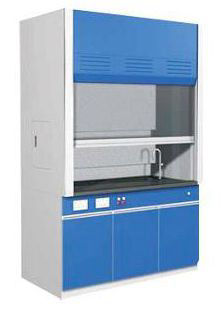
Energy and Operating Costs
A laboratory fume hood runs continuously. That continuous exhaust has a real energy cost, both in the power consumed by the blower and in the conditioned air being removed from the building.
In Pakistan’s climate, cooling air to comfortable laboratory conditions and then exhausting it continuously through a hood creates a meaningful load on the HVAC system.
A constant-volume hood exhausts the same air volume whether the sash is fully open or fully closed. A variable-air-volume system reduces exhaust when the sash is lowered.
For a laboratory operating multiple hoods over many years, VAV controls can produce genuine energy savings. The higher initial cost of VAV equipment may recover over several years of reduced HVAC demand.
When reviewing the fume hood price in Pakistan for VAV vs constant-volume options, ask the supplier for operating cost estimates based on your typical sash-usage pattern and local electricity rates.
What to Check Before Buying
When you buy fume hood equipment, comparing suppliers on price alone is a shortcut that creates longer problems. Here is what to review before finalising.
Chemical List
Not every hood suits every chemical. Provide a complete list of reagents and quantities to every supplier. If a supplier quotes without asking about chemicals, the specification may not be appropriate for your work.
Materials
Confirm worktop material, interior lining and sash construction. Request material-specification sheets, not only product photos.
Face Velocity
Ask what face velocity the hood is designed to provide and how it was determined. A typical target is 0.4–0.5 m/s for general laboratory work, but the appropriate value depends on the procedure, chemical hazard and room conditions.
Containment Testing
The gold standard is ASHRAE 110 tracer-gas testing. Not every installation reaches this level, but ask whether the supplier can support it if required.
Qualification Documentation
For pharmaceutical or regulated facilities, IQ/OQ documentation should be discussed before ordering. The fume hood price in Pakistan from qualified fume hood manufacturers who can support GMP qualification will generally be higher, but the documentation reduces risk during audits.
Blower Specification
Ask for the static-pressure and airflow curve for the recommended blower. A blower that is undersized for the duct length will not achieve the design face velocity. A blower that is oversized will waste energy and may be too loud.
Warranty and Service
Define what the warranty covers and how service calls are handled. A cabinet warranty that excludes the sash mechanism, electrical components and blower is limited protection.
TOPTEC PVT. LTD — Fume Hoods and Laboratory Furniture in Pakistan
TOPTEC PVT. LTD manufactures laboratory furniture in Pakistan. Among local fume hood manufacturers, TOPTEC produces general-purpose ducted hoods, polypropylene acid hoods and associated laboratory infrastructure for pharmaceutical companies, universities, hospitals and research facilities.
When you buy fume hood equipment from TOPTEC, the project can be coordinated with:
- Laboratory workbenches
- Chemical-resistant worktops
- Chemical storage cabinets
- Biological safety cabinets
- Laminar-flow cabinets
- Pass boxes
- Instrument benches
- Laboratory sinks
- Cleanroom furniture
- Shelving and storage systems
The fume hood price in Pakistan from TOPTEC depends on hood type, width, interior materials, service fixtures and installation scope. Sharing room drawings, ceiling height, duct route and a chemical list allows their technical team to prepare an accurate proposal.
Local manufacturing means custom dimensions are practical, lead times are shorter than for imported equipment and after-sales support does not require international coordination.
Frequently Asked Questions
Why do fume hood prices vary so much between suppliers?
The scope of supply often differs. One price covers only the cabinet. Another covers everything installed and tested. Material quality, brand and documentation level also drive significant differences.
Is a local laboratory fume hood as safe as an imported one?
A well-built local unit from qualified fume hood manufacturers can match imported performance when materials, airflow design and installation are correct. The decision should be based on materials, performance data and documentation — not assumed from origin.
How often does a fume hood need testing?
Face velocity should be verified at installation and then at regular intervals, often annually, or after any change to the exhaust system. Internal requirements or regulatory context may specify different frequencies.
Can a fume hood be used for biological hazards?
A standard laboratory fume hood is designed for chemical vapours. It does not provide the HEPA-filtered biological containment of a Class II biological safety cabinet and must not be used as a substitute for biological work.
How long does a fume hood last?
A quality unit with proper maintenance can last 15–25 years. The sash mechanism, gaskets, service valves and blower may require attention before the cabinet itself needs replacement.
Final Thoughts
In 2026, the fume hood price in Pakistan for a locally manufactured general-purpose unit starts around PKR 550,000 for the cabinet and may reach PKR 3,000,000 or more when installation, ductwork and qualification are included. Imported systems carry a higher base price and significant additional landed costs.
Neither local nor imported is automatically the better choice. The right decision comes from matching the hood type to the actual chemicals, comparing complete installed costs rather than cabinet prices and choosing fume hood manufacturers who ask about your process before they start quoting.
When you buy fume hood equipment for a pharmaceutical or research facility, materials, face velocity, containment performance and qualification support matter as much as the purchase price. A laboratory fume hood that fails its airflow test after installation is not a saving — it is a liability.
For locally manufactured fume hoods, workbenches, chemical-storage cabinets and complete laboratory furniture in Pakistan, contact TOPTEC PVT. LTD.
