


When laboratories start researching the fume hood price in Pakistan, the ducted vs. ductless question usually comes up early. The ductless model often appears cheaper at first glance because it avoids the exhaust duct, blower and building modifications. Sometimes that impression is correct. Often it is not.
The real cost comparison depends on chemicals, usage frequency, filter lifespan, regulatory requirements and what happens when a filter is exhausted or a chemical changes.
This article gives you an honest look at both options — what they cost, what they actually protect against and which one makes financial sense for different laboratory situations in Pakistan.
What Is a Ducted Fume Hood?
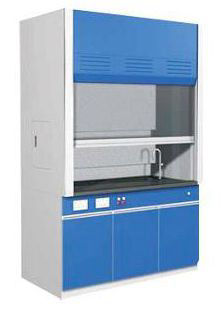
A ducted laboratory fume hood draws air through the sash opening, pulls vapours and particles across the work zone and exhausts everything to the outside through a duct system.
Nothing is returned to the room. Every vapour, aerosol and gas that enters the hood exits through the exhaust system. As long as the duct, blower and face velocity are correctly designed, the operator is protected from whatever is generated inside.
That simplicity is one of the strongest arguments for choosing a ducted model when you buy fume hood equipment. There is no filter that can become saturated, no vapour breakthrough and no requirement to match each chemical to a specific media type.
What Is a Ductless Fume Hood?
A ductless laboratory fume hood draws contaminated air through filtration media inside the cabinet and returns treated air to the room. There is no external exhaust. No duct penetration. No blower on the roof.
The filter material determines what vapours are captured. Common filter types include:
- Activated carbon for organic solvents
- Acid-specific media for hydrogen chloride, sulphuric acid mist and similar vapours
- Ammonia or base-specific media
- Multi-layer combinations for broader protection
- HEPA filtration for particulates
The ductless model looks attractive as an initial purchase because it avoids structural modifications. Whether it remains the cost-effective option over three to five years is a different calculation.
Initial Purchase Cost Comparison
The fume hood price in Pakistan for the cabinet itself may not differ enormously between ducted and ductless designs at the same width. Ductless cabinets often cost more than basic ducted cabinets because the internal filtration system, airflow monitoring, filter-saturation detection and safety controls add cost.
The real initial-cost difference emerges in the installation.
Ducted Installation Costs
When you buy fume hood equipment in a ducted configuration, the installed cost includes:
- Hood cabinet
- Exhaust collar and flexible connection
- Rigid or semi-rigid duct from hood to roof or external wall
- Roof penetrations and weathering caps
- Centrifugal exhaust blower
- Electrical connection for blower
- Vibration isolation for blower
- Makeup-air provision or building balancing
- Commissioning and airflow testing
For a 6-foot ducted unit installed on a ground-floor laboratory near an external wall, the full installed cost might sit between PKR 1,500,000 and PKR 3,500,000 depending on the cabinet specification and ductwork complexity.
For the same cabinet installed several floors below the roof, with a long duct route and complex building penetrations, installed costs can rise considerably beyond that range.
Ductless Installation Costs
A ductless laboratory fume hood normally requires only an electrical connection and positioning on a suitable bench or base cabinet. There is no ductwork, no blower installation and no roof penetration.
The cabinet sits where it is placed, plugs in and operates. Installation costs are lower, sometimes significantly so.
This is where the apparent advantage of the ductless design is strongest. If the laboratory is located in a building where ducting is impractical or very expensive, the ductless model may offer a genuine cost saving at the project stage.
Long-Term Operating Cost: Where the Comparison Changes
The initial installation saving can disappear quickly when filter replacement costs are calculated properly.
Filter Replacement Costs
A ductless laboratory fume hood filter has a finite capacity. Once the activated carbon or specialist media is saturated, it offers no further protection. The filter must be replaced, and the used filter must be disposed of as chemical waste.
Typical filter lifespans depend on:
- Chemical type and concentration
- Volume of chemical handled per day
- Whether the hood is operated continuously or intermittently
- Temperature and humidity in the room
- The hood’s airflow rate
Actual filter life in a busy analytical or pharmaceutical laboratory using mixed organic solvents may be three to six months. In some high-usage situations, it may be shorter.
The fume hood price in Pakistan for replacement filters varies by manufacturer, media type and filter size. Budget PKR 80,000 to PKR 300,000 or more per replacement cycle depending on the model and chemical compatibility.
Across three years of active laboratory use, filter replacement may cost more than the original price difference between the ductless cabinet and the ducted installation.
Energy Costs
Both systems consume electricity. A ducted blower running continuously may draw 300–750 watts depending on size and duct resistance. A ductless internal fan may draw 100–300 watts.
The more significant energy cost for a ducted system is the conditioned air being continuously exhausted. Air that has been cooled or heated to maintain laboratory conditions leaves through the duct and must be replaced by the HVAC system.
This can be reduced using variable-air-volume controls that reduce exhaust when the sash is lowered. The fume hood price in Pakistan increases for VAV systems, but the energy saving may justify the premium in multi-hood or high-usage facilities.
A ductless system does not exhaust conditioned air. The room’s HVAC system treats the same air repeatedly. This is an energy advantage for the ductless model and one that is sometimes overlooked in the initial comparison.
Safety Comparison: The Most Important Factor
Cost should not drive the safety decision. A laboratory fume hood that appears cost-effective but fails to protect the user against actual laboratory chemicals is not a money-saving choice.
Ducted Hood Safety Profile
A properly installed and maintained ducted hood protects against virtually any chemical vapour or aerosol, provided:
- Face velocity is within the approved range
- The duct system is airtight
- The blower is correctly specified
- The room has adequate makeup air
- The sash is used correctly
The only materials a ducted hood does not suit are those that are unsafe for the duct material itself. Perchloric acid, for example, requires a specialist wash-down system and appropriate duct material rather than a standard galvanised duct.
Ductless Hood Safety Profile
A ductless laboratory fume hood protects against only the chemicals it is specifically configured for. This is not a minor limitation. It is the central issue in the safety assessment.
If the laboratory uses organic solvents and an activated-carbon filter is installed, protection may be reasonable. If the chemical list is then expanded to include ammonia or hydrochloric acid, the same carbon filter offers inadequate or no protection.
Responsible fume hood manufacturers will not supply a ductless model without a chemical assessment. If you encounter a supplier who sells a ductless hood as a universal protection device without asking about your chemicals, that is a serious red flag.
The filter-saturation point is also critical. A saturated filter does not fail obviously. The hood continues to draw air, the fan continues to run, the display may show normal operation — but vapours pass through exhausted media and return to the room. Without a reliable saturation monitor, the user may have no warning.
Regulatory and GMP Considerations
When pharmaceutical laboratories buy fume hood equipment for regulated work, the regulatory context shapes the decision significantly.
Many international pharmaceutical GMP standards and local DRAP requirements expect that chemical-handling containment is validated, documented and verified. A ducted laboratory fume hood with documented face-velocity measurements and ASHRAE 110 or EN 14175 containment testing is generally easier to present to an auditor than a ductless model with chemical-specific filter records.
This does not mean ductless hoods cannot be used in GMP facilities. Some are used successfully when the chemical list is narrow, the filter is validated and the performance monitoring is robust. However, the documentation burden is higher.
Fume hood manufacturers who supply equipment to pharmaceutical companies should be able to support qualification documentation. IQ/OQ records for the chemical containment system may be reviewed during WHO prequalification or DRAP inspections.
If your facility is working toward or maintaining GMP status, discuss the regulatory implications before deciding between ducted and ductless. The fume hood price in Pakistan comparison should include the cost of achieving and maintaining compliance, not only the equipment purchase.
Chemical Compatibility: A Practical Guide
Before any decision is made on the fume hood price in Pakistan for either type, identify every chemical that may be used in the hood.
This list should include:
- Organic solvents
- Mineral acids
- Organic acids
- Bases and alkalis
- Oxidising agents
- Reducing agents
- Volatile compounds
- Reactive intermediates
- Biological materials
A ducted hood handles this list without modification. A ductless model requires a filter type matched to each chemical category. When the list contains both organic solvents and strong acids, a multi-layer filter may be needed — adding cost and reducing capacity compared with single-media designs.
If the chemical list may grow or change over time, a ducted system offers substantially more flexibility. When you buy fume hood equipment for a developing research programme or a multi-user laboratory where different teams may use the space, a ducted design avoids the risk of filter-chemical mismatch.
Applications Where Ductless Makes Sense
Despite its limitations, the ductless laboratory fume hood does suit certain situations well.
Limited and Well-Defined Chemical Use
If a laboratory uses only two or three known organic solvents in small quantities, a validated carbon filter can provide adequate protection and the absence of ductwork may be genuinely practical.
Temporary or Rented Facilities
A ductless model can be moved when a laboratory relocates. A ducted system is fixed in place by its ductwork. For organisations in temporary facilities or expecting to relocate within a few years, the portability of a ductless cabinet has real value.
Historic Buildings
Laboratories in heritage or protected buildings may face restrictions on structural modifications. Installing a ducted exhaust through original architecture may be prohibited or extremely expensive. A ductless model avoids this conflict.
Remote Locations
In a field station or remote facility without access to skilled ductwork installation, a ductless model plugged into a single electrical outlet may be the only practical option.
Low-Frequency Use
A laboratory that handles small quantities of solvents on occasional days each month has much lower filter consumption than a daily-use analytical facility. At low usage rates, filter life extends and the cost comparison shifts toward the ductless option.
Applications Where Ducted Is the Safer Choice
A ducted laboratory fume hood is the appropriate choice when:
- Concentrated or fuming acids are used
- Multiple different solvents are handled
- The chemical list changes or grows
- Large volumes of volatile chemicals are used
- Strong oxidising agents are involved
- The laboratory operates multiple shifts
- GMP qualification documents are required
- No-breakthrough assurance is needed
- High-flow procedures are performed
- Future chemical requirements cannot be predicted
In a pharmaceutical QC laboratory handling reference standards, reagents and test preparations daily, a ducted system is the standard professional choice. Most qualified fume hood manufacturers serving pharmaceutical clients will recommend ducted equipment unless there is a specific reason to do otherwise.
What Happens When a Ductless Filter is Exhausted?
This is the practical question that most buyers do not ask until after installation.
When the filter approaches saturation, a colour-indicating sensor or electronic monitor may signal a warning. In less sophisticated units, the end of filter life may only be apparent when the user detects chemical odour — which means exposure has already occurred.
After the warning appears:
- Work inside the hood must stop immediately
- The exhausted filter must be handled as chemical waste
- A replacement filter of the correct specification must be available
- Installation of the new filter must be done safely
- The hood must be tested before returning to use
If the replacement filter is not in stock, the hood is unavailable until one arrives. For a research project with tight timelines, that supply-chain risk can be costly.
A ducted system does not have this limitation. The exhaust system runs continuously and does not require consumable replacement to maintain protection.
TOPTEC PVT. LTD — Fume Hoods for Pakistani Laboratories
TOPTEC PVT. LTD manufactures laboratory furniture in Pakistan, including ducted fume hoods, polypropylene acid hoods and associated laboratory infrastructure. Among local fume hood manufacturers, TOPTEC supplies pharmaceutical companies, universities, hospitals, research facilities and industrial laboratories.
When you buy fume hood equipment from TOPTEC, the project benefits from local manufacturing, which means:
- Custom dimensions to fit your room layout
- Material selection matched to your chemical requirements
- Shorter lead times than imported equipment
- No international freight or customs risk
- Accessible after-sales support in Pakistan
- Coordination with laboratory workbenches, sinks, storage and ventilation
TOPTEC’s complete range includes:
- General-purpose ducted fume hoods
- Polypropylene acid-digestion hoods
- Laminar-flow cabinets
- Biological safety cabinets
- Pass boxes
- Chemical-storage cabinets
- Laboratory workbenches
- Cleanroom furniture
- Instrument benches
- Laboratory sinks and shelving
The fume hood price in Pakistan from TOPTEC depends on hood type, internal dimensions, worktop material, service fixtures, installation scope and qualification requirements. Providing room drawings, ceiling height, duct route options and a chemical list allows the technical team to prepare an accurate complete quotation rather than a cabinet-only estimate.
Five-Year Cost Model: Simple Comparison
The following is a simplified illustrative model for a medium-use pharmaceutical QC laboratory. Actual costs will vary.
| Cost element | Ducted 6-foot hood | Ductless 6-foot hood |
|---|---|---|
| Cabinet purchase | PKR 1,200,000 | PKR 1,500,000 |
| Installation and ductwork | PKR 1,100,000 | PKR 80,000 |
| Year 1 filter replacement | — | PKR 200,000 |
| Year 2 filter replacement | — | PKR 200,000 |
| Year 3 filter replacement | — | PKR 220,000 |
| Year 4 filter replacement | — | PKR 220,000 |
| Year 5 filter replacement | — | PKR 240,000 |
| Annual blower electricity | PKR 150,000 | PKR 75,000 |
| 5-year electricity total | PKR 750,000 | PKR 375,000 |
| 5-year approximate total | PKR 3,050,000 | PKR 3,035,000 |
In this illustration, the five-year totals are almost equal — but the ductless model provides less flexible and potentially less reliable chemical protection. In a high-use laboratory or one with diverse chemicals, filter replacement costs would increase and the total would shift further toward the ducted option.
In a low-use or single-chemical setting, the ductless model may remain cheaper across five years. In a complex pharmaceutical environment, the ducted system is usually more cost-effective over time and more defensible in a regulatory review.
Buyer’s Checklist
Before comparing the fume hood price in Pakistan for ducted and ductless models, answer these questions:
- Is a complete chemical list available?
- Is the chemical list likely to change?
- Is external ducting structurally possible?
- What is the estimated ductwork installation cost?
- How frequently will the hood be used?
- Are GMP qualification documents required?
- What is the expected filter life for the actual chemicals?
- What is the cost per filter replacement?
- Is a validated saturation monitor required?
- Is there budget for ongoing filter supply?
- Will the hood location change within five years?
- Are fume hood manufacturers providing a chemical-compatibility assessment?
Frequently Asked Questions
Is a ductless fume hood safe for acid work?
It depends entirely on the filter media and the acid. A standard carbon filter does not protect against most mineral acids. An acid-specific filter may provide limited protection for certain applications when properly matched and monitored. For regular or concentrated acid work, a ducted polypropylene hood is the standard recommendation.
Can I convert a ductless hood to ducted later?
Some models offer this option, but it requires adding ductwork, a blower and electrical connections. The conversion cost may approach the difference between buying ducted from the start.
How do I know when the filter is exhausted?
Reliable models include an electronic breakthrough sensor or colour-indicating media. Less reliable models depend on the user detecting chemical odour — by which time exposure has occurred. A saturation monitoring system should be a requirement, not an option.
How often do ducted hoods need testing?
Face velocity should be verified at installation and at least annually thereafter, or after any modification to the exhaust system. Some regulatory contexts require more frequent testing.
Do fume hood manufacturers in Pakistan offer both types?
Yes. Most established fume hood manufacturers in Pakistan offer ducted and ductless models. Request a chemical-compatibility assessment from any supplier before accepting a ductless recommendation.
Final Thoughts
The fume hood price in Pakistan comparison between ducted and ductless is not as straightforward as the installation cost difference suggests. Over five years, a ductless system in a busy laboratory can cost as much as or more than a ducted installation, while offering narrower chemical protection and a higher documentation burden for regulated environments.
When you buy fume hood equipment for routine pharmaceutical, research or analytical work with a broad or unpredictable chemical profile, the ducted laboratory fume hood remains the standard professional recommendation. When the chemical list is narrow, fixed and low-volume — and when ducting is genuinely impractical — a ductless model may be the right choice.
The decision should start with the chemicals and the usage pattern, not with the headline price.
For locally manufactured ducted fume hoods, polypropylene acid hoods, chemical-storage cabinets and complete laboratory furniture in Pakistan, contact TOPTEC PVT. LTD.
