

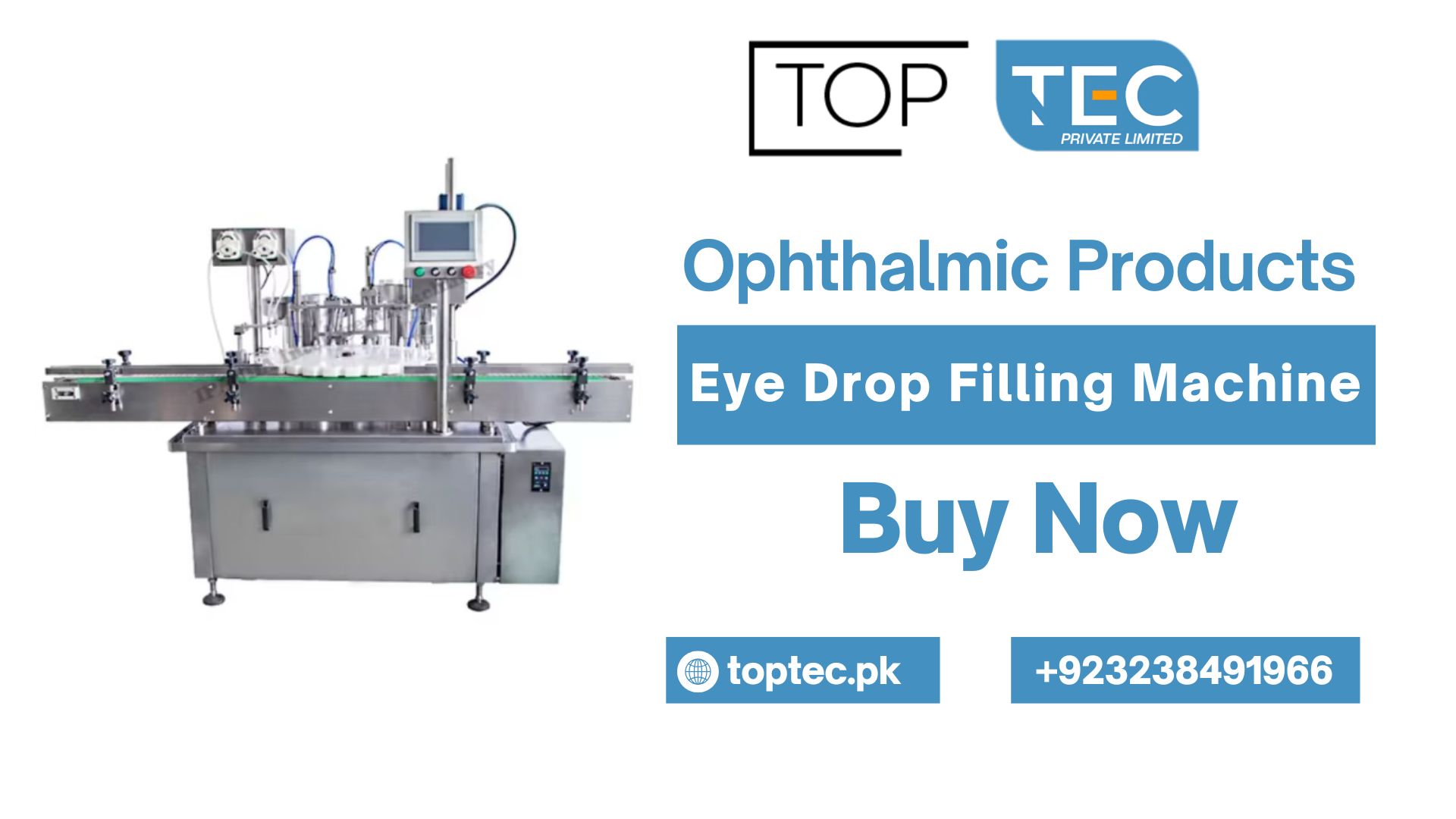
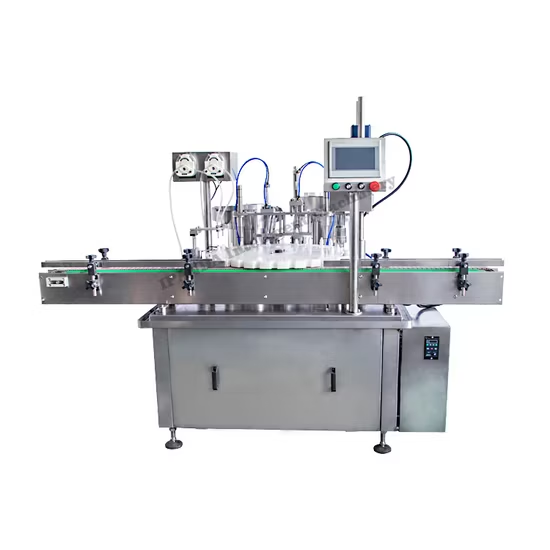
Find the right eye drop filling machine for your production line. Compare automatic models with capacities from 40 to 380 bottles per minute. Request a quote from verified manufacturers now. If you ask any pharmaceutical production engineer which line keeps them awake at night, ophthalmic liquid manufacturing usually tops the list.
Filling oral cough syrups? Relatively forgiving. Packing solid dosage tablets? Straightforward physics. But filling sterile, highly sensitive ophthalmic drops into small, flexible plastic bottles? That is an entirely different mechanical and chemical challenge. When you are dealing with fluid doses measured in mere microliters, small mistakes in dosing precision or capping torque don’t just cause product rejection—they jeopardize patient eyesight.
Whether you are scaling up your production capacity or moving away from manual bottlenecks by introducing an automatic eye drop filling machine into your cleanroom, the priorities are always the same: precise micro-dosing, gentle physical handling of containers, and batch-after-batch repeatable quality.
Let’s look into the mechanical engineering behind modern eye drop filling lines, why liquid characteristics matter so much during dispensing, and how making the decision to buy Eye Drop Filling Machine setups from reliable local sources in Pakistan can dramatically streamline your operational workflows.
Why Ophthalmic Products Demand Extreme Dosing Precision
Ophthalmic products are rarely just “water in a bottle.” From high-viscosity lubricating drops containing hypromellose (HPMC) to sensitive corticosteroid eye drop suspensions, each liquid formulation presents unique flow properties.
If your filling machine’s dosing pumps lack pinpoint accuracy, two costly problems immediately crop up:
- Underfilling: Causes regulatory compliance failures during Drug Regulatory Authority of Pakistan (DRAP) quality audits, leaving patients with less medication than legally required.
- Overfilling: Gives away expensive active pharmaceutical ingredients (APIs) for free, ruining batch economics, and causes messy fluid overflows during stopper insertion that contaminate bottle seams.
To combat this, a high-performance automatic eye drop filling machine relies on advanced peristaltic pump systems or valveless ceramic rotary piston pumps.
Peristaltic systems are massively popular in modern aseptic filling because the liquid formulation touches only the inside of medical-grade silicone or TPE tubing. There are no valves, seals, or metal impellers to scrape against shear-sensitive ophthalmic polymers. Plus, when a batch run is over, you simply replace or sterilize the continuous tubing loop—cutting down cleaning validation times from hours to minutes.
When evaluating equipment with professional Eye Drop Filling Machine manufacturers, look closely at their nozzle designs. Do they offer drip-free, suck-back mechanism nozzles? If a droplet hangs off the tip of a nozzle between machine cycles, it creates volume variations and crystallization on the needle tip. Precise fill volumes depend just as much on clean nozzle cut-offs as they do on pump mechanics.
Gentle Handling: Protecting Flexible Bottles and Engineered Closures
Have you ever looked closely at a modern 5ml, 10ml, or 15ml eye drop container? Most are made from Low-Density Polyethylene (LDPE) or polypropylene (PP). These materials are chosen specifically because they are squeezable, allowing patients to dispense exactly one liquid drop at a time into their eye.
However, that exact same flexibility makes them a nightmare for clumsy filling and capping machines.
If bottle-clamping mechanisms use too much force during liquid dispensing or indexing, the flexible LDPE bottle deforms. Try filling a slightly squeezed bottle with liquid, and the moment the mechanical clamp releases, the bottle springs back to its original shape, creating a vacuum—or worse, spilling sterile liquid across your laminar flow conveyor when it flexes!
This is where gentle handling engineering becomes a core buying criterion whenever pharmaceutical managers decide to buy Eye Drop Filling Machine infrastructure.
The Capping and Insertion Challenge
Eye drop packaging typically involves a three-part assembly:
- The flexible bottle body.
- A tiny, highly engineered inner dropper plug (the nozzle/tip).
- An outer screw cap (often with tamper-evident rings).
Inserting that tiny inner plug requires millimeter-perfect alignment. A gentle, vacuum-assisted mechanical arm must pick up the stopper, center it precisely over the bottle neck, and push it down until it snaps smoothly into place without cracking the fragile plastic edge.
Following plug insertion, the outer capping station must apply precisely controlled torque. If the torque is too high, the cap stripping threads will damage the seal; if too low, the bottle leaks during transit and compromises internal sterility. Quality automation handles all of this smoothly, at high speeds, without human fingers ever approaching the critical zone.
Achieving Repeatability with an Automatic Eye Drop Filling Machine
Manual or even basic semi-automatic filling operations invariably introduce variations. An operator gets fatigued toward the end of an eight-hour shift. Foot-pedal timing drifts by half a second. A container gets knocked slightly out of alignment under the filling needle.
In modern pharmaceutical cleanrooms, consistency is everything. Upgrading to an automatic eye drop filling machine removes these human operational variables entirely.
Here is what consistent automated execution actually looks like in practice:
- Synchronized Starwheel Indexing: Bottles are spaced and carried beneath filling needles with mechanical rhythm, ensuring zero collisions or tipping on high-speed conveyors.
- No-Bottle, No-Fill / No-Plug, No-Cap Sensors: Advanced optical and inductive fiber sensors continuously scan the conveyor line. If an empty pocket appears in the starwheel, the machine instantly halts liquid release for that cycle—preventing valuable liquid from spraying directly onto cleanroom conveyors.
- Integrated Vision Verification: Automated inspection setups check that the inner dropper plug is seated flush and that outer caps sit straight before releasing finished product down the discharge chute. Anything outside tight mathematical tolerances gets diverted instantly into a reject bin.
Navigating Equipment Choices: Local vs. Imported Infrastructure
For years, many Pakistani pharmaceutical managers instinctively turned to European or East Asian suppliers whenever they needed specialized equipment. But realities on the production floor quickly shift priorities once an imported machine breaks down.
Waiting six weeks for a minor electrical PLC relay or mechanical sealing rubber to clear customs—while an entire sterile manufacturing line sits completely idle—is a massive blow to operational profitability. Furthermore, international engineering service rates for on-site troubleshooting can drain departmental budgets remarkably fast.
This is precisely why collaborating with established local Eye Drop Filling Machine manufacturers inside Pakistan has become the smart operational preference. Dealing with local manufacturing capability means you get immediate technical assistance, readily accessible spare parts, direct engineer-to-engineer communication during Installation Qualification (IQ) and Operational Qualification (OQ), and designs that genuinely accommodate localized manufacturing workflows.
When you weigh up your operational risks and plan to buy Eye Drop Filling Machine units, working directly with local engineering infrastructure provides peace of mind that overseas catalog vendors simply cannot replicate.
Upgrade Your Entire Cleanroom: Laboratory Furniture & Equipment by TOPTEC Scientific
Here is an uncomfortable truth that many plant managers learn the hard way: setting up a state-of-the-art filling line inside a poorly equipped room creates contamination blind spots immediately. You can install the most sophisticated automation available, but if your surrounding tables, workstations, storage benches, and dispensing setups are shedding particulates, rusting beneath strong sanitizing agents, or difficult to scrub down, your sterility validations will fail.
This is where integrating your mechanical line with properly designed pharmaceutical cleanroom furniture matters. And you do not need to deal with import delays to get GMP-standard facilities.
TOPTEC Scientific is a distinguished manufacturing enterprise operating right here in Pakistan, designing and fabricating high-specification cleanroom and laboratory furniture tailored for sterile pharmaceutical facilities. Because they manufacture locally in Pakistan, you gain direct access to built-to-order, heavy-duty stainless steel solutions that withstand aggressive daily chemical fogging and cleaning routines without corroding or harboring microbial growth.
If your facility is looking for comprehensive cleanroom integration, TOPTEC Scientific directly manufactures and supplies:
- Pharmaceutical-Grade Stainless Steel Tables & Workbenches: Manufactured from premium SS304 or SS316, featuring seamless welded joints that eliminate microscopic microbial entrapment areas.
- Sampling & Dispensing Booths: Providing localized HEPA-filtered cleanroom environments for raw API measurement without cross-contamination.
- Pass-Through Boxes (Static & Dynamic): Allowing safe transfer of clean packaging material, closures, and laboratory tools between different cleanroom classification grades without dropping room pressures.
- Chemical Resistant Laboratory Benches & Fume Hoods: Designed specifically for quality control (QC) and microbiological research laboratories analyzing finished ophthalmic batches.
- Custom Washing Sinks & Storage Trolleys: Heavy-duty, ergonomic mobile units engineered for sterile gowning suites and production tooling transportation.
Sourcing both your operational infrastructure and laboratory furniture directly from skilled local enterprises like TOPTEC Scientific creates uniform mechanical reliability across your factory floor, reducing maintenance turnaround times to mere hours rather than months.
Real Talk: Assessing Eye Drop Filling Machine Price in Pakistan
Let’s address the budget equation. When procurement teams start reaching out to Eye Drop Filling Machine manufacturers for formal quotes, the price range across different proposals can seem wildly confusing at first glance. Why does one quote look double the other?
The raw Eye Drop Filling Machine price in Pakistan depends directly on several critical engineering variables that you must evaluate clearly during vendor meetings:
| Engineering Variable | Budget Level (Lower Cost) | Advanced GMP Standard (Higher Cost) |
|---|---|---|
| Material Contact Parts | SS304 Stainless Steel or standard polymers | SS316L medical grade steel with electro-polished finish & certified medical TPE tubing |
| Automation & Speed | Semi-automatic operations (~20-40 bottles/min) | Fully automatic eye drop filling machine with starwheels (~60-120+ bottles/min) |
| Dosing Technology | Mechanical piston cylinder pumps | High-precision servo-driven peristaltic pumps with suck-back features |
| Laminar Flow / Isolators | Basic canopy integration | Full laminar flow enclosure with integrated particulate and differential pressure sensors |
| Validation Documentation | Basic instructional user manual | Full GMP validation protocol package (IQ, OQ, PQ) & Material Traceability certificates |
When evaluating the Eye Drop Filling Machine price in Pakistan, it is dangerous to judge based on initial capital outlay alone. A cheaper imported system without proper documentation or localized engineering support almost always turns out to be more expensive over a three-year window once you calculate operational downtime and failed batch runs.
On the flip side, getting an honest quote from an enterprise like TOPTEC Scientific gives you transparent pricing structured around realistic Pakistani factory dynamics, supported by robust localized engineering guarantees.
Practical Checklists Before You Make a Decision to Buy Eye Drop Filling Machine Systems
Before signing any technical commercial agreement, take your production engineers through this rapid verification checklist to ensure you are investing in machinery that genuinely serves your facility:
- Test With Your Actual Formulations and Bottles: Never rely simply on water trials during FAT (Factory Acceptance Testing). Provide your actual ophthalmic suspensions and your specific flexible LDPE dropper bottles to ensure the gripper arms do not deform the containers.
- Verify Tool-Less Changeover Mechanics: In many Pakistani pharmaceutical lines, facilities alternate between 5ml, 10ml, and 15ml sizes throughout the week. Ask how many hours it takes to swap out starwheel indexing rings and capping heads between runs. Tool-less changeovers save massive hours of lost operational time.
- Assess CIP/SIP Compatibility: Does the liquid fluid path easily support Clean-In-Place (CIP) or Sterilize-In-Place (SIP) chemical protocols without requiring complete mechanical disassembly by maintenance engineering teams?
- Inspect Vendor Manufacturing Premises: If possible, physically visit the local assembly and fabrication floors. Working with transparent regional suppliers who welcome you onto their workshop floors is the best way to secure your production future.
Final Thoughts for Production Managers
At the end of the day, producing ophthalmic eye drops is a blend of scientific chemistry and robust precision mechanics. You are delivering liquid medications straight to one of the human body’s most sensitive tissues. You simply cannot compromise on liquid dosing tolerances, sterility barriers, or container capping integrity.
Whether you are expanding a high-speed sterile commercial plant or upgrading legacy setups, prioritizing gentle packaging handling and precision engineering will protect your formulations from costly manufacturing failures. Take the time to talk directly with experienced specialists, explore localized manufacturing advantages, and upgrade your surrounding laboratory furniture alongside your automation to ensure comprehensive cleanroom reliability.
When you are ready to modernize your production cleanroom, remember to evaluate the practical advantages of sourcing built-in-Pakistan laboratory furniture and operational systems directly from TOPTEC Scientific. Their understanding of regional manufacturing standards ensures your facilities operate with consistency, reliability, and precision every single day.
