

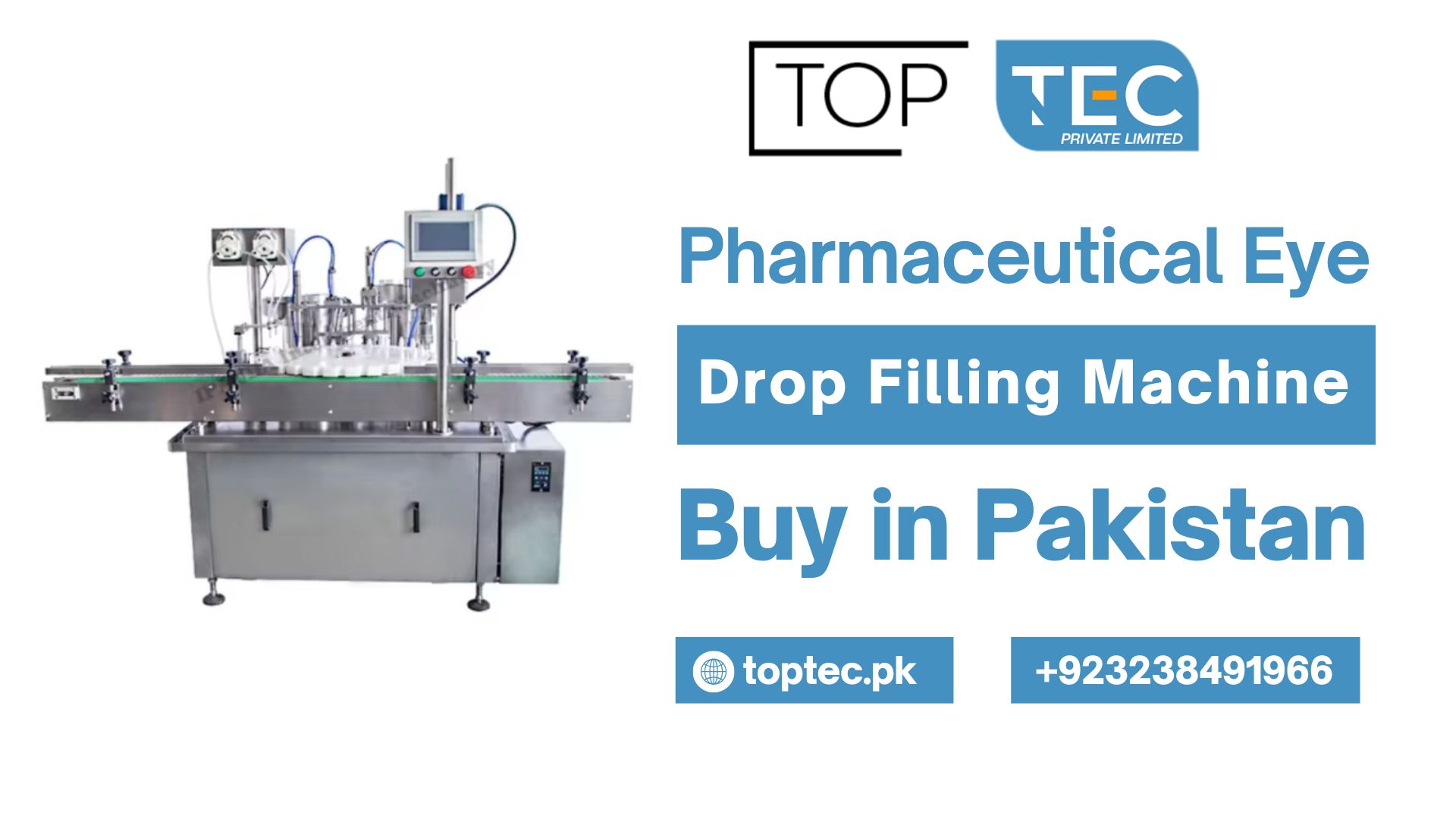
Discover high-precision eye drop filling machines from leading suppliers. With advanced filling technologies for sterile ophthalmic products and production speeds up to 24,000 units per hour. Get free price quotes and technical specifications today.
Look, if you’ve spent even a few weeks inside a pharmaceutical manufacturing unit — particularly one handling ophthalmic products — you already understand how brutal the quality standards are. One contamination event. One tiny particle drifting into an open vial. One inconsistent fill volume. That’s your entire batch gone. And in eye care manufacturing, it’s not just money down the drain. It’s a real patient safety problem.
That’s the thing about this industry that outsiders don’t always appreciate. The stakes are genuinely high, and the equipment you use reflects that reality every single day.
This is exactly why an Eye Drop Filling Machine isn’t just another piece of kit sitting on your production floor. It’s central to everything your ophthalmic line produces — and choosing it wisely, from the right Eye Drop Filling Machine manufacturers, shapes the quality of every bottle that leaves your facility.
So let’s have a proper look at what these machines actually do, how aseptic production and laminar flow work together, and what you should be thinking about before you decide to buy Eye Drop Filling Machine equipment for your operation.
What Actually Is a Pharmaceutical Eye Drop Filling Machine?
At the most basic level, it’s equipment designed to fill sterile liquid formulations into small ophthalmic containers — usually 5ml, 10ml, or 15ml dropper bottles — under strictly controlled, contamination-free conditions.
But that description barely scratches the surface.
These systems are engineered from the ground up to preserve microbial integrity throughout the filling process. They work in conjunction with laminar airflow units, HEPA filtration systems, and sometimes full isolator technology to ensure every bottle coming off the line genuinely meets sterile pharmaceutical standards — not just on paper, but in practice.
When people first look to buy Eye Drop Filling Machine systems, they’re usually surprised by how involved the whole thing is. There’s a natural assumption that filling liquid into small bottles is straightforward. It’s not. Not when the liquid is going directly onto someone’s eye. Not when the regulatory requirements are this specific. Not when a contamination event can result in product recalls, regulatory action, and real harm to patients.
Aseptic Processing — The Non-Negotiable Foundation
The human eye is remarkably vulnerable. Unlike skin, which offers a physical barrier against microbial invasion, the ocular surface is essentially exposed tissue. Even trace levels of bacterial contamination in an eye drop can cause infections, corneal damage, or in worst-case scenarios, permanent vision loss.
So when people ask why aseptic processing matters so much for ophthalmic products specifically — that’s your answer.
Aseptic processing means the product, container, and closure are each sterilized separately, then brought together in an environment engineered to prevent any recontamination. This is fundamentally different from terminal sterilization, where everything is sterilized after filling. In aseptic manufacturing, sterility must be maintained continuously — from the moment product enters the filling zone until the container is sealed.
This reality is a big part of why automatic eye drop filling machine systems have become the preferred choice for professional pharmaceutical environments. Manual filling isn’t just slower — it introduces human presence into the equation, and human operators are, frankly, one of the most significant sources of microbial contamination in any cleanroom setting. Skin cells, breath particles, movement-generated turbulence — it all adds up.
Automation reduces that risk substantially.
Laminar Flow — The Invisible Shield That Makes Aseptic Filling Possible
Walk into any well-designed pharmaceutical cleanroom and look up. You’ll likely see ceiling-mounted units pushing air downward in what appears to be a steady, gentle stream. That’s laminar flow — and what it’s doing is more important than it looks.
Laminar airflow pushes HEPA-filtered air in a unidirectional pattern across the critical filling zone. This continuous sweeping action physically displaces particles, microorganisms, and any airborne contaminants away from exposed product and open containers. The air moves at a controlled velocity — typically around 0.45 meters per second — maintaining a positive pressure envelope that actively prevents contaminated outside air from entering the critical zone.
There are two main configurations you’ll encounter:
Horizontal Laminar Flow: Air moves horizontally across the workspace, flowing from the back of the unit toward the operator. Common in compounding environments and some smaller filling setups.
Vertical Laminar Flow: Air flows downward from an overhead unit. This is what most eye drop filling stations use, and for good reason — it creates a clean air “curtain” directly above open containers at the filling point.
In a well-configured automatic eye drop filling machine setup, the laminar flow unit sits integrated directly above the filling station. This creates an ISO 5 (Class 100) environment right where it counts most — at the point of fill. Everything else in the room might be Grade B or C, but that critical zone needs to be Grade A, and laminar flow is what maintains it.
It’s worth appreciating what this actually means in practice. That invisible air current is working continuously, every second your machine is running, to keep your product sterile. It’s not a feature you’ll ever directly see doing its job — but the moment it fails, you’ll notice.
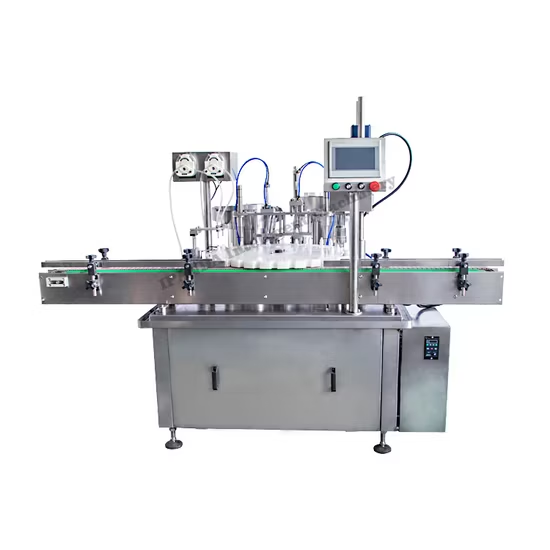
Breaking Down the Main Components
Whether you’re a first-time buyer trying to understand what you’re looking at, or an experienced manufacturing manager evaluating upgrades, knowing the core components helps you ask better questions when talking to Eye Drop Filling Machine manufacturers.
Filling System
Peristaltic pumps and piston pumps are both widely used. Peristaltic systems are popular in sterile applications because product only contacts the tubing — not the pump internals. This significantly simplifies cleaning validation and reduces contamination pathways. Piston pumps offer excellent accuracy and are preferred for higher viscosity formulations.
Laminar Flow Cabinet
The integrated HEPA-filtered unit above the filling station. Quality machines include airflow velocity monitoring to flag any degradation in performance. Don’t accept a machine where this is an afterthought — it should be engineered as part of the system, not bolted on afterward.
Bottle Conveying System
Containers move through the filling zone on stainless steel conveyors. In fully automated systems, conveyor speed is precisely synchronized with filling head cycles to ensure consistent volume delivery and prevent spillage or misfills.
Capping and Sealing Unit
Post-fill, dropper tips and outer caps are applied under controlled conditions. In automated systems, this happens without human hands touching the filled container — which is exactly what you want from a contamination control perspective.
Vision Inspection and Rejection
Better machines include optical detection for underfills, overfills, missing caps, and improperly seated closures. Rejected containers are automatically diverted before they reach packaging. This isn’t a luxury feature — it’s a quality system requirement.
CIP and SIP Capability
Clean-in-Place and Sterilize-in-Place functions let you clean and sterilize the filling pathway without taking the machine apart. For facilities with multiple products or frequent batch changeovers, this saves significant time and reduces contamination risk during transitions.
Semi-Automatic vs. Fully Automatic — Which One Do You Actually Need?
This is genuinely one of the most common questions that comes up when pharmaceutical companies in Pakistan are looking to buy Eye Drop Filling Machine equipment. And the honest answer is: it depends on where you are and where you’re going.
Semi-Automatic Systems
An operator loads bottles, initiates filling cycles, and manages transfers between stations. Output typically falls in the range of 2,000 to 8,000 bottles per shift. For smaller operations, these make sense — and the Eye Drop Filling Machine price in Pakistan for semi-automatic systems is considerably more approachable than full automation. They’re genuinely suitable for startups and small-to-medium manufacturers serving the local market.
Fully Automatic Systems
The machine handles everything — bottle infeed, filling, capping, inspection, and discharge — with minimal human intervention. A well-specified automatic eye drop filling machine can produce 10,000 to 40,000+ bottles per shift. Human presence in the critical zone is minimized. Documentation of every production parameter is automatic. These systems are essentially built for GMP compliance.
If your facility is working toward WHO-GMP certification, EU-GMP accreditation, or is planning to supply export markets, a fully automatic eye drop filling machine is almost certainly the direction you need to go. The regulatory expectations for sterile product manufacturing at that level don’t leave much room for semi-automation at the filling stage.
Navigating Regulatory Requirements in Pakistan
Operating an ophthalmic manufacturing facility in Pakistan means working within the framework set by DRAP — the Drug Regulatory Authority Pakistan. DRAP’s GMP requirements draw heavily from WHO-GMP guidelines and cover a lot of ground that directly affects your filling equipment choices.
Environmental monitoring in filling zones, equipment qualification protocols, batch documentation and traceability systems, sterility testing requirements — all of this connects back to your filling machine and how it’s installed, qualified, and operated.
Equipment qualification involves three stages: Installation Qualification (IQ) confirms the machine was installed correctly. Operational Qualification (OQ) verifies it performs within specified parameters. Performance Qualification (PQ) demonstrates it consistently produces product meeting defined quality standards. You cannot skip these steps.
When comparing Eye Drop Filling Machine price in Pakistan across different suppliers, this is something worth thinking carefully about. A machine that arrives without proper qualification documentation isn’t just an inconvenience — it’s a regulatory barrier that can delay your production launch significantly and cost you more in the long run than simply paying for proper documentation upfront.
Reputable Eye Drop Filling Machine manufacturers will provide Factory Acceptance Testing documentation, material certificates, and IQ/OQ protocol templates as standard. If a supplier is vague about documentation support, that’s worth taking seriously as a warning sign.
Pakistan’s Pharmaceutical Sector — What’s Actually Happening Right Now
The growth trajectory of Pakistan’s pharmaceutical industry over the past decade has been meaningful. A population well above 230 million people, rising healthcare awareness, government initiatives encouraging local manufacturing — all of these factors are pushing pharmaceutical companies to invest in production capacity rather than rely on imports.
Ophthalmic products are part of this shift. Eye drop manufacturing that was previously handled by importing finished goods is increasingly moving toward local production, driven both by economics and by DRAP’s preference for locally manufactured medicines where capacity exists.
This is creating genuine, practical demand among companies who want to buy Eye Drop Filling Machine systems that meet international standards but are priced and supported in a way that makes sense for Pakistani operations. That intersection — international-quality equipment, local manufacturing, local support — is exactly where TOPTEC Scientific has positioned itself.
TOPTEC Scientific — Manufacturing Equipment That Pakistani Pharmaceutical Companies Can Actually Rely On
When you’re looking at Eye Drop Filling Machine manufacturers in Pakistan, TOPTEC Scientific is a name that comes up for good reason. They manufacture laboratory furniture and pharmaceutical equipment here in Pakistan — not assembled from imported components with a local label stuck on, but genuinely manufactured locally with the understanding of what Pakistani facilities actually need.
What does that mean practically? Shorter lead times. No import-related delays or currency fluctuation surprises on the equipment itself. Local technical support from people who can actually visit your facility. And pricing that reflects the reality of the Pakistani market rather than international export margins.
When you buy Eye Drop Filling Machine equipment from TOPTEC Scientific, you’re working directly with the manufacturer. There’s no distributor layer absorbing margin and adding response time to your support requests. When something needs to be addressed, you’re talking to the people who built the machine.
What TOPTEC Scientific Brings to the Table:
GMP-Aligned Engineering: Equipment designed with pharmaceutical GMP requirements embedded in the design process — not retrofitted afterward as an afterthought.
Integrated Laminar Flow: Filling machines paired with matching laminar flow units for complete aseptic zone protection. The integration is designed, not cobbled together from separate suppliers.
Proper Material Specifications: SS304 and SS316L construction in product-contact areas. Pharmaceutical-grade seals and tubing. These aren’t specifications you should have to argue about with a supplier — they should come standard.
Genuine Customization: Production capacity, filling head count, bottle size range, conveyor configuration — TOPTEC Scientific can work with your specific product and facility requirements rather than forcing you into a catalog configuration that doesn’t quite fit.
On-Site Installation and Commissioning: Their team handles installation, which matters enormously for laminar flow setup. Getting the airflow right isn’t something you want to figure out by trial and error after the machine is installed.
Spare Parts and Ongoing Support: Local availability of spare parts is something that only becomes truly important when something breaks down during production. With TOPTEC Scientific, you’re not waiting weeks for international shipping.
Cleanroom and Laboratory Furniture — The Part People Forget Until It’s Too Late
Here’s something that regularly catches pharmaceutical companies off guard when they’re setting up or upgrading facilities: the furniture inside your cleanroom affects your contamination control just as much as your filling machine does.
Standard office furniture, wooden workbenches, regular shelving — none of these belong inside a pharmaceutical cleanroom. They shed particles. They harbor microorganisms in surface imperfections. They can’t withstand the repeated chemical disinfection that GMP environments require. Bringing standard furniture into a cleanroom essentially undermines the environmental controls you’ve spent significant money creating.
Cleanroom furniture needs to be non-particle-shedding, chemically resistant, easy to clean, and designed without the kinds of crevices and joints where contamination accumulates.
TOPTEC Scientific manufactures a comprehensive range of laboratory and cleanroom furniture to address exactly this need:
- Cleanroom Workbenches with integrated laminar flow options
- Stainless Steel Dispensing Counters for weighing and formulation areas
- Pass-Through Boxes for controlled material transfer between cleanroom grades
- Garment Room Benches and Storage Systems for personnel gowning areas
- Mobile Stainless Steel Trolleys for intra-facility material transport
- Pharmaceutical-Grade Shelving and Storage rated for cleanroom environments
If you’re establishing a complete ophthalmic manufacturing unit, sourcing your automatic eye drop filling machine and your cleanroom furniture from the same manufacturer simplifies everything — procurement, design coordination, installation, and ongoing support. It’s one relationship to manage instead of several, and that has real operational value.
What Actually Drives Eye Drop Filling Machine Price in Pakistan
Understanding what goes into the pricing helps you evaluate quotes intelligently rather than just picking the lowest number and hoping for the best.
Production Speed
Higher throughput machines cost more. The engineering required to reliably fill 20,000 bottles per hour is fundamentally more complex than a 5,000 bottle-per-hour system.
Automation Level
A fully automatic eye drop filling machine involves more sophisticated controls, sensors, and mechanical systems than a semi-automatic unit. The upfront cost is higher, but labor savings and reduced contamination risk over time often justify it.
Number of Filling Heads
More heads mean higher throughput but also more complex engineering and higher cost. For facilities running multiple products in smaller batches, fewer heads with efficient changeover capability might make better economic sense.
Material Specifications
SS316L contact parts with pharmaceutical-grade seals cost more than SS304 equivalents. But for sterile manufacturing, this specification is genuinely important and shouldn’t be the place you look for savings.
Laminar Flow Inclusion
Some quotes include an integrated laminar flow unit. Others don’t. This is a meaningful cost item that can create very misleading comparisons between suppliers if you don’t clarify it upfront.
Documentation Package
IQ/OQ protocols, material certificates, calibration documentation — these have real value and real cost. The Eye Drop Filling Machine price in Pakistan from a supplier providing full documentation will look higher than one providing none, but the total cost of ownership is lower because you’re not scrambling to generate missing documentation during your regulatory inspection.
After-Sales Terms
Warranty duration, spare parts availability, training inclusions — these all have financial implications that aren’t captured in the machine price alone.
A Practical Framework for Making This Decision
Rather than getting overwhelmed by options and specifications, here’s a straightforward way to think through the decision:
Figure out your real capacity needs first. Don’t just calculate current demand — project 3 to 5 years forward and account for growth. Buying a machine that’s at capacity from day one is a mistake you’ll regret.
Know your bottle range. If you’re running multiple products in multiple sizes, changeover capability becomes a critical specification. How long does a changeover take? What’s involved? These questions matter for your actual production efficiency.
Be honest about your regulatory requirements. Local market only, or export ambitions? This question significantly shapes what level of automation and documentation you actually need.
Don’t separate the laminar flow decision from the filling machine decision. These systems need to work together as an integrated unit. Evaluate them together.
Look at total cost of ownership, not purchase price. A cheaper machine with poor after-sales support, expensive spare parts, and missing documentation often costs significantly more over a 5-year period than a higher-quality machine with proper support.
Visit the manufacturer if you can. Before you buy Eye Drop Filling Machine systems for your production line, seeing the manufacturer’s facility tells you things that no brochure ever will.
Mistakes Worth Avoiding
A few patterns come up repeatedly when pharmaceutical manufacturers look back on equipment purchasing decisions they wish they’d made differently:
Buying to current capacity rather than projected capacity. Production demand grows. Buying a slightly larger machine now is almost always cheaper than replacing an undersized one in three years.
Treating documentation as optional. It isn’t. Missing IQ/OQ documentation during a DRAP inspection is a serious problem that doesn’t just cost you time — it can cost you your production license.
Separating the cleanroom furniture decision from the equipment decision. They’re connected. One undermines the other if done poorly.
Going with the lowest Eye Drop Filling Machine price in Pakistan without factoring in after-sales support quality. When your filling line goes down during a production run, the quality of your supplier’s response matters enormously. This is not an area where saving money upfront pays off.
Wrapping Up
Ophthalmic manufacturing sits at one of the more demanding intersections in pharmaceutical production. Small containers, sterile formulations, a sensitive target organ, strict regulatory oversight — there’s not much room for compromise anywhere in the process.
The right automatic eye drop filling machine, properly integrated with laminar flow protection, isn’t just about meeting regulatory requirements on paper. It’s about actually producing eye drops that are safe for the patients who rely on them. That’s the real standard you’re working toward.
Pakistan’s pharmaceutical sector is developing real capability in this space, and local manufacturers like TOPTEC Scientific are an important part of making that happen. When you buy Eye Drop Filling Machine systems from a manufacturer who builds locally and supports locally, you’re making a decision that works for your facility, your budget, and Pakistan’s broader pharmaceutical manufacturing growth.
If you want to have an honest conversation about your specific requirements — production capacity, product range, regulatory situation, budget — TOPTEC Scientific is worth contacting. The Eye Drop Filling Machine price in Pakistan that makes sense for your operation is one that accounts for everything: the machine, the documentation, the installation, and the support that follows.
That’s the conversation worth having.
For inquiries about Eye Drop Filling Machines, Cleanroom Furniture, Laboratory Furniture, and pharmaceutical manufacturing equipment, contact TOPTEC Scientific — manufacturing in Pakistan, for Pakistan’s pharmaceutical future.
