

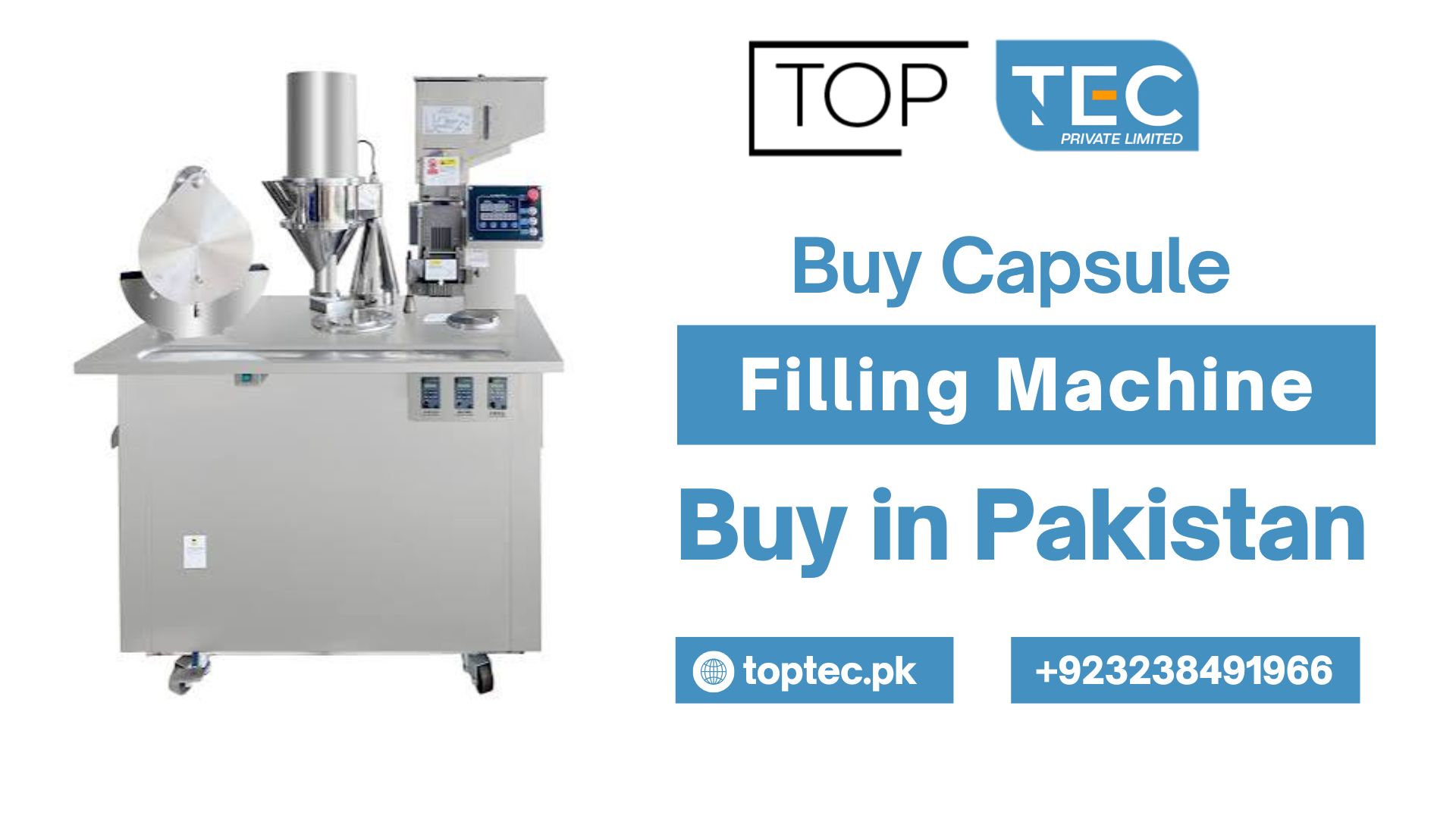
Find the ideal capsule filling machine for your pharmaceutical or nutraceutical production. Compare automatic and manual models, sizes, and capacities. Get instant price quotes from certified suppliers—start your inquiry now.
If you’ve landed on this page, you’re probably somewhere in the middle of a decision that feels more complicated than it should be. You need to fill capsules — whether for pharmaceutical production, herbal medicine manufacturing, nutraceutical supplements, or veterinary products — and you’re trying to figure out what machine to buy, what it should cost, and who you can actually trust to supply it in Pakistan.
That’s exactly what this article is going to help you with.
We’ll cover how capsule filling machines actually work, the real differences between machine types, what drives pricing, and why buying from a reliable local manufacturer matters more than most people realize until something goes wrong.
Let’s get into it.
What Does a Capsule Filling Machine Actually Do?
This sounds like a basic question, but understanding the mechanics properly helps you make smarter buying decisions — so bear with me for a moment.
Hard gelatin capsules (and increasingly, HPMC vegetarian capsules) come in two pieces: a body and a cap. The capsule filling process involves separating these two pieces, filling the body with a precise quantity of powder, pellet, granule, or liquid formulation, and then rejoining the cap onto the filled body to create a sealed, finished capsule.
Simple enough in concept. But doing this accurately, consistently, and at any meaningful production speed requires engineering that’s considerably more sophisticated than the description suggests.
The key challenges are:
- Achieving consistent fill weight across every single capsule in a batch
- Handling powder formulations with vastly different flow properties
- Maintaining capsule orientation throughout the filling process
- Rejecting defective or empty capsules before they reach packaging
- Keeping the process clean enough to meet pharmaceutical GMP standards
The type of machine you need depends entirely on your production scale, your budget, and the formulation characteristics of what you’re filling.
The Main Categories of Capsule Filling Machines
Before you buy Capsule Filling Machine equipment for your operation, understanding the three main categories will save you from making an expensive mistake.
Manual Capsule Filling Machines
A manual capsule filling machine is a simple, hand-operated device — typically a flat plate or tray with holes sized to hold a specific capsule size. The operator loads empty capsule bodies into the tray, fills them manually by spreading powder across the surface and tamping it down, then places the caps and applies a lid plate to close all the capsules simultaneously.
Output from a manual capsule filling machine is obviously limited — typically somewhere between 100 and 500 capsules per operation cycle depending on the tray size. The operator’s skill and pace determine everything.
But here’s the thing people sometimes overlook: for small-batch pharmaceutical compounding, clinical trial material production, herbal medicine startups, and nutraceutical companies in early stages, a manual capsule filling machine is often exactly the right tool. It’s affordable, simple to operate, easy to clean, and requires no electrical supply or technical maintenance.
If you’re filling a few thousand capsules per day and your formulation is a simple free-flowing powder, jumping straight to automation might genuinely be overkill. The Capsule Filling Machine price in Pakistan for manual systems is accessible to virtually any small operation, making them a sensible starting point.
Semi-Automatic Capsule Filling Machines
Semi-automatic machines add mechanical assistance to the process while still requiring an operator to manage loading and unloading. Capsules are loaded into magazine-fed systems, oriented automatically, and filled through mechanically controlled dosing mechanisms. The operator’s role shifts from doing the filling to managing the machine.
Output typically ranges from 5,000 to 25,000 capsules per hour depending on the specific model and configuration. Semi-automatic systems hit a sweet spot for medium-scale manufacturers — they’re significantly more productive than manual operation, considerably more affordable than full automation, and still manageable in terms of maintenance requirements.
Fully Automatic Capsule Filling Machines
Fully automatic systems handle the entire process without operator involvement at the filling stage. Capsules are fed from hoppers, oriented, separated, filled, closed, and polished in a single continuous automated sequence. Output ranges from 25,000 capsules per hour on smaller automatic models to well over 150,000 capsules per hour on high-speed industrial systems.
These machines are built for large-scale pharmaceutical manufacturing where GMP compliance, batch documentation, and validated fill-weight consistency are absolute requirements.
Who Actually Needs What?
Rather than giving you a generic comparison table, let me describe some real operational scenarios that map to each machine type.
You need a manual capsule filling machine if:
You’re a herbal medicine manufacturer producing small specialist batches. Or a nutraceutical startup that’s still developing formulations and doesn’t yet know which products will have commercial legs. Or a pharmaceutical compounding pharmacy filling custom prescriptions. Or a university research department producing clinical trial material. In all these cases, the Capsule Filling Machine price in Pakistan for a quality manual system is modest, and the simplicity is genuinely an advantage.
You need a semi-automatic machine if:
You’re a medium-scale pharmaceutical or nutraceutical manufacturer producing established product lines at consistent volumes. You need more output than manual operation can provide, but full automation isn’t yet justified by your production economics. You want mechanical dosing consistency without the capital investment of a fully automatic line.
You need a fully automatic system if:
You’re manufacturing at commercial pharmaceutical scale, supplying retail chains or export markets, working under WHO-GMP or similar regulatory frameworks, and producing volumes that make manual or semi-automatic operation economically impractical.
Most of the Pakistani pharmaceutical manufacturers currently looking to buy Capsule Filling Machine equipment fall somewhere in the semi-automatic range — growing operations that have outgrown manual methods but aren’t yet at the scale that justifies large automatic systems.
What Makes Capsule Filling Technically Challenging?
If you’ve only seen capsule filling described in brochures, it probably looks straightforward. In practice, several technical realities make it genuinely complex — and these realities directly affect which machine you need.
Powder Flow Properties
Not all pharmaceutical powders flow the same way. Free-flowing crystalline powders move through dosing mechanisms smoothly and predictably. Cohesive, sticky, or hygroscopic powders — which describes a large proportion of API-containing pharmaceutical formulations — tend to bridge across openings, clump together, and resist consistent volumetric dosing.
Different filling machine designs handle this differently. Dosator-based systems use a cylindrical plug of compressed powder that’s ejected into the capsule body. Tamping-pin systems build the plug through progressive compression across multiple stations. Each approach has advantages for specific powder characteristics. When you’re speaking with Capsule Filling Machine manufacturers, describing your specific formulation’s flow properties should be one of your first conversations.
Capsule Size Variation
Standard capsule sizes range from 000 (the largest, holding around 1.4g) down to 5 (the smallest, holding around 0.13g). Most filling machine systems are designed around a specific size or a changeable range of sizes. If your product line includes multiple capsule sizes, make sure the machine you’re considering can accommodate all of them — and find out how complex and time-consuming the size changeover actually is.
Fill Weight Consistency
Regulatory standards for pharmaceutical capsules typically require that fill weights stay within ±5% of the target, with tighter tolerances for high-potency active ingredients. Achieving this consistently across a full production batch — not just during a short test run — requires well-designed dosing mechanisms, stable powder flow from hoppers, and reliable machine control systems.
GMP Compliance Requirements
For pharmaceutical manufacturing under DRAP oversight, capsule filling equipment must meet GMP design standards: product-contact surfaces in pharmaceutical-grade stainless steel, no hollow spaces or crevices where powder can accumulate, cleanable without disassembly where possible, and capable of producing documented, validated results.
Key Specifications to Evaluate
When you sit down with Capsule Filling Machine manufacturers to evaluate specific models, here are the specifications that genuinely matter:
Output Capacity: Stated in capsules per hour. Always verify this against realistic operating conditions — manufacturers typically quote theoretical maximum output, which assumes perfect powder flow and continuous operation.
Capsule Size Range: Which sizes does the machine handle? Is changeover tool-free or does it require specialist intervention?
Dosing Mechanism Type: Dosator or tamping-pin? Each suits different formulation types. If you’re not sure which applies to your products, ask for clarification.
Fill Weight Accuracy: What tolerance does the machine guarantee? This should be backed by performance data, not just marketing claims.
Contact Material Specification: SS304 or SS316L? For pharmaceutical applications, SS316L is preferred for its superior chemical resistance.
Drive System: Mechanical cam-driven systems are robust and well-understood. Servo-driven systems offer flexibility and easier adjustment but add electronic complexity.
Cleaning and Changeover Time: In facilities with multiple products or sizes, this is a major factor in actual production efficiency.
Available Documentation: IQ/OQ protocol templates, material certificates, compliance declarations — necessary for regulatory qualification.
Capsule Filling Machine Price in Pakistan — What to Realistically Expect
Let’s talk about money, because this is usually the part of the conversation where things get unclear.
The Capsule Filling Machine price in Pakistan varies enormously depending on machine type, capacity, specification level, and supplier. Here’s a realistic overview:
Manual Capsule Filling Machines: Entry-level manual systems for small-scale operation fall at the accessible end of the pricing range. Even well-made, properly specified manual systems remain affordable for small pharmaceutical or nutraceutical businesses. If you need to buy Capsule Filling Machine equipment on a tight initial budget, this is where most people start.
Semi-Automatic Systems: Mid-range investment territory. The price spread within this category is significant — a basic semi-automatic system costs considerably less than a high-specification model with full GMP documentation. What you’re paying for at the upper end of this range is better fill-weight consistency, more robust construction, and proper regulatory documentation.
Fully Automatic Systems: Substantial capital investment. These are complex machines with sophisticated control systems, and the price reflects that. For companies that genuinely need the output, the economics work — but it’s not an investment to make ahead of your actual production requirements.
A few honest points about Capsule Filling Machine price in Pakistan that don’t get discussed enough:
Documentation has a real cost. IQ/OQ protocol packages, material traceability certificates, and calibration documentation take real engineering time to produce. Machines quoted without this documentation look cheaper upfront but cost you more when you’re trying to qualify your facility for regulatory inspection.
After-sales support has a value that isn’t in the purchase price. When a critical component fails during production, the cost of downtime often exceeds the price difference between a cheap machine and a quality one. Local suppliers with proper spare parts availability are worth paying more for.
Import logistics add hidden costs to overseas equipment. Customs duties, shipping time, currency exchange exposure, and international service rates for technical visits all add up. When you buy Capsule Filling Machine equipment from local Capsule Filling Machine manufacturers in Pakistan, many of these hidden costs disappear.
Why Local Manufacturing Matters More Than You’d Think
There’s a tendency in some procurement circles to assume that imported equipment is automatically better than locally manufactured alternatives. This assumption is worth examining critically.
Pakistani pharmaceutical manufacturing has matured significantly over the past decade. DRAP’s regulatory requirements have pushed local manufacturers to develop serious technical capabilities. Local engineering enterprises that have invested in proper machining, quality control, and documentation systems are producing equipment that meets international GMP standards — while offering service and support advantages that imported equipment simply cannot match.
Consider what happens when something goes wrong with an imported machine. You’re looking at international shipping time for spare parts. Possibly weeks before a technical engineer can visit. Communication across time zones and language barriers during a production emergency. Meanwhile, your filling line sits idle.
With a local manufacturer, a technical engineer can potentially be at your facility within hours. Spare parts are available domestically. Communication is direct and immediate.
For many Pakistani pharmaceutical and nutraceutical manufacturers, this practical operational reality is the single most compelling reason to buy Capsule Filling Machine equipment from established local Capsule Filling Machine manufacturers rather than pursuing imported alternatives.
TOPTEC Scientific — Laboratory Furniture and Equipment Manufactured in Pakistan
When you’re setting up or expanding a capsule filling operation, the filling machine itself is only one part of the equation. The surrounding infrastructure — workbenches, dispensing stations, storage systems, cleanroom furniture — affects your contamination control, your workflow efficiency, and your ability to meet GMP standards just as directly.
TOPTEC Scientific is a Pakistan-based manufacturing enterprise producing high-specification laboratory furniture and cleanroom equipment for pharmaceutical, nutraceutical, and research facilities across the country. Everything they make is manufactured locally in Pakistan — which means proper lead times, no import complications, and direct technical support.
What makes TOPTEC Scientific particularly relevant to pharmaceutical manufacturers thinking about capsule filling operations is the comprehensive range of supporting infrastructure they offer:
Stainless Steel Workbenches and Tables: Manufactured from SS304 or SS316 with seamless welded construction, these benches provide the contamination-resistant work surfaces that GMP capsule filling operations require. No wooden surfaces, no painted finishes that chip and contaminate product — just properly specified pharmaceutical-grade work surfaces.
Dispensing Counters and Weighing Stations: Purpose-designed for raw material handling and in-process weighing operations, with integrated anti-vibration features and properly specified surfaces for pharmaceutical environments.
Pass-Through Boxes: Static and dynamic configurations for transferring materials between different cleanroom zones without compromising environmental controls.
Storage Systems and Mobile Trolleys: Pharmaceutical-grade stainless steel shelving and mobile trolleys for in-facility transport of materials, equipment, and finished product.
Fume Hoods and Safety Cabinets: For facilities handling potent APIs or solvent-based formulations, proper containment and ventilation equipment is essential.
Gowning Room Furniture: Benches, lockers, and storage systems for personnel gowning areas adjacent to production cleanrooms.
If you’re investing in capsule filling capability — whether you’re buying a manual capsule filling machine for a small herbal operation or a fully automatic system for large-scale pharmaceutical production — the surrounding infrastructure matters. Investing in quality filling equipment while operating from inadequate furniture and fitout creates gaps in your contamination control that can cause batch failures and regulatory issues.
TOPTEC Scientific manufactures these supporting elements to GMP standards, locally, with the kind of after-sales support that Pakistani manufacturers actually need.
Setting Up Your Capsule Filling Operation: A Practical Sequence
For manufacturers who are in the planning phase of establishing capsule filling capability, here’s a practical sequence that reflects how successful operations typically develop:
Step 1: Characterize your formulations
Before talking to any Capsule Filling Machine manufacturers, understand your powder’s flow properties. Is it free-flowing or cohesive? What’s the bulk density? What fill weight are you targeting? What capsule size? This information directly determines which machine types are suitable.
Step 2: Define your capacity requirements honestly
Calculate your realistic production requirements — not your aspirational capacity, but what you actually need to produce in the next 12 to 24 months. Then factor in realistic machine efficiency (not theoretical maximum output) and plan for 70-80% utilization as a sustainable operating target.
Step 3: Assess your regulatory context
Are you manufacturing licensed pharmaceutical products under DRAP oversight? Or nutraceutical supplements with less demanding regulatory requirements? This determines the documentation and qualification requirements for your equipment, which affects the specification level you need.
Step 4: Establish your infrastructure requirements
What workbenches, storage, dispensing stations, and cleanroom furniture do you need? Engage a supplier like TOPTEC Scientific early in the planning process so that your physical infrastructure is designed around your production workflow rather than retrofitted afterward.
Step 5: Evaluate machine suppliers
Contact multiple Capsule Filling Machine manufacturers, request detailed technical specifications and quotations, ask about after-sales support arrangements, spare parts availability, and documentation packages. Visit supplier facilities if practical. The Capsule Filling Machine price in Pakistan comparison should be done on a total-cost-of-ownership basis, not purchase price alone.
Step 6: Plan your qualification process
If you’re manufacturing pharmaceutical products, plan IQ/OQ/PQ qualification activities before your machine arrives. Having your qualification protocols drafted in advance saves significant time during commissioning.
Common Mistakes When Buying Capsule Filling Equipment
Based on what regularly goes wrong for manufacturers in this space, here are the pitfalls most worth avoiding:
Buying capacity you don’t yet need. A fully automatic system sitting at 20% utilization for its first three years is a poor investment. Start with appropriate capacity and upgrade as your business justifies it.
Ignoring powder characterization. Buying a machine based on output specs alone, without verifying it’s suitable for your specific formulation, leads to expensive performance problems after commissioning.
Underestimating changeover complexity. If your product line requires regular size changes between runs, the time involved in changeover directly reduces your effective production capacity. Ask specifically about this before you buy Capsule Filling Machine equipment.
Neglecting documentation requirements. Especially for pharmaceutical manufacturers, missing IQ/OQ documentation creates regulatory problems that are expensive and time-consuming to resolve after the fact.
Treating the filling machine as the only investment. The surrounding infrastructure — furniture, weighing stations, storage, environmental controls — is part of the production system. Underinvesting in supporting elements compromises the performance of your filling equipment.
Choosing the lowest-cost supplier without evaluating support. This one costs people money almost every time. The Capsule Filling Machine price in Pakistan is only part of the picture. After-sales support, spare parts availability, and technical expertise are the factors that determine long-term operational reliability.
How to Evaluate Capsule Filling Machine Manufacturers in Pakistan
When you’re shortlisting Capsule Filling Machine manufacturers to approach for quotations, here are the evaluation criteria that matter:
Manufacturing Facility: Can you visit and see how the machines are actually built? Legitimate manufacturers welcome facility visits. If a supplier is evasive about their manufacturing setup, that’s a genuine concern.
Technical Knowledge: Can their engineering team have a real technical conversation about your formulation characteristics, your powder flow behavior, and the appropriate dosing mechanism for your application? Or are they just reading from a brochure?
Reference Customers: Can they connect you with existing customers whose operations you can contact or visit? Real-world references from comparable manufacturing environments are worth more than any marketing material.
Documentation Capability: Can they provide material certificates, calibration records, and IQ/OQ protocol documentation? This is non-negotiable for pharmaceutical GMP compliance.
Spare Parts Commitment: What spare parts do they stock locally? What’s their typical lead time for components that aren’t in stock? These questions reveal a lot about the practical reliability of the relationship.
After-Sales Structure: Do they have dedicated technical support staff? How do they handle warranty claims and post-warranty service?
Quick Reference: Capsule Filling Machine Decision Summary
Here’s a simplified framework for the decision:
Small scale, limited budget, simple formulations: Start with a quality manual capsule filling machine. It will serve you well and the Capsule Filling Machine price in Pakistan for a properly built manual system is accessible. When your volumes justify it, step up to semi-automatic.
Medium scale, established products, regulatory compliance required: Semi-automatic systems hit the right balance of output, cost, and manageability. Focus your evaluation on fill-weight accuracy, changeover flexibility, and documentation quality.
Large scale, pharmaceutical GMP, high-volume commercial production: Fully automatic systems are where you need to be. Invest properly in specification, qualification, and infrastructure — the operational and regulatory cost of getting this wrong is significant.
Whatever your scale, make sure the surrounding laboratory furniture and infrastructure from suppliers like TOPTEC Scientific matches the standard of your filling equipment. These things work together as a system.
Wrapping Up
Choosing the right capsule filling equipment for your operation is a decision that will affect your production efficiency, your regulatory compliance, and your product quality for years. It deserves careful evaluation rather than a quick procurement decision driven primarily by price.
Take the time to understand your formulation characteristics, define your realistic capacity requirements, engage with genuine Capsule Filling Machine manufacturers who can have technical conversations rather than just sales presentations, and think about total cost of ownership rather than purchase price alone.
And don’t overlook the infrastructure surrounding your filling line. When you invest in quality capsule filling equipment, make sure the workbenches, dispensing stations, and cleanroom furniture from manufacturers like TOPTEC Scientific meet the same standard — because the whole production environment needs to work together.
When you’re ready to buy Capsule Filling Machine equipment that genuinely fits your operation, do it with the full picture in mind. The Capsule Filling Machine price in Pakistan that makes sense is the one that accounts for everything: machine quality, documentation, after-sales support, and the supporting infrastructure around it.
