

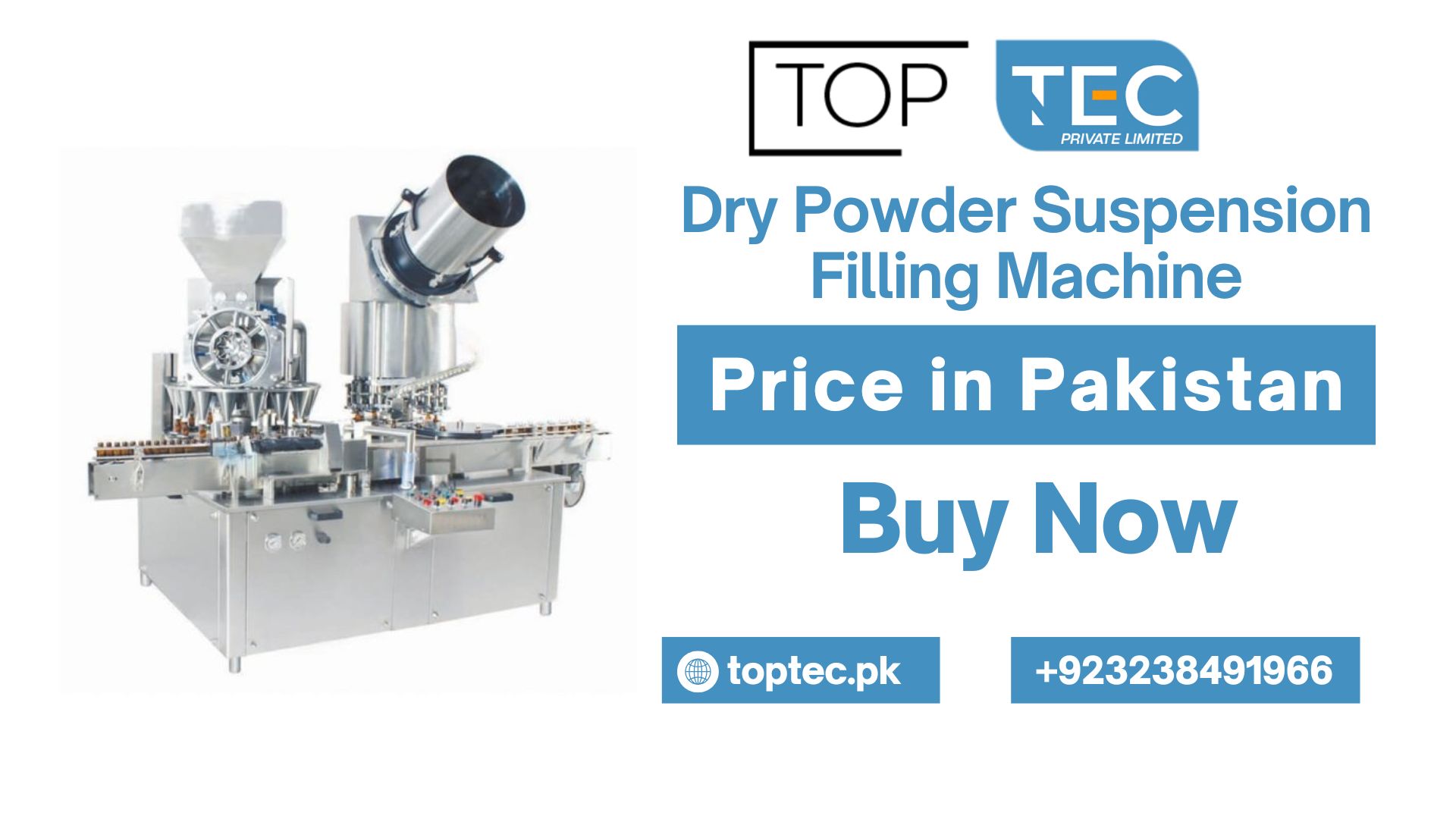
Buy Pharmaceutical Dry Powder Suspension Filling Machine from from TOPTEC Scientific. A production manager — usually from a mid-sized pharma company that’s been growing steadily for a few years — calls and says something like: “We’ve been managing our dry syrup line with equipment we bought eight years ago. It’s getting unreliable, the fill weights are drifting, and our DRAP inspector flagged the dust containment situation during our last audit. We need to upgrade but we’re not sure where to start.”
That scenario plays out regularly. And the honest answer to “where do you start” is the same every time: start with understanding what you actually need, before you start evaluating what suppliers are offering you.
Because the dry powder suspension filling machine market includes everything from basic semi-manual setups to sophisticated servo-controlled pharmaceutical-grade production lines — and the gap between them, in terms of performance, compliance capability, and price, is enormous.
This guide is designed to help you navigate that gap intelligently. We’ll cover what pharmaceutical-grade suspension filling equipment actually requires, what separates adequate from genuinely good equipment, where TOPTEC Scientific fits into this picture for Pakistani manufacturers, and how to make a buying decision that serves your operation well for the next decade.
Let’s Start With the Product — Why Dry Syrup Formulations Exist
Before getting into equipment specifics, understanding why dry syrup products exist clarifies what the manufacturing process is actually trying to achieve — and why the filling step is so consequential.
Many pharmaceutical active ingredients — particularly antibiotics like amoxicillin, ampicillin, azithromycin, and cephalosporins — are chemically unstable in aqueous solution over extended periods. If you formulated these drugs as ready-to-drink liquid syrups, they’d degrade before reaching the patient, particularly in the storage and distribution conditions typical in Pakistan’s pharmaceutical supply chain.
The solution is brilliant in its simplicity: keep the active ingredient dry until just before use. Manufacture the product as a dry powder blend, fill it into bottles as a powder, seal it, and ship it dry. The pharmacist or patient adds water at the point of dispensing, creating a suspension that’s stable for a much shorter period — typically 7 to 14 days refrigerated — which is exactly the duration of a typical antibiotic course.
This is why dry syrup products dominate pediatric antibiotic formulations. Children need liquid dosage forms — they can’t swallow tablets — but liquid antibiotic stability is limited. Dry syrups solve both problems simultaneously.
The manufacturing implication is clear: the dry powder blend going into those bottles is the critical product. Its moisture content must be controlled. Its particle size distribution must be consistent. Its blend homogeneity must be maintained through the filling process. And the filling and sealing operation must protect it from moisture until the patient opens the bottle.
Every design decision in dry syrup powder filling machine equipment connects back to these product protection requirements.
What Makes Pharmaceutical Dry Powder Filling Genuinely Difficult
People who haven’t worked directly with pharmaceutical dry powder filling sometimes assume it’s mechanically simpler than liquid filling — after all, you’re not dealing with pumps, nozzles, and liquid containment. In practice, dry powder filling is in many ways more technically demanding.
Powder Flow Behavior Is Complex and Variable
Liquids flow predictably. Measure the viscosity, design the pump and nozzle appropriately, and the liquid behaves consistently.
Dry pharmaceutical powders don’t work that way. The same powder can flow freely under some conditions and bridge completely under others, depending on temperature, humidity, compaction history, particle size distribution, and the specific mechanical conditions of the filling system.
This variability is the central challenge for dry powder suspension filling machine engineering. The dosing mechanism — typically an auger — must deliver consistent powder volumes despite this inherent variability in powder flow behavior. Managing this requires thoughtful hopper geometry, appropriate agitation to maintain consistent powder presentation to the auger, and precise auger control.
Fill Weight Accuracy Is Non-Negotiable
Pharmaceutical dry syrup products have defined fill weights — the quantity of powder per bottle is specified in the product registration and must be controlled within defined tolerances. Typically these tolerances are ±5% of target fill weight, though some high-potency products require tighter specifications.
Achieving this accuracy consistently across a full production batch — not just during the initial machine setup when the operator is paying close attention — requires proper equipment design, good process control, and appropriate in-process monitoring.
Moisture Control Is Critical
The hygroscopic nature of many antibiotic powders means that extended exposure to ambient humidity during filling can degrade product quality. Good suspension filling equipment design minimizes powder exposure time and supports operation in humidity-controlled environments. Some high-hygroscopicity products require filling in dehumidified environments or even under nitrogen purge conditions.
Dust Is a Constant Challenge
Fine pharmaceutical powders generate dust during handling. This dust creates operator exposure risks, cross-contamination risks between products, and GMP compliance challenges if it migrates into adjacent areas. Dry syrup powder filling machine equipment must manage dust generation through contained filling heads, integrated dust extraction, and design features that minimize powder turbulence during the filling cycle.
The Anatomy of a Pharmaceutical Dry Syrup Filling Machine
Understanding what’s inside the machine helps you evaluate what you’re being offered and ask the right questions.
The Powder Hopper and Agitation System
The hopper holds the working supply of powder blend during production. Its geometry — the angle of the cone, the outlet diameter, the surface finish — affects powder flow to the auger. Most pharmaceutical dry powder suspension filling machine designs incorporate an agitation mechanism in the hopper — paddles, stirrers, or vibration — to prevent powder bridging and maintain consistent bulk density presentation to the dosing auger.
Hopper capacity determines how frequently production needs to be interrupted for powder replenishment. At higher production speeds, hopper capacity becomes a more significant productivity factor.
The Auger Dosing System
The auger is a precisely machined screw that rotates a controlled number of turns to deliver a defined volume of powder through the filling tube into the bottle below. Fill weight is controlled by auger rotation — more turns, more powder; fewer turns, less powder.
In pharmaceutical-grade systems, auger rotation is controlled by a servo motor with closed-loop position feedback. This means the control system commands a specific rotation angle and verifies it was achieved, rather than simply timing the motor. This closed-loop control is what enables the fill weight accuracy pharmaceutical applications require, especially at higher production speeds.
The auger geometry — diameter, pitch, flight depth — is matched to the specific powder being filled. Different powder characteristics require different auger specifications. Reputable suspension filling equipment suppliers either offer interchangeable auger sets for different products or provide application engineering support to select the appropriate auger for your formulation.
The Filling Nozzle and Dust Containment
The filling nozzle delivers powder from the auger into the bottle. Pharmaceutical-grade nozzle designs incorporate features to minimize dust generation at this critical point — close-fitting nozzle-to-bottle proximity, gentle powder delivery, and integrated local dust extraction at the nozzle.
The dust extraction system at the filling head is one of the most important features to evaluate in any dry powder suspension filling machine. Inadequate extraction at this point results in powder dust accumulating in the filling area — a GMP compliance problem and an operator exposure risk.
Bottle Transport and Positioning
The conveyor system moves bottles through the filling station and positions each bottle precisely under the filling nozzle. At higher production speeds, reliable bottle positioning becomes increasingly critical — a misaligned bottle at 60 BPM means powder dispensed outside the bottle, immediately creating a mess and a potential product loss and contamination situation.
Inline Checkweighing
Modern pharmaceutical dry syrup powder filling machine systems incorporate inline checkweighing that monitors fill weights continuously during production. Statistical process control algorithms detect fill weight drift early, triggering automatic auger adjustment before out-of-specification product is produced.
Some systems check every bottle (100% checkweighing); others check a defined sample fraction. For pharmaceutical applications, understanding the checkweighing approach — and how the system responds to detected fill weight drift — is an important specification question.
Sealing and Capping Stations
After filling, the bottle moves to the sealing station where an aluminum foil induction seal is applied to protect the hygroscopic powder content from moisture. This is followed by cap application — either press-on caps or screw caps with torque-controlled tightening.
The integrity of this sealing operation directly affects product shelf life and stability. For hygroscopic antibiotic powders, inadequate sealing integrity allows moisture ingress that can degrade the active ingredient over the product’s shelf life.
GMP Requirements for Dry Syrup Filling Operations
Pharmaceutical dry syrup manufacturing in Pakistan operates under DRAP GMP requirements, and for dry powder suspension filling machine equipment specifically, these translate into concrete expectations:
Cleanroom Environment
Dry syrup powder filling is typically conducted in a Grade C (ISO 7) cleanroom. Temperature control is important for powder flow consistency; humidity control is critical for moisture-sensitive antibiotic powders. Many pharmaceutical dry syrup filling areas operate at controlled relative humidity — often below 40-45% RH — to protect hygroscopic products during filling.
Contact Surface Specification
All product-contact surfaces must be pharmaceutical-grade. SS316L stainless steel for metal components — not SS304, and certainly not carbon steel or aluminum. Pharmaceutical-grade polymers for any plastic components. Material traceability certificates confirming these specifications are a documentation requirement, not an optional extra.
Equipment Qualification
IQ/OQ/PQ qualification documentation for the suspension filling equipment is mandatory for pharmaceutical applications. This requires suppliers to provide protocol templates, design documentation, and technical data that supports your qualification activities. Suppliers without experience in pharmaceutical GMP qualification applications may not be able to provide adequate documentation support.
Cleaning Validation
For multi-product facilities, cleaning validation between products demonstrates that residual active ingredient from the previous batch is removed to acceptable levels before the next product is filled. Equipment design directly affects cleaning validation difficulty and reliability.
Batch Documentation
Electronic or paper records of production parameters — fill weights, production speed, alarm events, operator interventions — must be maintained as part of the batch manufacturing record. Modern dry powder suspension filling machine control systems should support batch record documentation requirements.
TOPTEC Scientific — Why This Matters for Pakistani Pharmaceutical Manufacturers
Let’s talk specifically about why TOPTEC Scientific is worth your serious consideration if you’re a pharmaceutical manufacturer in Pakistan looking to invest in dry syrup filling capability.
TOPTEC Scientific is a Pakistan-based manufacturing company. They manufacture laboratory furniture and pharmaceutical production equipment locally — in Pakistan, not imported from overseas with a local distributor’s label on it. This distinction matters in ways that become very clear when you’re actually operating production equipment in a Pakistani pharmaceutical facility.
The Local Manufacturing Advantage
When your dry powder suspension filling machine needs service — and at some point, every production machine needs service — the response time and cost of that service depends entirely on where your supplier is based.
International suppliers with Pakistani distributors often have limited spare parts inventory locally. Critical components may need to be ordered internationally, with lead times measured in weeks. Service visits from overseas technical engineers involve international travel costs and scheduling delays that are genuinely painful when your filling line is sitting idle.
TOPTEC Scientific is here. Their technical team is in Pakistan. Spare parts are available locally. When you have a production problem that needs engineering support, you’re talking to people who can actually respond quickly and cost-effectively.
For a production-critical piece of suspension filling equipment like a dry syrup filling line, this local support capability is a significant operational advantage that doesn’t always show up in initial price comparisons but becomes very visible over the equipment’s operating life.
Understanding Pakistani Pharmaceutical Manufacturing Reality
TOPTEC Scientific operates within the Pakistani pharmaceutical manufacturing environment. They understand DRAP inspection requirements from direct experience with Pakistani facilities. They understand the utility and infrastructure realities of Pakistani pharmaceutical plants. They understand how Pakistani production teams operate and what practical support they need.
This contextual understanding produces better outcomes than working with suppliers whose pharmaceutical equipment experience is primarily in European or North American manufacturing environments with very different infrastructure realities.
Laboratory Furniture and Complete Production Environment
Here’s where TOPTEC Scientific‘s offering becomes particularly comprehensive for pharmaceutical manufacturers investing in dry syrup filling capability.
Your dry syrup powder filling machine operates inside a production environment. The quality of that environment — the workbenches surrounding the filling line, the powder dispensing stations upstream, the in-process quality control furniture, the storage systems for packaging components — directly affects your contamination control and your GMP compliance.
TOPTEC Scientific manufactures the complete production environment, not just individual pieces of equipment. For dry syrup filling operations specifically, they supply:
Stainless Steel Pharmaceutical Workbenches
SS304 and SS316 construction with seamless welded joints and pharmaceutical-grade surface finish. These are the workbenches immediately surrounding your filling line — where operators manage in-process documentation, perform manual adjustments, and handle packaging components. Properly specified for daily pharmaceutical cleaning protocols. No painted surfaces, no hollow sections, no construction features that compromise cleanability or contamination control.
These aren’t generic steel workbenches with a “pharmaceutical” label. They’re designed specifically for pharmaceutical production environments where GMP requirements govern every surface in the production area.
Powder Dispensing and Weighing Stations
For the raw material dispensing operations that feed your filling line — weighing and dispensing dry syrup powder blends before transfer to filling hoppers. Integrated anti-vibration features improve weighing accuracy for pharmaceutical formulations. Ergonomic design supports operators through long production shifts of repetitive dispensing operations.
Contained Dispensing Booths
HEPA-filtered enclosures for API and powder blend dispensing where contained handling is required. For pharmaceutical facilities handling potent or sensitizing active ingredients in dry syrup formulations, contained dispensing booths protect operators and prevent cross-contamination during the critical upstream dispensing step.
Pass-Through Boxes
Static and dynamic configurations for controlled material transfer between cleanroom zones. Moving dry powder blends from dispensing areas into filling cleanrooms. Transferring packaging materials from warehouse areas into the production environment. TOPTEC Scientific manufactures pass-through boxes to pharmaceutical standards appropriate for different cleanroom grade differentials.
In-Process QC Workstations
Dedicated workstations for fill weight checking and in-process quality control adjacent to the filling line. Stable, cleanable, properly specified surfaces that support accurate in-process measurements — which are part of your GMP obligation during pharmaceutical dry syrup production.
Mobile Stainless Steel Trolleys
Pharmaceutical-grade transport systems for moving dry powder blends, packaging components, and filled product within production facilities. Designed for cleanroom environments — smooth and fully cleanable, appropriate load ratings, maneuverable in pharmaceutical production corridors.
Gowning Room Furniture
Benches, lockers, and organized storage systems for personnel gowning areas adjacent to your dry syrup filling cleanroom. Proper gowning room furniture design supports consistent compliance with pharmaceutical gowning procedures — the contamination control process that begins before anyone enters your production area.
Fume Hoods and Ventilated Workstations
For QC laboratory operations and any chemical handling associated with your dry syrup product testing. Properly specified fume hoods with appropriate airflow and filtration for pharmaceutical laboratory environments.
Environmental Monitoring Support Furniture
For the environmental monitoring activities conducted in pharmaceutical filling areas — microbial air sampling, surface contact plates, particle counting — appropriate support furniture provides stable, cleanable work surfaces for these quality assurance activities.
The comprehensive nature of TOPTEC Scientific‘s offering means you can source your complete production environment — filling area furniture, cleanroom infrastructure, QC furniture — from a single local supplier who understands the pharmaceutical application and can coordinate delivery and installation alongside your filling equipment commissioning.
That’s a genuinely valuable operational simplification when you’re setting up or upgrading a pharmaceutical dry syrup filling operation.
Evaluating Dry Powder Suspension Filling Machine Price in Pakistan
The Dry Powder Suspension Filling Machine price in Pakistan range is wide — wide enough to be confusing when you’re comparing quotations. Here’s an honest framework for understanding what you’re actually comparing:
What Drives Price Differences:
Production speed is the most obvious driver. A 20 BPM system and a 60 BPM system are different machines requiring different mechanical systems, and price reflects this. But speed is only one variable — two machines with identical rated speed can have substantially different prices due to differences in everything else.
Dosing control sophistication matters enormously. Servo-driven auger systems with closed-loop position control cost significantly more than mechanically timed auger systems. The fill weight accuracy and production consistency benefits are real and directly affect your product quality and yield.
Dust containment engineering is frequently where lower-priced systems cut corners. Inadequate dust containment looks fine during a machine demonstration but creates real problems — GMP compliance issues, operator exposure concerns, housekeeping challenges — in day-to-day pharmaceutical production.
Documentation package quality is the specification element most invisible from equipment photographs and brochures. IQ/OQ protocol templates, material certificates, FAT documentation — these take real time to produce. Dry syrup powder filling machine suppliers who include comprehensive pharmaceutical documentation reflect that investment in their pricing.
Local versus imported acquisition costs differ meaningfully. Import duties, shipping, insurance, currency exchange exposure — these add to the total cost of imported equipment in ways that aren’t always fully visible in initial quotations. Local manufacturing from TOPTEC Scientific eliminates most of these additional costs.
What to Compare Beyond Price:
Fill weight accuracy demonstrated with your actual powder, not a surrogate material.
Cleaning validation support — documentation, accessible surfaces, cleanable design.
Qualification documentation quality — ask to see example IQ/OQ documents from a previous installation.
After-sales service structure — who provides service, where are they based, what’s their realistic response time.
Spare parts availability — local inventory versus international ordering.
Reference customers — existing pharmaceutical customers running comparable products.
Practical Steps Before You Commit
Before finalizing any dry powder suspension filling machine investment, these steps protect you from common purchasing mistakes:
Document Your Product Requirements
What powders will you fill? What are their particle size specifications, bulk density, hygroscopicity, and flow characteristics? What are the target fill weights and tolerances? What bottle sizes and shapes? This information is the starting point for meaningful equipment specification.
Define Your Production Capacity Needs
Current required throughput and realistic three-year growth projections. Factor in realistic machine efficiency — not theoretical maximum output — and plan for changeover time if you’re running multiple products.
Assess Your Facility Environment
Does your filling area have adequate humidity and temperature control for your product? What is your cleanroom classification? What utility connections are available? These facility realities constrain your equipment options.
Request FAT With Your Actual Powder
Factory Acceptance Testing with your actual dry syrup powder blend is the only reliable way to verify that the suspension filling equipment performs as specified with your specific formulation. Don’t accept demonstration with water or a non-representative powder.
Evaluate the Complete Line
The dry powder suspension filling machine is one station in a complete filling line. Ensure all line components have matched capacities — your filling machine speed shouldn’t exceed your sealing station, labeling line, or secondary packaging speed.
Plan Your Production Environment Infrastructure
Before your filling line arrives, have your surrounding workbenches, dispensing stations, pass-through systems, and QC furniture specified and ordered. From TOPTEC Scientific if you want locally manufactured, pharmaceutical-grade infrastructure without import complications.
Questions Worth Asking Every Supplier
These questions consistently reveal the difference between suppliers who genuinely understand pharmaceutical dry syrup filling and those selling general powder filling equipment:
What auger specification do you recommend for my specific powder, and why?
How does your dust extraction system maintain negative pressure at the filling head — can you demonstrate this with measurement?
What is your cleaning validation support documentation — do you have example swab recovery data?
What happens when the checkweigher detects a fill weight deviation — automatic adjustment or alarm only?
What is your local spare parts inventory for this machine model, and what’s the lead time for components not in stock?
Can I speak with an existing customer running a similar product on this machine?
What does your IQ/OQ documentation package include, and can I see an example?
Clear, specific, technically confident answers to these questions are what you should expect from a supplier worth working with.
Closing Thoughts
The dry powder suspension filling machine investment is genuinely consequential for pharmaceutical manufacturers in Pakistan. At any production scale — from modest batch production for local market supply to high-speed lines supporting export market commitments — the filling equipment you operate defines your product quality, your regulatory compliance posture, and your production economics for years.
The Dry Powder Suspension Filling Machine price in Pakistan that represents genuine value is the one that delivers proper suspension filling equipment with pharmaceutical-grade dosing accuracy, effective dust containment, proper contact surface specification with documentation, comprehensive qualification documentation support, and local after-sales service from people who can actually respond when you need them.
TOPTEC Scientific brings local manufacturing, pharmaceutical understanding, and comprehensive laboratory furniture and cleanroom infrastructure capability to this picture. Whether you’re equipping a new dry syrup filling line from scratch or upgrading existing equipment and surrounding infrastructure, they’re worth a serious conversation.
Your dry syrup products protect patients. Your filling equipment protects your products. And your production environment protects your filling equipment’s ability to do its job properly. Invest in all three with the same seriousness.
