

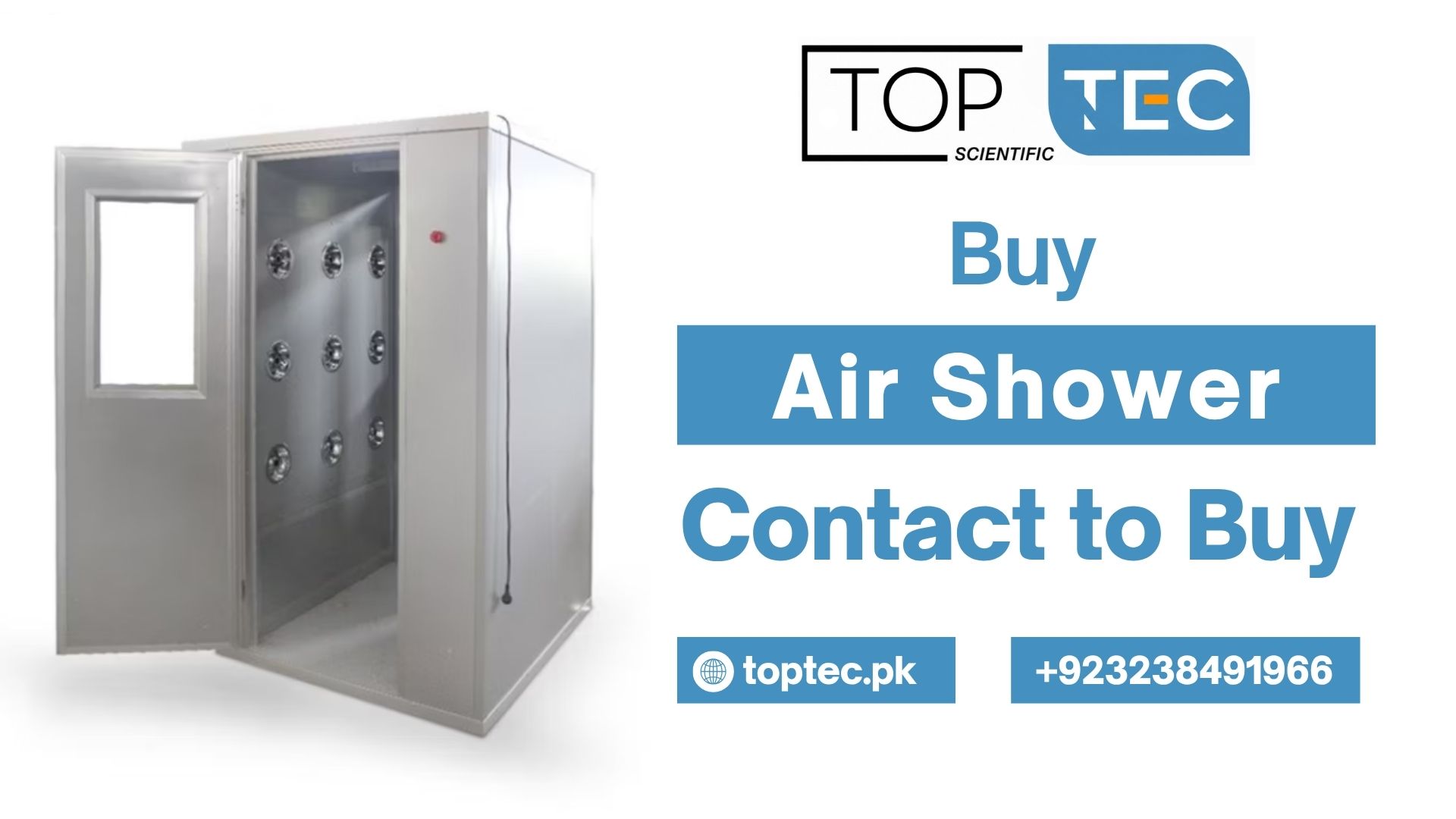
Buy air showers for GMP cleanrooms. Choose from single, double, and cargo configurations. H14 HEPA filtered (99.995% efficiency), SS304/316L stainless steel interlocked entry systems. Request a local manufacturer quote with certification support today.
Picture this. You’ve spent months — and a significant chunk of your budget — building a cleanroom facility. The walls are sealed, the HVAC is balanced, your pressure differentials are dialed in, your GMP documentation is spotless. And then someone walks through the entrance wearing a contaminated gown, carrying particles on their shoes, with dust clinging to their gloves — and just like that, your controlled environment has a contamination problem.
It sounds dramatic, but it happens all the time. Human beings are, by nature, walking contamination sources. Skin cells, lint from clothing, dust from the outside environment, microbial particulates — we carry all of it with us wherever we go. And when we walk into a cleanroom without proper decontamination at the point of entry, we bring all of it inside with us.
This is the problem that a cleanroom air shower solves — and it solves it remarkably well. If you’re setting up a cleanroom for pharmaceutical manufacturing, electronics assembly, food processing, research, or any other contamination-sensitive application, understanding air showers and where they fit in your contamination control strategy is absolutely essential.
At TOPTEC Scientific, we manufacture and supply cleanroom air shower systems and complete laboratory infrastructure right here in Pakistan. This article is going to walk you through everything — how air showers work, why HEPA filtration is non-negotiable, what to look for when you decide to Buy Air Shower equipment, and how to make the right choice for your specific facility.
Let’s get into it properly.
What Is a Cleanroom Air Shower — And What Does It Actually Do?
Before anything else, let’s make sure we’re clear on what a cleanroom air shower actually is and what job it’s performing.
An air shower is a self-contained chamber installed at the entrance of a cleanroom or controlled environment. Personnel — and sometimes materials — pass through the chamber before entering the cleanroom. Once inside the chamber, high-velocity jets of HEPA-filtered air blast the person from multiple directions, physically dislodging contaminating particles from their clothing, gloves, and exposed surfaces.
An air shower is an enclosed pre-entry chamber used in industries where contaminants must be removed from personnel and objects before entering a cleanroom environment. The high-velocity air jets remove particles from the person’s clothing and body, reducing the risk of contaminating the cleanroom.
The process typically takes between 15 and 30 seconds. During that window, the air jets — coming from nozzles positioned strategically on the walls, ceiling, and sometimes floor of the chamber — create turbulent airflow that lifts particles off surfaces and carries them away to be captured by return filters. The person rotates slowly to expose all surfaces to the airflow, and by the time the inner door unlocks, the vast majority of surface contamination has been removed.
Air showers are used to remove particles, dust, and other contaminants from the surface of personnel and objects before they enter the cleanroom, thereby reducing the risk of contamination.
It’s a simple concept. But the engineering behind making it work effectively — the right nozzle placement, the right air velocity, the right HEPA filtration efficiency, the right interlock system — is considerably more complex than it looks from the outside.
Why HEPA Filtration Is the Heart of Every Air Shower System
When you start shopping around to Buy Air Shower equipment, you’ll see HEPA mentioned everywhere. And for good reason — the HEPA filter is the single most important component in an air shower system.
HEPA stands for High-Efficiency Particulate Air. A HEPA filter, by definition, captures at least 99.97% of particles at 0.3 microns in diameter. That 0.3-micron size is specifically targeted because it represents the most penetrating particle size — the size at which airborne particles are hardest to capture.
HEPA filters can remove at least 99.97% of dust, pollen, mold, bacteria, and any airborne particles with a size of 0.3 microns. The diameter specification of 0.3 microns corresponds to the most penetrating particle size.
Why does this matter so much in a cleanroom air shower? Because the entire purpose of the air shower is to strip particles off personnel and then capture those particles — permanently — so they can’t re-enter the cleanroom. If the filter doesn’t capture what the air jets dislodge, you’re just redistributing the contamination rather than removing it. The particles would simply get lifted off the person’s gown, swirl around in the chamber, and settle back on surfaces — or worse, get carried through the inner door when it opens.
HEPA-filtered air in the air shower is recirculated multiple times through filters before being expelled, ensuring that removed particles don’t reenter the cleanroom environment.
A quality cleanroom entry system uses HEPA filtration rated at H13 or H14 grade — capturing particles down to 0.3 microns with 99.95% to 99.995% efficiency respectively. When you Buy Air Shower equipment from TOPTEC Scientific, our systems are built with verified HEPA filtration that meets these standards, giving you genuine contamination removal rather than just the appearance of it.
How a Cleanroom Air Shower Works: The Full Cycle Explained
Understanding the operational cycle of a cleanroom air shower helps you appreciate both its value and its limitations — and helps you use it correctly once it’s installed.
Stage 1: Outer Door Entry
The user approaches the air shower from the non-cleanroom side — typically the gowning room or corridor. They press an entry button or the outer door opens automatically via sensor. Crucially, the inner door is locked at this point. Air shower systems are always designed so that both doors cannot be open simultaneously — this is the interlock system, and it’s fundamental to how the cleanroom entry system maintains zone separation.
A key feature of air showers is the interlocking door system, which prevents both doors from opening simultaneously, thereby maintaining a positive pressure barrier.
Stage 2: Chamber Entry and Door Sealing
The person steps into the chamber, the outer door closes and seals behind them. Most modern systems confirm the seal before initiating the air shower cycle — some use pressure sensing, others use magnetic seal confirmation.
Stage 3: Air Shower Cycle
Once the outer door is sealed, the blower motor activates and high-velocity HEPA-filtered air is directed through strategically positioned nozzles. The nozzles are typically adjustable so that airflow can be directed at specific areas — torso, legs, feet — depending on the contamination risk profile of that particular application.
Air shower systems typically feature high-velocity air jets ranging from 20 to 25 meters per second, with nozzles strategically placed to ensure comprehensive coverage of the personnel or objects inside.
The person rotates slowly — ideally making at least one complete rotation — so that all surfaces of their gown are exposed to the airflow. The dislodged particles are swept by return air toward floor-level or ceiling-level return grilles, where they pass through pre-filters before reaching the HEPA filter stage and being captured permanently.
Stage 4: Cycle Completion and Inner Door Release
After the timed cycle completes — typically 15 to 30 seconds — the blower shuts down and the inner door unlocks. The person enters the cleanroom. The inner door closes, and the system resets for the next user.
This entire cycle can be customized — cycle duration, air velocity, number of nozzle banks, sensor type for door activation — based on the ISO classification of your cleanroom and your specific contamination control requirements.
Types of Cleanroom Air Showers: Which One Is Right for You?
When you go to Buy Air Shower equipment, you’ll discover that these systems come in several configurations. The right choice depends on your throughput requirements, the nature of what’s being decontaminated (personnel vs. materials), and your facility layout.
1. Single-Person Air Showers
The most common configuration. Designed for a single person to stand in and undergo the decontamination cycle. Single-person air showers are compact, cost-effective, and suitable for most standard cleanroom entry points.
Single-person air showers accommodate one individual at a time and are the most common type, suitable for standard cleanroom applications where individual personnel decontamination is required.
2. Multi-Person (Tunnel) Air Showers
For high-throughput facilities — large pharmaceutical manufacturing plants, electronics fabs, or any facility with a large workforce entering the cleanroom simultaneously — tunnel-style air showers accommodate two or more people at once.
Multi-person or tunnel air showers accommodate multiple individuals simultaneously, ideal for high-traffic cleanroom environments where throughput efficiency is critical.
These are significantly larger systems with higher blower capacity and more nozzle banks, but they dramatically reduce bottlenecks at the cleanroom entry point during shift changes.
3. Roll-In / Pass-Through Air Showers (For Materials)
Not everything entering a cleanroom is a person. Equipment, components, raw materials, and packaging all need decontamination too. Roll-in air showers — also called pass-through air showers — are designed to accommodate carts, trolleys, and material transfer units.
Pass-through air showers are designed for the decontamination of equipment, materials, and objects before they enter the cleanroom. These systems typically include low nozzle positions to reach the underside of carts and equipment.
4. Corner-Entry Air Showers
These are designed for facilities where the gowning area and cleanroom are positioned at an angle to each other — the entry and exit doors are on adjacent walls at 90 degrees rather than directly opposite. Corner-entry configurations help with facility space planning.
5. Cargo Air Showers
Heavy-duty systems designed for large equipment, pallets, or oversized materials. These are larger versions of pass-through air showers with reinforced flooring, wider doors, and higher airflow capacity to handle large surface areas.
Key Technical Specifications to Evaluate Before You Buy Air Shower Equipment
This is where most buyers get lost — because air shower spec sheets can look very similar on the surface while the actual performance difference between products is substantial. Here’s what to pay attention to:
HEPA Filter Grade
This is non-negotiable. Any cleanroom air shower worth considering should use H13 or H14 grade HEPA filters. H13 filters capture 99.95% of 0.3-micron particles; H14 filters capture 99.995%. For ISO Class 5 and above (pharmaceutical Grade A/B), H14 is the standard. For ISO Class 6, 7, and 8 (Grade C/D), H13 is typically sufficient.
When you Buy Air Shower equipment, always ask for the HEPA filter grade and request documentation of filter integrity test results.
Air Velocity at Nozzle Outlets
High-velocity air is what physically dislodges particles from clothing and surfaces. Most well-designed systems operate in the range of 20 to 25 meters per second (approximately 4,000 to 5,000 feet per minute) at the nozzle outlet. Systems that operate below this velocity simply won’t generate enough turbulence to dislodge particles effectively — especially from dense fabrics like cleanroom coveralls.
Air shower systems typically feature high-velocity air jets ranging from 20 to 25 meters per second, with nozzles strategically placed to ensure comprehensive coverage of the personnel or objects inside.
Nozzle Placement and Coverage
The number of nozzles and their angular positioning directly affects how comprehensively the airflow covers the person or material in the chamber. Look for systems with nozzles on both side walls, adjustable angular positioning, and — for full-body coverage — nozzles at multiple heights covering the torso, lower body, and feet.
Interlock System Reliability
The interlock preventing simultaneous opening of both doors is a critical safety and contamination control feature. A failing interlock means both doors could open at the same time — creating a direct airflow path between the outside and inside of the cleanroom. When you evaluate a cleanroom entry system, ask specifically about the interlock mechanism and its fail-safe behavior.
Cycle Timer Range
Most applications work well with cycles between 15 and 30 seconds. However, for higher contamination risk environments or for materials decontamination, longer cycles may be needed. Look for systems with adjustable cycle time.
Construction Material
For pharmaceutical and laboratory applications, the interior surfaces of your cleanroom air shower should be constructed from stainless steel (304 or 316L grade) or powder-coated mild steel with a smooth, non-porous finish — the same standards that apply to other GMP cleanroom surfaces. Rough, porous, or hard-to-clean interior surfaces defeat the purpose of a decontamination chamber.
Stainless steel construction is preferred for pharmaceutical applications as it offers superior resistance to chemical disinfectants and supports GMP compliance.
Control Panel and Automation Features
Modern air shower systems come with digital control panels that allow facility managers to set cycle time, air velocity, operational schedules, and even monitor usage data. Some high-end systems integrate with facility access control and personnel tracking systems. If traceability and data logging matter to your audit requirements, look for these features when you Buy Air Shower equipment.
Air Shower vs. Pass Box: Understanding the Difference
One question we frequently get at TOPTEC Scientific from clients who are setting up their cleanroom entry system for the first time is: “Do I need an air shower or a pass box — or both?”
The answer is almost always: both, for different purposes.
A pass box (also called a pass-through chamber) is used for transferring materials, documents, small equipment, and supplies between the cleanroom and the surrounding environment. It uses HEPA-filtered air — and sometimes UV sterilization — to decontaminate items before they enter the cleanroom, without requiring the item to be carried through the personnel entry point.
An air shower, by contrast, is specifically for decontaminating personnel. It’s positioned at the human entry point to the cleanroom, while a pass box is positioned at a separate material transfer point.
Most well-designed pharmaceutical and laboratory cleanrooms have both. Personnel enter through the cleanroom air shower. Materials are transferred through the pass box. The two systems together form a comprehensive contamination control barrier at all entry points.
When you Buy Laboratory Furniture and cleanroom equipment from TOPTEC Scientific, we supply both air showers and pass boxes — along with the complete range of cleanroom furniture and infrastructure needed to make your facility function as a properly integrated, compliant system.
Where Is a Cleanroom Air Shower Absolutely Necessary?
Not every controlled environment requires a full air shower installation. But for certain industries and certain ISO classifications, a cleanroom air shower at the entry point isn’t optional — it’s a regulatory and operational necessity.
Here’s a breakdown of where air showers are most commonly required and why:
Pharmaceutical Manufacturing
Pharmaceutical cleanrooms — particularly Grade A and B aseptic manufacturing areas — have some of the most stringent contamination control requirements in any industry. In these environments, a properly designed cleanroom entry system including an air shower isn’t just best practice — it’s expected by regulatory bodies including DRAP, WHO GMP, US FDA, and the EU GMP Annex 1.
Air showers are commonly used in industries such as pharmaceuticals, biotechnology, electronics, food processing, hospitals, and any other field where maintaining a contamination-free environment is crucial.
Semiconductor and Electronics Manufacturing
Semiconductor fabrication is extraordinarily sensitive to particulate contamination — a single 0.1-micron particle can destroy a chip. ISO Class 3 and 4 cleanrooms in this industry deploy air showers with some of the highest performance specifications available, often with cycle times exceeding 30 seconds and air velocities at the upper end of the spec range.
Food and Beverage Processing
Certain food production environments — particularly those producing ready-to-eat foods, infant formula, or sterile liquid products — use air showers at entry points to controlled production zones.
Air showers are used in food processing facilities to prevent the introduction of contaminants such as bacteria, allergens, and foreign particles into food production areas, thus maintaining product safety and quality.
Biotechnology and Research Labs
BSL-2 and BSL-3 research facilities, biotech manufacturing plants, and advanced research laboratories all benefit from cleanroom air shower installations at critical entry points. The decontamination requirement goes in both directions in some biosafety applications — personnel must be decontaminated on both entry and exit.
Hospital Operating Theaters and Sterile Processing
Some hospital environments, particularly high-end surgical suites and sterile supply departments, install air showers as part of comprehensive infection control strategies.
Common Mistakes People Make When Buying an Air Shower
When clients come to us to Buy Air Shower systems in Pakistan, they sometimes arrive with misconceptions that could lead to a poor purchasing decision. Let’s address the most common ones:
❌ Mistake 1: Prioritizing Price Over HEPA Filter Grade
The cheapest air shower is not the most economical air shower. If it’s fitted with substandard filters that don’t meet H13 or H14 specification, it’s not actually decontaminating your personnel — it’s just giving the appearance of decontamination while your cleanroom accumulates contamination.
❌ Mistake 2: Ignoring Airflow Velocity Specifications
A system with beautiful stainless steel construction but insufficient airflow velocity is basically a very expensive tunnel. The physics of particle dislodgement requires minimum airflow velocities — below that threshold, particles stay put. Always ask for verified airflow velocity data, not just the blower motor wattage.
❌ Mistake 3: Choosing the Wrong Size for Your Throughput
A single-person air shower at the entry point of a facility where 50 workers change shifts simultaneously creates a massive bottleneck. A 30-second cycle with one person at a time means the last person in line is waiting 25 minutes. For high-throughput environments, sizing the cleanroom air shower to your peak personnel volume is critical.
❌ Mistake 4: Neglecting the Surrounding Entry System Design
An air shower doesn’t work in isolation. It needs to be integrated into a properly designed gowning sequence — including gowning room layout, shoe change benches, glove and mask dispensers, and proper transition zones. When you Buy Laboratory Furniture and cleanroom infrastructure from TOPTEC Scientific, we help you design the complete gowning and entry sequence, not just spec the air shower in isolation.
❌ Mistake 5: Skipping Commissioning and Validation
An air shower that hasn’t been commissioned and validated is an unknown quantity. You don’t actually know that it’s performing to specification. For GMP pharmaceutical environments in Pakistan operating under DRAP oversight, commissioning documentation and periodic requalification of your cleanroom entry system are part of your quality system.
The HEPA Air Shower and Your Contamination Control Strategy
In recent years, particularly following the update of EU GMP Annex 1 in 2022, the concept of a holistic Contamination Control Strategy (CCS) has become central to pharmaceutical cleanroom design. Your cleanroom air shower is not a standalone device — it’s a component of an integrated contamination control system.
A contamination control strategy should encompass all aspects of contamination control across the facility, from building design and material flows to cleaning procedures, personnel behavior, environmental monitoring, and equipment qualification. Every element contributes to — or detracts from — the overall contamination control picture.
Within this framework, the cleanroom entry system — including the air shower, the gowning room design, the personnel flow sequence, and the material transfer arrangement — is one of the most critical nodes. Get it right and you dramatically reduce the contamination burden entering your cleanroom from human sources. Get it wrong and all your other contamination control investments are working harder than they need to.
This is exactly why TOPTEC Scientific approaches air shower supply as part of a broader conversation about your facility’s contamination control design. When you come to us to Buy Air Shower equipment, we don’t just take your dimensions and ship a box. We ask about your ISO class, your personnel throughput, your material flow, your regulatory requirements, and the rest of your contamination control infrastructure — so that the system we supply actually integrates with everything else you’re doing.
Maintaining Your Cleanroom Air Shower: What Nobody Tells You at the Point of Sale
Purchasing the right cleanroom air shower is only the beginning. Maintaining it properly is what ensures it continues performing to specification over its operational life. Here’s what a proper maintenance program looks like:
HEPA Filter Integrity Testing
HEPA filter integrity should be tested periodically using a photometer and aerosol challenge (typically DOP or PAO test). This verifies that the filter media hasn’t developed any pinhole leaks or bypass paths that would compromise its capture efficiency. Frequency depends on your ISO class and quality system requirements — typically annually for lower-grade zones, more frequently for Grade A/B environments.
Air shower filters — both pre-filters and HEPA filters — should be inspected and replaced at regular intervals based on usage, contamination load, and filter differential pressure readings.
Pre-Filter Replacement
Most cleanroom air shower systems have a pre-filter upstream of the HEPA filter that captures larger particles before they reach and load the HEPA media. Pre-filters are designed to be replaced regularly — typically every 3 to 6 months depending on usage and particulate load — to protect the HEPA filter and maintain airflow volumes.
Nozzle Inspection and Cleaning
Over time, nozzle openings can accumulate deposits that affect the directionality and velocity of the air jets. Regular inspection and cleaning of all nozzles is an important maintenance task that’s often overlooked.
Interlock Testing
The door interlock is a mechanical and/or electronic system that can fail over time. Regular functional testing of the interlock — confirming that both doors genuinely cannot be open simultaneously — should be part of your scheduled maintenance program.
Interior Surface Cleaning
The interior of the air shower chamber itself is a cleanroom surface and should be cleaned and disinfected according to a schedule consistent with your cleanroom cleaning program. Smooth stainless steel or powder-coated interiors make this task considerably easier than textured or rough interior finishes.
Blower and Motor Inspection
The blower motor that generates airflow is the mechanical heart of the system. Annual inspection of the motor, bearings, drive belts (if applicable), and electrical connections extends the operational life of the system significantly.
When you Buy Air Shower equipment from TOPTEC Scientific, we provide a maintenance schedule and technical support to keep your system performing to specification throughout its operational life.
Integrating the Air Shower into Your Complete Cleanroom Entry System
A cleanroom air shower doesn’t operate in a vacuum — it’s one component in a sequence of contamination control steps that starts outside the cleanroom and ends at the point of entering the controlled zone. Here’s what a properly designed cleanroom entry sequence looks like for a pharmaceutical facility:
Step 1: Outer Change Room
Street clothes are removed and stored. Personnel put on cleanroom-compatible undergarments. This is the first line of contamination control — reducing the particle load on the person before they put on cleanroom garments.
Step 2: Gowning Room
Cleanroom coveralls, overshoes, gloves, face masks, and head coverings are donned in a specific sequence. The gowning room itself should be a controlled environment — typically Grade D or ISO Class 8 — to ensure that the garments being put on aren’t contaminated in the process of putting them on.
Step 3: The Cleanroom Air Shower
Fully gowned personnel enter the cleanroom air shower. The cycle runs, removing surface particles from the exterior of the gown and all exposed surfaces. This is the critical final decontamination step before cleanroom entry.
Step 4: Cleanroom Entry
The inner door releases, and the person enters the cleanroom. The airlock effect of the air shower — with both doors locked closed except when one is actively being passed through — helps maintain the pressure differential between the cleanroom and the surrounding environment.
This sequence is supported by properly designed infrastructure throughout — and that infrastructure includes GMP-compliant cleanroom furniture. When you Buy Laboratory Furniture from TOPTEC Scientific, our range includes gowning room benches, garment storage lockers, shoe change facilities, and all the supporting furniture that makes this entry sequence function properly and efficiently.
Why TOPTEC Scientific Is Pakistan’s Trusted Source for Air Shower Systems
When you’re looking to Buy Air Shower equipment in Pakistan, you face a choice that every lab manager and facility planner in the country knows well: import from overseas with all the associated delays, duties, and support headaches — or source locally from a manufacturer who understands Pakistani facility requirements and can actually support you after the sale.
TOPTEC Scientific is that local manufacturer. We build and supply cleanroom air shower systems and complete cleanroom and laboratory infrastructure in Pakistan, for Pakistan. Here’s what that means for you in practice:
- Made in Pakistan — Our air showers are locally fabricated to international specification, without the import cost premium or customs delays
- Complete Cleanroom Infrastructure — Air showers, pass boxes, cleanroom furniture, lab benches, fume hoods, biosafety cabinets, and more — all from one supplier
- Custom Configurations — Single-person, multi-person, tunnel, roll-in, corner-entry — we fabricate to your facility layout and requirements
- Competitive Pricing — International-standard cleanroom entry system solutions at local prices
- Expert Technical Consultation — Our team understands ISO 14644, GMP Annex 1, DRAP requirements, and can help you specify the right system for your ISO class
- Commissioning and Validation Support — We don’t just deliver and walk away; we support installation, commissioning, and provide the documentation you need for your quality system
- After-Sales Support — Maintenance, filter replacement, spare parts — all available locally without international shipping delays
When clients come to us to Buy Laboratory Furniture and cleanroom systems, they consistently tell us the same thing: the combination of local manufacturing, technical expertise, and genuine after-sales support is something they simply can’t get from overseas suppliers or local agents of foreign brands.
Comparing Air Shower Options: A Quick Reference Guide
| Specification | Entry-Level Systems | Mid-Range Systems | High-Performance Systems |
|---|---|---|---|
| HEPA Filter Grade | H11-H12 | H13 | H14 |
| Filter Efficiency | 95-99.5% | 99.95% | 99.995% |
| Air Velocity | 15-18 m/s | 20-22 m/s | 23-25+ m/s |
| Nozzle Coverage | Side walls only | Side walls + ceiling | Side + ceiling + floor |
| Cycle Time | Fixed | Adjustable | Adjustable + programmable |
| Construction | Powder-coated MS | Stainless steel 304 | Stainless steel 316L |
| Interlock System | Basic mechanical | Electronic | Electronic + fail-safe |
| Data Logging | None | Basic digital display | Full data logging + export |
| Suitable ISO Class | ISO 7-8 | ISO 6-7 | ISO 5-6 |
| GMP Grade | Grade D | Grade C-D | Grade A-C |
Use this table as a starting reference when you Buy Air Shower equipment — and always discuss your specific ISO class and regulatory requirements with a supplier who understands contamination control, not just box specifications.
Frequently Asked Questions About Cleanroom Air Showers
Q: How long should an air shower cycle run for effective decontamination?
A: Most standard applications use 15 to 30 seconds. For higher contamination risk environments or materials decontamination, longer cycles up to 60 seconds may be appropriate. The cycle time should be validated for your specific application and ISO class.
Q: Can an air shower replace proper gowning procedures?
A: Absolutely not. A cleanroom air shower supplements proper gowning — it doesn’t replace it. Personnel must be fully and correctly gowned before entering the air shower. The air shower removes surface particles from a properly gowned person; it cannot compensate for inadequate gowning.
Q: How often do HEPA filters in an air shower need replacing?
A: HEPA filter life depends heavily on usage and environmental conditions. Pre-filters should typically be replaced every 3-6 months. HEPA filters are replaced based on differential pressure readings and annual integrity testing results, rather than on a fixed schedule.
Q: Where can I Buy Air Shower systems in Pakistan without importing?
A: TOPTEC Scientific manufactures and supplies cleanroom air shower and complete cleanroom entry system solutions locally in Pakistan. Contact our team for custom specifications and competitive quotes.
Q: Do I need an air shower for ISO Class 7 and 8 cleanrooms?
A: While air showers are most commonly associated with high-grade (ISO 5-6) cleanrooms, they add value in any controlled environment where personnel contamination control is a priority. For pharmaceutical Grade C and D zones, air showers are increasingly considered best practice even where they’re not strictly mandated.
Q: Does TOPTEC Scientific supply the complete gowning room setup alongside the air shower?
A: Yes. When you Buy Laboratory Furniture and cleanroom equipment from TOPTEC Scientific, we supply the complete gowning area infrastructure — benches, lockers, shoe racks, and garment storage — alongside the cleanroom air shower and other cleanroom equipment. Everything from one local manufacturer.
Final Thoughts: Don’t Underestimate Your Entry Point
Here’s the thing about cleanroom contamination control — you can invest heavily in HVAC, HEPA ceiling modules, environmental monitoring, and GMP-compliant furniture, and still have a serious contamination problem if your entry point isn’t properly managed. The entry point is where the outside world meets your controlled environment. It’s where the contamination risk is highest, and where the right investment in a quality cleanroom air shower pays the biggest dividends.
A properly specified and maintained cleanroom entry system — built around a HEPA-filtered air shower that’s right for your ISO class and throughput — is one of the most effective contamination control investments any cleanroom facility can make. The physics are sound, the technology is proven, and the regulatory justification is well established across pharmaceutical, electronics, food, and research industries worldwide.
At TOPTEC Scientific, we’ve helped pharmaceutical manufacturers, research institutions, university labs, and food processing facilities across Pakistan design and equip their cleanroom entry systems correctly. When you Buy Air Shower equipment from us, you’re getting a system that’s been specified for your actual needs, manufactured to international standards, and backed by local support you can actually rely on.
And when you Buy Laboratory Furniture and complete lab infrastructure from TOPTEC Scientific, you’re choosing a manufacturer that understands that every element of your facility — from the entry air shower to the lab bench to the fume hood — needs to work together as a system.
Ready to discuss your cleanroom entry requirements? Reach out to TOPTEC Scientific and let’s build something that performs.
