

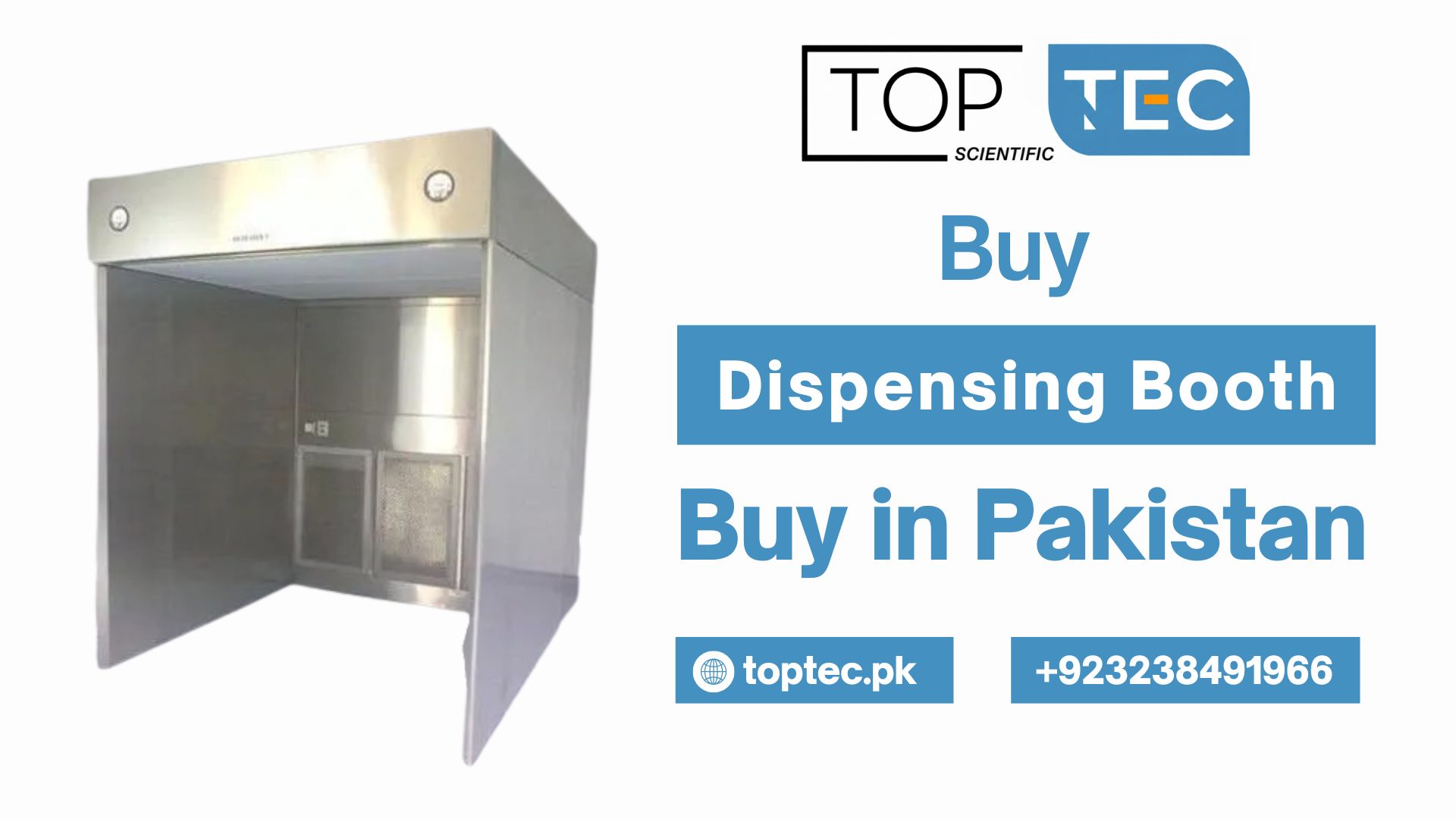
Looking for a Dispensing Booth in Pakistan? Explore ISO Class 5 stations with pre-filters, HEPA filters, and 304/316 stainless steel construction. Request a quote for your cleanroom needs today.
Their raw material dispensing area had been operating for years using a conventional laminar flow cabinet — the kind with airflow blowing from the back toward the operator. The team assumed that any enclosed workspace with HEPA filtration was adequate for pharmaceutical powder dispensing. Nobody had really questioned it.
Then came the WHO-GMP pre-inspection audit. The auditor spent about four minutes in the dispensing area before flagging the setup as non-compliant. The conventional LAF was actively blowing pharmaceutical dust toward the operators rather than containing it. The facility had been creating both cross-contamination risk and operator exposure risk simultaneously, for years, without realizing it.
The remediation — replacing the conventional LAF with proper reverse laminar airflow containment equipment — took time, cost more than the original equipment, and delayed the WHO-GMP certification timeline significantly.
This is why the decision about where to Buy Dispensing Booth in Pakistan deserves serious attention rather than quick procurement based on whatever’s available at the lowest price.
This guide is for pharmaceutical manufacturers across Pakistan who are making this decision properly — whether you’re equipping a new facility, upgrading inadequate existing equipment, or preparing for a DRAP or WHO-GMP inspection that will scrutinize your raw material dispensing and sampling operations.
The Core Problem That Dispensing Booths Solve
Before getting into equipment specifications and supplier evaluation, understanding exactly what problem this equipment solves clarifies why getting the specification right matters so much.
Pharmaceutical raw material dispensing — weighing APIs and excipients for batch manufacturing — involves handling fine powders that generate airborne dust during every operation. Opening a container releases accumulated dust. Transferring powder from a bulk container to a weighing vessel generates dust. Even the act of careful weighing on an analytical balance disturbs fine powder particles into the air.
This dust creates two simultaneous problems:
Product contamination risk: Dust from one material can settle on surfaces, containers, and equipment in the dispensing area, and then contaminate the next material dispensed. For pharmaceutical manufacturing where batch composition is a critical quality attribute, this cross-contamination is a serious GMP failure.
Operator exposure risk: API dust inhaled by dispensing operators represents an occupational health hazard proportional to the potency of the material being handled. For potent APIs — low-dose compounds, hormones, cytotoxics — even small exposure quantities can cause adverse health effects.
A properly specified dispensing booth addresses both problems through engineered airflow that simultaneously maintains product integrity and protects operators. A poorly specified setup — like a conventional laminar flow cabinet — may appear to address the problem while actually making the operator exposure problem worse.
When Pakistani pharmaceutical manufacturers Buy Dispensing Booth in Pakistan equipment from properly qualified local manufacturers like TOPTEC Scientific, they get containment solutions designed by people who understand both the pharmaceutical application and the specific context of Pakistani pharmaceutical manufacturing.
Reverse Laminar Airflow — Why This Specific Technology Is Required
The airflow engineering of a pharmaceutical dispensing booth is not a detail — it is the fundamental technical requirement that determines whether the equipment actually works.
What Reverse Laminar Airflow Does
Reverse laminar airflow creates a controlled, unidirectional air movement pattern that sweeps generated powder dust away from the operator and toward a rear or lower extract system where HEPA filtration captures it.
The airflow pattern works like this: Clean, HEPA-filtered air enters from above or from the front upper section of the booth, flows downward and toward the rear across the work zone, and is captured by a rear or lower extract plenum. Any powder dust generated during dispensing operations is entrained in this airflow and carried away from the operator before it can be inhaled or escape into the surrounding room.
This directional sweep — from operator-side toward the extract — is what the word “reverse” refers to. Conventional laminar flow cabinets flow in the opposite direction: from the back toward the operator. For pharmaceutical powder containment, the conventional direction is exactly wrong. Reverse laminar airflow is exactly right.
What Happens Without Reverse Laminar Airflow
This is worth being explicit about, because it explains the scenario I described at the beginning.
A conventional laminar flow cabinet creates a clean air zone by pushing HEPA-filtered air from the rear toward the operator. This protects the product in the cabinet from environmental contamination — which is exactly what it’s designed for in microbiological and aseptic applications.
But during pharmaceutical powder dispensing, the operator is generating dust in the work zone. That dust gets picked up by the conventional LAF airflow and blown directly toward the operator’s face and breathing zone. The clean air supply helps the dust stay airborne longer, potentially increasing exposure.
Simultaneously, some of this airborne dust escapes through the open front face of the conventional LAF into the surrounding room — creating cross-contamination risk for other materials in the area.
A weighing booth with proper reverse laminar airflow engineering solves both problems. A conventional LAF makes both problems worse. This distinction is exactly what auditors look for — and exactly what facilities that rush to Buy Dispensing Booth in Pakistan without understanding the technology sometimes get wrong.
Face Velocity Requirements
The effectiveness of reverse laminar airflow containment depends critically on maintaining the right airflow velocity at the open front face of the booth — typically 0.3 to 0.5 meters per second for pharmaceutical dispensing applications.
Too low: Generated dust isn’t reliably captured before it reaches the operator or escapes into the room.
Too high: Turbulence is created that actually disturbs powder and makes containment less effective rather than more.
The right velocity, uniformly distributed across the entire face of the booth, is what properly engineered pharmaceutical dispensing booth equipment delivers. Verifying this performance through airflow measurement at the installed location is part of the operational qualification process.
Understanding the Different Equipment Types
When Pakistani pharmaceutical manufacturers search to Buy Dispensing Booth in Pakistan, the market includes several distinct configurations. Understanding the differences prevents costly specification mistakes.
Weighing Booth
A weighing booth is specifically configured for the act of weighing pharmaceutical raw materials — APIs and excipients — using analytical or precision balances positioned within the controlled environment.
Key design considerations specific to weighing booth applications:
Balance stability: The airflow velocity within the booth must provide containment without disturbing sensitive analytical balances. Balance readings at 0.1mg resolution are affected by air currents. Good weighing booth design positions the balance in a zone where containment airflow is effective but not turbulent, and some designs incorporate balance shields that protect the weighing pan while maintaining the surrounding containment envelope.
Work surface configuration: Adequate work surface space for the balance, sample containers, labeling materials, and documentation — all within the controlled zone.
Antistatic measures: Fine pharmaceutical powders often carry electrostatic charge that causes them to cling to surfaces and float in air longer. Good weighing booth design incorporates antistatic work surfaces and earth bonding, with ionization as an option for highly electrostatic materials.
Sampling Booth
A sampling booth is designed for the specific operation of opening bulk pharmaceutical containers and taking representative samples — operations that generate more intense dust events than careful weighing.
The sampling booth airflow design must handle peak dust generation from container opening and sample extraction without losing containment. This typically requires higher extract capacity and more robust rear plenum design than a weighing booth optimized for steady-state low-dust generation.
Sampling booth applications include:
Raw material sampling upon goods receipt for QC testing. In-process sampling from bulk containers during production. Finished product sampling for release testing and stability studies.
Downflow Dispensing Booths
The most common pharmaceutical dispensing booth configuration. Clean air enters from a ceiling-mounted HEPA-filtered supply plenum, flows downward across the work zone, and is captured by a floor-level extract or low rear extract system. Working with gravity — powder dust falls downward and is captured by the downward airflow.
Downflow booths provide excellent containment for most pharmaceutical raw material dispensing applications and are the configuration most commonly specified when facilities Buy Dispensing Booth in Pakistan for routine GMP pharmaceutical manufacturing.
Horizontal Reverse Laminar Airflow Booths
An alternative configuration where clean supply air enters from the front or top and flows horizontally to the rear extract. True horizontal reverse laminar airflow creates a very clear, sweeping containment pattern across the work zone.
Particularly effective for potent API dispensing where horizontal sweep airflow provides excellent operator protection during dispensing operations at the booth’s open front face.
What TOPTEC Scientific Offers Pakistani Pharmaceutical Manufacturers
This is the core of what this guide is about — helping Pakistani pharmaceutical manufacturers understand why TOPTEC Scientific is the right conversation to have when you need to Buy Dispensing Booth in Pakistan for pharmaceutical cleanroom applications.
TOPTEC Scientific is a Pakistan-based manufacturing company producing high-specification laboratory furniture, cleanroom equipment, and pharmaceutical production infrastructure for facilities throughout the country. They manufacture locally — genuinely — which creates advantages that matter in ways that become very clear when you’re actually operating pharmaceutical production equipment.
Why Local Manufacturing Matters for Dispensing Booth Procurement
When you Buy Dispensing Booth in Pakistan from TOPTEC Scientific, you’re dealing directly with the manufacturer. Not a distributor managing an international relationship. Not a reseller who ordered equipment from overseas and is marking it up. The people you talk to during procurement are the people who will design and build your equipment.
This means:
Customization that actually works: Your dispensing area has specific dimensions. Your dispensing operations involve specific materials. Your facility has specific utility connections. TOPTEC Scientific can design and manufacture sampling booth and weighing booth equipment that genuinely fits your specific situation — not a standard catalog item that approximately fits.
Lead times that make project planning manageable: International procurement for dispensing booths involves shipping time, customs clearance, import duties, and all the uncertainty of international logistics. Local manufacturing from TOPTEC Scientific means realistic lead times and delivery control.
Installation support from people who built the equipment: When TOPTEC Scientific installs your dispensing booth, the people doing the installation understand exactly how it was built and how it’s supposed to perform. Technical questions get answered by people with direct knowledge, not by support staff working from a manual.
Ongoing support without international barriers: When you need filter replacement guidance, airflow performance verification, or technical assistance with equipment qualification documentation, TOPTEC Scientific is here in Pakistan. Not managing a support ticket through an international time zone.
The Equipment TOPTEC Scientific Manufactures
Pharmaceutical Dispensing Booths with Reverse Laminar Airflow
Properly engineered dispensing booth systems with:
H14 HEPA filtration providing 99.995% efficiency at 0.3 micrometers — the pharmaceutical standard, not a lower-grade filter that merely sounds similar.
Uniform face velocity delivery across the complete booth opening — engineered, not assumed. Factory airflow measurement documentation provided with each unit.
Rear extract systems designed for effective pharmaceutical powder capture with appropriate extract plenum depth and perforated rear panel distribution.
Antistatic SS304 and SS316 work surfaces with smooth, chemically resistant finishes designed for GMP cleaning between dispensing operations.
Documentation to support IQ/OQ qualification activities — the material certificates, factory test records, and protocol templates that pharmaceutical facilities need for equipment qualification.
Sampling Booths for Pharmaceutical Raw Material QC
Dedicated sampling booth enclosures for raw material sampling, designed for the higher-intensity dust generation events characteristic of bulk container opening and sample extraction.
Appropriate airflow engineering for sampling — not simply a scaled-down dispensing booth, but equipment designed specifically for the airflow challenges of pharmaceutical sampling operations.
Weighing Booths for Precision Pharmaceutical Dispensing
Weighing booth configurations with specific attention to balance stability — airflow delivery that provides containment without creating turbulence at the balance position. Balance stability features including appropriate deflection shields where required.
Work surface layouts configured for efficient dispensing workflow — space for containers, labeling, paperwork, and balance operations all within the controlled zone.
The Complete Dispensing Area Infrastructure
Here’s something that distinguishes TOPTEC Scientific from suppliers who only sell the booth itself.
A pharmaceutical dispensing booth operates within a complete dispensing area environment. The surrounding workbenches, storage systems, material transfer trolleys, and quality control workstations all affect how well the dispensing operation functions and how effectively GMP contamination controls are maintained throughout the complete dispensing workflow.
TOPTEC Scientific manufactures all of this:
Stainless Steel Workbenches for Dispensing Areas
The work surfaces surrounding your sampling booth or weighing booth need to match the contamination control standard of the booth itself. TOPTEC Scientific manufactures SS304 and SS316 workbenches with seamless welded construction and pharmaceutical-grade surface finishes — no painted surfaces that chip and contaminate, no hollow sections that harbor residual pharmaceutical powder between cleaning operations.
These workbenches provide the surrounding work area for auxiliary dispensing operations — container management, label preparation, and documentation completion — all within the contamination-controlled dispensing environment.
Anti-Vibration Balance and Instrument Stands
Analytical balances used outside the weighing booth — for container tare weights, for example — need stable, vibration-damped surfaces for accurate measurement. TOPTEC Scientific manufactures dedicated instrument stands appropriate for analytical balance positioning in pharmaceutical dispensing areas.
Material Transfer Trolleys
Moving raw material containers between storage and the dispensing area, and moving dispensed materials from the dispensing booth to production, requires pharmaceutical-grade transport equipment. TOPTEC Scientific manufactures stainless steel trolleys with smooth, fully cleanable surfaces and appropriate load ratings — designed for pharmaceutical cleanroom environments where conventional trolleys would be contamination risks.
Pass-Through Boxes
Controlling material transfer between different environmental zones — between the raw material warehouse and the Grade C dispensing area, or between the dispensing area and production cleanrooms — requires pass-through systems that maintain zone integrity during material transfer. TOPTEC Scientific manufactures static and dynamic pass-through boxes in configurations appropriate for different pharmaceutical zone boundary requirements.
Gowning Room Furniture
Personnel entering pharmaceutical dispensing areas follow defined gowning procedures. TOPTEC Scientific manufactures complete gowning room furniture systems — benches, lockers, organized storage, and mirror installations — that support consistent compliance with pharmaceutical gowning requirements. Contamination control in the dispensing area begins in the gowning room.
QC Laboratory Infrastructure
Samples taken in the sampling booth go to QC laboratories for testing. TOPTEC Scientific manufactures complete QC laboratory furniture including chemical-resistant analytical benches, instrument workstations, sample storage systems, and stability-related furniture for the complete quality control laboratory environment.
The ability to source complete dispensing area infrastructure — from the dispensing booth itself through the entire surrounding environment — from a single local manufacturer simplifies project management, ensures consistent specification throughout, and provides a single point of contact for support as the facility’s needs evolve.
Evaluating Your Specification Requirements
Before you Buy Dispensing Booth in Pakistan for your pharmaceutical facility, working through these specification questions produces a much more useful outcome than simply asking for “a dispensing booth”:
What Materials Will You Handle?
The potency of your pharmaceutical materials determines the required containment performance level. Low-potency excipients — microcrystalline cellulose, lactose, starch — have very different containment requirements from potent APIs.
If you’re handling compounds with OELs (Occupational Exposure Limits) below 10 µg/m³, your containment requirements are substantially higher than for low-potency materials. The reverse laminar airflow booth design, face velocity specification, and additional containment measures all need to match your most potent material.
What Operations Will the Booth Perform?
Careful precision weighing of small quantities on an analytical balance has different airflow requirements from scooping large quantities of bulk excipient from a drum. Sampling operations from bulk containers generate more intense dust events than careful transfer operations.
Being specific about the operations — weighing at 0.1mg precision, sampling from 200kg drums, transferring bulk powders for granulation charging — helps specify a dispensing booth or sampling booth configuration that’s genuinely matched to your operations rather than a generic compromise.
What Are Your Regulatory Requirements?
DRAP GMP compliance as the baseline. WHO-GMP certification if you’re pursuing export market access. Export market regulatory requirements if specific markets are being targeted.
Different regulatory frameworks have different documentation and qualification requirements. Understanding your regulatory context determines the documentation package you need from your dispensing booth supplier.
What Are Your Space and Utility Constraints?
Booth dimensions must fit within your dispensing room layout with adequate clearance for operator access and material handling. Utility requirements — electrical supply for blower motor and lighting, exhaust ductwork connections for exhaust-type booths — must be compatible with your facility infrastructure.
These practical constraints often drive booth configuration decisions as much as technical performance requirements. TOPTEC Scientific‘s local manufacturing capability means booth dimensions can be customized to your specific room layout rather than forcing your facility to accommodate standard catalog dimensions.
The Qualification Process — What Happens After Installation
When you Buy Dispensing Booth in Pakistan for pharmaceutical GMP production use, installation is not the end of the process. Equipment qualification must be completed before the booth enters production use.
Installation Qualification (IQ)
Confirms the booth was installed correctly in the intended location with appropriate utilities, clearances, and supporting infrastructure. Documents booth identity information, installation location, utility connections, and receipt of required documentation.
TOPTEC Scientific provides the documentation support that makes IQ efficient — material certificates, factory test records, design drawings, and operating manuals. These documents feed directly into your IQ documentation rather than requiring you to generate them from scratch.
Operational Qualification (OQ)
Verifies that the installed booth operates within specified parameters. For a weighing booth or sampling booth, OQ typically includes:
Airflow velocity mapping across the booth face, confirming face velocity is within the specified range and uniformly distributed.
HEPA filter integrity testing at the installed location, verifying filter integrity was maintained during transport and installation.
Lighting level verification within the work zone.
Control and alarm function testing.
These measurements generate data that goes into your OQ documentation and establishes the performance baseline against which ongoing monitoring is compared.
Performance Qualification (PQ)
Demonstrates that the booth consistently delivers its intended containment performance under operational conditions. For pharmaceutical dispensing equipment, PQ may involve:
Particle count monitoring within the booth during simulated dispensing operations.
Surrogate powder containment testing verifying that the booth achieves the containment performance required for your specific materials.
Cleaning procedure validation confirming that the cleaning protocol removes pharmaceutical residue to acceptable levels between dispensing operations.
Cleanroom Classification and Dispensing Booth Integration
A dispensing booth doesn’t replace cleanroom environmental controls — it augments them. Understanding how the booth integrates with your cleanroom classification is important for specifying the right equipment and for managing regulatory expectations.
Typical Dispensing Area Classification
Pharmaceutical raw material dispensing is typically conducted in a Grade C (ISO 7) background environment. The dispensing booth provides a localized Grade A (ISO 5) environment within the dispensing zone — the critical zone where pharmaceutical powder is directly exposed and where containment is most important.
This two-tier approach — Grade C room, Grade A within the booth — is the standard pharmaceutical GMP approach to dispensing area design. The reverse laminar airflow of the dispensing booth creates and maintains the Grade A conditions within the active dispensing zone.
Environmental Monitoring Requirements
Ongoing environmental monitoring within the dispensing area — particle counts, microbial monitoring — is a GMP requirement. The sampling booth or dispensing booth must be positioned and operated in a way that supports the facility’s environmental monitoring program, with monitoring points within the booth’s Grade A zone documented in the environmental monitoring plan.
Common Specification Mistakes Worth Avoiding
These come up regularly when pharmaceutical manufacturers make dispensing booth purchases they later regret:
Buying a conventional LAF for pharmaceutical dispensing
The scenario from the beginning of this article. Understand reverse laminar airflow before you Buy Dispensing Booth in Pakistan — it’s the fundamental requirement for pharmaceutical powder containment.
Underspecifying for actual material potency
Specifying a weighing booth for OEB 2 handling and then using it for OEB 3 or OEB 4 materials. Know your OEL requirements across your complete material range and specify for the most potent compound you’ll handle.
Skipping site performance verification
Factory performance testing is necessary but not sufficient. Airflow performance must be verified at the installed location — transport and installation can affect performance in ways that factory testing doesn’t capture.
Ignoring cleaning design
Internal surfaces, seams, and features that make the dispensing booth difficult to clean between products create cross-contamination risks that undermine the containment the booth provides. Evaluate cleaning accessibility before purchase.
Not planning the complete dispensing environment
The booth is one element of a complete dispensing area. Surrounding workbenches, material handling equipment, and gowning room furniture all contribute to the contamination control and GMP compliance of the complete dispensing operation.
Questions to Ask When You Contact Suppliers
Before finalizing any decision to Buy Dispensing Booth in Pakistan, get clear, specific answers to:
What HEPA filter grade is used — H13 or H14? What is the rated filtration efficiency at 0.3 micrometers?
What is the specified face velocity range and how is velocity uniformity achieved across the complete booth face?
Is factory airflow velocity testing performed and documented for each unit?
What documentation is provided to support pharmaceutical equipment qualification — IQ/OQ protocols, material certificates, factory test records?
What are the maintenance requirements — filter replacement frequency, recommended filter replacement procedure for pharmaceutical environments?
Can the booth be customized to our specific room dimensions and workflow requirements?
What local support is available post-installation — airflow verification services, qualification support, filter supply?
Final Thoughts
The decision to Buy Dispensing Booth in Pakistan for your pharmaceutical cleanroom is about more than procurement. It’s about providing your dispensing operations with the containment engineering they require for GMP compliance, operator protection, and consistent product quality.
Reverse laminar airflow is the technical foundation. H14 HEPA filtration is the air quality standard. Proper face velocity and uniformity are the performance requirements. Pharmaceutical-grade construction and cleaning design are the GMP requirements. And complete surrounding infrastructure — weighing booth work surfaces, sampling booth support furniture, material handling equipment — from TOPTEC Scientific is what makes the complete dispensing area function as an integrated, compliant pharmaceutical operation.
TOPTEC Scientific manufactures pharmaceutical dispensing booths, sampling booths, weighing booths, and complete laboratory and cleanroom furniture locally in Pakistan — with the technical understanding, documentation support, and local service capability that pharmaceutical GMP manufacturing requires.
Contact TOPTEC Scientific to discuss your specific dispensing area requirements and start building the properly specified pharmaceutical dispensing environment your operation deserves.
