

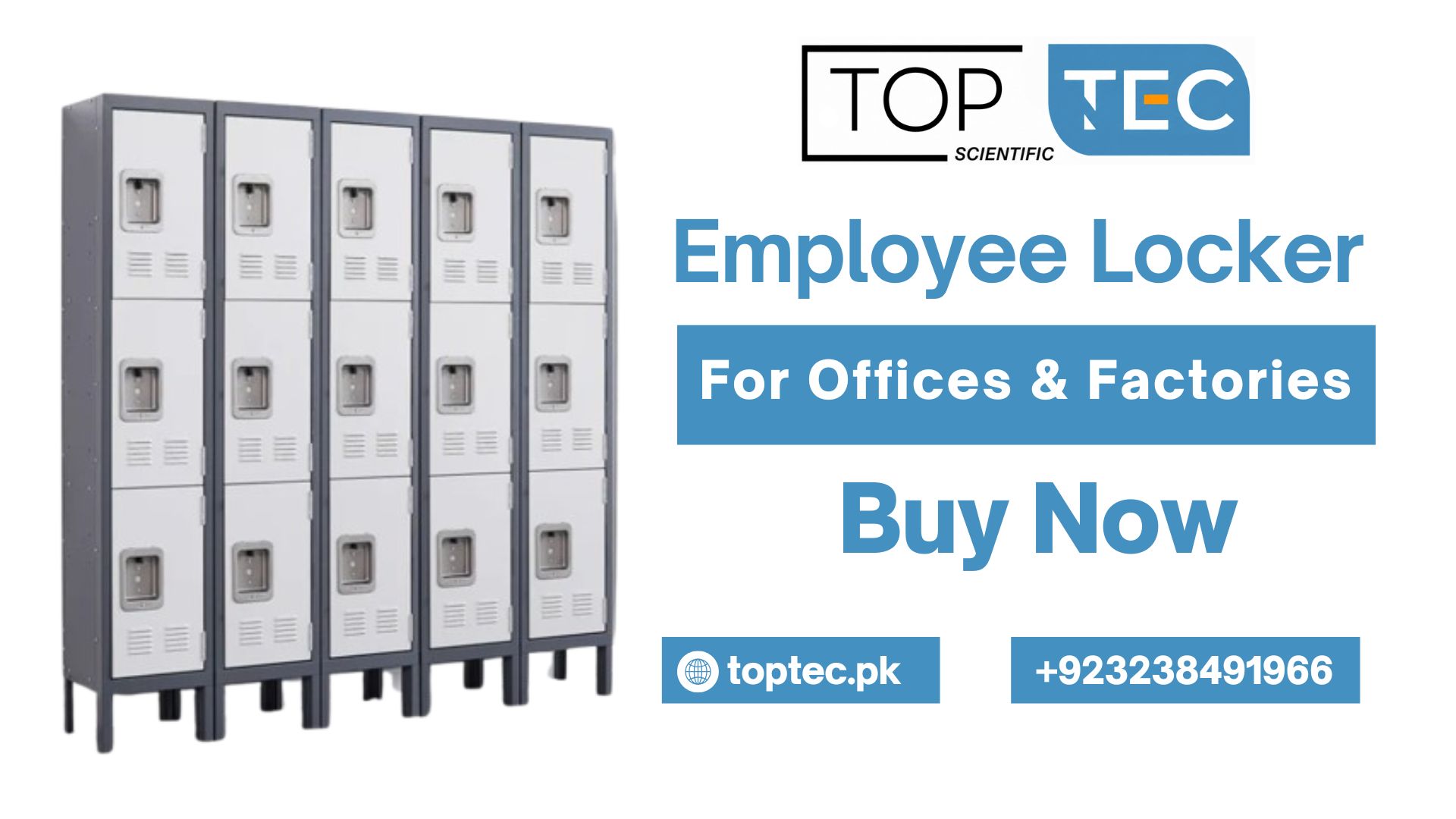
Buy heavy-duty employee lockers built for daily use in busy workplaces. Find models with reinforced steel doors, ventilation, and secure lock options. Get pricing on single, multi-tier, and smart locker configurations
Let me paint a picture that’s probably familiar to anyone who manages a workplace. It’s Monday morning. An employee comes in, has nowhere to put their bag, jacket, and personal items, so they shove everything under their desk or pile it on a chair. By midday, the workspace looks chaotic. By Friday, three people have complained that their things went missing. And somewhere in there, a manager is fielding questions about where people are supposed to store their belongings during shifts.
Sound familiar? This is what happens when a workplace doesn’t have a proper storage solution for its people. And the fix — while not complicated — requires actually investing in the right equipment rather than hoping the problem sorts itself out.
Steel lockers are that fix. Specifically, properly designed, well-built employee lockers that give every person in your facility a secure, designated space for their personal belongings. Whether you’re running a pharmaceutical factory, a hospital, a school, an office, or any kind of industrial facility, getting this right makes a genuine difference — to operations, to employee satisfaction, and to overall workplace organization.
This article covers everything you need to know about employee lockers — what types are available, what to look for when you buy employee locker solutions for your facility, how smart employee lockers are changing workplace storage, and where to source quality steel lockers in Pakistan without overcomplicating the procurement process.
Why Employee Lockers Matter More Than You Might Think
Before getting into the product details, it’s worth spending a moment on why proper employee storage actually matters — because a lot of facility managers treat it as an afterthought rather than a genuine operational consideration.
Security for Personal Belongings
Workplaces — especially large ones — are environments where personal items can go missing. Whether through accidental misplacement, opportunistic theft, or simple confusion in shared spaces, employees who don’t have secure personal storage are vulnerable. When you provide proper steel lockers with individual locks, you eliminate this problem. Each person has their own secured space, and accountability is clear.
Compliance in Regulated Environments
In pharmaceutical manufacturing, food processing, cleanroom environments, and healthcare settings, keeping personal items separate from work areas isn’t just a good idea — it’s a regulatory requirement. GMP guidelines and food safety standards explicitly require that personal belongings, food, and non-work items be stored away from production areas. A proper employee locker system is how you meet that requirement.
Workforce Morale and Professionalism
This one surprises some managers, but it’s real. When employees have a secure, clean, personal space to store their belongings, it communicates that the organization values their comfort and security. It’s a small thing, but it contributes to the overall sense of being in a professional, well-run workplace. Employees notice when basic provisions are made for their convenience — and they notice when they’re not.
Operational Organization
In environments where employees change clothes — pharmaceutical facilities, food processing plants, hospitals, factories — a proper changing room with lockers keeps workwear separate from personal clothing and maintains hygiene standards. Without lockers, this separation either doesn’t happen or happens messily.
Reduced Workplace Conflicts
When everyone has their own space, disputes over territory, missing items, and storage become dramatically less common. It’s one of those infrastructure decisions that prevents a category of problem from arising in the first place.
Types of Employee Lockers Available
When you decide to buy employee locker solutions for your facility, the first thing to sort out is what type you actually need. This isn’t one-size-fits-all — the right locker depends on your environment, your employees’ needs, and your operational requirements.
Single-Tier Lockers (Full-Height)
These are full-height lockers — typically around 180cm tall — with one compartment per door. Each employee gets the full height of the locker for their storage needs. This configuration is best when:
- Employees need to store full-length garments (lab coats, overalls, long coats)
- Maximum storage space per person is a priority
- You have the floor space to accommodate them
Single-tier lockers are common in pharmaceutical facilities where employees need to store both their personal clothes and their work uniforms separately — sometimes in adjacent compartments.
Double-Tier Lockers (Two-Tier)
The same total height divided into two compartments — one on top, one on bottom. Two employees share a column of locker space rather than one. Double-tier configurations are popular because they:
- Accommodate twice as many users in the same floor footprint
- Are appropriate when employees don’t need to store full-length hanging items
- Reduce cost per person compared to single-tier
This is probably the most common configuration in offices, schools, and many factory environments.
Three-Tier, Four-Tier, and Six-Tier Lockers
Dividing the locker column into three, four, or six compartments respectively. As you go higher in tiers, each individual compartment gets smaller. Six-tier lockers offer compact storage suitable only for small personal items — suitable for environments where employees are in work clothes and just need to store phones, wallets, keys, and similar small items.
Horizontal (Stacked) Locker Configurations
Some installations use horizontal lockers that run along a wall at different heights, similar to the configurations seen in gyms and sports facilities. These can work well when vertical space is limited but horizontal wall space is available.
Personal Item Lockers (Mini Lockers)
Very small individual compartments — sometimes just large enough for a phone, wallet, and keys. Used in environments where employees don’t carry bags or change clothing, but need a secure spot for valuable small items.
Garment Lockers with Hanging Provisions
Specifically designed to include a hanging rod inside the compartment, so garments can be hung rather than folded. Important in environments where work uniforms need to hang to maintain their condition — hospital scrubs, pharmaceutical cleanroom garments, etc.
Ventilated Lockers
Lockers with perforated doors or ventilation slots. Useful when damp clothing or footwear will be stored — the ventilation prevents mildew and odors from developing in sealed compartments.
Smart Employee Lockers: The Future of Workplace Storage
Traditional lockers use a key or combination lock. Someone has a key, they open their locker, done. It works, but it has limitations — keys get lost, combinations get forgotten, and managing a large locker installation with physical keys creates administrative overhead.
Smart employee lockers address these limitations using electronic access systems and digital management capabilities. If you’re setting up a new locker installation — especially in a larger or more technologically sophisticated facility — understanding what smart employee lockers offer is worth your time.
Electronic Locking Systems
Smart employee lockers replace mechanical locks with electronic ones. Access is granted through:
- PIN code — The user enters a personal code on a keypad
- RFID card — The same card used for building access opens the locker
- Biometric — Fingerprint recognition
- Mobile app — A smartphone app controls the lock
Each of these options eliminates lost keys. RFID integration with existing access control systems is particularly useful in facilities that already use card-based building access — the same card works for everything.
Flexible Allocation
Traditional lockers are typically permanently assigned — Employee A always has Locker 14. Smart employee lockers can be configured for flexible (hot-locker) allocation, where any employee can use any available locker. The system assigns a locker when the employee arrives and releases it when they leave.
This is particularly useful in environments with shift work, where not everyone is on-site simultaneously. A facility with 300 employees across three shifts might only need 150 lockers rather than 300, because no more than 100-110 people are on-site at any one time. Smart employee lockers with flexible allocation make this possible.
Centralized Management
A digital management system for smart employee lockers provides administrators with:
- Real-time visibility into which lockers are in use and which are available
- Access logs (who accessed which locker and when)
- Remote locking and unlocking capability
- Alerts for malfunctions or security events
- Usage analytics for planning and optimization
For large facilities, this administrative capability is genuinely valuable. Managing 500 physical keys is a headache. Managing 500 electronic access credentials through a software interface is straightforward.
Lost Access Recovery
With physical keys, a lost key means calling maintenance, drilling out the lock, and replacing it. With smart employee lockers, a lost PIN is reset through software. A lost RFID card is deactivated and a new one issued. No physical intervention required, no locker downtime.
Integration with HR Systems
More sophisticated smart employee locker systems can integrate with HR databases — so when a new employee joins, they’re automatically provisioned locker access. When someone leaves, their access is automatically revoked. This kind of automated lifecycle management is particularly useful in large organizations with frequent staff turnover.
Steel Lockers: Why Material Quality Matters
Whether you’re buying traditional or smart employee lockers, the physical construction matters enormously for longevity and performance. Steel lockers are the standard in most workplace environments — and for good reason.
Why Steel?
Durability — Steel is simply stronger than the alternatives. In a workplace environment where lockers get used multiple times a day, every day, by people who are often in a hurry, they take a beating. A well-made steel locker lasts decades. Cheaper alternatives — thin sheet metal, plastic-bodied lockers — don’t hold up nearly as well.
Security — Steel construction resists forced entry far better than lighter-gauge or non-metal alternatives. For valuable personal belongings, the physical security of a solid steel locker matters.
Fire resistance — Steel lockers don’t burn. In factory and industrial environments where fire risk exists, this matters.
Hygiene — Steel surfaces are easy to clean and disinfect. In pharmaceutical, food processing, and healthcare environments, this is essential. Many steel lockers in these environments have smooth surfaces specifically to facilitate cleaning.
Professional appearance — Powder-coated steel lockers have a clean, professional look that holds up over time. Unlike lower-quality alternatives that chip, peel, or discolor, quality steel lockers maintain their appearance for years.
Steel Gauge Matters
Not all steel lockers are equally durable. The gauge (thickness) of the steel used in construction significantly affects longevity and security.
Heavier gauge steel (lower gauge number) is more durable and more secure. Lighter gauge steel is cheaper to manufacture and will show dents and damage much sooner.
When you buy employee locker solutions for a demanding industrial or factory environment, asking about steel gauge is a reasonable quality question. A supplier who can answer it clearly is usually one who takes construction quality seriously.
Powder Coating vs. Painted Finish
The surface finish on steel lockers affects both appearance and durability. Powder coating — where a dry powder is electrostatically applied and then baked on — is significantly more durable than conventional liquid paint. Powder-coated finishes resist chipping, scratching, and corrosion far better.
For environments where lockers will be regularly cleaned with chemical cleaning agents — pharmaceutical and food processing facilities especially — powder coating is the more durable choice.
Planning Your Locker Installation: Getting the Basics Right
When you’re ready to buy employee locker solutions for your facility, the planning process matters almost as much as the product selection. A poorly planned locker installation creates problems that are expensive and disruptive to fix.
Calculate How Many Lockers You Need
The number of lockers needed depends on:
- Total headcount across all shifts
- Whether you’re doing permanent or flexible allocation
- Any regulatory requirements for individual locker assignment
For facilities with shift workers and flexible allocation, you typically don’t need one locker per employee — you need enough for the maximum number of people simultaneously on-site, plus a reasonable buffer.
For environments with individual assignment, you need at least one per employee, and a sensible plan suggests having 10-15% spare capacity for new hires and the occasional damaged unit.
Assess Your Space
Measure the available space carefully before ordering. Consider:
- Floor space for the lockers themselves
- Clearance in front of lockers — employees need room to stand and open doors comfortably (typically at least 1.2-1.5 meters of clearance in front of locker doors)
- Ceiling height — can full-height lockers fit?
- Proximity to changing areas, bathrooms, and entry points — lockers should be conveniently located relative to where people need them
Consider the Environment
Is this a dry office environment or a humid industrial facility? Will lockers be exposed to chemical splashes? Will they need to be regularly disinfected? The answers affect material selection and finish requirements.
In pharmaceutical and food processing environments, lockers are often required to have smooth, easily cleanable surfaces without ledges or recesses that collect contamination. This is a specific design requirement worth communicating to your supplier.
Ventilation Requirements
If employees will be storing damp clothing, sports gear, or footwear, ventilation is important. Perforated doors or ventilation slots prevent mildew and odor problems. Without ventilation, sealed lockers with damp contents develop hygiene problems quickly.
Anchoring and Installation
Steel lockers need to be properly anchored — either to the wall or to each other — to prevent tipping. This is a safety requirement, particularly in environments where seismic activity is a consideration, but it’s also basic stability practice in any environment. A row of unanchored lockers that gets knocked over is a safety incident.
Plan for proper installation with appropriate anchoring from the start.
Locker Configurations for Specific Industries
The right locker solution looks different depending on the industry and the specific workplace environment.
Pharmaceutical Manufacturing
Pharmaceutical GMP requirements drive specific locker needs:
- Separate storage for personal clothes and work uniforms — often achieved with double compartment lockers where one side holds personal items and the other holds work attire
- Smooth, cleanable surfaces — no ledges, perforated surfaces, or recesses that collect particles
- Rust-resistant construction — pharmaceutical cleaning protocols often involve chemical sanitizers that can affect lesser-quality finishes
- Organized changing room layout that supports the gowning procedure
When you buy employee locker solutions for pharmaceutical facilities, these requirements should drive the specification.
Food Processing
Similar to pharmaceutical requirements — hygiene is the priority. Additionally:
- Lockers should be positioned so employees can change before entering production areas
- Some facilities require color coding of lockers to manage flow between different areas
- Stainless steel lockers are sometimes specified in high-hygiene food processing environments
Hospitals and Healthcare Facilities
Healthcare workers often need to store personal clothes, change into scrubs, and secure valuables during shifts. Smart employee lockers with electronic access work particularly well in healthcare environments where staff don’t always have convenient pockets for keys during patient care activities. RFID access using the same card as the building access system is often the right solution.
Offices and Commercial Buildings
Office environments typically need less specialized lockers — but that doesn’t mean any old locker will do. For open-plan offices where people don’t have dedicated desks, locker storage becomes more important. Smart employee lockers with flexible allocation work well in hot-desking office environments.
Schools and Universities
High-volume, high-use environments where durability matters enormously. Students are not always gentle with equipment. Heavy-gauge steel lockers with robust locks are the right choice. Color options — schools often specify locker colors that match school colors or create visual organization — are an important consideration here.
Factories and Industrial Facilities
Heavy industrial environments need the most robust lockers. Heavy-gauge steel, powder-coated finish resistant to industrial cleaning chemicals, robust hinges and locking mechanisms, and proper anchoring to withstand the general rough-and-tumble of an industrial environment.
Buying Employee Lockers in Pakistan: What to Look For
When you’re ready to buy employee locker solutions in Pakistan, here’s a practical checklist to guide your evaluation.
Construction quality — Ask about steel gauge. Look at weld quality. Inspect the door alignment and how well the doors close and latch. These things tell you about manufacturing quality immediately.
Locking mechanism — Is the lock robust? Does it feel solid or flimsy? For traditional key locks, are master key systems available? For electronic locks, what access options are available?
Finish durability — Is it powder coated or painted? Ask specifically — the answer matters for longevity.
Size and configuration options — Does the supplier offer the tier configuration, dimensions, and features you need, or are you being asked to compromise on specification because they only have one option?
Customization — Can they manufacture to your specific dimensions if the standard sizes don’t fit your space?
After-sales support — If a lock fails or a hinge breaks, can you get replacement parts and service locally?
References — Have they supplied similar facilities? Can they point to installations in comparable environments?
Lead time — How long from order to delivery? If you’re on a project timeline, this matters.
TOPTEC Scientific: Buy Employee Lockers and Laboratory Furniture in Pakistan
Here’s where the local manufacturing advantage becomes very tangible.
TOPTEC Scientific is a Pakistani manufacturer producing laboratory furniture and workplace storage solutions — including employee lockers — right here in Pakistan. If you’re looking to buy employee locker solutions for your facility, or if you need to buy laboratory furniture for a new or upgraded lab, TOPTEC Scientific is the supplier worth starting with.
Why TOPTEC Scientific?
They manufacture in Pakistan. This is the fundamental advantage. When you source from TOPTEC Scientific rather than importing, you eliminate import duties, international shipping costs, customs clearance delays, and the uncertainty of dealing with overseas suppliers across time zones. All of those costs and complications simply don’t apply.
Competitive pricing. Because manufacturing is local, the pricing reflects Pakistani market realities rather than export pricing plus import costs. For budget-conscious procurement — which is pretty much every procurement in Pakistan — this matters.
Faster delivery. No waiting for shipping containers. No customs clearance delays. Domestic delivery timelines are dramatically faster than import timelines. If your project has a schedule, faster delivery has real value.
Real customization. Every facility is different. Space dimensions vary. Employee counts differ. Regulatory requirements create specific needs. TOPTEC Scientific, as a local manufacturer, can accommodate customization requests — specific dimensions, particular configurations, special finishes — in ways that overseas catalog suppliers can’t or won’t.
Genuine after-sales support. If something needs attention — a lock replacement, a hinge repair, a warranty issue — you’re dealing with people who are in Pakistan. That means fast response, no language barriers, and the ability to actually visit your site if needed.
Steel Lockers from TOPTEC Scientific
TOPTEC Scientific manufactures steel lockers for a range of applications:
- Office lockers — clean design, appropriate for commercial office environments
- Industrial lockers — heavy-duty construction for factory and manufacturing environments
- Pharmaceutical lockers — smooth, cleanable surfaces meeting GMP requirements
- School and university lockers — durable construction with color options
- Smart locker systems — electronic locking options for facilities needing advanced access management
Their steel lockers are built with appropriate gauge steel, powder-coated finishes, and robust locking mechanisms. The manufacturing quality reflects their experience supplying to pharmaceutical, industrial, and institutional customers who have genuine quality requirements.
Buy Laboratory Furniture from TOPTEC Scientific
Beyond lockers, TOPTEC Scientific manufactures a complete range of laboratory furniture. If your facility includes laboratory or quality control spaces in addition to general working areas, you can source everything from one local supplier:
- Laboratory workbenches and instrument tables
- Chemical-resistant work surfaces
- Fume hoods and laminar flow cabinets
- Safety cabinets and chemical storage
- Balance tables and instrument stands
- Sink benches
- Dispensing and sampling booths
- And much more
When you buy laboratory furniture from TOPTEC Scientific alongside your employee locker purchase, you’re simplifying procurement, ensuring consistent quality across your facility, and typically achieving better overall project pricing than splitting the purchase across multiple suppliers.
For pharmaceutical facilities in particular — where you need both GMP-compliant laboratory furniture and appropriate employee locker solutions for changing areas — being able to buy laboratory furniture and lockers from one local manufacturer is a genuine convenience.
Serving Pakistan’s Key Industries
TOPTEC Scientific supplies organizations across Pakistan’s key industrial and institutional sectors:
- Pharmaceutical manufacturers
- Food and beverage processing facilities
- Research institutions and universities
- Hospitals and healthcare organizations
- Industrial and manufacturing facilities
- Government laboratories and testing facilities
If your organization falls into any of these categories and you need to buy employee locker solutions or buy laboratory furniture, a conversation with TOPTEC Scientific is the logical starting point.
Installation Tips for Employee Lockers
Once you’ve purchased your lockers, proper installation is what makes them work well for years rather than becoming a maintenance problem. Here are some practical installation guidelines.
Plan the Layout Before Installation Day
Have a clear layout plan before the lockers arrive. Know exactly where each unit goes, which direction the doors open, how rows are oriented, and where anchor points will be.
Poor layout planning — discovered on installation day — wastes time and sometimes means lockers are installed in suboptimal positions that are then difficult to change.
Level the Floor First
Lockers on an uneven floor look bad, don’t align properly, and create door problems. If your floor isn’t level, address that before the lockers go in — shims under locker bases, leveling feet, or floor correction depending on the degree of unevenness.
Anchor Properly
Steel lockers should be anchored to the wall and to each other (lockers in a row are typically bolted together for stability). Use appropriate fasteners for your wall material — concrete anchors for masonry, appropriate fasteners for drywall-over-steel stud construction. Don’t skip anchoring — a falling row of steel lockers is a serious safety hazard.
Allow Proper Door Clearance
Double-check that door clearance in front of the lockers is adequate before finalizing positions. Locker doors that open into a walkway, hit a wall, or interfere with adjacent lockers are a daily annoyance and a potential injury hazard.
Label and Number Everything
Every locker should have a clear, durable number or identifier. This is the basic administrative foundation of any locker system — knowing which locker is which. Use permanent, professional numbering — not masking tape and handwriting.
Distribute Keys or Set Access
For traditional lockers, have a key management plan ready on installation day — who gets which key, where master keys are stored, what the procedure is for lost keys.
For smart employee lockers, have the access system configured and tested before people start using the lockers. Test every lock. Register every user’s credential. Confirm the management software is working correctly.
Maintaining Your Locker Installation
A quality locker installation that’s properly maintained will serve your facility for 15-20 years or more. Neglected, even good lockers deteriorate faster than they should.
Regular Cleaning
Establish a cleaning schedule appropriate to your environment. In pharmaceutical and food processing facilities, this might be daily. In offices, weekly. Clean exterior surfaces, door edges, and handle areas. In healthcare environments, regular disinfection of high-touch surfaces is important.
Inspect Locks and Hinges Periodically
Physical locks wear over time. Hinges can loosen. A quarterly inspection of all locks and hinges — checking for smooth operation, tightness, and any signs of damage — catches small problems before they become bigger ones. A stiff lock is cheap to lubricate. A broken lock is more disruptive.
Address Damage Promptly
Dents, scratched finish, damaged locks — address these when they happen rather than letting them accumulate. A well-maintained installation maintains a professional appearance and communicates that the facility is well-run. A battered, damaged locker installation communicates the opposite.
Replace Lost Keys Systematically
In traditional key locker systems, lost keys happen constantly. Have a clear procedure: employee reports lost key, replacement key is issued (ideally from a tracked inventory), lost key is deactivated if a master key system allows it. Systematic management of this common occurrence prevents it from becoming chaotic.
Final Thoughts
Whether you’re managing a pharmaceutical facility, running a manufacturing plant, operating a hospital, or managing a large commercial office, employee lockers are one of those infrastructure elements that either work well or create ongoing problems. Get them right — the right type, the right quality, properly installed and maintained — and they become invisible in the best possible sense. People have what they need, security is maintained, regulatory requirements are met, and nobody thinks about the lockers because everything just works.
When you buy employee locker solutions, the decisions that matter are: what configuration fits your employee count and space, whether traditional or smart employee lockers make sense for your environment, what construction quality will hold up over the long term, and where you source from.
For facilities in Pakistan, TOPTEC Scientific answers that last question definitively. Local manufacturing means no import costs, no customs delays, genuine customization capability, and real after-sales support. Their steel lockers are built for the demands of industrial, pharmaceutical, institutional, and commercial environments. And if you also need to buy laboratory furniture for adjacent lab or QC spaces, you can handle that from the same supplier.
It’s a more straightforward procurement decision than it might seem. Quality steel lockers from a local manufacturer who understands your market, your requirements, and your operational environment — that’s what TOPTEC Scientific offers, and it’s genuinely hard to beat.
