

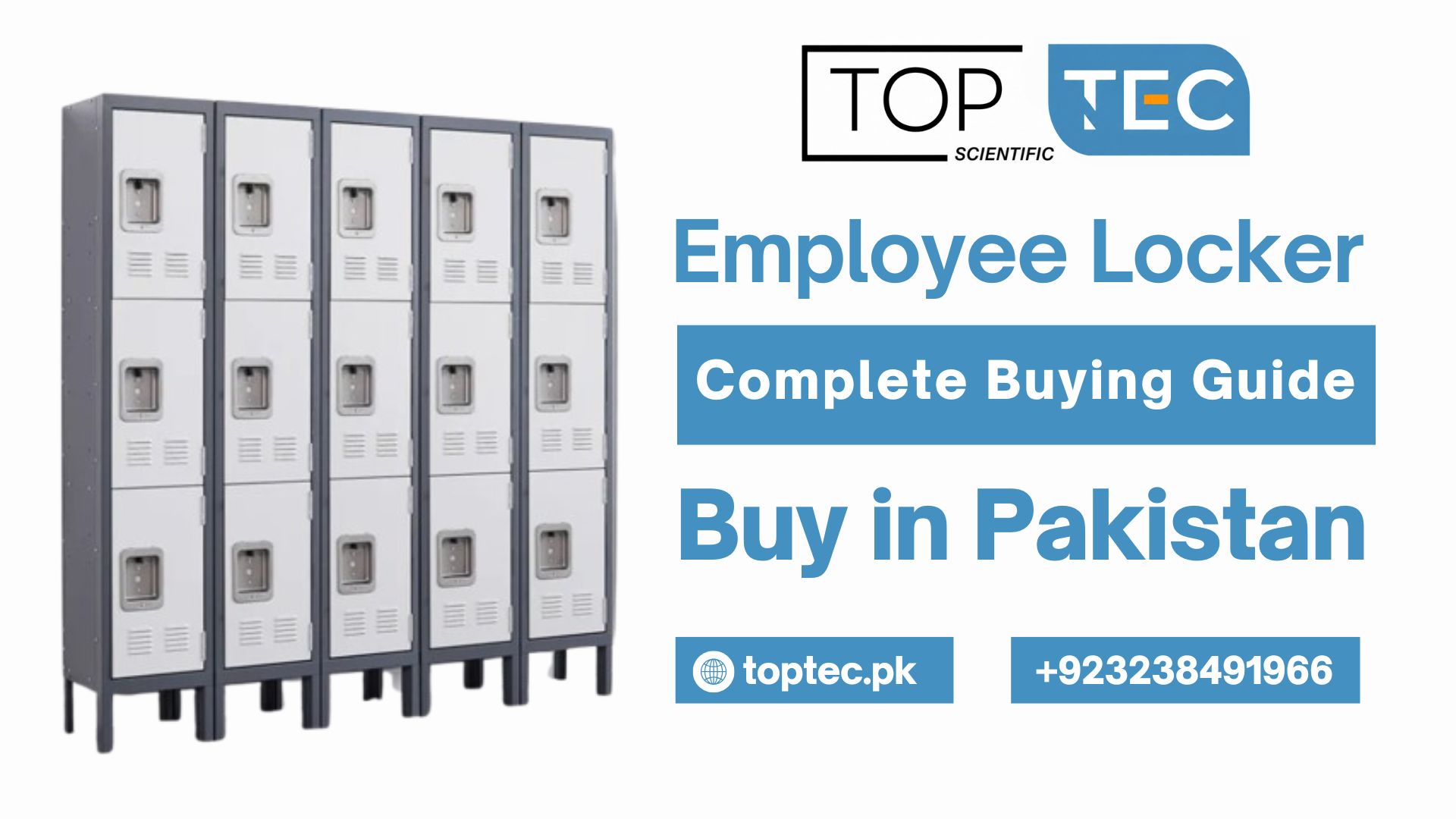
Looking for employee lockers? Prices from $100 to $350 per compartment for standard steel models. Compare durable storage solutions with secure locks and customizable configurations
A new employee joins a pharmaceutical manufacturing facility. On their first day, they arrive at the gowning room, change into their cleanroom garments, and then look around wondering where to put their bag, phone, wallet, and street clothes. Someone points to a corner where bags are stacked on the floor next to a wall. No labeling. No security. No organised system.
Or consider a research laboratory where staff have been leaving personal belongings on bench tops — because there’s nowhere else to put them. Valuable scientific equipment shares space with lunch bags and phone chargers. The laboratory manager knows it’s a contamination risk and an operational inefficiency, but hasn’t gotten around to solving it properly.
Both of these scenarios have the same straightforward solution: properly specified, appropriately located employee storage. And the decision to buy Employee Locker systems — whether for a pharmaceutical gowning room, a hospital changing area, a manufacturing facility, or a research institution — is worth approaching with the same seriousness as any other facility infrastructure investment.
This guide covers the complete picture.
Why Employee Locker Systems Matter More Than Most Organisations Realise
Before getting into specifications and purchasing decisions, it’s worth being direct about why this matters — because “it’s just lockers” is a mindset that leads to poor decisions.
Personnel Dignity and Professionalism
Employees who have secure, organised personal storage feel that their employer respects their basic needs. This sounds like soft HR language, but it has real operational consequences. Employees who feel respected by their physical work environment have better morale, which translates to better retention, lower absenteeism, and — in the end — better productivity.
In a competitive labour market for skilled pharmaceutical technicians, laboratory scientists, and manufacturing personnel, the quality of basic facilities like changing rooms and personal storage is noticed. Organisations that buy Employee Locker systems that communicate quality and respect for their people are sending a message about their organisational culture.
GMP and Regulatory Compliance
For pharmaceutical manufacturing facilities in Pakistan operating under DRAP GMP requirements, gowning room design — including personal storage — is subject to regulatory expectations. Personnel must be able to separate street clothes from cleanroom garments, secure personal items that could contaminate the manufacturing environment (phones, keys, jewellery), and manage the gowning process in an organised way.
Steel lockers in pharmaceutical gowning rooms are GMP infrastructure, not just furniture. Inspectors examining gowning room procedures look at whether the physical environment supports the contamination control objectives that gowning is meant to achieve.
Security and Theft Prevention
Workplace theft — of personal belongings, tools, laboratory equipment, and pharmaceutical materials — is a real concern in any organisation. Secure personal storage for employees’ belongings reduces the temptation and opportunity for workplace theft significantly. When personal items are properly secured in individual locked storage, the risk of loss or theft drops dramatically.
Contamination Control in Sensitive Environments
In pharmaceutical manufacturing, food processing, hospital environments, and research laboratories, personal items — phones, bags, keys, food — are contamination risks. A structured system for securing these items before personnel enter sensitive areas, through appropriately designed steel lockers in gowning and changing areas, is part of the complete contamination control system.
Types of Employee Lockers — Understanding the Complete Range
When organisations start evaluating options to buy Employee Locker equipment, the range of available configurations can be surprisingly wide. Understanding these types upfront prevents specification mistakes.
Single-Tier Full-Height Lockers
The classic configuration — one compartment per locker unit, full height (typically 1800mm). Maximum storage space per user. Each person has a complete, full-height compartment for clothing, equipment, and personal items.
Best for: Environments where employees keep complete changes of clothing — pharmaceutical facility gowning rooms where complete clothing changes are required, sports and recreation facilities, industrial manufacturing sites.
The full-height single-tier locker is the most spacious option and provides the best organisational capability for each individual user. When pharmaceutical manufacturing personnel need to store complete street clothing, shoes, and personal items while in cleanroom garments, full-height single-tier lockers provide the space to do this in an organised way.
Two-Tier (Double-Tier) Lockers
Each full-height locker column is divided horizontally into two compartments — stacked one above the other. Half the height per compartment compared to single-tier. Two users share a single column.
Best for: Offices, laboratories, and facilities where employees don’t need full clothing storage — securing personal items like bags, phones, and valuables during the working day. Good where floor space is limited but user numbers are high.
Two-tier lockers are very common in research laboratories and office environments adjacent to laboratory areas — scientists can secure personal items during laboratory sessions without the full gowning room requirements of pharmaceutical manufacturing.
Three-Tier, Four-Tier, and Six-Tier Lockers
Further subdivision of the column height. Three-tier lockers are appropriate for partial clothing storage. Four to six-tier lockers provide minimal individual compartment space — appropriate only for securing small personal items: phones, wallets, keys.
Best for: Large employee populations where space constraints require high density. Reception areas, casual use areas, gym changing facilities.
Half-Height Lockers
These sit at approximately waist height — suitable for sitting areas or where a lower profile is required. Often combined with bench seating immediately above or below.
Box Lockers (Small Item Security)
Small compartments — 200mm × 200mm or similar — for securing only the smallest personal items. Common in airports, libraries, and visitor areas. Not typically appropriate for employee changing room applications but useful for specific applications like visitor management.
Material Specification — Steel Lockers vs. Alternatives
The material choice for employee lockers determines durability, security, cleanability, and suitability for different environments. Understanding these options helps you make the right specification decision when you buy Employee Locker systems.
Steel Lockers — The Standard for Most Applications
Steel lockers are the default specification for most workplace, industrial, and institutional locker applications. They provide:
Security: Steel construction resists forced entry far better than polymer alternatives. A determined attempt to break into a steel locker with adequate gauge material and proper locking mechanism will require tools and time — providing meaningful deterrence.
Durability: Properly specified steel lockers with good quality coating finish will serve an organisation for 20+ years in normal use conditions. This longevity makes them more economical than apparently cheaper alternatives that require frequent replacement.
Cleanability: Smooth steel surfaces can be wiped down and disinfected. For pharmaceutical and food processing environments where locker surfaces need regular cleaning with disinfectants, steel is appropriate. Some polymer alternatives don’t withstand aggressive cleaning chemistry.
Fire resistance: Steel lockers in changing room areas provide meaningful fire resistance that polymer alternatives don’t. In pharmaceutical facilities where flammable materials may be stored, steel construction reduces risk.
Load capacity: Steel construction supports heavier contents than polymer alternatives — relevant when lockers are used for tools, equipment, or heavy personal protective equipment.
Material Grade Considerations for Steel Lockers
Not all steel lockers are equivalent. The steel gauge (thickness) significantly affects security and durability:
0.8mm (18 gauge): Economy specification. Adequate for light commercial use but susceptible to denting and provides limited security.
1.0mm (20 gauge) / 1.2mm: Standard commercial specification. Good durability for most workplace applications.
1.5mm or heavier: Heavy-duty specification for industrial environments or high-security applications.
For pharmaceutical facilities, food processing environments, and other applications where lockers represent long-term GMP infrastructure, the heavier gauge specification is appropriate — the incremental material cost is minimal compared to the replacement cost of inadequate units that don’t last.
Stainless Steel Lockers
For environments requiring the highest level of cleanability and corrosion resistance — pharmaceutical gowning rooms with aggressive cleaning protocols, food processing facilities, hospital changing areas — stainless steel lockers (SS304) provide:
Superior corrosion resistance under repeated disinfectant exposure. Smooth surface finish that doesn’t harbour contamination. Professional appearance appropriate for GMP environments. Full compatibility with pharmaceutical cleaning and disinfection protocols.
Stainless steel locker systems cost more than standard steel alternatives but are the appropriate specification for pharmaceutical GMP gowning rooms and similar environments where contamination control and cleanability are GMP requirements.
Polymer and ABS Lockers
Polymer lockers are appropriate for specific environments — particularly wet areas like swimming pools and sports changing rooms where constant moisture exposure would corrode steel. They’re lightweight, inherently corrosion-resistant, and available in a wide range of colours.
Limitations: Lower security than steel. Less resistance to impact damage. Limited suitability for environments requiring chemical disinfection. Generally not appropriate for industrial or pharmaceutical applications.
Smart Employee Lockers — The Technology-Enabled Evolution
Smart Employee Lockers represent a significant evolution beyond traditional lock-and-key storage systems. As organisations adopt modern facility management approaches, the capabilities of Smart Employee Lockers are increasingly relevant to workplace efficiency and security.
What Makes a Locker “Smart”?
Smart Employee Lockers incorporate electronic access control and management systems in place of (or in addition to) traditional mechanical locks. The specific technologies vary:
PIN code access: Users enter a numeric code on a keypad to unlock their assigned locker. Codes can be changed easily — eliminating lost key problems. Codes can be individual or shared depending on the deployment model.
RFID/proximity card access: The same employee access card used for building entry can unlock personal lockers. Integrated with the facility’s existing access control system. No separate key or code to remember.
Biometric access: Fingerprint or other biometric authentication. Highest security option — can’t be shared, lost, or stolen.
Mobile app control: Smartphone-based locker unlock via Bluetooth or NFC. Convenient for facilities where employees already use mobile apps for other access control.
QR code access: Time-limited QR codes for visitor or temporary use situations.
Management Advantages of Smart Employee Lockers
Beyond the individual user convenience, Smart Employee Lockers provide facility management advantages:
Usage monitoring: Know which lockers are occupied, which are vacant, and for how long. Helps facilities managers optimise locker allocation — a significant advantage in “hot desking” or flexible workplace environments where employees don’t have permanently assigned lockers.
Audit trail: Full record of who accessed which locker when. Relevant for security incidents and for GMP facilities where access records support regulatory compliance.
Remote management: Administrators can assign lockers, change access permissions, and unlock lockers remotely — eliminating the operational burden of managing physical keys.
Temporary access provision: Guest or contractor lockers can be activated and deactivated electronically without physical key management.
Integration with HR systems: Locker assignment and access permissions linked to employee onboarding and offboarding processes.
Smart Employee Lockers in Pharmaceutical GMP Environments
For pharmaceutical manufacturing facilities, Smart Employee Lockers offer specific GMP compliance advantages:
Electronic records of who changed and when — supporting the access records that GMP facilities maintain for personnel management.
No physical key management — eliminating the contamination risk of keys moving between gowning and production areas.
Remote deactivation when employees leave — immediately removing access without physical key collection.
Integration with gowning room entry control systems — potentially interlocking locker access with gowning procedure compliance monitoring.
Locking Mechanisms — Choosing the Right Security Approach
The locking mechanism is the critical security component of any buy Employee Locker decision. Understanding the options and their implications helps you specify appropriately.
Hasp and Padlock
The simplest system — the locker is delivered without a lock, and users provide their own padlocks. Maximum flexibility, zero master key concerns, but no master override capability when a padlock is forgotten or a user leaves without returning it.
Appropriate for: Casual use situations, visitor lockers, low-security applications.
Not appropriate for: GMP pharmaceutical facilities where master override capability is needed for safety access.
Key Lock (Deadbolt)
Traditional keyed deadbolt lock with one or two user keys plus a master key for management override. Reliable, secure, familiar to users. The key management challenge — ensuring keys are returned when employees leave, managing lost keys — is the primary operational burden.
For large pharmaceutical facilities with hundreds of locker units, the physical key management overhead is significant. Transition to electronic systems becomes operationally attractive at scale.
Combination Lock (Dial Combination)
No keys — users memorise a three-number combination to open. No key management overhead, no lost key problems. The combination must be reset between users, which requires master reset capability.
Appropriate for: Facilities where user turnover creates key management challenges. Less appropriate for users who find combination memorisation difficult.
Electronic Keypad Locks
PIN code entry eliminates keys entirely. Codes can be set per user, changed easily, and reset by administrators. Audit capability varies by model — basic models simply require a code; more sophisticated models log access attempts.
The right balance of convenience, security, and manageability for most modern commercial and pharmaceutical applications.
Electronic RFID Locks
Proximity card reading aligned with facility access control systems. The same card that opens the building opens the personal locker — one less credential for employees to manage. Full audit trail in the access control system.
For pharmaceutical facilities already using RFID access control for cleanroom entry, RFID locker locks represent a natural, integrated extension of the existing security infrastructure.
Configuration Considerations for Different Environments
When you buy Employee Locker systems for different facility types, configuration requirements vary significantly:
Pharmaceutical Manufacturing Gowning Rooms
The GMP requirements that drive specification:
Gowning rooms in pharmaceutical manufacturing facilities are transitional zones where street contamination is separated from cleanroom contamination. The locker system must support clean/dirty separation — ideally with entry from the non-classified side (street clothes removal, stored in locker), and exit on the classified side toward the cleanroom.
Recommended specification:
Full-height single-tier stainless steel or powder-coated steel lockers — full height to accommodate complete clothing changes. Adequate ventilation within the locker compartment — perforated doors or ventilation slots prevent dampness from freshly removed clothing. Smooth, cleanable surfaces throughout the gowning room locker area. Electronic locking integrated with facility access control where possible. Smart Employee Lockers with audit trail capability for regulated environments.
Number of lockers: Should match the peak gowning room population plus typically 10-20% for operational flexibility and future growth.
Research Laboratories
The requirements:
Laboratory scientists need to secure personal items — bags, phones, food, valuables — before entering laboratory areas. They may not require full clothing changes but need to remove personal items that could contaminate laboratory work.
Recommended specification:
Two-tier or three-tier steel lockers — full clothing change not always required, so smaller compartments are adequate. Located in a defined area outside the laboratory proper — at the transition point between the personal area and the laboratory area. Electronic or combination locking for convenience. Ventilation in compartments if food storage is expected (though food in laboratory areas adjacent to the storage should be addressed through SOPs).
Industrial Manufacturing Facilities
The requirements:
Production workers may arrive in street clothing and change into work uniforms. They may need to secure tools, personal protective equipment, and personal items. The environment may involve dust, oils, or chemicals that require cleaning-resistant locker surfaces.
Recommended specification:
Full-height single-tier steel lockers with heavy-gauge steel (1.2mm or greater) for durability in industrial environments. Robust powder-coat finish appropriate for industrial cleaning. Ventilation within compartments. For environments with significant contamination (chemical processing, food manufacturing), stainless steel may be appropriate despite higher cost.
Office and Corporate Environments
The requirements:
Hot-desking, flexible working, and open-plan offices create the need for secure day-use personal storage where employees without assigned desks can secure personal items during the working day. Aesthetics matter alongside function.
Recommended specification:
Smart Employee Lockers with app or card access are particularly well-suited to hot-desking environments where daily allocation of available lockers to attending employees is needed. A mix of two-tier and four-tier configurations depending on what employees need to store. Aesthetically designed enclosures — powder-coated in corporate colours, or integrated within designed furniture systems.
Ventilation Design — Often Overlooked, Always Important
Locker ventilation is a specification detail that’s frequently overlooked until the gowning room smells like a gym locker room.
When employees store recently worn, damp, or sweat-dampened clothing in unventilated lockers, the enclosed space allows moisture and microbial growth. This creates odour problems and, in pharmaceutical gowning rooms specifically, potential microbial contamination concerns.
Proper locker ventilation includes:
Perforated doors or ventilation slots: The most basic approach — perforations in the door and/or back panel allow some air circulation within the compartment.
Active ventilation integration: More sophisticated gowning room locker systems incorporate connection to the room’s HVAC supply and return, actively ventilating each locker compartment. This is particularly valuable in pharmaceutical gowning rooms where the gowning area itself is HVAC-conditioned.
Compartment geometry: Internal hooks and compartment geometry that allow clothing to hang freely rather than being crammed together improves air circulation around stored items.
For pharmaceutical GMP gowning rooms, active ventilation of locker compartments is a specification worth considering seriously — it addresses both the odour management and the microbial contamination concerns that closed, unventilated compartments create.
TOPTEC Scientific — Employee Lockers and Complete Laboratory Furniture for Pakistani Organisations
When Pakistani pharmaceutical manufacturers, research institutions, hospitals, and industrial facilities need to buy Employee Locker systems and surrounding facility infrastructure, TOPTEC Scientific provides locally manufactured solutions with direct support.
TOPTEC Scientific is a Pakistan-based manufacturing company producing high-specification laboratory furniture, cleanroom equipment, and facility infrastructure for organisations throughout Pakistan. When you Buy Laboratory Furniture or facility furniture from TOPTEC Scientific, you’re dealing with a local manufacturer — direct communication, no import delays, local installation support, and pricing that reflects local manufacturing economics.
Employee Locker Systems from TOPTEC Scientific
Pharmaceutical Gowning Room Lockers
Full-height steel lockers with appropriate specification for pharmaceutical GMP gowning rooms — smooth cleanable surfaces, ventilation provisions, and locking options appropriate for pharmaceutical facility access control integration. Available in powder-coated mild steel and stainless steel depending on the cleaning protocol and environmental requirements of your specific gowning room.
TOPTEC Scientific manufactures gowning room locker systems specifically for pharmaceutical manufacturing environments — with the understanding of GMP requirements that general furniture suppliers often lack.
Standard Steel Lockers for Industrial and Commercial Use
Single-tier, two-tier, and multi-tier steel lockers for industrial manufacturing facilities, office environments, and institutional applications. Heavy-gauge steel construction with durable powder-coat finish in standard colours and custom colour options for corporate branding.
Smart Employee Lockers
Electronic locking systems — PIN code, RFID card, or combination — for facilities wanting to move beyond traditional key-based locker management. Audit trail capability for regulated environments. Remote management of locker assignment and access.
The Complete Gowning Room and Laboratory Environment
Beyond employee lockers specifically, TOPTEC Scientific manufactures the complete surrounding infrastructure that gowning rooms and laboratory changing areas require:
Gowning Benches
The bench where pharmaceutical personnel sit during the gowning process — changing footwear, donning overshoes, completing lower-body gowning operations. TOPTEC Scientific manufactures gowning benches in stainless steel and powder-coated steel with smooth, cleanable surfaces appropriate for pharmaceutical gowning room environments.
The step-over bench configuration — with a physical divide marking the clean/dirty line — is a specific pharmaceutical gowning room design element that TOPTEC Scientific manufactures for Pakistani pharmaceutical facilities.
Mirror Installations
Personnel need to verify correct garment donning before entering the cleanroom. Appropriately positioned mirrors — full-length, properly mounted for stability — support garment verification compliance in pharmaceutical gowning rooms.
Shoe Storage and Footwear Management Systems
Cleanroom overshoe storage, designated shoe-change positions, and footwear management systems for gowning areas where footwear separation is part of the contamination control protocol.
Complete Laboratory Workbenches and Furniture
For the research laboratories and QC areas associated with pharmaceutical manufacturing or industrial operations, TOPTEC Scientific manufactures complete laboratory furniture — chemical-resistant workbenches, analytical instrument stations, fume hoods, pass-through boxes, storage systems, and specialist furniture for specific laboratory applications.
When you Buy Laboratory Furniture from TOPTEC Scientific for your complete facility — from gowning room lockers through to production area workbenches and QC laboratory furniture — you’re sourcing from a single local supplier who understands the complete pharmaceutical or industrial facility environment.
Mobile Stainless Steel Trolleys
For material transport within manufacturing and laboratory facilities, TOPTEC Scientific manufactures pharmaceutical-grade stainless steel trolleys appropriate for different load requirements and facility environments.
Dispensing Booths and Sampling Stations
For pharmaceutical facilities where contained powder dispensing and sampling is required, TOPTEC Scientific manufactures reverse laminar airflow dispensing booths with HEPA filtration — completing the contamination control picture from gowning room through to product-contact operations.
The local manufacturing advantage is particularly valuable for complete facility projects. Rather than coordinating multiple international suppliers with different lead times, quality standards, and support arrangements, sourcing your gowning room lockers, laboratory workbenches, cleanroom furniture, and specialist equipment from TOPTEC Scientific simplifies the complete project while providing consistent quality and local support.
Common Mistakes When Buying Employee Lockers
These patterns come up regularly when organisations reflect on locker procurement decisions they regret:
Buying too few units
Calculating the minimum number of lockers for current staff and forgetting about peak occupancy, future growth, and operational flexibility. Building in 20-30% additional capacity at initial purchase is almost always more economical than a second procurement later.
Underspecifying steel gauge for the environment
Light-gauge steel lockers in industrial environments where employees are rough with equipment dent and deform within months. Heavy-gauge specification costs marginally more but lasts a decade longer.
Ignoring ventilation
Unventilated lockers in any environment where clothing is stored become malodorous. In pharmaceutical environments, unventilated lockers adjacent to gowning areas present microbial concerns. Specify ventilation from the start.
Choosing the cheapest locking mechanism
Cheap key locks fail. Cheap combination mechanisms jam. Cheap electronic locks have software that doesn’t support the management functions you need. The locking mechanism is the most-used component — specify appropriately.
Not considering the gowning workflow
In pharmaceutical gowning rooms specifically, locker placement and orientation relative to the gowning sequence affects how effectively personnel follow the gowning procedure. Lockers should be positioned to support the workflow naturally, not fight against it.
Separating locker purchase from complete gowning room design
Lockers are one element of a complete gowning room system that includes benches, mirrors, footwear management, airflow design, and environmental monitoring. Designing the complete system together produces better outcomes than specifying components independently.
Calculating How Many Lockers You Need
A practical calculation framework for locker quantity specification:
For assigned lockers (one per employee):
Number of lockers = Total employees × 1.2 (20% surplus for operational flexibility and growth)
For shared/day-use lockers (hot-desking environments):
Assess peak simultaneous attendance — typically 60-80% of total workforce in flexible working environments. Number of lockers = Peak simultaneous attendance × 1.1 (10% operational margin)
For pharmaceutical gowning rooms:
Number of lockers = Peak shift size × 1.25 (25% margin for overlap between shifts and operational flexibility)
Additional considerations:
Visitor lockers for facilities receiving regular visitors. Contractor lockers for construction or maintenance personnel during project phases. Reserve lockers for new hires during equipment lead time.
Closing Thoughts
The decision to buy Employee Locker systems for your organisation — whether pharmaceutical manufacturing facility, research laboratory, industrial plant, or commercial office — is an investment in people, security, regulatory compliance, and operational efficiency.
Steel lockers built to appropriate specification for your environment, in the right configurations for your users’ actual needs, with appropriate locking mechanisms and ventilation — from a supplier who understands your specific application — serve your organisation reliably for decades.
Smart Employee Lockers with electronic access control provide the management visibility and operational efficiency that modern organisations increasingly require, particularly in regulated pharmaceutical environments where access records support compliance.
And when you Buy Laboratory Furniture and facility infrastructure — from gowning room lockers through to complete laboratory fitout — from TOPTEC Scientific, you’re sourcing locally manufactured, properly specified equipment with direct technical support and no import complications.
Make the complete investment thoughtfully. Your employees, your regulatory compliance, and your operational efficiency all benefit from getting this right.
