

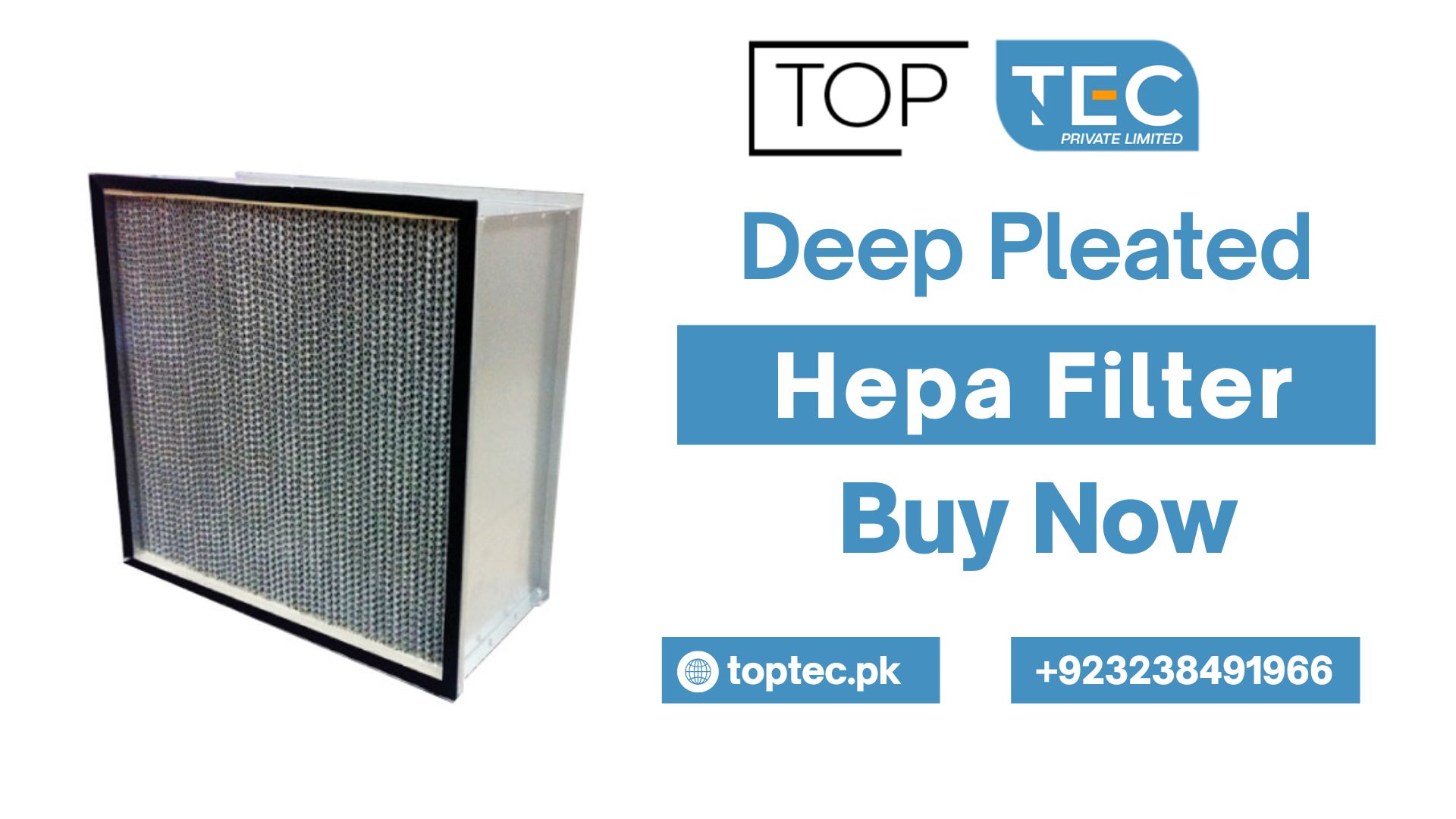
Three weeks ago, I was killing time in an electronics store in Karachi waiting for my friend to show up. There was this salesman cornering an elderly couple near the air purifiers. I wasn’t trying to eavesdrop, but the store wasn’t that big.
“This one has a HEPA filter,” he said, pointing at a box that looked identical to all the others. He said it the way you’d announce a car has leather seats or whatever. Like it was obviously premium.
The woman looked at her husband, then back at the salesman. “What’s HEPA?”
And I swear, watching this guy’s face was priceless. His mouth opened. Nothing came out. You could literally see him searching his brain for any scrap of information about what he’d been confidently selling for who knows how long.
“It’s… uh… it’s the really good filter. The advanced one. For… air.”
She just stared at him.
“The other models don’t have it.”
More staring.
“I’ll take the cheaper one,” she finally said, and walked away. The salesman looked defeated.
Here’s what kills me about this whole thing—HEPA gets slapped on everything now. Air purifiers, vacuum cleaners, even face masks during COVID. Everyone’s shouting about HEPA filtration like it’s magic. But ask people what those four letters actually mean? Blank stares and mumbling.
So let’s actually talk about what HEPA is, how it works, and—if you’re trying to Buy HEPA Filter equipment—how to tell if you’re getting the real thing or just expensive marketing.
Okay, So What Does HEPA Actually Stand For?
High-Efficiency Particulate Air
That’s it. I know, kind of anticlimactic. No Latin roots, no complex scientific terminology. Just a straightforward description.
Some old technical manuals say “High-Efficiency Particulate Absorbing” or “High-Efficiency Particulate Arrestance,” but officially—according to the U.S. Department of Energy anyway—it’s “High-Efficiency Particulate Air.”
And honestly? The name makes sense when you think about it:
- High-Efficiency: It catches stuff other filters completely miss
- Particulate: It targets particles specifically (not gases or smells)
- Air: It filters air (not water or anything else)
Pretty straightforward once someone actually explains it.
Where This Whole Thing Started (And Why It’s Kinda Cool)
This is my favorite random fact about HEPA filters: they were invented for the atomic bomb.
No, seriously. Back in the 1940s during the Manhattan Project, scientists working on nuclear weapons had this problem—radioactive particles kept contaminating everything. Regular air filters weren’t even close to good enough. You can’t have plutonium dust floating around your lab. That’s… bad.
So they invented a completely new type of filter using densely packed fibers that could trap incredibly tiny particles. It worked shockingly well. And after the war ended and the technology got declassified, companies went “hey, we could use this for other stuff.”
By the 1950s and 60s, hospitals were using HEPA filters. Pharmaceutical companies jumped on board. The semiconductor industry realized they couldn’t manufacture chips without them.
Now? They’re literally everywhere. That $60 air purifier in your bedroom? Same basic technology that was developed to contain radioactive contamination. Pretty wild when you think about it.
The Actual Technical Definition (Bear With Me Here)
Not every filter that claims to be HEPA actually is HEPA. There’s a real standard, and it matters.
True HEPA filters must remove at least 99.97% of particles that are 0.3 microns in diameter.
That 0.3 micron thing isn’t random, by the way. It’s actually the hardest particle size for filters to catch—they call it the Most Penetrating Particle Size. Particles bigger than 0.3 microns? Easier to catch. Particles smaller than 0.3 microns? Also easier to catch, weirdly enough. But right around 0.3 microns is where particles have the best chance of sneaking through.
So if a filter nails 99.97% at 0.3 microns, it’s catching even more of everything else.
There are actually different grades:
- Standard HEPA: 99.97% at 0.3 microns
- Medical-grade HEPA: Same efficiency but with stricter testing
- ULPA (Ultra-Low Particulate Air): 99.999% at 0.12 microns (overkill for most uses)
- H13/H14: European ratings that are roughly equivalent
When you’re shopping to Buy HEPA Filter stuff, knowing these differences helps. Most home use? Standard HEPA is plenty. Running a pharmaceutical cleanroom? You probably want certified medical-grade or better.
How Do These Things Even Work?
Okay, this is where it gets interesting. Most people—including that salesman I mentioned—think HEPA filters work like a super-fine screen. Tiny holes that physically block particles from getting through.
Completely wrong.
HEPA filters are made from randomly arranged fibers, usually fiberglass. And here’s the weird part—the gaps between the fibers are actually way bigger than the particles being caught. Like, not even close.
So how does it work? Four different mechanisms happening at once:
Interception: Particles following the airflow get close enough to a fiber and just… stick to it. Van der Waals forces, if you remember high school chemistry.
Impaction: Bigger particles are too heavy to follow the twisting airflow path around fibers. They slam straight into the fibers and stick.
Diffusion: Really tiny particles (under 0.1 micron) get bounced around by air molecules in this random dance. This erratic movement means they’re way more likely to hit a fiber eventually.
Electrostatic attraction: Some HEPA filters have a static charge that literally pulls particles to the fibers.
All four of these work together, which is why HEPA filters catch such a wide range of particle sizes.
I saw a demonstration once—microscope view of airflow through a HEPA filter. The path air takes is absolutely insane. It’s twisting, turning, doubling back on itself. Particles are bouncing around like pinballs. Eventually they make contact with a fiber, and boom, they’re stuck.
Pretty clever engineering, actually.
The “HEPA-Type” Scam (Don’t Fall For This)
Alright, here’s where you need to pay attention. When you Buy HEPA Filter products, you’ll see creative labeling like:
- “HEPA-type filter”
- “HEPA-like filtration”
- “HEPA-style filter”
- “True HEPA” (which ironically is sometimes fake)
- “99% HEPA filter” (not a real thing)
None of these—NONE—are actual HEPA filters. They’re marketing garbage designed to make you think you’re getting HEPA performance when you’re absolutely not.
Actual HEPA filters:
- Meet the 99.97% at 0.3 microns standard
- Usually have documentation or certification
- Say “HEPA” or “H13/H14” clearly
- Cost more because they’re actually engineered properly
Fake “HEPA-type” filters:
- Might catch 85-95% of particles (sounds good until you realize that’s not good enough)
- Use vague language because they can’t make specific claims
- Are cheaper (shocker)
- Won’t perform when you actually need them to
I’ve tested both in cleanroom settings. The difference is dramatic—and I mean dramatic. Real HEPA brings particle counts down to basically zero. “HEPA-type”? Counts drop, sure, but they’re still way too high for anything critical.
Last year I watched a guy set up what he thought was a sterile workspace with a “HEPA-style” filter. His contamination rates were terrible. Switched to actual HEPA, problem solved immediately.
When you’re shopping to Buy HEPA Filter equipment and the packaging says anything other than just “HEPA” or “H13/H14,” walk away. You’re being played.
Where You’ll Actually Find These Things
HEPA filters show up in more places than you’d think:
Medical stuff:
Operating rooms where surgical infections are a huge deal. Isolation rooms for infectious patients. Pharmacy areas where they’re mixing IV drugs. Dental offices capturing all that nasty aerosol spray.
Laboratories:
Biosafety cabinets for working with bacteria and viruses. Laminar flow hoods for cell culture. Cleanrooms for research. Pretty much anywhere contamination would ruin expensive experiments.
Industrial:
Semiconductor fabs—because a single dust particle can destroy a microchip. Aerospace manufacturing. Food processing plants. Nuclear facilities.
Commercial:
Data centers protecting server equipment. Museums preserving priceless artifacts. Some high-end restaurants.
Your house:
Air purifiers for allergies. Vacuum cleaners that don’t just scatter dust around. Some HVAC systems.
Random places:
Airplanes (the cabin air actually gets HEPA filtered). Submarines. The International Space Station.
The range is genuinely impressive. From your bedroom to outer space, HEPA filtration is doing work.
When to Actually Replace These Filters
Whether you Buy HEPA Filter products for home or professional use, they don’t last forever.
HEPA filters don’t really “wear out” like brake pads or whatever. They get clogged with particles until air can’t flow through anymore. Eventually the blower can’t pull enough air, or the pressure drop gets too high, and you need a fresh filter.
For home air purifiers:
Most manufacturers claim 6-12 months. Reality? Depends entirely on how dirty your air is and how much you run the thing. If your allergies suddenly get worse for no reason, probably time for a new filter.
For lab equipment:
Usually based on testing and pressure readings. Could be 2-5 years for cleanroom HEPA filters if the environment is relatively clean. Sometimes longer. But you don’t wait until failure—you schedule replacement.
For vacuum cleaners:
Check what the manufacturer says. Usually 1-2 years. Some are supposedly washable (verify this before you try it).
Definite replacement signs:
- Visible damage
- Airflow way down
- Weird musty smell (means something’s growing in there)
- Pressure readings out of spec
Here’s a mistake I see all the time: people trying to “extend the life” of HEPA filters by cleaning them. Some filters are washable. Most aren’t. Vacuuming or washing a non-washable HEPA destroys the filter media. You’ve just ruined an expensive filter.
When in doubt, replace it. A compromised HEPA is worse than no HEPA because you think you’re protected when you’re not.
Shopping for HEPA Filters Without Getting Ripped Off
Ready to buy? Here’s how to not get scammed.
Make sure it’s actually HEPA:
Look for “True HEPA” or “H13 certified.” If the box just says “advanced filtration” or “hospital-quality” without being specific, it’s probably not real HEPA.
Check the rating:
Should clearly state 99.97% efficiency at 0.3 microns. No mention of this specific spec? Be very suspicious.
Certification documentation:
Serious HEPA filters have test results or certification. Consumer products don’t always show this on the packaging, but you should be able to ask for it.
Think about what you actually need:
Don’t Buy HEPA Filter products that are way overkill for your application. Room air purifier for allergies? Standard HEPA works great. Pharmaceutical cleanroom? Yeah, you need the certified, tested, documented stuff.
Do the replacement cost math:
Some products are cheap upfront but the replacement filters cost a fortune. Others cost more initially but have reasonable replacement costs. Calculate what you’ll spend over 3-5 years, not just the initial purchase.
Size matters:
Especially for replacements, make absolutely certain you’re getting the right dimensions. I’ve watched people Buy HEPA Filter replacements that were half an inch too big and completely useless.
Pre-filters are your friend:
Good HEPA systems have a cheaper pre-filter that catches bigger particles first. This extends the HEPA filter life significantly and saves money.
Brand reputation:
Established manufacturers usually have better quality control. Random no-name brand selling suspiciously cheap HEPA filters? Probably not actually HEPA.
The Laboratory Furniture Connection Nobody Thinks About
Here’s something people miss when they Buy HEPA Filter equipment for labs: where’s this stuff going to live, and how does it fit into your workspace?
HEPA filters are critical in:
- Laminar flow hoods
- Biological safety cabinets
- Cleanroom air systems
- Portable filtration units
All this equipment needs proper support, appropriate surrounding workspace, and smart integration into your lab.
This is why TOPTEC PVT. LTD matters.
TOPTEC manufactures laboratory furniture right here in Pakistan. They design stuff specifically for environments where air quality and contamination control actually matter. When you’re setting up labs that depend on HEPA-filtered equipment, the furniture isn’t an afterthought—it’s critical infrastructure.
Why TOPTEC makes sense for HEPA-equipped labs:
They build furniture that can actually handle the weight: Laminar flow hoods and biosafety cabinets with HEPA filters are heavy. Like 100-400 kg heavy. TOPTEC builds benches engineered to support this without sagging or wobbling over time.
Workflow integration that makes sense: HEPA equipment doesn’t exist in isolation. You need space to stage materials, storage for supplies, logical layout for operations. TOPTEC can design complete workstations instead of just selling you a table.
Cleanroom-compatible designs: In cleanrooms where HEPA filtration keeps air quality pristine, your furniture can’t be generating contamination. TOPTEC understands this—smooth surfaces, minimal particle shedding, easy cleaning.
Chemical resistance: Labs with HEPA equipment also use cleaning agents, solvents, all kinds of chemicals. TOPTEC’s countertops resist these without falling apart.
Local manufacturing advantages: Because TOPTEC makes everything in Pakistan:
- Delivery measured in weeks, not months
- Actual customization for your space
- Direct communication in your language
- Reasonable pricing without shipping containers from China
- Support when you need changes
A microbiology lab in Islamabad spent serious money on beautiful laminar flow hoods with proper HEPA filtration. Then they realized their workspace was a disaster—wobbly benches, inadequate storage, bad layout. After TOPTEC redesigned their furniture, the whole operation transformed.
When you Buy HEPA Filter equipment and install it, don’t kill the investment with garbage furniture. Talk to TOPTEC about building the proper foundation.
Myths People Believe About HEPA Filters
Let me kill some misconceptions I hear constantly.
“HEPA filters remove all contaminants”
Nope. HEPA removes particulates—solid and liquid particles in air. What it doesn’t remove:
- Gases and vapors
- VOCs (volatile organic compounds)
- Odors (unless the smell is particle-based)
- Carbon monoxide and other gaseous pollutants
For those you need activated carbon or other tech.
“HEPA filters kill bacteria and viruses”
They catch bacteria and viruses, but don’t necessarily kill them. Microorganisms get trapped in the filter where they might eventually die, but the filter itself isn’t antimicrobial unless specially treated.
Some systems add UV light or antimicrobial coatings, but standard HEPA is just physical filtration.
“More expensive HEPA filters work better”
Not necessarily. Price reflects brand, build quality, longevity, and market positioning. A $200 filter isn’t automatically more effective at removing particles than a $50 filter if both legitimately meet HEPA standards.
Build quality and lifespan do vary, though. Cheap filters might technically meet specs but fail early.
“HEPA filters need constant replacement”
Actually, in clean environments, HEPA filters can last years. I’ve seen cleanroom HEPA filters performing perfectly after 7-8 years.
Replacement depends entirely on particle loading—how much junk the filter catches.
“You can clean and reuse HEPA filters”
A few washable HEPA filters exist. Most are NOT designed to be cleaned. Washing or vacuuming traditional HEPA filters damages the media and destroys efficiency.
If it doesn’t say “washable,” don’t try it.
HEPA in Weird Places You Wouldn’t Expect
You probably don’t realize how many things around you use HEPA filtration:
Commercial airplanes: Cabin air gets HEPA filtered during recirculation. This became big news during COVID, but it’s been standard for decades.
Some cars: High-end vehicles offer HEPA cabin filters now. Tesla made a huge deal about it, but other manufacturers have it too.
Hospital delivery rooms: Many use portable HEPA units during births to protect newborns from infection.
Crime scene investigation: Portable HEPA systems sometimes prevent contamination when collecting evidence.
Mushroom growing: Huge market now. Growers use HEPA filters in laminar flow hoods for sterile inoculation.
3D printing: Some printers use HEPA to capture ultrafine particles generated during printing.
The tech has spread way beyond nuclear research labs.
DIY HEPA Projects (Probably Not a Great Idea)
There’s been this explosion of DIY air purifier projects—especially during COVID. People were building them left and right.
Basic concept: Buy HEPA Filter designed for HVAC, duct tape it to a box fan, done. Cheap air purifier.
Does it work? Kinda.
What’s good: You’re moving air through HEPA filtration, so yes, particles get removed.
The problems:
- Box fans aren’t built for the pressure HEPA filters create
- Can burn out the motor
- You’re probably not sealing it properly (air just goes around the filter)
- Actual efficiency is often way lower than you’d think
- Fire risk if the motor overheats
I’m not saying never do this—plenty of people have made functional DIY purifiers. Just understand the risks and limitations.
For critical stuff—labs, medical settings, cleanrooms—never, ever rely on DIY. Buy HEPA Filter products from real manufacturers with testing and certification.
What’s Coming Next for HEPA Tech
HEPA has been around 80 years. What’s the future look like?
Nanofiber filters: Using electrospinning to make even finer fibers. Could exceed HEPA efficiency with less airflow restriction.
Antimicrobial treatments: Filters that actively kill captured bugs instead of just trapping them.
Smart filters: Sensors monitoring condition in real-time, predicting replacement based on actual particle loading instead of just time.
Better energy efficiency: New designs achieving HEPA performance with less pressure drop, reducing energy to move air.
Graphene-based filtration: Still research phase, but promising.
The core HEPA tech probably won’t change much—it already works incredibly well. But refinements around efficiency, lifespan, and energy use continue.
Making Your Decision
When you’re ready to Buy HEPA Filter products, it comes down to matching the tech to your actual needs.
Home air quality: Standard HEPA in a properly sized purifier handles most situations. Don’t overpay for medical-grade unless you have specific health requirements.
Laboratories: Get actual certified HEPA with documentation. The extra cost is worth it. And talk to TOPTEC about proper furniture to support your equipment.
Industrial applications: Work with suppliers who understand contamination control and can provide appropriate filtration with testing.
Cleanrooms: Not DIY territory. Professional equipment, proper installation, regular certification.
The key is understanding what HEPA actually means, what it can and can’t do, and getting products that legitimately meet the standard.
Wrapping This Up
HEPA—High-Efficiency Particulate Air—is one of those technologies that’s so successful it’s basically invisible now. It’s everywhere, quietly protecting us from particles we can’t even see.
From classified nuclear research in the 1940s to your bedroom air purifier today, HEPA filtration has become the gold standard for removing particulates from air. When you Buy HEPA Filter products, you’re tapping into eight decades of development and refinement.
Just make sure you’re getting actual HEPA. Not “HEPA-type.” Not “HEPA-like.” The real thing has specific performance standards. Anything less is marketing nonsense.
And if you’re setting up labs or professional spaces where HEPA equipment is critical, don’t forget the supporting infrastructure. TOPTEC PVT. LTD can help build the proper workspace to house and integrate your filtration systems.
