

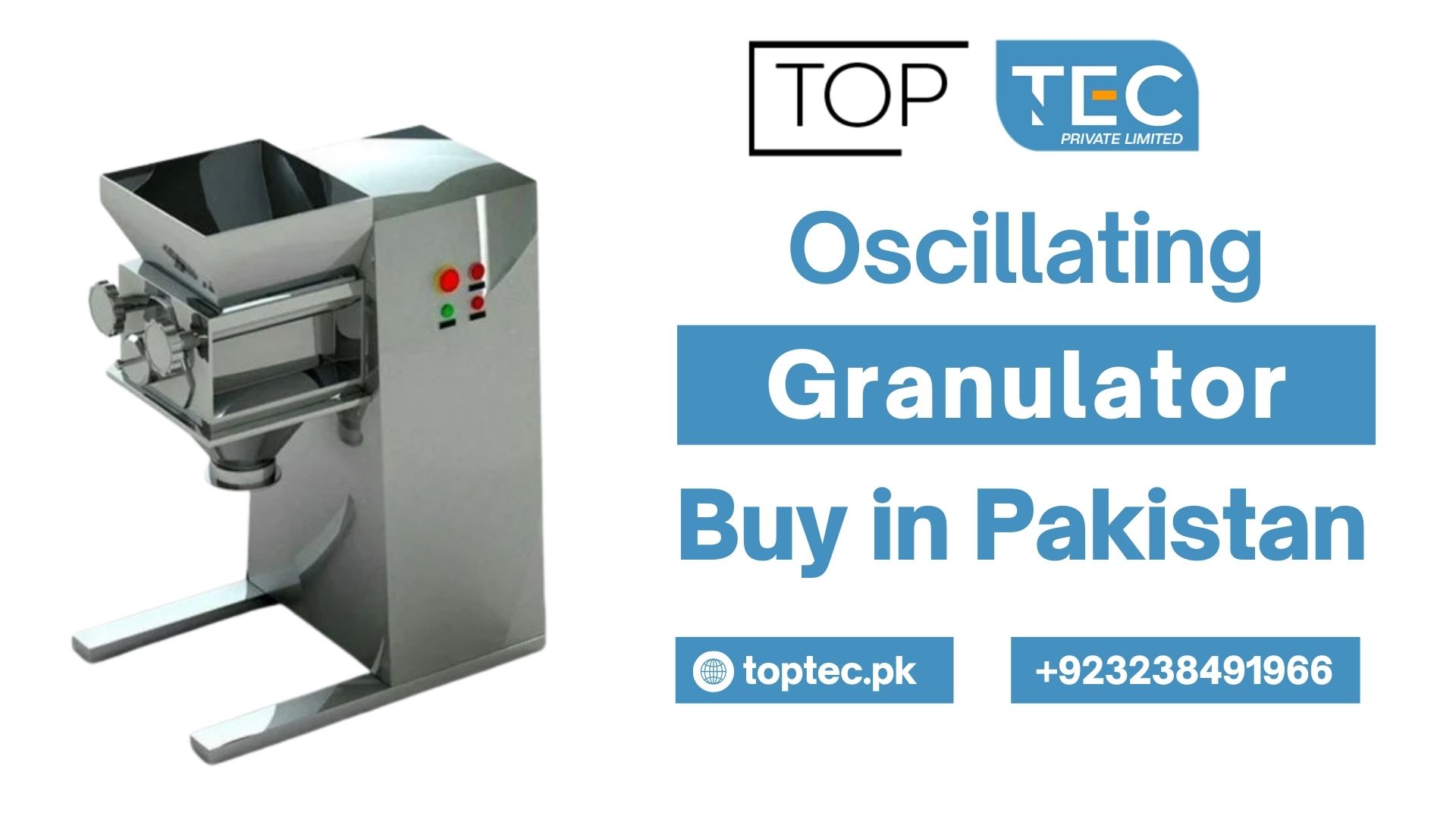
What You Really Need to Know about Granulator Oscillator? I’ve been involved in pharmaceutical manufacturing for more than a decade, and I can tell you straight up: choosing the right granulator is one of those decisions that affects your entire operation. You get this wrong, and you’re dealing with production headaches for years. Get it right, and you’ll have a machine that just works.
This guide is meant to walk you through everything about oscillating granulator machines – from the basics of how they actually work, to choosing the right one for your needs, to getting the most out of it once you’ve got it running.
When you buy Granulator Oscillator equipment, you should understand what you’re buying. Not just the specs on paper, but how it actually performs, what its strengths are, and what its limitations look like in real-world operation. That’s what we’re going to cover here.
At TOPTEC PVT. LTD in Pakistan, we manufacture these machines for serious pharmaceutical, research, and manufacturing operations. We’ve learned a lot about what works and what doesn’t. Let me share that experience with you.
The Fundamentals – How Oscillating Granulators Actually Work
Let me start with the basic principle, because it’s actually pretty elegant.
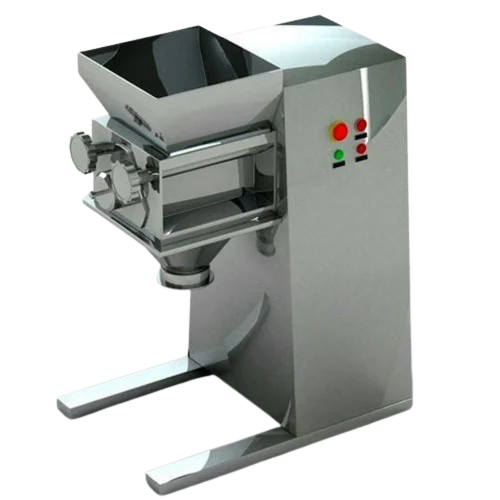
An oscillating granulator works through rapid, repetitive back-and-forth movement. Inside the machine, you’ve got a chamber that contains your material – could be a wet granule mass that needs breaking up, could be dry powder that needs sizing, depends on your application.
The chamber itself – or sometimes the grinding tool inside it – moves back and forth hundreds or thousands of times per minute. That rapid movement creates shear and impact forces that break down larger particles into smaller, more uniform granules. It’s aggressive, controlled, and efficient.
Think of it this way: instead of spinning something around like a traditional ball mill, you’re repeatedly smashing and shearing material in a contained space. The result? Consistent granule size, excellent control over particle distribution, and relatively fast processing times.
That’s why when you buy Granulator Oscillator machines, you’re choosing a technology that’s proven in pharmaceutical work. It’s been used for decades because it simply works.
Different Types of Oscillating Granulators – Not All the Same
Here’s where people sometimes get confused. Not every machine that calls itself an oscillating granulator works exactly the same way.
Horizontal Oscillators – These are the most common type. The grinding chamber moves side-to-side horizontally. You load material in from the top, it gets shredded and sieved, and granules fall through the screen. Simple, effective, and straightforward to operate. Most of TOPTEC’s production models are horizontal oscillators.
Vertical Oscillators – These are less common, but they do show up in specialized applications. The grinding chamber moves up and down. They’re useful in certain pharmaceutical scenarios, particularly when you’re dealing with very fine granulations or need more gentle handling of delicate materials.
Rotary Oscillators – A hybrid approach where the chamber has both rotational and oscillating movement. More complex mechanically, sometimes overkill for standard applications, but excellent when you need maximum flexibility.
When you buy Granulator Oscillator equipment, understand which type fits your actual workflow. Most pharmaceutical operations do well with horizontal oscillators – they’re reliable, straightforward, and there’s tons of operational experience with them.
Wet vs. Dry Granulation – Which Scenario Are You Actually In?
This is crucial, and it affects which machine you should be looking at.
Wet Granulation – You’ve mixed your powder with a binder liquid (water, alcohol, or whatever’s appropriate). Now you’ve got this wet mass that needs to be broken into uniform granules. An oscillating granulator is perfect for this. The oscillating action breaks up the wet mass effectively, and the granules fall through the screen and dry afterward. This is incredibly common in pharmaceutical manufacturing.
Dry Granulation – You’re taking already-dry material and sizing it into specific granule sizes. This is less common but absolutely happens. Oscillating granulators can handle this too, though sometimes you’re using slightly different frequency and intensity settings.
Here’s the real talk: most people doing pharmaceutical work use oscillating granulators for wet granulation. It’s where the technology really shines. When you buy Granulator Oscillator machines from TOPTEC for wet granule work, you’re making the right choice technologically.
Size Matters – Choosing Between Lab, Pilot, and Production Scale
Let me give you honest guidance on this, because I’ve seen people make wrong decisions on scale.
Lab Scale Models – Chamber volume around 2-3 liters. Output roughly 10-20 kg per hour depending on material and settings. These are perfect for:
- R&D departments doing formulation development
- Research labs testing new products
- Small batch operations
- Pilot studies before scale-up
- Universities and educational facilities
If you’re still testing formulations, figuring out what works, lab scale is smart. You can experiment without committing huge investment. When you buy Granulator Oscillator equipment at lab scale, you’re typically looking at machines that are still mechanically sophisticated but physically smaller and less expensive.
Pilot Scale Models – Chamber volume 5-8 liters. Output around 40-70 kg per hour. These bridge the gap between lab and full production. Useful for:
- Testing process scale-up
- Small commercial batches
- Contract manufacturing with variable volumes
- Facility with space constraints
- Operations that need flexibility between different formulations
Pilot scale is where a lot of TOPTEC customers land, honestly. It’s enough capacity to handle real production without being so massive you can’t fit it in a reasonable facility.
Production Scale Models – Chamber volume 10-20+ liters. Output 80-150+ kg per hour. These are for:
- Consistent, high-volume pharmaceutical manufacturing
- Dedicated product lines
- Facilities built around this equipment
- Operations where throughput is the priority
When you buy Granulator Oscillator equipment at production scale, you’re making a commitment to volume. You’re saying this is your standard process, and you need capacity to match your demand.
Real advice: don’t oversize. A lot of companies buy bigger than they need because “we might grow.” But then they’re dealing with excess capacity and lost efficiency. Better to start appropriately sized and upgrade later if needed.
Screen Sizes and Granule Specifications – Getting the Size Right
Here’s something that trips people up: screen mesh size isn’t intuitive if you’re not used to working with it.
The screen mesh size determines what size granules you get. A #10 mesh screen has bigger holes – granules fall through more easily, you get larger granules. A #60 mesh has tiny holes – only small particles fall through, you get fine granules.
In pharmaceutical work, most operations target somewhere in the #20-#40 range. That’s a granule size that’s:
- Easy to handle and mix with other ingredients
- Small enough to dissolve properly in water-based formulations
- Large enough that you’re not generating excessive fines
- Consistent enough for good tablet compression or capsule filling
Different formulations need different sizes, though. Some operations need #15 granules. Others need #50 or finer. This is where understanding your actual product requirements matters.
The screen itself is replaceable – that’s important. When you buy Granulator Oscillator machines from TOPTEC, you get interchangeable screens so you can adjust granule size without changing the entire machine. Takes maybe 15-20 minutes to swap a screen, and replacement screens are affordable.
We typically keep several screen sizes in stock. If you’re doing multiple products, having 2-3 screen options on hand lets you quickly switch between different granule sizes.
Power, Electricity, and Installation Realities
Let me be straightforward about this because it affects your actual ability to use the machine.
Our smaller oscillating granulator models – lab and some pilot scale – run on standard 220V single-phase power. That means you can plug them into most facilities without any special electrical work. If you’ve got a standard outlet, you can probably run it.
Mid-range production models typically need 380-440V three-phase power. If your facility doesn’t have three-phase available, you’ve got options – you can use a phase converter, but honestly, that’s adding complication and cost. Better to run three-phase if the machine needs it.
Larger production machines? Definitely three-phase, sometimes requiring dedicated electrical circuits depending on power draw.
When you buy Granulator Oscillator equipment, the first thing you should do is check with your facility manager about available power. This isn’t something you figure out after delivery. Call TOPTEC before purchase and let us know your electrical setup. We’ll tell you exactly what you need and whether your facility can support the machine you’re interested in.
Installation is pretty straightforward once power is there. The machine goes on a sturdy table or stand, gets bolted down for vibration control, and plugs in. Doesn’t require special ventilation or cooling for most applications. Getting it running takes a day, maybe.
Material Feed and Loading – Making the Process Smooth
How you feed material into the granulator matters more than people realize.
For wet granulation, you typically load the wet mass directly into the chamber – usually from the top through an opening. The mass drops in, the oscillation starts, and the machine breaks it down and screens it. Pretty straightforward.
But there’s a practical question: how do you actually get material into the chamber? Most of our machines have a top-loading opening large enough that you can pour material in or use a scoop. Some operations use a hopper with gravity feed. If you’re doing really high volume, you might rig up a metering system to control input.
The real consideration is material flow. If your material bridges – meaning it forms an arch inside the chamber and stops flowing – you’ve got a problem. Some materials do this naturally. Our machines handle most common pharmaceutical materials fine, but if you know you’re working with something that tends to bridge, mention that when you buy Granulator Oscillator equipment so we can recommend solutions.
For dry granulation applications, the same principles apply, though sometimes you need to control the feed rate more precisely.
Processing Time – How Long Does This Actually Take?
This is a practical question that affects your production scheduling.
For wet granulation with our mid-range models, processing typically takes 3-8 minutes depending on:
- How much material you’re processing
- How aggressive the oscillation is
- How fine you need the granules
- What the material properties are
A lot of factors, basically. But ballpark? Under 10 minutes most of the time.
Here’s the workflow: load material (1-2 minutes), run the oscillator (5-10 minutes), discharge (2-3 minutes). So you’re looking at roughly 10-15 minutes per batch for mid-scale operations.
For someone running pharmaceutical operations, that means you can typically do 4-6 batches per hour on a single machine. That translates to real production numbers – you’re not just experimenting, you’re moving actual volume.
When you buy Granulator Oscillator machines and start doing real production, build your scheduling around these timeframes. It helps you figure out if you need one machine or if multiple machines make sense.
Temperature Considerations – When Heat Becomes a Factor
I mentioned this briefly before, but it’s worth expanding because it’s genuinely important for certain materials.
The oscillating action generates friction and energy dissipation. That creates heat. For most materials, it’s not a problem – you’re producing maybe a 5-10 degree temperature rise during processing. The material warms up a bit during granulation, then cools as it sits.
But if you’re working with:
- Thermolabile pharmaceuticals (materials that degrade with heat)
- Certain polymers or resins
- Some botanical extracts
- Anything specifically temperature-sensitive
Then you need to think about this.
Some solutions: run shorter processing times. Run slower oscillation speeds. In really sensitive applications, some facilities use jacketed chambers with coolant circulation – basically, you cool the chamber walls while it’s running.
When you buy Granulator Oscillator equipment for temperature-sensitive work, this is definitely a conversation to have with TOPTEC’s technical team upfront. We can recommend operating parameters that keep temperatures reasonable, or we can discuss whether alternative equipment might be more suitable.
Maintenance Schedule – What Keeps It Running
Here’s what actually needs to happen to keep an oscillating granulator working:
Daily (if running every day):
- Clean the chamber after use – remove residual material
- Visually inspect for anything obviously wrong
- Check that the machine oscillates smoothly through its full range
- Listen for unusual sounds that might indicate problems
Weekly (if running regularly):
- More thorough cleaning, especially internal surfaces
- Check all visible bolts and fasteners – they stay tight
- Wipe down and inspect the screen for wear or damage
- Lubricate any points specified in the manual
Monthly:
- Deeper maintenance – disassemble what needs disassembling, clean everything
- Check bearing function and lubrication
- Inspect the oscillating mechanism for any wear
- Test discharge systems to make sure they work smoothly
Annually:
- Comprehensive inspection by someone who knows the machine well
- Replace wear items (screens, maybe seals) as needed
- Check that everything is mechanically sound
- Verify electrical components are working properly
This isn’t crazy maintenance. It’s what lets you get 10+ years of life from the machine. Neglect it, and you’ll have problems.
When you buy Granulator Oscillator systems from TOPTEC, we provide detailed maintenance documentation. Follow it, and your machine will serve you well for years.
Troubleshooting Common Issues – What Probably Happened
You’re running production and something goes wrong. Here’s how to think through it:
Material Not Processing – Stopped Oscillating
Most common cause: something’s jammed. Could be material caught in the oscillating mechanism. Could be electrical. First step: switch it off immediately. Look for obvious debris or material causing the jam. If it’s not obvious, call someone who knows the machine. This usually isn’t a long-term problem – you remove the jam and you’re back to work.
Uneven Granule Sizes – Some Big, Some Small
Probably a screen issue. Screen might be partially clogged. Some areas might be worn while others are fine. Clean the screen thoroughly first. If it still happens, might be time to replace the screen. This is normal wear – screens don’t last forever.
Machine Vibrating Excessively
Check that it’s properly bolted down to its mounting surface. Check that the table it’s on is sturdy. Sometimes a loose bolt creates vibration. Sometimes the oscillating mechanism itself needs lubrication or has wear. Again, clean and lubricate first. If that doesn’t help, might need professional inspection.
Slower Processing Than Expected
Material properties have changed, or you’ve adjusted settings. Wet material oscillates differently than dry. If you changed anything in your process, consider whether that’s affecting it. Temperature matters – cold material might behave differently. If nothing’s changed, might be wear on the oscillating mechanism reducing efficiency.
Electrical Issues
If it won’t turn on at all – check power, check that it’s not tripped a breaker, check the on switch. If these are all fine, you probably need an electrician. Don’t mess with electrical stuff yourself.
When you buy Granulator Oscillator equipment from TOPTEC, we’re available for troubleshooting. Call with a description of what’s happening, and we can usually help you diagnose and fix it.
Comparing Oscillating Granulators to Other Technologies
Sometimes the right choice isn’t an oscillating granulator. Let me be honest about the alternatives.
Ball Mills – Slower, but very thorough. If you need extremely fine, uniform particle size and you don’t mind waiting longer, ball mills work. They’re also better at handling very hard materials. Downside: they’re slow.
Fluid Bed Dryers with Granulation – If you need to granulate AND dry in one step, these can be efficient. Upside: integrated process. Downside: more complex, harder to control granule size precisely, and more expensive.
Roller Compactor with Screen Mill – Good for dry granulation, turns powder into granules through compression. Upside: no moisture needed. Downside: not suitable for wet granulation, more equipment needed overall.
High Shear Mixer Granulator – Combines mixing and granulation. Good if you’re also doing formulation mixing. Upside: one step does everything. Downside: less suitable for just breaking up granules that are already mixed.
The honest assessment: for wet granulation in pharmaceutical work, oscillating granulators are hard to beat. Controlled, reliable, reproducible, and straightforward. That’s why they’re industry standard.
When you buy Granulator Oscillator machines, you’re choosing proven technology. Not sexy, not flashy, but genuinely effective.
Industry Applications – Who’s Actually Using These
Let me give you a real picture of who’s using oscillating granulators and why.
Pharmaceutical Companies – This is where most of the action is. Wet granulation is standard in tablet manufacturing. Oscillating granulators do this job efficiently and consistently. Pretty much every pharmaceutical facility has at least one.
Nutraceutical Manufacturers – Vitamin supplements, herbal products, dietary supplements. Granulation is important here too. Oscillating granulators handle these materials well.
Food Processing – Some food granulation applications use oscillating granulators. Spice blends, seasoning mixes, powdered supplement blends. Less common than pharma, but it happens.
Chemical Manufacturers – Certain chemical products need size control. Dyes, pigments, specialty chemicals. Oscillating granulators provide that control.
Research and Testing Facilities – Universities, research labs, contract testing organizations. Oscillating granulators at lab scale are standard equipment for anyone doing formulation work.
Contract Manufacturers – Companies that make products for other companies. Contract manufacturers of supplements, cosmetics, pharmaceuticals. Oscillating granulators are staple equipment.
When you buy Granulator Oscillator equipment from TOPTEC, you’re joining this community of users who’ve standardized on this technology because it actually works.
Cost Considerations – What You’re Actually Paying For
Let me be realistic about investment.
Our lab-scale oscillating granulators start around reasonable prices for equipment that performs well. You’re paying for:
- Precision engineering of the oscillating mechanism
- Durable construction that lasts years
- Stainless steel or quality carbon steel
- A machine that processes consistently
Our mid-range production models represent the best value proposition for most operations. Capacity is genuine, but not so large you’re carrying excess. Price is reasonable for what you’re getting.
Production-scale machines are more expensive because they’re bigger and more robust, but the cost per unit of output is actually lower.
What affects price:
- Chamber size and capacity
- Material (stainless vs. carbon steel)
- Oscillation mechanism complexity
- Features like variable speed control
- Voltage and motor specifications
Here’s the thing: buy based on what you actually need, not on price alone. A cheap granulator that doesn’t work for your materials or doesn’t last is a bad investment. Quality equipment from TOPTEC – you’re paying for something that will work reliably for years.
When you buy Granulator Oscillator equipment, think about your cost per production hour over a 5-10 year lifespan. That’s the real metric.
TOPTEC’s Approach to Manufacturing – Why Local Matters
I should mention why TOPTEC being a Pakistan-based manufacturer actually matters.
We’re not some distant supplier. We’re in the same region, understanding the same regulatory environment, dealing with the same climate and facility challenges as our customers. When you buy Granulator Oscillator machines from TOPTEC, you’re buying from people who understand your context.
Support is personal. If you have a problem, you’re talking to someone who knows your facility, your industry, your materials. Not a call center thousands of kilometers away. That matters when you need help.
Spare parts are accessible. If you need a replacement component, it’s not a months-long international shipping wait. You get parts relatively quickly.
Service and maintenance can be supported locally. TOPTEC has the expertise to help keep your equipment running properly.
When you buy Granulator Oscillator equipment for your facility, choosing a local manufacturer who understands your specific situation is genuinely practical.
Getting Started – How to Actually Procure Equipment
So you’ve decided an oscillating granulator makes sense. What’s the process?
1. Assess Your Actual Needs – What materials are you processing? How much volume? What granule size do you need? What’s your facility like? These answers determine what equipment makes sense.
2. Contact TOPTEC – Tell us about your situation. We ask detailed questions because we actually want to sell you the right equipment, not just any equipment.
3. Recommendation – Based on your needs, we recommend specific models. We’re honest if we think you’re overshooting or undershooting capacity.
4. Technical Discussion – Power requirements, installation space, material compatibility, operation details. We go through everything so you know what you’re getting into.
5. Testing or Trial – For important decisions, some customers like to test equipment first. We can arrange this so you’re confident before committing.
6. Ordering and Installation – Once you’re ready, we handle ordering, delivery, and initial setup. Installation support is part of what you get.
7. Training and Support – Your team gets trained on how to actually operate the equipment. We provide documentation and ongoing support.
When you buy Granulator Oscillator systems from TOPTEC, this is the process. We want you successful with the equipment you purchase.
Regulatory and Quality Considerations
If you’re in pharmaceuticals or food production, you probably care about compliance. Legitimate concern.
Our oscillating granulator machines are designed to support:
- Consistent reproducible operation
- Clean stainless steel construction (on models specified for this)
- Control parameters that can be documented
- Easy cleaning and maintenance
- Durable construction that doesn’t degrade over time
These features support compliance with pharmaceutical manufacturing standards (GMP), food safety standards (FDA, FSMA), and quality management systems (ISO).
Documentation – we provide all the technical specifications you need. Materials of construction, performance data, maintenance requirements. This supports your quality documentation requirements.
When you buy Granulator Oscillator equipment for regulated industries, you’re getting machines designed with compliance in mind.
Looking Forward – What Comes After You Have the Machine
You’ve purchased the granulator. Now what?
First Runs – You’re learning how the machine handles your specific materials. You’re dialing in settings – oscillation speed, processing time, screen size. This is important. Don’t just assume settings from another operation will work for you.
Process Documentation – Once you figure out what works, document it. This is your standard operating procedure. Your team does the same thing every time, producing consistent results.
Optimization – After running a while, you start noticing things. Maybe you could reduce processing time slightly. Maybe a different screen size would be slightly better. You optimize around your actual experience.
Scaling – If you’re successful and need more capacity, do you upgrade to a larger machine, or do you get a second machine? This is a strategic decision based on your facility and products.
Integration – The granulator doesn’t work in isolation. It’s part of your broader manufacturing process. You figure out how it integrates best with your other equipment and workflows.
When you buy Granulator Oscillator systems from TOPTEC, that first year is when you’re really learning. We’re available to support this learning process.
Real Talk – When to Buy and When to Wait
I’m going to be honest about when you should and shouldn’t invest in granulation equipment.
Buy an oscillating granulator if:
- You’re doing consistent pharmaceutical or nutraceutical manufacturing
- You need reliable, reproducible granule sizes
- You’ve tested your formulation and know it works
- You have sufficient volume to justify the equipment
- You’re ready for the operational commitment
Wait if:
- You’re still in early testing and development
- Your volume is very small
- You haven’t decided on equipment suppliers yet
- You don’t have proper facility setup
- Your formulation is still changing
Don’t rush equipment purchases. When you buy Granulator Oscillator equipment, you’re making an investment that should serve you well for years. Buy when you’re actually ready.
Closing – Making Your Decision
Oscillating granulators have been the standard in pharmaceutical and nutraceutical manufacturing for good reason. They work. They’re reliable. They produce consistent results.
TOPTEC manufactures quality oscillating granulator machines right here in Pakistan. We understand your industry, your needs, and your context. We can help you choose the right equipment for your operation.
When you buy Granulator Oscillator equipment from us, you’re getting machines designed and built by people who know the industry. You’re getting support from people who actually care about your success.
If you’re considering an oscillating granulator for your operation, let’s have a conversation. Tell us about your needs, your challenges, and your goals. We’ll help you figure out if an oscillating granulator is right for you, and if it is, which configuration makes sense.
TOPTEC PVT. LTD manufactures high-quality laboratory and production equipment right here in Pakistan. When you buy Laboratory Furniture items from TOPTEC PVT. LTD, you’re investing in equipment engineered for serious work, backed by local support and genuine expertise.
Contact TOPTEC today to discuss your granulation equipment needs. Let’s find the right solution for your operation.
