

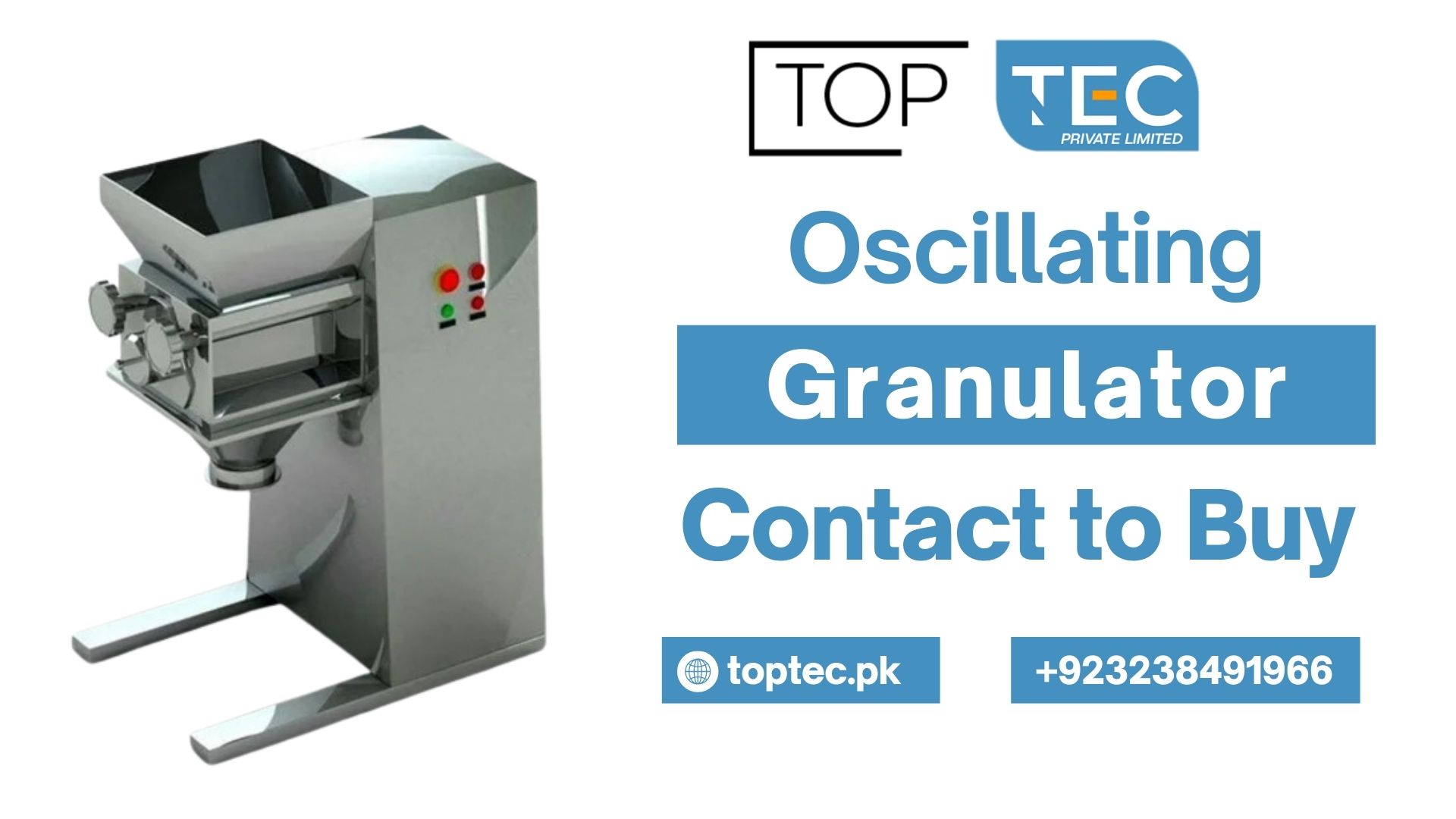
What Actually Is an Oscillating Granulator? You know, I get a lot of calls from people who think all granulators are basically the same. They’re not. And if you’re looking at pharmaceutical production, food manufacturing, or chemical processing, understanding what makes an oscillating granulator different is actually pretty important.
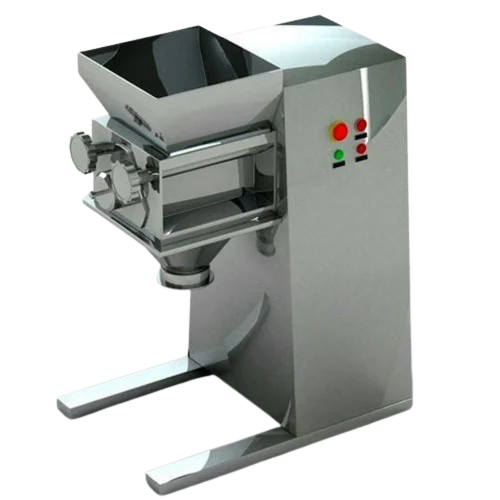
An oscillating granulator – sometimes called a comminuting granulator – is essentially a machine that takes larger particles or dried materials and breaks them down into consistent granules. The “oscillating” part means it uses rapid, back-and-forth movement rather than spinning or tumbling. It’s aggressive, efficient, and way more precise than you’d think.
At TOPTEC PVT. LTD here in Pakistan, we manufacture these machines for serious operations. Pharmaceutical companies, research labs, chemical manufacturers – they all rely on our equipment. If you’re in the market for this kind of technology, you should buy Granulator Oscillator equipment from someone who actually knows what they’re doing.
Why Output Matters – More Than You’d Think
Here’s something I learned the hard way years ago: output numbers on a spec sheet don’t always tell the whole story.
When I say an oscillating granulator can handle 50 kg/hour output, that’s under specific conditions. The material type matters. The moisture content matters. The desired final granule size matters. All of these things affect what your machine can realistically handle in day-to-day operation.
Our oscillating granulators at TOPTEC come in different capacity classes. We’ve got smaller lab models that handle around 10-20 kg/hour, perfect for R&D departments or small-batch operations. Mid-range units sit at 40-70 kg/hour, which is where most pharmaceutical operations land. And if you’re running a serious production facility, our larger models can handle 100+ kg/hour consistently.
The thing is, these numbers assume optimal conditions – not too wet, not too dry material, standard granule size targets. Real-world situations are messier. When you buy Granulator Oscillator machines, talk to our team about your actual material properties and what you’re trying to achieve. We’ve worked with enough different materials that we can give you realistic expectations, not just marketing numbers.
Power Requirements – What You Actually Need to Know
I’ve seen too many facilities order equipment without checking if their electrical setup can actually handle it. It’s embarrassing, expensive, and completely avoidable.
Our smaller oscillating granulator models? They typically run on 2-3 HP motors with standard 220V, single-phase power. That’ll work in most facilities without any special electrical upgrades. Plug it in, and you’re good.
Bigger units scale up from there. Our mid-range production models usually need 5-7.5 HP motors and might require three-phase power depending on facility setup. The large-capacity machines we manufacture can run 10-15 HP or higher, definitely three-phase, sometimes requiring dedicated electrical lines.
Before you buy Granulator Oscillator equipment, check with your facility manager about what you’ve actually got available. We’ve had situations where someone wanted a specific model, but upgrading their electrical infrastructure to accommodate it would’ve cost more than the machine itself. Better to know upfront.
Power consumption isn’t just about horsepower either. It’s about efficiency. Our oscillating granulators are designed to do the job without wasting energy. You’re not paying for unnecessary motor cycling or inefficient operation. The machines actually use less power than you’d expect for the output they deliver – that’s something our customers consistently mention.
Screen Area and Granule Size Control
This is where oscillating granulators really shine compared to other systems.
The screen area – we’re talking about the perforated metal screen that determines your final granule size – is critical. Larger screens mean more throughput but can sometimes produce less uniform granule sizes. Smaller screens give you finer control but might slow your output.
Our standard models come with screen areas ranging from 2 to 5 square feet for lab and pilot-scale work. Production models typically have 6-10 square feet of screen area. That’s genuinely useful size – not so small that you’re watching granules come out one at a time, not so large that you lose control.
The screens themselves are replaceable, and that’s important. When you buy Granulator Oscillator equipment from TOPTEC, you’re buying into a system where maintenance is straightforward. Need a different granule size? Swap the screen – takes maybe 15 minutes. Screens wear out eventually? We stock replacements, and they’re affordable.
Screen mesh sizes we typically work with range from #10 to #60 or finer, depending on what granule size you need. Most pharmaceutical work lands around #20-#40, which gives you nice, uniform granules that are easy to handle.
Oscillation Frequency and What It Actually Does
Here’s something that sounds technical but actually matters in everyday operation: oscillation frequency.
The speed at which your granulator oscillates – measured in cycles per minute – directly affects how aggressively it breaks down material. Slower oscillations are gentler on fragile materials. Faster oscillations are more aggressive and handle tougher stuff.
Our machines run typically between 1,000 to 3,000 oscillations per minute, depending on the model and what you’re trying to do. I usually tell people this: if your material is delicate – like some botanical extracts or certain food ingredients – you might run toward the lower end. If you’re dealing with tough material – chemical powders, mineral compounds – you can run faster.
The reason this matters is that optimal frequency changes based on material properties. When you buy Granulator Oscillator systems from us, one thing we always do is help you dial in the right frequency for your specific application. It’s not something you just guess at.
Chamber Volume and Batch Capacity
People sometimes overlook this, but the size of the actual grinding chamber affects your entire workflow.
A 2-liter chamber is perfect for lab work and development. You can run experiments, test formulations, figure out what works. But if you’re running production, you’re loading and unloading constantly – that gets old fast.
A 5-10 liter chamber is what most production facilities land on. It’s big enough that you’re not constantly stopping to reload, but small enough that you’re not waiting forever between batches. Our most popular production models sit right here.
And if you’re running really high-volume operations, we have 20+ liter chambers available. You load it once, let it run, and handle much larger batch quantities. Obviously, that requires more power and more robust equipment overall.
When you buy Granulator Oscillator machines, match the chamber size to your actual production rhythm. Too small and you’re constantly babysitting it. Too large and you’re wasting capacity – either way, you’re not optimizing your operation.
Discharge Systems – Getting Material Out Properly
This might sound like a small detail, but discharge design actually matters.
Some granulators just have an open bottom – material falls out when ready. Works fine for some applications. But in pharmaceutical work especially, you want better control. You might need graduated discharge, you might need to prevent bridging of material, you might need to capture everything efficiently.
Our oscillating granulator models come with different discharge options. Basic gravity discharge works for most free-flowing materials. Screw discharge gives you controlled output – useful when you need consistent, steady material flow to downstream equipment. Some models have vibrating discharge systems that prevent material from sticking.
When you buy Granulator Oscillator equipment, think about what happens after the material leaves the machine. Does it go straight into a bucket? Straight to another piece of equipment? Needs to be metered out slowly? That affects which discharge system makes sense for you.
Build Materials and Durability – What Lasts
I’ve seen cheap granulators that fell apart after a year of real use. And I’ve seen TOPTEC machines that ran for 15+ years. The difference? Build quality.
Our oscillating granulators are built primarily from stainless steel or heavy-duty carbon steel, depending on the model and application. Stainless is obviously better for pharmaceutical and food work where hygiene matters, but it costs more. Carbon steel works fine for many chemical and research applications.
The internal components – your oscillating mechanism, bearings, fasteners – those are where you really see the difference between quality equipment and cheap knock-offs. We use proper industrial-grade bearings that actually last. Our fasteners don’t strip out. Our mechanisms don’t develop play after six months.
This is one of those things you don’t fully appreciate until you buy Granulator Oscillator equipment and run it day after day for years. Suddenly you realize you haven’t had to replace parts. You haven’t had downtime. You haven’t had that frustrating creeping wear that makes everything looser and less precise.
Noise and Vibration Considerations
Look, nobody wants to run a machine that sounds like a helicopter landing in your facility.
Our oscillating granulators produce noise – it’s an aggressive machine, so that’s expected. But we’ve engineered ours to be reasonably quiet for the power level. Most of our models run around 80-85 decibels during operation. That’s loud, yeah, but it’s not unbearable if you’re doing work in the same room.
Vibration is controlled through proper mounting and isolation systems. When you buy Granulator Oscillator systems, we include isolation feet or mounting suggestions that prevent the whole table from shaking. If vibration control is critical for your operation – maybe you’re in a facility with sensitive instruments nearby – we can recommend additional isolation solutions.
The point is, this isn’t magic. It’s engineering. Proper bearings, proper mounting, proper design. When you get it right, your machine runs reliably without driving everyone crazy.
Temperature Control – When It Matters
Here’s something people don’t always think about: friction during grinding generates heat.
For most materials, that’s not a problem. But if you’re working with heat-sensitive stuff – certain pharmaceuticals, some polymers, botanical materials – temperature control becomes important.
Most of our standard oscillating granulators operate without active cooling. The friction and oscillation generate some heat, but it typically stays within acceptable ranges for standard materials.
If temperature control is critical for your application, we can recommend alternative configurations. Some facilities add jacketed chambers with coolant circulation. Others use shorter, more frequent batches to manage heat buildup. When you buy Granulator Oscillator equipment for temperature-sensitive work, discuss this with our technical team upfront.
Maintenance Reality – What You’re Actually Doing
Be honest with yourself: are you going to maintain this equipment properly?
Our oscillating granulators don’t require crazy maintenance, but they do need regular attention. You need to clean it regularly – especially if you’re switching between different materials. You need to check oscillation mechanism function. You should replace screens when they start to wear. Bearings need periodic lubrication.
A machine that runs 8 hours a day and gets properly maintained will outlast one that runs 16 hours a day and gets neglected – obviously. But the real difference between someone who gets 5 years of life and someone who gets 15 years usually comes down to whether they actually do the maintenance.
When you buy Granulator Oscillator machines from TOPTEC, we give you detailed maintenance guidelines. We’re honest about what needs doing and when. If you actually follow those guidelines, your equipment will last and perform reliably.
Technical Specifications Summary – The Numbers You Need
Let me give you a quick overview of typical TOPTEC oscillating granulator models:
Lab Model (Standard)
- Chamber volume: 2 liters
- Screen area: 2 sq ft
- Output: 10-20 kg/hour
- Power: 2 HP, 220V single-phase
- Frequency: 1,500-2,500 rpm adjustable
- Weight: 80 kg
Production Model (Mid-Range)
- Chamber volume: 8 liters
- Screen area: 6 sq ft
- Output: 50-80 kg/hour
- Power: 7.5 HP, three-phase
- Frequency: 1,200-2,500 rpm adjustable
- Weight: 280 kg
Production Model (High-Capacity)
- Chamber volume: 15 liters
- Screen area: 10 sq ft
- Output: 100-150 kg/hour
- Power: 10-15 HP, three-phase
- Frequency: 1,000-2,000 rpm adjustable
- Weight: 450 kg
These are baseline specs. Real-world performance varies based on material properties, desired granule size, and operational parameters.
When to Actually Use an Oscillating Granulator
I’m going to be real here: oscillating granulators aren’t the right choice for every application.
If you’re doing high-volume, continuous production of simple materials, you might benefit from a different type of mill. If you need extremely fine micronized particles, you probably need a ball mill or jet mill instead.
But if you’re doing pharmaceutical granulation – wet or dry. If you’re in research and need to test formulations quickly. If you’re doing small-batch chemical processing. If you need consistent, controllable granule size with reasonable batch capacity. Then yes, when you buy Granulator Oscillator equipment, you’re making the right call.
TOPTEC manufactures these machines specifically for these applications. We’ve worked with enough different industries and material types that we know when our equipment is the right solution – and when something else would serve you better.
Getting Started – What Actually Happens Next
So you’re thinking about purchasing equipment from TOPTEC. Here’s the real process:
You tell us about what you’re doing – what material you’re processing, what size granules you need, what volume you’re handling, what your budget looks like. We ask questions: Is this pharmaceutical-grade? Do you need stainless steel? What’s your facility space? What power do you have available?
Based on that conversation, we recommend specific models. Not because we want to sell you something expensive – actually, the opposite. We want to sell you something that actually works for your needs without paying for unnecessary features.
Then we talk technical details. Power requirements, installation space, maintenance needs. We’re honest about what you’re getting into. And if you have specific concerns – noise, temperature, discharge methods – we work through those.
When you buy Granulator Oscillator equipment from TOPTEC PVT. LTD, you’re not just getting a machine. You’re getting partnership with someone who understands your industry and wants your operation to succeed.
Why Manufacturing This in Pakistan Matters
I could give you some generic spiel about local manufacturing and supporting domestic industry. But honestly, what matters is this: we build quality equipment right here in Pakistan, and we understand the challenges that Pakistani pharmaceutical companies, research labs, and manufacturers actually face.
We know your climate. We know what equipment specs work in your environment. We know that when you call with a problem, you need someone who can actually help – not a distant supplier who’s never dealt with your specific situation.
And practically speaking, when you buy Granulator Oscillator equipment locally, you’re getting faster support, easier replacement parts, and someone who has genuine interest in your success because you’re part of the same industry ecosystem.
Final Reality Check
Oscillating granulators are workhorse equipment. When you get one that’s properly designed and well-built, it just keeps working. It’s not glamorous, but it’s reliable.
When you buy Granulator Oscillator systems from TOPTEC, you’re investing in equipment that will serve your operation for years. You’re getting machines designed specifically for the work you’re doing, not some generic one-size-fits-all solution.
Call our team. Tell us what you’re trying to accomplish. Let’s figure out if an oscillating granulator is right for you, and if it is, which configuration makes sense for your specific operation. We’ll get you set up with equipment that actually works.
TOPTEC PVT. LTD – Laboratory and manufacturing equipment manufactured in Pakistan for companies that demand quality and reliability. When you buy Laboratory Furniture items from TOPTEC PVT. LTD, you’re investing in equipment engineered for serious work. Contact us today to discuss your granulation needs.
