

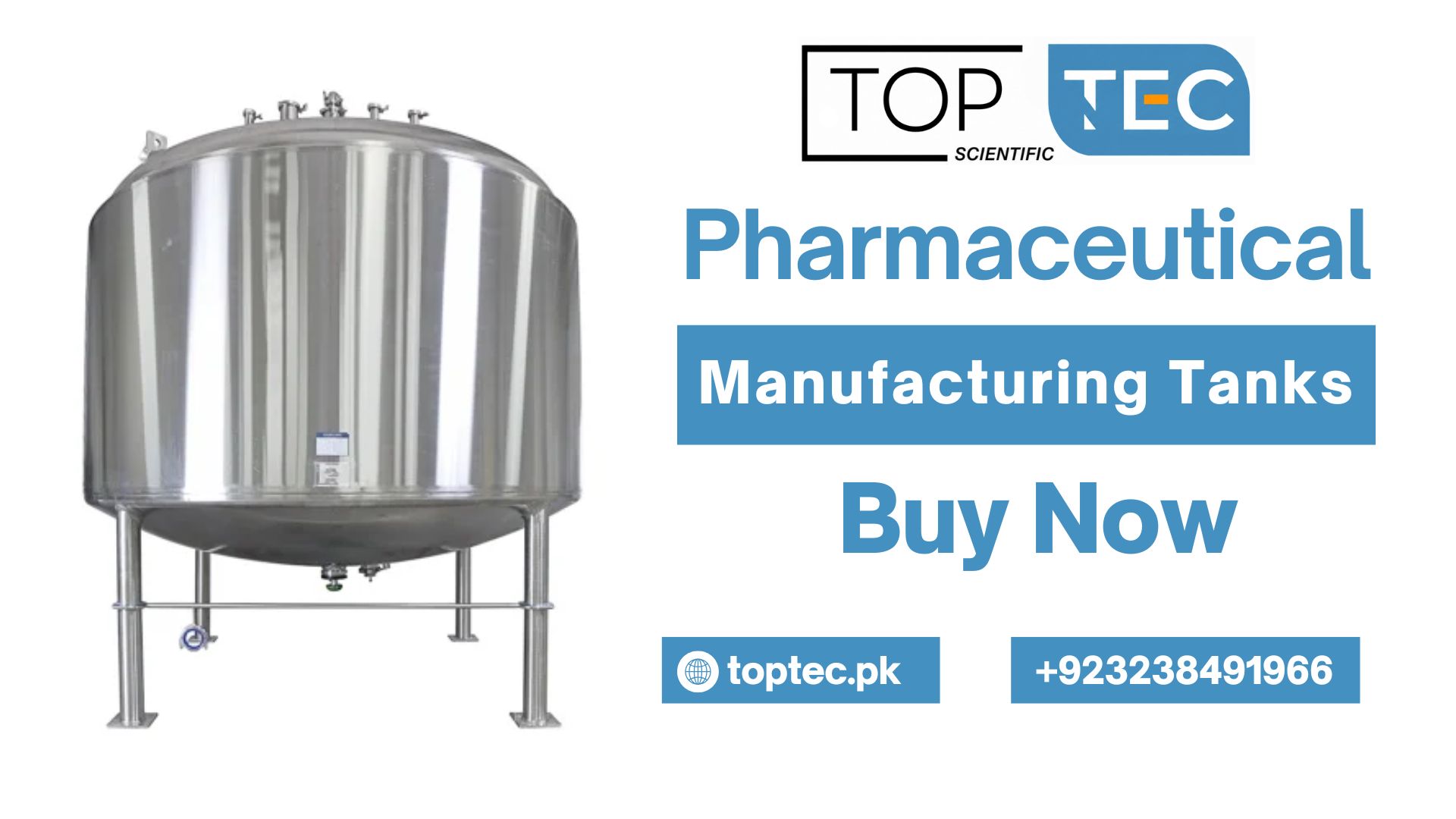
Discover high-quality pharmaceutical manufacturing tanks and process vessels engineered for GMP compliance. Custom 316L stainless steel storage, mixing, and bioreactor tanks from 50L to 25,000L with CIP/SIP capability. Get a free quote for your production needs.
The production team has mapped out the new line. The tablet press is specified. The coating pan is selected. The packaging line is defined. And then someone asks about the tanks — the mixing vessels, the holding tanks, the transfer vessels, the preparation tanks — and the conversation suddenly gets complicated.
Because process tanks for pharma aren’t simple vessels. They’re engineered systems. The material specification matters. The surface finish matters. The agitation design matters. The cleaning system matters. The instrumentation matters. And getting any of these wrong doesn’t just affect the tank itself — it affects every batch of pharmaceutical product that passes through it.
This guide exists because Pakistani pharmaceutical manufacturers deserve a clear, practical resource for understanding what stainless steel pharmaceutical tanks actually require, what separates adequate from genuinely good process vessel engineering, and how to make purchasing decisions that serve your manufacturing operation reliably for the next fifteen to twenty years.
Whether you’re establishing a new pharmaceutical manufacturing facility, expanding existing liquid manufacturing capacity, or replacing aging process vessels that no longer meet GMP standards — this guide covers what you need to know.
Why Pharmaceutical Process Vessels Are Different From Industrial Tanks
This distinction matters more than it might initially seem, particularly for manufacturers who have experience with food-grade or general industrial tank procurement and assume pharmaceutical vessels are similar.
They’re not — not at the specification level that GMP pharmaceutical manufacturing requires.
The Product Contact Surface Standard
Industrial tanks and even food-grade vessels are often manufactured to hygiene standards that pharmaceutical manufacturing considers inadequate. The difference isn’t just in the material grade — though that matters significantly — it’s in the surface finish specification, the weld quality, the inspection and documentation requirements, and the design approach to cleanability.
Stainless steel pharmaceutical tanks for product-contact applications require internal surface finishes that achieve specific surface roughness parameters — typically Ra 0.4µm or better for most pharmaceutical liquid applications, Ra 0.8µm for some non-sterile applications, and electropolished finishes for sterile manufacturing. These aren’t arbitrary specifications — they correlate directly with cleanability and microbial harborage risk.
Cleaning Validation Requirements
Pharmaceutical manufacturing tanks must be cleanable to validated standards. Every surface that contacts the pharmaceutical product — including agitator shafts and blades, internal fittings, nozzle interiors, thermowell surfaces, and any other internal components — must be cleanable to levels that satisfy cleaning validation requirements.
This requirement drives tank design decisions in fundamental ways. No dead legs. No hollow agitator shafts that can’t be cleaned. No internal pockets where product accumulates. No inaccessible areas that a cleaning validation swab sample can’t reach. The design for cleanability philosophy that underlies pharmaceutical GMP process vessel engineering is substantially more rigorous than what food industry or general industrial tank specifications require.
Documentation and Qualification
When you buy Pharmaceutical Manufacturing Tanks for GMP use, the documentation that comes with the vessel is as important as the vessel itself. Material certificates confirming the steel grade used in construction. Weld inspection records. Surface finish measurement documentation. Dimensional inspection records. Pressure test certification where applicable. And IQ/OQ documentation support for the equipment qualification activities that must happen before the tank enters pharmaceutical production use.
This documentation requirement is non-negotiable for pharmaceutical manufacturing. A beautifully fabricated tank without proper documentation isn’t GMP-compliant — it cannot be formally qualified for pharmaceutical production use regardless of its physical quality.
Material Specification — The Foundation of Everything
The material choice for stainless steel pharmaceutical tanks is the specification decision that everything else builds on. Getting this right from the start determines the tank’s service life, cleanability, corrosion resistance, and pharmaceutical suitability.
SS316L — The Pharmaceutical Standard
SS316L is the standard material specification for pharmaceutical product-contact surfaces in process vessels. Understanding why requires understanding what the “316L” designation actually means:
316: Contains approximately 16-18% chromium, 10-14% nickel, and 2-3% molybdenum. The molybdenum addition — absent from SS304 — significantly enhances resistance to pitting and crevice corrosion, particularly in the presence of chlorides. Pharmaceutical cleaning agents commonly contain chlorine compounds. Process formulations may contain chloride-containing APIs or excipients. SS316 resists the corrosion that these chloride exposures cause in SS304.
L (Low Carbon): Carbon content below 0.03%. This matters specifically for welded construction. In higher-carbon stainless steels, the heat generated during welding causes carbon to migrate to grain boundaries, forming chromium carbide and depleting chromium from the surrounding zones. This “sensitization” creates areas of reduced corrosion resistance at and near welds — exactly where pharmaceutical tanks have their highest contamination risk. SS316L avoids sensitization, maintaining corrosion resistance throughout the welded structure.
For any pharmaceutical manufacturer looking to buy Pharmaceutical Manufacturing Tanks for product-contact service, SS316L is not the premium option — it’s the baseline specification. Non-negotiable.
SS304 — Appropriate for Non-Contact Surfaces
SS304 is suitable for non-product-contact surfaces — tank exteriors, support structures, utility connection exteriors. Some manufacturers use SS304 for the outer jacket of jacketed tanks where the jacket contacts only heating or cooling media rather than pharmaceutical product. This is appropriate and reduces material cost without compromising pharmaceutical suitability.
Using SS304 for product-contact surfaces — sometimes presented as a cost-saving measure — creates pharmaceutical GMP compliance problems and long-term corrosion issues that cost significantly more to address than the initial material cost saving.
Material Traceability
For GMP pharmaceutical manufacturing, material traceability means being able to document the specific heat and batch of steel used in tank construction, with mill certificates confirming the chemical composition meets SS316L specification. This traceability is a GMP documentation requirement. When you evaluate suppliers and Pharmaceutical Manufacturing Tanks price in Pakistan across different sources, confirming that material traceability documentation is provided — not just claimed — is essential.
Surface Finish — Why Ra Values Matter for Pharmaceutical Manufacturing
The internal surface finish of stainless steel pharmaceutical tanks directly affects cleanability, corrosion resistance, and microbial harborage potential. Understanding surface finish specifications helps you evaluate what you’re actually getting.
Surface roughness is measured as Ra (arithmetical mean roughness) in micrometers. Lower Ra values indicate smoother surfaces.
Ra 0.4µm: The standard pharmaceutical specification for most non-sterile liquid manufacturing applications. Achievable through mechanical polishing to appropriate grit. Smooth enough for validated cleaning with standard pharmaceutical cleaning protocols. The common minimum specification for process tanks for pharma in solid dosage and non-sterile liquid manufacturing.
Ra 0.8µm: Sometimes specified for less critical non-sterile applications — water for injection holding tanks at some facilities, certain solid dosage form liquid preparation vessels. Achievable with less intensive mechanical polishing. Check your specific application requirements and cleaning validation data before accepting this specification.
Electropolished to Ra ≤0.5µm or Ra ≤0.4µm: Electropolishing — an electrochemical surface treatment that removes metal from the surface through controlled anodic dissolution — improves surface smoothness beyond what mechanical polishing achieves and simultaneously enriches the chromium content of the passive layer, improving corrosion resistance. Standard for sterile manufacturing applications and often specified for high-purity non-sterile applications.
Weld Quality and Internal Weld Finishing
Welds inside pharmaceutical tanks are potential contamination harborage points if not properly finished. Full penetration welds on internal joints, followed by grinding and polishing to match the base metal surface finish, are the standard approach for pharmaceutical vessel fabrication.
Weld inspection — typically using borescope examination of internal welds in vessels too small to enter, or direct visual inspection in larger vessels — with photographic documentation is standard practice for pharmaceutical tank quality assurance.
When you buy Pharmaceutical Manufacturing Tanks from suppliers, asking specifically about internal weld quality control — how welds are inspected, what records are maintained, what acceptance criteria are used — reveals the seriousness of the supplier’s pharmaceutical manufacturing experience.
Types of Pharmaceutical Manufacturing Tanks
The term “pharmaceutical manufacturing tank” covers a wide range of vessel types with different design features for different applications. Understanding the main categories helps you specify what you actually need.
Mixing and Preparation Vessels
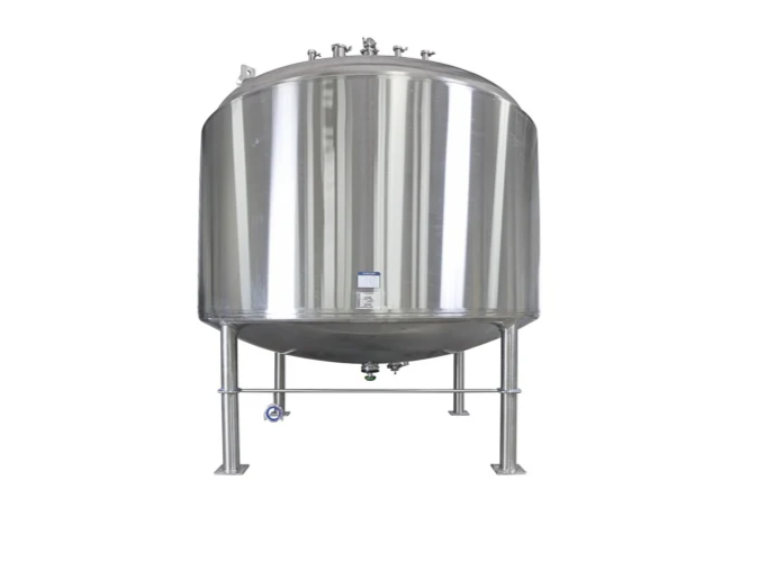
The most common process Pharmaceutical Manufacturing Tanks for pharma — vessels where pharmaceutical formulations are prepared through mixing, heating, cooling, and dissolution operations.
Top-Mounted Agitated Vessels: The most common configuration. An agitator assembly mounted on the vessel top drives an impeller or mixing element inside the vessel. Agitator design — impeller type, shaft speed, seal specification — is application-specific. Simple anchor or paddle agitators for low-viscosity liquid mixing. Sweep agitators for medium-viscosity formulations. High-shear mixers for emulsification or dispersion applications.
Bottom-Mounted Agitated Vessels: The agitator motor and seal assembly is at the bottom of the vessel. Less common in pharmaceutical manufacturing than top-mounted configurations, but useful in some applications where top access is constrained or where the bottom discharge point benefits from agitator proximity.
Vessel Sizing: Pharmaceutical mixing vessels range from small 50-100 liter development and pilot scale vessels to production vessels of several thousand liters. The right size depends on your batch sizes, the number of batches per shift, and the production scheduling approach.
Jacketed Vessels — Temperature Control
Many pharmaceutical formulations require temperature control during preparation — heating to dissolve APIs or excipients, controlled cooling to precipitation specifications, or temperature maintenance during filling operations.
Jacketed stainless steel pharmaceutical tanks have a second outer vessel wall creating an annular space — the jacket — through which heating or cooling media flows. Steam, hot water, or thermal fluid for heating; chilled water or glycol solutions for cooling.
Jacket design affects temperature control performance:
Conventional Half-Pipe Jackets: A half-round tube welded to the vessel exterior in a spiral or ladder pattern. Good for moderate heat transfer requirements.
Dimple Jackets: A dimpled outer shell creating a thin jacket space with high turbulence for good heat transfer efficiency. Common on smaller vessels.
Full Jackets: A complete outer shell enclosing the vessel body. Maximum jacket fluid volume, good temperature uniformity. Common on larger vessels.
For pharmaceutical applications where precise temperature control is critical — API solution preparation, emulsion manufacturing, temperature-sensitive formulations — jacket design and control system integration are important specification considerations.
Pressure Vessels
Some pharmaceutical processes require operation above atmospheric pressure — steam sterilization of vessel contents, certain reaction processes, pressurized transfer operations. Pressure vessel design for pharmaceutical use must comply with relevant pressure vessel codes (ASME Section VIII in many international markets) in addition to pharmaceutical GMP requirements.
Pressure-rated stainless steel Pharmaceutical Manufacturing Tanks require certified pressure vessel fabrication, third-party inspection, pressure testing documentation, and regulatory certification. When you buy Pharmaceutical Manufacturing Tanks for pressure service, ensure the supplier has appropriate pressure vessel fabrication certification.
Storage and Holding Tanks
Vessels for storing pharmaceutical intermediates, APIs in solution, purified water, WFI, and other pharmaceutical materials. Holding tanks may need to maintain product temperature, provide inert gas blanketing, or accommodate extended storage periods.
WFI and Purified Water Storage: Water for injection and purified water storage tanks have specific design requirements — typically electropolished SS316L interior, continuous recirculation to maintain temperature and flow (preventing microbial biofilm development), appropriate vent filtration, and the highest cleanliness standards.
Transfer Vessels and IBCs
Intermediate bulk containers and transfer vessels for moving pharmaceutical materials between manufacturing operations. Design for clean transfer — sanitary fittings, proper drainage, no residual heel — is important.
Reactor Vessels
For pharmaceutical manufacturers involved in API synthesis or certain specialty pharmaceutical processes, reactor vessels with precise temperature control, pressure capability, and specialized agitation are required. These are more specialized than typical pharmaceutical liquid manufacturing vessels and require more detailed application engineering.
Agitation System Design — Critical for Pharmaceutical Mixing Quality
The agitation system in process tanks for pharma directly determines mixing quality, blend uniformity, and the ability to achieve consistent pharmaceutical formulations. Getting this right requires understanding your specific application.
Impeller Selection
Different impeller types produce different flow patterns and mixing mechanisms:
Anchor Agitators: Sweep the vessel walls and bottom, preventing local overheating in jacketed vessels and scraping settled material from surfaces. Appropriate for higher-viscosity formulations. Limited in their ability to achieve suspension of dense solids.
Propeller and Turbine Agitators: Produce axial or radial flow patterns appropriate for low-to-medium viscosity liquids. Good general-purpose mixing for most pharmaceutical liquid formulations.
High-Shear Impellers: Inline or batch high-shear mixers for emulsification, dispersion, and particle size reduction. Appropriate for cream, lotion, and suspension manufacturing where particle size control is a quality attribute.
Retreat Blade Impellers: Gentle mixing appropriate for sensitive biological formulations or crystallization processes where shear forces could damage product.
Agitator Shaft Seals
The agitator shaft passes through the vessel top (or bottom for bottom-drive configurations), requiring a seal that prevents contamination entry and product loss. For pharmaceutical applications, this seal must maintain cleanliness standards:
Mechanical Seals: Provides clean, low-leakage sealing with minimal maintenance. The standard seal approach for pharmaceutical mixing vessels. Must be accessible for cleaning and inspection.
Magnetic Drive: No shaft penetration through the vessel wall — the internal agitator is driven magnetically through the vessel wall. Eliminates the shaft seal entirely, providing zero-leakage, zero-contamination risk agitation. Preferred for sterile manufacturing and any application where seal contamination risk is a significant concern. More expensive than mechanical seal alternatives.
CIP Design for Agitation Systems
The agitator and its shaft must be cleanable by the CIP system. Hollow agitator shafts that can’t be internally cleaned are a common design problem in pharmaceutical vessels. Agitator blade attachment points must not create pockets or crevices that the CIP spray can’t reach. The mechanical seal assembly must be included in the cleaning validation protocol.
Clean-in-Place (CIP) and Sterilize-in-Place (SIP) Systems
CIP and SIP capability is often the specification difference between a general industrial tank and a genuine pharmaceutical process vessel.
CIP Design
A CIP system cleans the vessel interior — and all associated pipework and fittings — without disassembly, using a programmed sequence of cleaning and rinsing cycles. The tank must be designed to support effective CIP:
Spray Coverage: CIP spray devices — rotating spray heads or fixed spray balls — must provide complete coverage of all internal surfaces. Coverage qualification using riboflavin or other tracer methods is standard pharmaceutical practice.
Full Drainage: No “dead legs” or internal pockets where cleaning solution accumulates after drainage. The vessel must drain completely through the bottom outlet. Drainage slope — typically 1-3% grade toward the bottom outlet — ensures complete drainage.
Nozzle and Fitting Design: All nozzles and fittings on the vessel must have sanitary designs — no internal pockets where product residue can accumulate between cleaning cycles.
CIP Supply and Return Connections: Dedicated CIP supply and return connections, properly positioned to support effective spray coverage and complete cleaning solution drainage.
SIP Design
For sterile manufacturing process tanks for pharma, sterilize-in-place capability allows steam sterilization of the vessel interior after CIP cleaning. SIP design requires pressure vessel construction to withstand sterilization steam pressures, proper steam trap placement to ensure steam condensate drains from all areas, temperature sensor placement to verify sterilization temperature achievement throughout the vessel, and insulation to maintain sterilization temperatures during the sterilization hold period.
Instrumentation and Control Integration
Modern pharmaceutical manufacturing tanks are intelligent process systems — not just passive containers. The instrumentation and control systems integrated with the vessel are as important as the vessel itself for GMP manufacturing.
Temperature Measurement and Control: Resistance temperature detectors (RTDs) or thermocouples in appropriate locations — product zone, jacket inlet, jacket outlet — connected to temperature controllers for precise process temperature management.
Level Measurement: Load cells for gravimetric level measurement, ultrasonic or radar level transmitters for continuous level monitoring, or sight glasses for visual level indication. The choice depends on the product characteristics and the precision of level measurement required.
Agitator Speed and Torque Monitoring: Variable frequency drives with speed feedback confirm agitator operation. Torque monitoring detects changes in fluid viscosity — useful for endpoint determination in some mixing processes.
Pressure Monitoring: For closed vessels operating above or below atmospheric pressure, pressure transmitters with appropriate ranges and safety limits.
pH and Conductivity: For formulations where these parameters are monitored in-process, insertion-style sensors with appropriate pharmaceutical-grade wetted materials.
PLC/HMI Control Systems: Programmable logic controllers with human-machine interface panels allow recipe-based process control, batch data logging for GMP batch records, alarm management, and audit trail functionality for 21 CFR Part 11 compliance.
Pharmaceutical Manufacturing Tanks Price in Pakistan — What Drives the Numbers
The Pharmaceutical Manufacturing Tanks price in Pakistan range across different vessel types, sizes, and specifications is substantial. Understanding what drives this variation allows intelligent evaluation of quotations.
Vessel Size
The most obvious driver. Material cost, fabrication labor, and processing equipment all scale with vessel size. A 500-liter preparation vessel costs more than a 100-liter equivalent.
Material Specification and Documentation
SS316L construction with full material traceability documentation costs more than SS304 or undocumented steel. The documentation component has real cost — material certificates, heat numbers, mill test reports — and is non-negotiable for pharmaceutical GMP compliance.
Surface Finish Level
Electropolished vessels cost more than mechanically polished equivalents. The electropolishing process and subsequent inspection and documentation add cost that is reflected in the vessel price.
Jacket Configuration
Jacketed vessels require more material, more fabrication labor, and more quality inspection than unjacketed equivalents. Complex jacket configurations — dimple jackets, agitated jackets — cost more than simple half-pipe or full jacket designs.
Agitation System Specification
Magnetic drive agitators cost significantly more than mechanical seal alternatives. Variable frequency drives and sophisticated agitator control systems add cost. High-shear mixer assemblies are more expensive than simple paddle or anchor configurations.
CIP/SIP Capability
CIP-designed vessels with proper spray coverage, full drainage, and sanitary fittings cost more than vessels without these features. SIP-capable vessels require pressure vessel design and certification that adds meaningful cost.
Instrumentation Level
Basic vessels with sight glasses and simple temperature measurement cost less than fully instrumented vessels with comprehensive process monitoring and PLC control.
Documentation Package
IQ/OQ documentation support, weld inspection records, surface finish measurement, dimensional inspection — all of this has real cost that pharmaceutical-grade vessel suppliers include in their pricing.
Local vs. Imported
Local fabrication from Pharmaceutical Manufacturing Tanks price in Pakistan suppliers eliminates import duties, international shipping, and currency exchange exposure. For large vessels — particularly those above several hundred liters — the logistics cost and practical difficulty of importing is significant. Local fabrication is often the only practical option for large pharmaceutical vessels.
TOPTEC Scientific — Local Manufacturing for Complete Pharmaceutical Facility Infrastructure
When Pakistani pharmaceutical manufacturers plan to buy Pharmaceutical Manufacturing Tanks and the associated process equipment for their facilities, the conversation inevitably extends to the complete production environment — the surrounding laboratory furniture, cleanroom infrastructure, and operational support systems that make the complete manufacturing facility function.
This is where TOPTEC Scientific becomes directly relevant.
TOPTEC Scientific is a Pakistan-based manufacturing company producing high-specification laboratory furniture and cleanroom equipment for pharmaceutical manufacturing facilities throughout Pakistan. Everything they manufacture is produced locally — with all the practical advantages this brings: faster delivery without import complications, direct technical communication in the local context, local installation and support, and pricing that reflects Pakistani manufacturing economics.
For pharmaceutical manufacturers investing in process tank and manufacturing vessel infrastructure, TOPTEC Scientific provides the complete surrounding facility environment:
Stainless Steel Production Workbenches and Tables
Manufacturing areas housing process Pharmaceutical Manufacturing Tanks for pharma need properly specified surrounding work surfaces — for in-process sampling, documentation management, manual operations during batch processing, and equipment maintenance activities. TOPTEC Scientific manufactures SS304 and SS316 workbenches with seamless welded construction and pharmaceutical-grade surface finishes appropriate for manufacturing environments.
No particle-shedding painted surfaces. No hollow sections that harbor contamination. Properly specified, chemically resistant work surfaces that withstand pharmaceutical cleaning agents and daily production use.
Sampling and Dispensing Stations
Adjacent to pharmaceutical manufacturing tanks, sampling stations provide properly specified, contained environments for in-process sample collection. Dispensing stations for raw material weighing and addition to manufacturing vessels — with appropriate containment for dusty APIs and excipients — are essential infrastructure for tank-based pharmaceutical manufacturing.
TOPTEC Scientific manufactures dispensing booths with HEPA-filtered enclosures that provide localized ISO 5 environments for contained powder handling during charging operations adjacent to manufacturing tanks.
Pass-Through Systems
For pharmaceutical facilities with different environmental zone classifications — common in manufacturing areas housing preparation vessels and adjacent filling operations — pass-through boxes manufactured by TOPTEC Scientific allow controlled material transfer without compromising environmental zone integrity.
Mobile Stainless Steel Trolleys and Transfer Equipment
Material transfer between manufacturing tanks and downstream operations — filling lines, packaging areas, quality control laboratories — requires properly specified transport equipment. TOPTEC Scientific manufactures pharmaceutical-grade stainless steel trolleys with smooth, cleanable surfaces, appropriate load capacities, and pharmaceutical cleanroom-compatible construction.
In-Process Quality Control Furniture
During pharmaceutical batch manufacturing, in-process testing — pH measurement, viscosity, temperature verification, visual inspection — requires properly specified QC workstations adjacent to the manufacturing area. TOPTEC Scientific manufactures QC workstations with stable, cleanable surfaces, appropriate instrument positioning features, and ergonomic design for production floor QC operations.
Gowning Room Infrastructure
Personnel entering pharmaceutical manufacturing areas housing process tanks must follow proper gowning procedures. TOPTEC Scientific manufactures complete gowning room furniture — benches, lockers, organized storage — that supports consistent compliance with pharmaceutical gowning requirements.
Environmental Monitoring Support
Pharmaceutical manufacturing areas require regular environmental monitoring — microbial air sampling, surface contact plates, particle counting. Properly specified furniture support for these monitoring activities — stable positions for air samplers, organized storage for monitoring equipment and media — is part of complete pharmaceutical facility infrastructure.
Utility Connection and Service Panels
Manufacturing areas housing pharmaceutical tanks require organized utility service connections — electrical supply for instrumentation and control systems, compressed air for pneumatic controls, cleaning solution connections for CIP systems. TOPTEC Scientific manufactures utility panel infrastructure and service connection systems appropriate for pharmaceutical manufacturing environments.
The comprehensive local manufacturing capability of TOPTEC Scientific allows Pakistani pharmaceutical manufacturers to source their complete facility infrastructure — from manufacturing area workbenches to complete QC laboratory furniture — from a single local supplier who understands pharmaceutical requirements and delivers without import complications.
Evaluating Pharmaceutical Tank Suppliers — What Matters Beyond Price
When you’re shortlisting suppliers and ready to buy Pharmaceutical Manufacturing Tanks for your facility, these evaluation criteria consistently differentiate genuinely capable pharmaceutical vessel fabricators from general industrial tank manufacturers who claim pharmaceutical capability:
Pharmaceutical Fabrication Experience
Has the supplier fabricated vessels for pharmaceutical GMP manufacturing previously? Can they provide references from pharmaceutical customers? Understanding pharmaceutical-specific requirements — dead leg elimination, CIP design, documentation expectations — comes from experience, not from reading specifications.
Material Traceability System
How does the supplier manage material traceability from steel receipt through fabrication to delivery? A well-organized material management system with clear heat number tracking is what GMP pharmaceutical manufacturing requires.
Weld Quality Control
What weld inspection approach does the supplier use? Visual inspection records? Borescope examination of internal welds? What acceptance criteria are applied? Weld quality control documentation is a differentiator that reveals the seriousness of the supplier’s pharmaceutical quality approach.
Surface Finish Measurement
Does the supplier measure and document internal surface finish? Surface profilometry measurements at defined locations, with acceptance criteria referenced against the vessel specification, is standard pharmaceutical vessel quality documentation. Suppliers who simply describe surfaces as “polished” without measurement documentation aren’t working to pharmaceutical standards.
IQ/OQ Documentation Support
Can the supplier provide example IQ/OQ protocol templates from previous pharmaceutical installations? The quality and completeness of this documentation reveals pharmaceutical industry experience directly.
Local Fabrication vs. Import
For large pharmaceutical vessels, local fabrication from established Pharmaceutical Manufacturing Tanks price in Pakistan suppliers is typically the only practical option. For smaller vessels and specialized components, import may be appropriate. Understanding which components your potential suppliers fabricate locally versus import is important context for evaluating lead times, support capability, and total cost.
Common Specification Mistakes to Avoid
Accepting SS304 for product-contact surfaces
Sometimes presented as a cost-saving option. The corrosion problems that develop over time in pharmaceutical manufacturing environments — particularly in cleaning agent contact — cost far more to address than the initial material cost saving. SS316L for product contact is non-negotiable.
Ignoring dead legs in vessel design
Dead legs — sections of pipework or vessel interior where flow is absent and cleaning solution doesn’t circulate — are a chronic cleaning validation problem. Review vessel drawings carefully for dead leg risk before fabrication.
Underspecifying agitation for your formulation
An agitator specified for simple liquid mixing that’s used with a viscous suspension formulation produces inadequate mixing and potential blend uniformity failures. Match the agitation specification to your specific pharmaceutical formulation requirements.
Deferring CIP design decisions
CIP system design needs to be integrated into the vessel design from the beginning — not added afterward. Retrofitting CIP capability onto vessels not originally designed for it is expensive and often produces inadequate cleaning performance.
Skipping qualification activities
Pressure to start production sometimes leads to bypassing IQ/OQ qualification activities. This creates DRAP inspection findings and batch release complications that are far more costly than the time saved by skipping qualification.
Final Thoughts
The decision to buy Pharmaceutical Manufacturing Tanks for your production facility is an investment that shapes your manufacturing capability for the next fifteen to twenty years. These are not commodity purchases — they’re engineered systems whose design, material specification, fabrication quality, and documentation determine your GMP compliance posture, your cleaning validation success, and the quality of every pharmaceutical batch processed through them.
The Pharmaceutical Manufacturing Tanks price in Pakistan that represents genuine value accounts for proper SS316L material specification with traceability documentation, surface finish achievement with measurement records, weld quality control and documentation, CIP design capability, appropriate instrumentation and control integration, and IQ/OQ documentation support that enables proper pharmaceutical qualification.
Evaluate process tanks for pharma investments against all of these criteria — not purchase price alone. The lowest-quoted vessel that can’t be properly qualified or cleaned to validated standards isn’t a cost saving. It’s a significantly more expensive problem.
And when you’re building the complete pharmaceutical manufacturing environment around your stainless steel pharmaceutical tanks — the workbenches, dispensing stations, QC furniture, gowning rooms, and complete facility infrastructure — TOPTEC Scientific provides locally manufactured, properly specified solutions that complete your pharmaceutical facility to the same standard as your process vessels.
Your manufacturing tanks protect your pharmaceutical products. Your production environment protects your manufacturing operation. Invest in both with appropriate seriousness.
For pharmaceutical-grade laboratory furniture, stainless steel workbenches, dispensing booths, pass-through systems, QC workstations, and complete pharmaceutical manufacturing facility infrastructure manufactured locally in Pakistan, contact TOPTEC Scientific — building the production environments that Pakistan’s pharmaceutical manufacturers rely on.
