

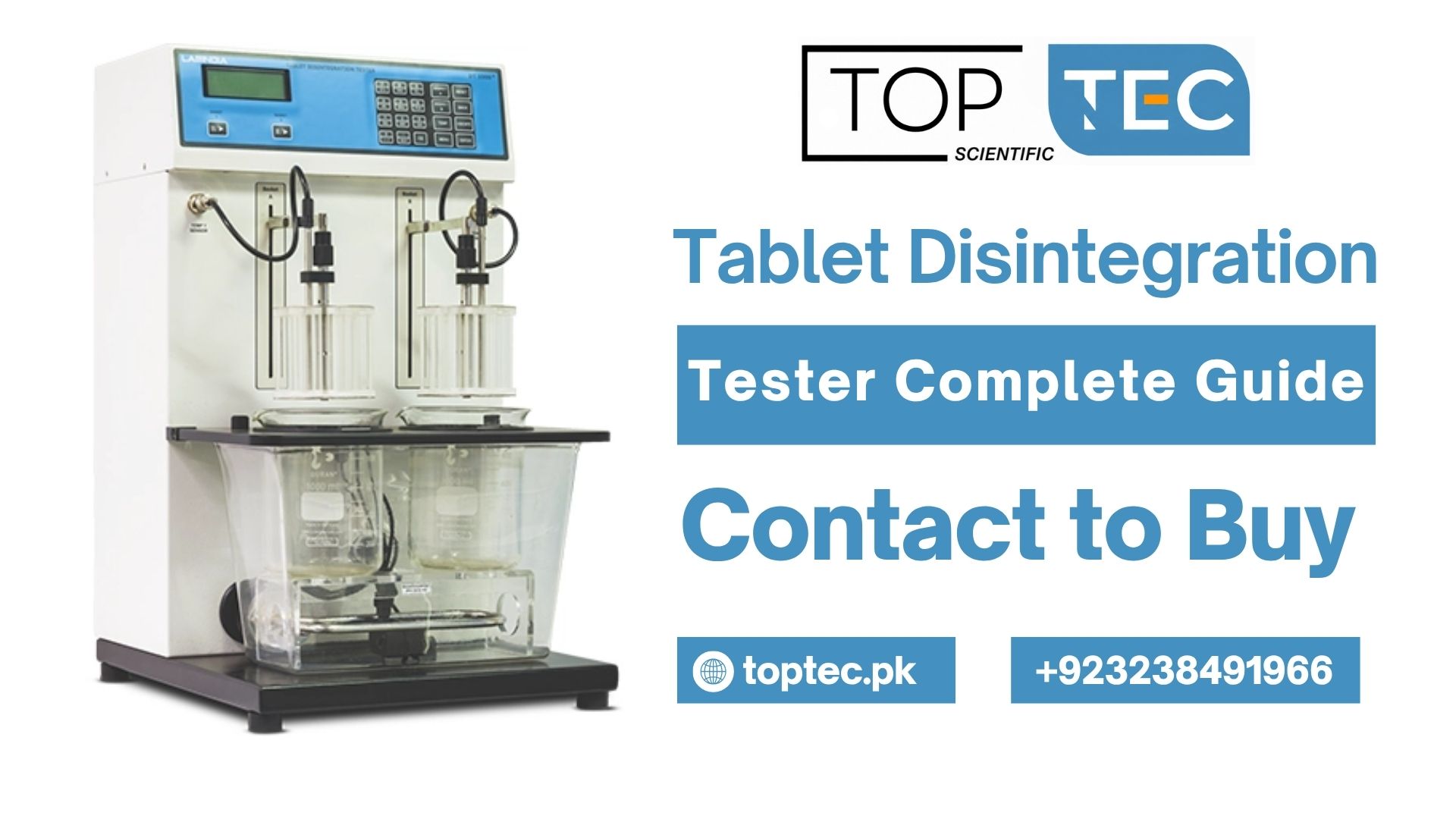
Buy tablet disintegration testers for your pharma QC lab. Compare manual, automatic, and dual-basket models from top manufacturers. Prices from $550 to $5,500+. Get a free quote and find the right tester for your needs.
You know, I’ve spent considerable time around pharmaceutical testing laboratories, and if there’s one piece of equipment that gets overlooked but is absolutely critical, it’s the tablet disintegration tester. Seriously. I’ve watched facilities struggle with quality control issues that could have been caught early with proper testing equipment. It’s frustrating to see, honestly.
The thing is, most people don’t think about disintegration testing until they absolutely have to. You’re making tablets, everything looks good, and then someone remembers—oh right, we need to test whether these things actually break down in the body. That’s when you realize you need proper equipment.
Let me walk you through what makes a good tablet disintegration tester, why the specific specifications matter, and how this relates to your entire quality control operation.
What Actually Is a Tablet Disintegration Tester and Why It Matters
Okay, so let me explain what’s actually happening when you test tablet disintegration. It’s simpler than you might think, but also more important than most people realize.
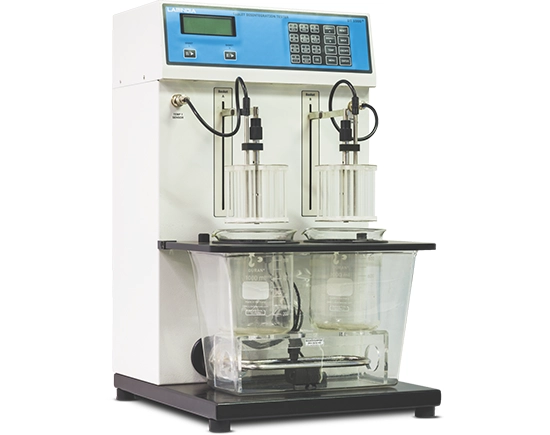
A tablet disintegration tester basically simulates what happens when a tablet enters your digestive system. It mimics the stomach environment—temperature, movement, the actual fluids you’d find there. The goal is straightforward: does your tablet break down into smaller particles within a specific timeframe?
This matters enormously because if your tablet doesn’t disintegrate properly, the active ingredients can’t dissolve and get absorbed. Your medication might just pass through someone’s system without doing anything. That’s obviously not acceptable from a therapeutic standpoint, and it’s also a regulatory nightmare.
When you buy tablet disintegration tester equipment, you’re investing in quality assurance. You’re making sure every single batch meets specifications before it reaches patients. That’s not optional—that’s fundamental to pharmaceutical manufacturing.
I’ve talked with quality control managers who admitted they were initially skeptical about investing in proper testing equipment. Once they had it though, they realized how many batches had slight variations they never would have caught otherwise. Some batches disintegrated in 15 minutes. Others took 25 minutes. Without testing, they wouldn’t have known, and consistency would be all over the place.
Understanding the Specific Specifications: 30 DPM, 55mm Stroke, and 37°C Bath
Here’s where it gets technical, but bear with me because this stuff matters for actual pharmaceutical production.
The 30 DPM specification: This means 30 dips per minute. That’s the frequency at which the basket containing your tablets moves up and down in the testing medium. Why this specific number? Because it’s been determined through decades of pharmaceutical research to closely mimic the movement of fluid in your stomach. Too slow and you’re not simulating realistic conditions. Too fast and you’re being unnecessarily aggressive. 30 DPM is the sweet spot that regulatory agencies have standardized on.
I remember talking with a lab technician who mentioned they’d tested equipment with different dip rates, and the results varied noticeably. Once they switched to proper 30 DPM equipment, their disintegration times became consistent and reproducible. That consistency is everything in pharmaceutical manufacturing.
The 55mm stroke: This refers to how far the basket moves up and down with each cycle. Think of it as the distance traveled. A 55mm stroke creates proper agitation of the testing medium while handling the tablets gently enough that you’re testing disintegration, not just mechanical destruction. The stroke height is calibrated to produce repeatable results that match the pharmacopeial standards.
When you buy pharma disintegration tester equipment, this 55mm specification should be non-negotiable. It’s not just a random number—it’s the industry standard for a reason.
The 37°C bath temperature: This is body temperature. Your body runs at about 37 degrees Celsius, so the testing fluid needs to match that temperature. Warmer or cooler, and you’re not testing in realistic conditions. At 37°C, the testing medium behaves the way it would in an actual human stomach—the viscosity is right, the chemical reactions happen at proper rates, everything is authentic.
Maintaining exactly 37°C is trickier than it sounds. You need a thermostat that’s accurate and responsive. I’ve seen cheaper equipment that drifts to 36°C or 38°C, and that actually affects your results. A quality tester keeps 37°C ±0.5°C throughout the testing period.
These three specifications working together create conditions that accurately represent what happens in a human digestive system. That’s why they’re standardized. That’s why they matter.
The Pharmacopeial Standards Behind These Specifications
Alright, so where do these specifications come from? They’re not arbitrary. They’re based on pharmacopeial standards—these are essentially the rulebooks for pharmaceutical testing.
The United States Pharmacopeia (USP), the European Pharmacopoeia (EP), and the Indian Pharmacopoeia (IP) all specify tablet disintegration testing parameters. These standards have been refined over decades based on actual physiological research and practical manufacturing experience.
When a regulatory agency approves your medication, one of the things they’re checking is whether you’ve conducted proper disintegration testing according to these standards. If your equipment doesn’t meet specifications, your test results are essentially worthless. You could have perfect results from substandard equipment, but a regulator would reject them because the testing method wasn’t valid.
This is why when you buy tablet disintegration apparatus from a reputable manufacturer like TOPTEC Scientific, you’re getting equipment that meets these international standards. It’s not just about having a machine that moves tablets around in water. It’s about having a machine that produces results that regulators will actually accept.
TOPTEC Scientific: Pakistan’s Trusted Source for Pharmaceutical Testing Equipment
Let me talk about something that I think deserves attention. When you’re looking to buy laboratory furniture and specialized pharmaceutical testing equipment, you might automatically think you need to import from overseas. But honestly, that’s not necessarily the best approach.
TOPTEC Scientific manufactures pharmaceutical testing equipment right here in Pakistan, and they’ve built a solid reputation for quality. I’m mentioning them specifically because there are real advantages to working with local manufacturers that often get overlooked.
They understand Pakistani pharmaceutical manufacturing: TOPTEC works with Pakistani manufacturers daily. They understand the specific challenges, the regulatory environment, the practical realities of operating a pharmaceutical facility in this region. When you buy pharma disintegration tester equipment from them, you’re getting something designed with your actual situation in mind.
Support you can actually access: When you need technical assistance, maintenance, or replacement parts, TOPTEC is here. Not on the other side of the world, not dealing with massive time zone differences. You can actually reach them and get help.
Regulatory compliance: These guys know what Pakistani pharmaceutical regulators expect. They know international standards and how they’re interpreted locally. Your equipment will meet compliance requirements.
Reasonable pricing: No massive import duties, no international shipping costs, no currency exchange complications. Your investment is transparent and fair.
Proven performance: TOPTEC equipment has been tested in Pakistani manufacturing facilities. They know it works in your climate, with your water quality, with your power infrastructure. It’s not theoretical—it’s proven locally.
When you invest in equipment from TOPTEC, you’re not just buying a machine. You’re establishing a partnership with people who want your facility to succeed because your success reflects on them locally.
Why Specific Specifications Matter in Real Operations
Let me get into why these exact specifications matter by walking through what happens if they’re not right.
Imagine you’re testing batch A with equipment that’s running at 32 DPM instead of 30 DPM. The increased motion slightly accelerates disintegration time. Your tablets disintegrate in 18 minutes instead of 20 minutes. You approve the batch. But if someone else tests the same tablets with properly calibrated 30 DPM equipment, they get 20 minutes. Is your batch good or not? You’ve got inconsistent results, and that’s a problem.
Now imagine your temperature is drifting between 36°C and 38°C. At 36°C, disintegration is slightly slower. At 38°C, it’s slightly faster. Over multiple batches, you get erratic results. Some batches pass, some fail, even though they’re actually identical. You can’t figure out what’s going on. That’s maddening.
Or picture this: your stroke is 50mm instead of 55mm. The agitation is less aggressive. Disintegration times increase across the board. Now you’re rejecting perfectly good batches because your equipment isn’t creating proper testing conditions. You waste product, waste time, and create unnecessary costs.
This is why specifications aren’t just nice-to-haves. They’re essential. When you buy tablet disintegration tester equipment, those specifications directly impact your ability to produce consistent, quality products.
How the Test Actually Works: The Practical Process
Let me walk through what actually happens when you run a disintegration test. It’s good to understand the process because it helps you appreciate why the equipment matters.
You get your tablet samples—usually six tablets per test, according to standards. You place them in the basket of the disintegration tester. The basket is basically a small basket-like apparatus that holds the tablets while allowing fluid in and out.
You fill the testing vessel with the appropriate testing medium. For most tablets, this is purified water at 37°C. For enteric-coated tablets or certain other formulations, you might use different media—acidic medium for stomach-like conditions, or buffered medium for intestinal-like conditions.
The machine starts running. The basket dips up and down 30 times per minute, moving 55mm with each dip. The tablets are immersed and removed repeatedly, creating agitation. You’re watching for when the tablets completely break down—when there’s no solid mass remaining, just small particles.
Standards typically specify a disintegration time of 30 minutes or less, though some products have different requirements. Your quality control person is timing the process and recording when complete disintegration occurs.
For your batch to pass, all six tablets need to disintegrate within the specified time. If even one tablet takes longer, the batch fails. That’s how stringent pharmaceutical standards are.
This entire process depends on your equipment being exactly right. The temperature, the dip rate, the stroke length—all of it needs to be spot-on. When you buy pharmaceutical syrup filling machine or other testing equipment, you’re essentially buying precision.
Actually, wait—let me correct that. I meant to say when you buy tablet disintegration apparatus, you’re buying precision. Different equipment for different purposes, but the principle is the same.
Real-World Issues I’ve Observed
I’ve spent time with quality control teams, and I’ve heard stories about what happens when equipment isn’t right.
One facility had a tablet disintegration tester that was calibrated correctly when they bought it, but over time, the thermostat drifted. Nobody noticed for weeks. Their disintegration times gradually increased, but they thought their formulation might have changed. They started investigating their manufacturing process, their raw materials, everything—spending time and money on troubleshooting. Turned out it was just the equipment. Once they recalibrated, everything went back to normal.
Another facility bought cheaper equipment to save money. The specifications looked okay on paper—30 DPM, 55mm, 37°C. But in actual operation, the equipment couldn’t maintain consistency. Tuesday’s results would differ from Wednesday’s results on identical samples. They eventually figured out the temperature control wasn’t stable enough, and the whole instrument had too much mechanical play in the motion. They ended up replacing it with proper equipment anyway, but by then they’d wasted weeks troubleshooting phantom problems.
A third facility had equipment that was oversized and overly complicated. They were paying for capabilities they didn’t need. When they switched to a properly specified but simpler system from TOPTEC, they got identical results, spent less on maintenance, and had fewer complications. Sometimes simpler is actually better.
Integration with Your Quality Control Workflow
When you’re considering whether to buy laboratory furniture including testing equipment, think about how it fits into your overall operation.
Your quality control lab probably has multiple pieces of equipment—dissolution testers, hardness testers, weight variation analyzers, moisture analyzers. The disintegration tester is one piece of a larger quality assurance puzzle.
Good equipment should integrate smoothly into your workflow. It should be positioned where it doesn’t interfere with other testing. It should share compatible support infrastructure—the same utilities, the same record-keeping systems, compatible data management.
TOPTEC understands this. When they help you set up equipment, they think about how it fits into your complete lab operation, not just as a standalone machine.
Calibration and Maintenance: Ongoing Requirements
Here’s something that doesn’t always get discussed when people buy tablet disintegration tester equipment: you need to maintain and calibrate it regularly.
The temperature thermostat needs to be checked periodically. The mechanical components need lubrication. The basket needs to be inspected for wear. The dip mechanism needs to maintain proper stroke depth and frequency.
Most regulatory standards require calibration verification at least annually. Some facilities do it more frequently for peace of mind. TOPTEC offers calibration services and can provide maintenance contracts to keep your equipment running optimally.
Proper maintenance isn’t an expense—it’s an investment in having reliable results. When your equipment is well-maintained, you get consistent, dependable data. When it’s neglected, you get erratic results and questions about your data integrity.
Cost Considerations and Budget Reality
Alright, let’s talk money. A quality tablet disintegration tester isn’t the cheapest piece of equipment you’ll buy, but it’s not the most expensive either.
You can find cheaper equipment out there. You can always find something less expensive than what you actually need. The issue is that cheaper equipment often comes with compromises. Maybe the temperature control isn’t quite as stable. Maybe the mechanical components have more play. Maybe the specifications drift more easily.
When you buy pharma disintegration tester equipment properly, you’re paying for precision, reliability, and the ability to produce defensible test results. That’s worth the investment.
Think about it this way: if a cheap tester gives you questionable results, you might reject a perfectly good batch. That’s expensive. Or you might approve a batch that’s actually marginal, and it causes issues downstream. That’s even more expensive.
A proper tester costs more upfront but saves money by giving you reliable data you can trust.
TOPTEC offers equipment at fair prices because they’re local manufacturers without massive international overhead. You get quality without paying a premium just because the equipment came from overseas.
Regulatory Compliance: Why This Matters Beyond Just Testing
Here’s something important that deserves emphasis: your tablet disintegration testing isn’t just for internal quality control. It’s part of your regulatory compliance.
When you submit a pharmaceutical product for approval, you’re required to demonstrate that your disintegration testing meets pharmacopeial standards. Regulators want to see that you’ve used proper equipment, conducted tests correctly, and recorded results appropriately.
If your equipment doesn’t meet specifications, your entire testing program is questionable. Regulators might reject your submission based solely on the testing methodology being invalid.
This is why using proper equipment from a reputable manufacturer isn’t optional. It’s foundational to your regulatory strategy.
When you buy tablet disintegration apparatus from TOPTEC, you’re getting equipment that produces results regulators will accept. That’s not a small thing—that’s critical.
Choosing Between Different Equipment Options
If you’re actually in the market for this equipment, you’ve probably realized there are options. Different manufacturers, different price points, different feature sets.
Here’s how I’d approach it:
Start with specifications: Does the equipment meet 30 DPM, 55mm stroke, and 37°C ±0.5°C stability? If not, don’t even consider it.
Check calibration and certification: Does it come with calibration documentation? Can the manufacturer provide ongoing calibration services?
Evaluate support: If something goes wrong, can you reach the manufacturer? Do they have local presence or technical support?
Consider your volume: Do you need to run multiple tests simultaneously, or is one station sufficient?
Think about data management: Can results be recorded electronically? Do you need integration with your lab information system?
Factor in maintenance: What’s the maintenance schedule? What are spare part costs? How often do components need replacement?
Assess training: Will the manufacturer provide proper training for your team?
TOPTEC scores well on all these criteria. That’s why I keep bringing them up.
Common Misconceptions About Disintegration Testing
Let me clear up a few things that people often get wrong about tablet disintegration testing.
Misconception 1: “If my tablet dissolves, it’s passed disintegration.” Actually, these are different tests. Disintegration means breaking down into fine particles. Dissolution means those particles actually dissolving. You need both to happen, but they’re tested separately.
Misconception 2: “Faster disintegration is always better.” Actually, no. Some medications need to disintegrate slower to ensure they release in the right part of your digestive system. Enteric-coated tablets intentionally disintegrate slowly in acidic conditions.
Misconception 3: “All tablet disintegration testers give the same results.” Nope. Equipment that doesn’t meet proper specifications will give different results. That’s why standards exist.
Misconception 4: “You only need to test occasionally.” Actually, you need to test regularly. Every batch should have disintegration testing to ensure consistency.
Understanding these nuances helps you make better decisions about your testing program.
Setting Up Your Lab for Success
If you’re planning to establish or upgrade your quality control lab, here’s what I’d recommend:
First, define your testing requirements. What products are you making? What are their specific disintegration requirements?
Second, assess your current capacity. Do you have space for equipment? Do you have trained personnel?
Third, develop your testing protocol. What’s your sampling strategy? How many samples per batch? What documentation do you need?
Fourth, select proper equipment. Don’t compromise on specifications.
Fifth, arrange for training and support. Make sure your team knows how to operate equipment properly.
Sixth, establish calibration and maintenance schedules. This is ongoing, not one-time.
When you buy laboratory furniture and equipment from TOPTEC, they can actually help guide you through these steps. They’ve done this before with other facilities.
The Bigger Picture: Quality Assurance Philosophy
Using proper tablet disintegration testing equipment isn’t just about following regulations or passing inspections. It’s part of a broader philosophy about quality.
When you invest in proper testing equipment, you’re saying: “We care about the quality of our products. We’re going to verify that everything we make meets standards.” That’s a statement about your company’s values.
Patients taking your tablets deserve to know that they actually disintegrate properly, that the medication can be absorbed, that they’re getting effective therapy. Using proper testing equipment is how you guarantee that.
Conclusion: Making the Investment
Alright, so here’s the bottom line. Tablet disintegration testing is essential for pharmaceutical manufacturing. Proper equipment that meets specifications—30 DPM, 55mm stroke, 37°C bath—is non-negotiable. When you buy tablet disintegration tester equipment, you’re investing in quality assurance, regulatory compliance, and ultimately, patient safety.
You don’t need to import equipment from overseas and deal with shipping costs, import duties, and distant support. TOPTEC Scientific manufactures quality disintegration testers right here in Pakistan. When you work with them, you get equipment that meets international standards, support you can actually reach, and fair pricing that reflects local manufacturing.
Whether you’re establishing your first quality control lab or upgrading existing equipment, make the proper choice. Invest in equipment that does the job right. Your products deserve it. Your patients deserve it. Your business deserves it.
Take time to evaluate your options carefully. Talk to other facilities about their experiences. Request demonstrations and specifications. But when you’re ready, consider TOPTEC Scientific. They’ll help you set up a testing program you can trust.
