

Today, our topic is to know the comparison about Pass Box vs. Air Shower. Someone is designing a new cleanroom or upgrading an existing one. They know they need contamination control at the entry and transfer points. Someone mentions a cleanroom pass box. Someone else says an air shower is better. The discussion goes back and forth without anyone clearly articulating what problem each solution is actually solving — and eventually a decision gets made based on cost or familiarity rather than actual suitability.
The result is sometimes a facility with air showers where pass boxes were needed, or pass boxes where air showers would have served better, or — genuinely the worst outcome — neither installed properly because nobody could agree.
This guide is about making that decision correctly by understanding what each piece of cleanroom equipment actually does, where it works, where it doesn’t, and how to match the solution to the specific contamination control challenge you’re facing.
Two Different Problems, Two Different Solutions
Let me establish the fundamental distinction before getting into specifications and comparisons.
A cleanroom pass box solves a material transfer problem. How do you move items from a lower-classification area into a higher-classification area without opening a connecting door that equalizes pressure differentials, disrupts controlled airflow, and allows particles to migrate between classified spaces?
An air shower solves a personnel contamination problem. How do you reduce the particle load on gowning and personnel surfaces before they enter a cleanroom, minimizing the contamination they carry in on their clothing and equipment?
These are different problems. The equipment that solves them is different. In some facilities you need one; in some you need the other; in many serious cleanroom environments you need both, serving different functions at different points in your contamination control strategy.
Getting clarity on which problem you’re trying to solve is the starting point for everything else in this decision.
What a Cleanroom Pass Box Actually Does
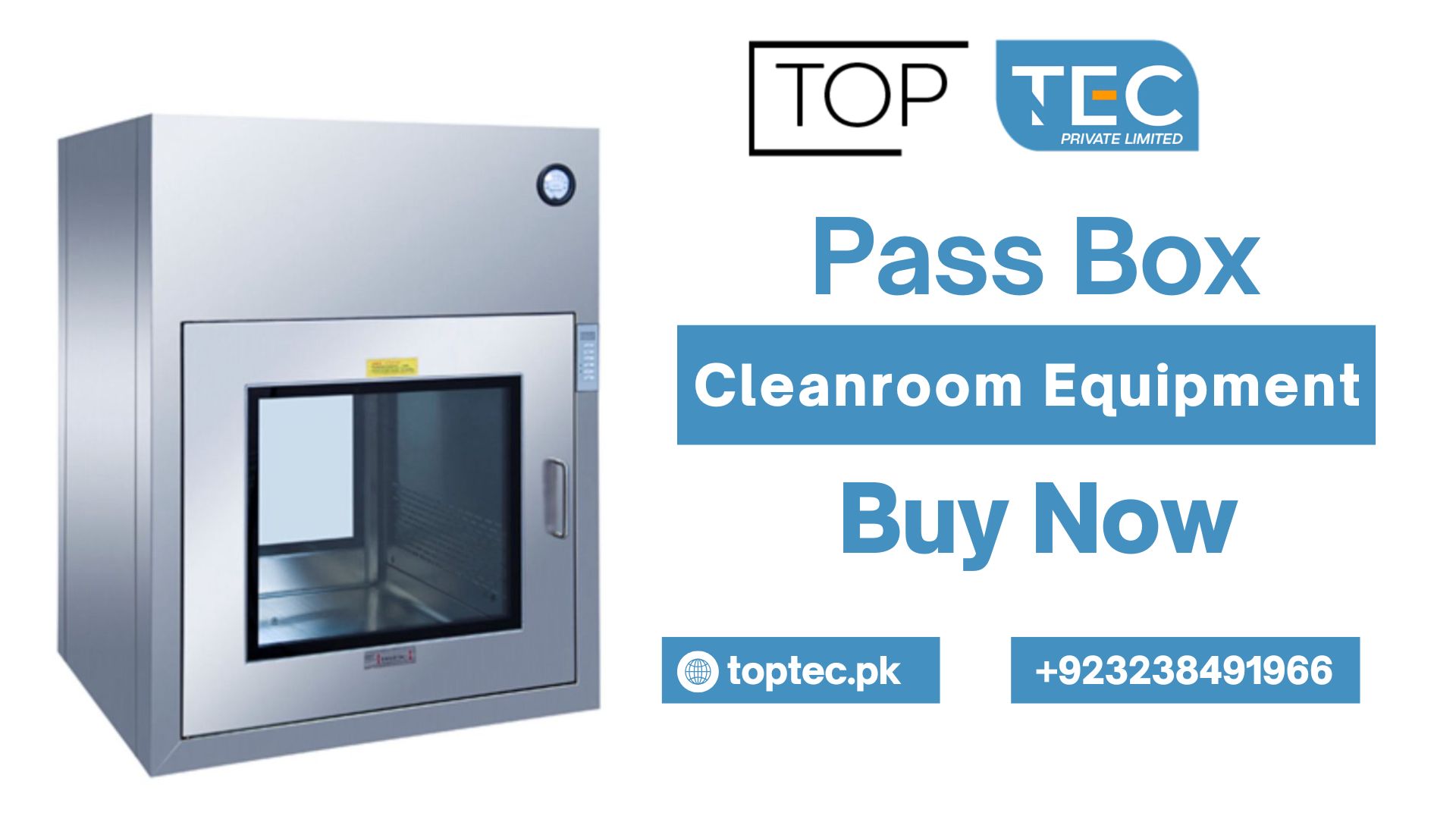
A cleanroom pass box — also called a transfer hatch or pass-through chamber — is an enclosed, sealed chamber installed through the wall between two spaces of different cleanliness classifications. It has doors on both sides: one opening into the lower-classification area, one into the higher-classification area.
The contamination control principle is the interlock. Both doors cannot be open simultaneously. Materials are placed inside through the lower-classification side, that door is closed and sealed, and only then can the higher-classification side door be opened for retrieval.
This interlock prevents the direct breach between two environments that would occur if someone simply opened a connecting door. The lower-classification air never directly mixes with the higher-classification air. The pressure differential between the two spaces is maintained. Contamination pathways through the transfer point are controlled.
Static vs. Dynamic Pass Box
Static cleanroom pass box: No active airflow inside the chamber. The interlock mechanism — mechanical or electronic — is the sole contamination control. Materials sit in the chamber between door operations without any air cleaning occurring inside.
Appropriate for: transfer between lower-classification spaces (say, Grade D to Grade C, or unclassified to ISO Class 7) where the contamination risk of the transfer chamber itself is manageable. Cost-effective, simple, reliable.
Dynamic cleanroom pass box: A HEPA-filtered, fan-driven airflow system inside the chamber actively cleans the interior air during the transfer process. Particles from the outside environment are removed from both the chamber air and the surfaces of items placed inside.
Appropriate for: transfer into higher-classification spaces (Grade B, ISO Class 5) where any contamination introduced by the transfer items themselves needs to be controlled. The dynamic system ensures that items leaving the pass box have been exposed to clean, HEPA-filtered air during the transfer period.
UV Sterilization Option
Some cleanroom pass box units include UV-C germicidal lamps inside the chamber. These provide surface decontamination of items during the dwell time in the pass box. UV light kills microorganisms on exposed surfaces, adding a biological decontamination function alongside the physical particle control.
Important limitation that gets overlooked: UV light only decontaminates exposed surfaces. It doesn’t penetrate packaging, doesn’t reach shadowed areas, and requires adequate dwell time to be effective. UV is a supplement to the interlock and airflow functions, not a replacement for them.
Electronic Interlock Systems
The interlock is the safety-critical element of any cleanroom pass box. Mechanical interlocks use a physical bar mechanism that prevents simultaneous door opening. Electronic interlocks use sensors and electromagnetic locks with alarm outputs, audit trail capability, and integration with building management systems.
For GMP pharmaceutical facilities, electronic interlocks provide the documentation capability that mechanical systems can’t: timestamped records of door operations, alarm history, and operator identification — data that regulatory inspectors increasingly expect to see.
What an Air Shower Actually Does
An air shower is a personnel decontamination chamber positioned at the entrance to a cleanroom area. Personnel entering the cleanroom pass through the air shower, which bombards them with high-velocity HEPA-filtered air from multiple nozzle positions — typically 20-40 m/s at the nozzle outlet.
The physical mechanism: high-velocity clean air impinges on the gowned surface, dislodging particles that are loosely attached to clothing, hair, and equipment. These dislodged particles are then captured by the return airflow system and removed from the shower chamber through HEPA filters.
What an air shower actually achieves in quantitative terms: studies show air shower use reduces surface particle counts on gowning by roughly 60-80% depending on dwell time, air velocity, and nozzle configuration. It’s significant but not absolute — some particles remain on gowning after even well-designed air shower exposure.
What Air Showers Are Good For
Reducing particle load at cleanroom entry: The particles a person carries on their gown, shoe covers, gloves, and hair net are a continuous source of cleanroom contamination during their time in the classified space. Reducing that initial load reduces ongoing contamination from personnel throughout their time working in the area.
High-cleanliness semiconductor environments: Semiconductor fabs with very high particulate sensitivity have used air showers as standard entry protocol for decades. The particle loads they’re managing are at levels where even small reductions in entry contamination matter.
Large material items that can’t go through a pass box: Roll-in equipment, large trolleys, carts — items too large for a pass box that still need to enter the cleanroom. An air shower can accommodate these if dimensions are appropriate.
What Air Showers Are Not Good For
Biocontamination control: Air showers reduce surface particles. They do nothing for microbial contamination on gowning surfaces. For aseptic pharmaceutical manufacturing where microbial contamination control is the primary concern, air showers contribute to particulate control but cannot substitute for proper gowning, gowning room design, and environmental monitoring.
Material transfer between classified areas: An air shower is a personnel entry system. Using it for material transfer is either impractical (for most items) or inappropriate (for items that need the controlled, sequential interlock transfer that a pass box provides).
Replacing good gowning practice: Air showers reduce particle load but don’t compensate for inadequate gowning procedures or poor gowning technique. Personnel who gown improperly generate contamination that an air shower can’t adequately address.
Direct Comparison: Where Each Excels and Where It Falls Short
| Factor | Cleanroom Pass Box | Air Shower |
|---|---|---|
| Primary function | Material transfer | Personnel decontamination |
| Contamination type controlled | Particles (static); particles + biocontamination (dynamic + UV) | Particles on gowning surfaces |
| Physical size | Countertop to large wall-mounted | Walk-through chamber |
| GMP documentation | Electronic interlock logs door events | Limited documentation capability |
| Regulatory requirement | Specified in EU GMP Annex 1 | Not always required; depends on classification |
| Pharmaceutical aseptic use | Essential for Grade A/B | Supplementary |
| Bidirectional use | Yes — materials in and out | One direction only — entry |
| Maintenance complexity | Lower | Higher — nozzle cleaning, motor maintenance |
Regulatory Context: What GMP Actually Requires
For pharmaceutical manufacturers in Pakistan operating under DRAP GMP requirements — which align with WHO GMP and EU GMP guidelines — there are specific expectations around cleanroom transfer solutions.
EU GMP Annex 1 (2022 revision) on sterile manufacturing is the most detailed international reference for this type of cleanroom equipment specification. It has significant implications:
For material transfer into Grade A/B areas, Annex 1 requires airlock systems with appropriate interlocks and differential pressure management. The cleanroom pass box with electronic interlock and dynamic HEPA airflow is the standard implementation of this requirement for smaller item transfer.
For personnel entry, Annex 1 describes changing rooms with airlock design and appropriate gowning procedures. Air showers are not explicitly mandated by Annex 1 for pharmaceutical aseptic manufacturing, but they are referenced as acceptable supplementary contamination control.
For Pakistani pharmaceutical companies producing sterile products or exporting to regulated markets, the Annex 1 framework is increasingly relevant — not just as an international benchmark but as a practical specification guide for facility design and cleanroom equipment selection.
WHO GMP Guidelines: Similar principles — controlled transfer between zones, maintained pressure differentials, interlock systems at transfer points. The cleanroom pass box with appropriate interlock specification satisfies these requirements for material transfer.
How to Decide What Your Facility Actually Needs
Rather than a general comparison, let me give you a decision framework based on specific facility scenarios.
Scenario 1: Pharmaceutical Grade B Filling Area
You have a filling suite classified as Grade B (ISO Class 5 unidirectional flow for Grade A filling, Grade B background). Materials need to enter the suite — components, packaging materials, containers.
What you need: Dynamic cleanroom pass box with HEPA filtration and electronic interlock. Potentially UV sterilization for certain components. Materials going into Grade A/B areas cannot simply be handed through a static pass box — the transfer point itself needs to be a controlled, clean environment.
Air shower role: Personnel entry is through a gowning room progression with airlocks — not primarily an air shower function. Some facilities add air showers at the final entry point, but this is supplementary to proper gowning room design, not a substitute for it.
Scenario 2: ISO Class 7 (Grade C) Manufacturing Area
A pharmaceutical solid dosage form manufacturing area — tablet compression, granulation — classified as ISO Class 7. Materials and components move in and out regularly.
What you need: Static cleanroom pass box with interlock for controlled material transfer. Grade C is less demanding than aseptic environments — a static unit with appropriate interlock meets the contamination control requirement without the cost of full dynamic pass boxes at every point.
Air shower role: An air shower at personnel entry makes sense here as a standard contamination reduction step. The higher traffic volumes in solid dosage manufacturing mean personnel are a significant contamination source, and air shower use at entry reduces ongoing contamination during the working period.
Scenario 3: Semiconductor or Electronics Cleanroom
An ISO Class 5-6 electronics manufacturing environment where fine particle contamination damages product and personnel are the primary contamination source.
What you need: Air shower at personnel entry — potentially sophisticated multi-directional systems. Cleanroom pass box for small component transfer between zones.
Both types of cleanroom equipment are likely needed in this environment, serving different functions simultaneously.
Scenario 4: Hospital Pharmacy Compounding Suite
A hospital pharmacy preparing sterile compounded preparations in an ISO Class 5 compounding area within a Grade C background.
What you need: Static or dynamic cleanroom pass box for material transfer depending on what items are being transferred. Simple electronic interlock at minimum; dynamic with HEPA for items entering the ISO Class 5 area directly.
Air shower: Optional but potentially useful for reducing particle load when entering the general compounding area. Not required by most hospital pharmacy regulations but reasonable practice in a well-designed facility.
Common Mistakes in Selection and Installation
These mistakes come up repeatedly in pharmaceutical facility design in Pakistan and are worth flagging explicitly.
Installing a static pass box where a dynamic is needed. A static cleanroom pass box between a Grade D area and a Grade B area may satisfy the interlock requirement but does nothing about contamination introduced on the surfaces of transferred items. Grade B transfer requires dynamic units.
Air shower as a substitute for gowning room design. Some facilities install an air shower and deprioritize the gowning room airlocks and gowning procedures. The air shower reduces particles on gowning but doesn’t replace the pressure differential airlock function of a properly designed gowning room sequence.
Pass box dimensions specified without considering actual use. A pass box that’s too small for the containers actually being transferred becomes either a bottleneck (small batches at a time) or gets bypassed entirely. Specify internal dimensions based on the actual largest items that will be transferred.
Electronic interlock not integrated with monitoring. Installing an electronic interlock but not connecting it to any monitoring or alarm system wastes most of the benefit. Electronic interlocks should generate alarms for improper use and create logs that support GMP documentation requirements.
Poor wall sealing at pass box installation. The pass box frame must be perfectly sealed to the wall at both interfaces. Gaps at the seal create contamination pathways that defeat the purpose of the unit entirely. This installation detail is often inadequate.
TOPTEC PVT. LTD: Cleanroom Equipment and Lab Infrastructure in Pakistan
For pharmaceutical and industrial facilities in Pakistan that need cleanroom pass box equipment or supporting laboratory infrastructure, TOPTEC PVT. LTD is a Pakistani manufacturer worth knowing.
TOPTEC manufactures laboratory furniture and cleanroom-related equipment locally in Pakistan — genuinely manufacturing, not importing and relabeling. Their understanding of pharmaceutical GMP environments, combined with local manufacturing capability, makes them a practical resource for Pakistani facilities.
Pass Box and Cleanroom Equipment
TOPTEC manufactures cleanroom pass box units — static and dynamic configurations — with mechanical and electronic interlock options. Custom sizing is available for non-standard wall thicknesses, unusual opening dimensions, or specific material requirements.
The advantage of working with a local manufacturer for this type of cleanroom equipment: lead times are dramatically shorter than imported equipment. A cleanroom pass box from a European or Asian manufacturer takes 10-16 weeks to arrive in Pakistan. TOPTEC delivers in 3-6 weeks for standard configurations, 5-8 weeks for custom fabrications. If your facility is under construction with a commissioning deadline, this timeline difference is the difference between opening on schedule and explaining delays.
Custom fabrication also means the unit fits your specific wall construction — thickness, material, finish — without the adaptor frames and sealing complications that come from trying to fit a standard-sized imported unit into a non-standard wall opening.
Supporting Laboratory Furniture
Beyond cleanroom pass box units, TOPTEC manufactures the complete laboratory furniture infrastructure that cleanroom-adjacent areas need:
Gowning room furniture: Benches for gown donning and doffing, storage for gowning supplies, mirror installations. Gowning room furniture needs to be smooth, easy to clean, compatible with the disinfectants used in pharmaceutical environments. TOPTEC manufactures this to pharmaceutical GMP material standards.
Cleanroom workbenches: For pharmaceutical manufacturing areas, research cleanrooms, and quality control labs adjacent to classified spaces. Steel-frame construction, appropriate surface materials, custom dimensions.
Storage systems: For cleanroom consumables, spare gowning materials, and cleanroom equipment maintenance supplies — organized, clean, appropriate for the pharmaceutical environment.
Antechamber and airlock furniture: The furniture in airlocks, change rooms, and transitional spaces between unclassified and classified areas.

The Local Manufacturing Advantage
The practical advantages of sourcing from TOPTEC rather than importing are specific and meaningful:
Timeline coordination: your construction, your pass box installation, and your furniture delivery can all be on the same project schedule. Imported items on 14-week lead times create coordination problems that local manufacturing resolves.
Exact dimensions: your wall thickness, your opening dimensions, your room layout — TOPTEC fabricates to your measurements rather than requiring you to adapt to international standard sizes.
PKR pricing: no exchange rate exposure between order and delivery. No import duty calculation. What’s quoted is what’s paid.
Post-installation support: if modifications are needed after installation — an additional shelf, a height adjustment, a sealing issue at the wall interface — TOPTEC is local. The resolution is days, not weeks of international logistics.
Making the Decision: A Summary Framework
The pass box vs. air shower decision ultimately comes down to answering these questions:
Are you controlling material transfer or personnel entry?
Material transfer → cleanroom pass box
Personnel entry → air shower
Both → both, for different points in your facility
What classification are you transferring between?
Lower classifications (Grade C/D, ISO 7/8) → static pass box adequate
Higher classifications (Grade A/B, ISO 5) → dynamic pass box required
What are your GMP documentation requirements?
DRAP/WHO/EU GMP regulated → electronic interlock with logging capability
Research or non-GMP → mechanical interlock may be sufficient
What is your wall construction?
Standard thickness → standard configurations available
Non-standard → custom fabrication (TOPTEC) is the practical solution
What are your timelines?
Flexible → imported options available
Fixed construction deadlines → local manufacturing (TOPTEC) provides realistic lead times
Final Thoughts
Cleanroom pass boxes and air showers serve genuinely different contamination control functions. Treating them as alternatives to each other — which happens more than it should — leads to facilities where one contamination pathway is controlled while another is left open.
Match the equipment to the problem. Use cleanroom equipment where it solves your specific contamination control challenge, qualified and documented appropriately for your regulatory requirements. For material transfer into classified pharmaceutical areas, the cleanroom pass box with appropriate interlock and airflow is the right answer. For personnel entry contamination reduction, the air shower plays its role.
For Pakistani pharmaceutical and industrial facilities needing cleanroom pass box equipment and supporting lab infrastructure, TOPTEC PVT. LTD manufactures locally — on realistic Pakistani project timelines, to your specific dimensions, at PKR pricing with local post-installation support.
Contact TOPTEC PVT. LTD
TOPTEC PVT. LTD manufactures cleanroom pass box units, gowning room furniture, cleanroom workbenches, storage systems, and complete laboratory furniture solutions — all manufactured locally in Pakistan for pharmaceutical, research, and industrial laboratory environments.
Contact TOPTEC to discuss your cleanroom transfer equipment and infrastructure requirements and receive a customized quotation.
