


Buy Pass Box for Laboratory. If you’ve ever worked in a microbiology lab, pharmaceutical research facility, or any controlled environment where contamination is a real and constant threat, you already know how frustrating it is when a simple material transfer compromises your entire experiment. One moment of carelessness at the entry point — and weeks of work can go down the drain.
That’s exactly why a Laboratory Pass Box isn’t just a piece of furniture. It’s a critical component of your contamination control strategy.
And if you’re looking to buy Pass Box equipment that actually performs under real laboratory conditions, you’ve come to the right place. This article will walk you through everything — what a pass box does, why it matters, how to choose the right one, and where to get a reliable unit manufactured right here in Pakistan.
What Exactly Is a Laboratory Pass Box?
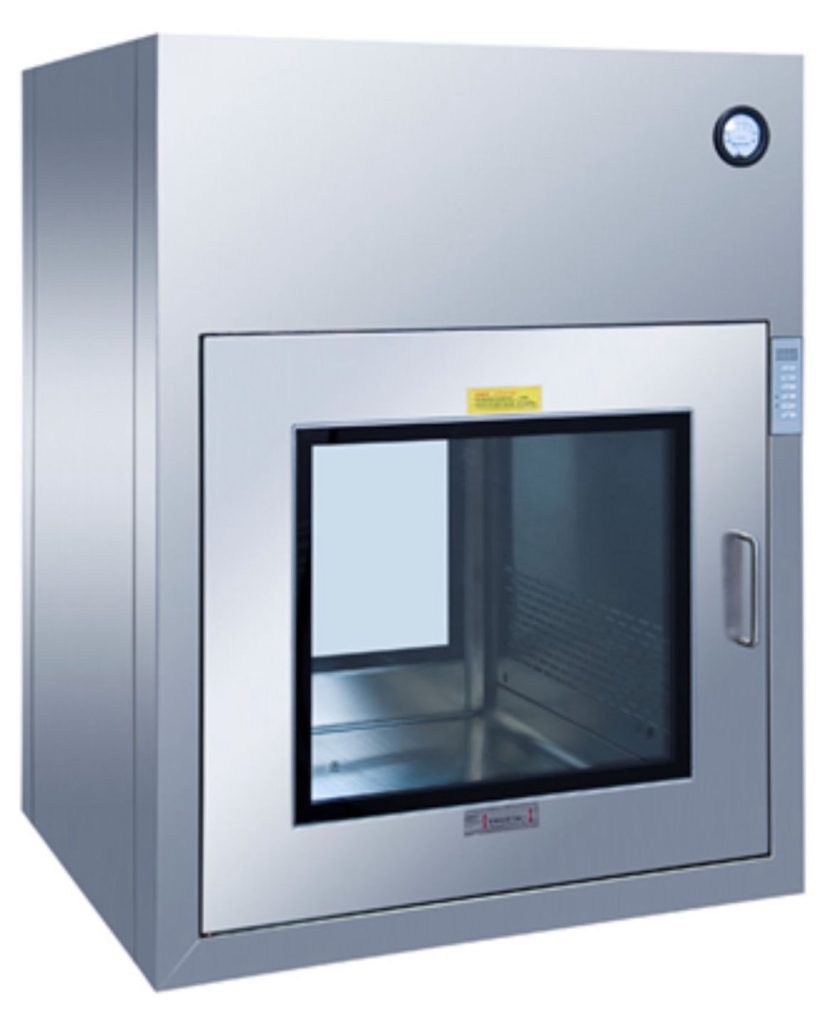
A pass box (also called a transfer hatch or transfer box) is essentially an enclosed chamber built into a wall between two areas — typically a clean zone and a less clean zone — that allows materials, samples, and equipment to be transferred without direct contact between the two environments.
Think of it as an airlock for your lab. You place items in one side, close the door, run the sterilization cycle (usually UV irradiation or HEPA filtration), and then the person on the other side retrieves the items — all without either person ever walking between the zones.
Simple in concept. Absolutely essential in practice.
Static vs. Dynamic Pass Box — What’s the Difference?
Before you decide to buy Pass Box units for your facility, you need to understand there are two main types:
Static Pass Box
This type does not have any active airflow system. It typically uses UV germicidal lamps to decontaminate surfaces of transferred materials. It’s simpler, more cost-effective, and works well for facilities where the primary concern is surface contamination rather than airborne particles.
Best suited for:
- Microbiology research labs
- University and academic laboratories
- Quality control rooms
- Small pharmaceutical units
Dynamic Pass Box
This one is more advanced. It has a built-in HEPA filtration system that actively maintains positive or negative air pressure within the chamber. The airflow prevents cross-contamination even from airborne microorganisms.
Best suited for:
- Pharmaceutical manufacturing
- Biotechnology production facilities
- Sterility testing rooms
- High-containment research environments
If you’re just starting out or working in a research or academic setting, the static version is usually sufficient. For pharmaceutical-grade cleanroom environments, you’ll want to seriously consider the dynamic version.
Key Features to Look For When You Buy Pass Box Equipment
Not all pass boxes are created equal. Here’s what genuinely matters when you’re making this purchase decision:
1. Door Interlock System
This is non-negotiable. Both doors of the pass box should never be able to open simultaneously. A proper mechanical or electrical interlock system ensures this. Without it, the entire purpose of the pass box is defeated.
2. UV Lamp Specification
The UV lamp should emit at 253.7 nm wavelength — this is the most effective range for killing bacteria, viruses, and fungi. Lamps should be easy to replace and should have a timer or usage indicator.
3. Construction Material
High-quality pass boxes are constructed with 304 or 316 stainless steel on interior surfaces. This prevents corrosion, is easy to clean and disinfect, and doesn’t harbor microbial growth. The exterior is often powder-coated steel or laminate.
4. HEPA Filter (for Dynamic Models)
Should be rated at H14 or better, capable of filtering particles ≥0.3 microns at 99.995% efficiency.
5. Interior Lighting
Proper illumination inside the chamber allows users to clearly see what they’re transferring. Sounds minor — but in practice, it matters.
6. Size and Dimensions
Choose a size based on what you’ll actually be transferring. A unit that’s too small becomes a bottleneck. A unit that’s too large takes up unnecessary wall space and costs more to run.
Why Contamination Control Starts at the Entry Point
Most lab managers focus heavily on what happens inside the clean room — the air handling, the gowning protocols, the surface disinfection routines. All of that is important. But contamination very often enters through the transfer point.
Think about how many times materials move in and out of your clean area during a single working day. Reagents, samples, tools, glassware, packaging — every single one of those transfers is a potential contamination event if you don’t have a proper system in place.
When you buy Pass Box solutions with proper interlocking and UV or HEPA decontamination, you’re essentially closing one of the most significant contamination pathways that many labs overlook.
Applications Across Industries
Microbiology Laboratories
Culture media, petri dishes, swab samples, and reagents need to move between zones constantly. A pass box makes this safe and standardized.
Pharmaceutical Manufacturing
Regulatory bodies like WHO-GMP, FDA, and EU-GMP all recommend or require material transfer controls in pharmaceutical production environments. Using a certified pass box supports compliance.
Hospital and Clinical Laboratories
Pathology specimens, blood samples, and sterile consumables need to be transferred without exposing staff or contaminating results.
Biotechnology Research
Gene editing, cell culture, and fermentation research all happen in carefully controlled environments. A single contamination event can ruin months of work.
Food Testing Facilities
Microbiological testing of food samples requires strict contamination control to ensure accurate results.
TOPTEC PVT. LTD — Pakistan’s Trusted Laboratory Furniture Manufacturer
Here’s something worth knowing if you’re in Pakistan and looking to upgrade your lab infrastructure: you don’t need to import pass boxes from abroad and deal with customs delays, currency issues, and service gaps.
TOPTEC PVT. LTD manufactures high-quality laboratory furniture and equipment right here in Pakistan — and that includes professionally built pass boxes designed to meet international standards.
When you choose to buy Pass Box from TOPTEC, you’re making a decision that makes sense on multiple levels:
Local Manufacturing, International Standards
TOPTEC builds its pass boxes using quality stainless steel and components that meet GMP requirements. The construction quality is consistent, and the team understands local lab environments and regulatory requirements.
Custom Sizing and Configuration
Every facility is different. Some labs need a small bench-top transfer unit. Others need a larger floor-standing model integrated into a cleanroom wall. TOPTEC offers customization to match your specific layout and requirements.
After-Sales Support
This is where local manufacturers genuinely have an edge over imported solutions. If something needs adjustment, calibration, or repair, TOPTEC’s team is accessible. No waiting weeks for an overseas technician or spare part.
Competitive Pricing
Importing lab equipment from Europe, the US, or even China involves significant cost beyond the purchase price — freight, import duties, taxes, and currency exchange risk. When you buy Pass Box from TOPTEC, you’re paying a fair price for quality equipment without those hidden costs.
Complete Laboratory Furniture Solutions from TOPTEC
While we’re talking about pass boxes, it’s worth mentioning that TOPTEC isn’t a one-product company. They manufacture a comprehensive range of laboratory furniture and infrastructure:
- Laboratory Workbenches and Benchtops — acid-resistant, solvent-resistant, and stainless steel options
- Fume Hoods — ducted and recirculating models for chemical handling safety
- Biosafety Cabinets — Class II Type A2 and B2 for biological work
- Laboratory Cabinets and Storage — chemical storage, instrument storage, and general-purpose units
- Cleanroom Furniture — tables, trolleys, and seating designed for controlled environments
- Steel Shelving Systems
- Laboratory Sinks and Fixtures
- ESD (Anti-Static) Workstations — for electronics testing and sensitive instrument work
This means if you’re setting up or upgrading a lab, you can source most of what you need from a single, reliable local supplier — which simplifies procurement significantly.
How to Properly Use a Pass Box (Best Practices)
Owning a pass box isn’t enough. Using it correctly is what actually prevents contamination.
Step-by-Step Transfer Protocol
1. Preparation
Before placing anything inside, the pass box interior should be clean. Wipe down surfaces with an appropriate disinfectant — 70% isopropyl alcohol is commonly used.
2. Load the Items
Open the outer door (cleanroom side should remain closed), place the materials inside, and close the outer door completely.
3. Activate UV Decontamination
Run the UV cycle for the specified time — usually 15 to 30 minutes depending on your facility’s validated protocol. Do not open either door during this time.
4. Retrieve Materials
Once the cycle is complete, open the inner door (cleanroom side) and retrieve the materials. Close the inner door after retrieval.
5. Never Bypass the Interlock
Never attempt to open both doors simultaneously or defeat the interlock mechanism. This single habit can undo all your contamination control efforts.
6. Regular Lamp Replacement
UV lamps degrade over time. Check intensity with a UV meter periodically and replace lamps according to manufacturer recommendations — typically every 8,000 to 9,000 hours of use.
Common Mistakes Labs Make with Pass Boxes
Based on real-world lab experience, these are the mistakes that come up again and again:
Buying Without Proper Interlocking
Some budget units don’t have proper interlocks. This is a false economy. The interlock is the entire point. When you buy Pass Box equipment, confirm that the interlock system is mechanical, electrical, or both.
Skipping Validation
Simply installing a pass box doesn’t mean your transfer process is validated. You need documented evidence that the UV cycle achieves the required log reduction in microbial load. Work with your quality team to validate this.
Incorrect Sizing
Too small means you’ll be tempted to leave the door open while loading — which defeats the purpose. Too large wastes resources. Size it based on your actual largest items that need transfer.
Ignoring Maintenance Schedules
UV lamps, filters, and seals all need periodic maintenance. Set up a maintenance log and stick to it.
Questions to Ask Before You Buy Pass Box Equipment
If you’re in the evaluation stage, here are the questions that will help you make a better decision:
- What material is used for interior construction? (Should be 304 or 316 stainless steel)
- What is the UV lamp specification? (Should specify 253.7 nm germicidal wavelength)
- Is the interlock system mechanical, electrical, or both?
- What are the exterior and interior dimensions?
- Is customization available for our wall thickness and opening?
- What is the warranty period?
- Is after-sales service available locally?
- Can the unit be validated according to GMP requirements?
When you buy Pass Box from TOPTEC, their team can walk you through all of these specifications clearly so you make a confident purchase.
Cost Consideration — Is a Pass Box Worth the Investment?
Let’s be practical about this. A quality pass box is an investment. You might wonder if it’s really necessary for your facility.
Here’s how to think about it:
The cost of contamination in a pharmaceutical batch can run into millions of rupees in lost materials, failed batch investigations, regulatory non-compliance, and repeated testing. Even in a research setting, a single contaminated experiment can mean weeks of repeated work.
Against that backdrop, the cost of a properly built pass box — especially when you buy Pass Box equipment locally from TOPTEC at Pakistan-competitive pricing — is genuinely modest.
It’s not a luxury item. It’s risk management equipment.
How to Get in Touch with TOPTEC PVT. LTD
If you’re ready to upgrade your facility’s contamination control infrastructure, reaching out to TOPTEC is the natural next step. They serve clients across Pakistan — including pharmaceutical companies, hospitals, universities, research institutions, food testing labs, and government facilities.
Their team can help you:
- Assess your specific requirements
- Recommend the right pass box type and size
- Provide customization if needed
- Deliver and install at your facility
- Advise on maintenance and validation
Whether you need a single unit for a small research lab or multiple pass boxes for a large pharmaceutical plant, TOPTEC has the manufacturing capacity and expertise to deliver.
Final Thoughts
A Laboratory Pass Box might not be the most glamorous piece of equipment in your facility. It doesn’t generate data, it doesn’t accelerate reactions, and it doesn’t impress visitors the way a shiny new analytical instrument might.
But it does something arguably more important — it protects everything else you do.
Every experiment you run, every batch you produce, every result you report depends on the integrity of your controlled environment. A well-chosen, properly used pass box is one of the most reliable ways to maintain that integrity at the material transfer point.
If you’re in Pakistan and ready to buy Pass Box equipment that you can actually trust, TOPTEC PVT. LTD is a name worth knowing. Local manufacturing, quality construction, customization options, and real after-sales support — that’s a combination that’s genuinely hard to beat.
Take contamination control seriously. Your research, your patients, and your regulatory standing all depend on it.
