

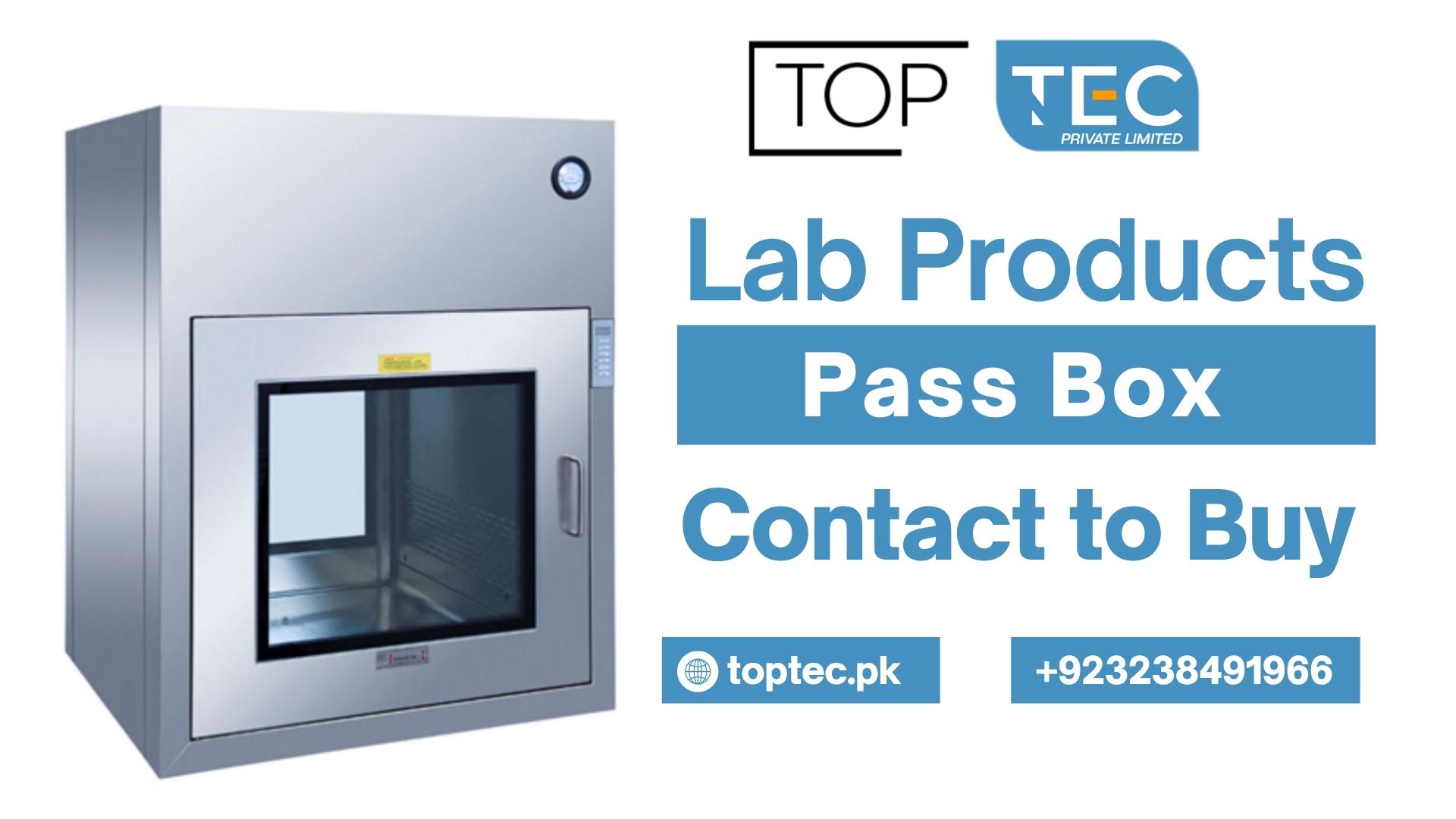
No You can Buy Pass Box Online from Toptec Pvt Ltd. Let me start with something that doesn’t get said enough: most people who are shopping for cleanroom equipment online are working with incomplete information. They find a product listing, see a price, and either it’s too vague to be useful or it’s clearly written by someone who has never actually stood inside a cleanroom and thought about contamination control in practical terms.
This guide is different. I’ve tried to write this the way I’d explain it to a colleague who’s setting up a pharmaceutical manufacturing area or a microbiology lab for the first time — someone who needs real answers, not marketing fluff.
So whether you’re looking to buy pass box equipment for a new cleanroom installation, upgrading an old transfer window that’s been leaking contamination for years, or just trying to understand what you’re actually purchasing before you commit — you’re in the right place.
What Is a Pass Box, Really?
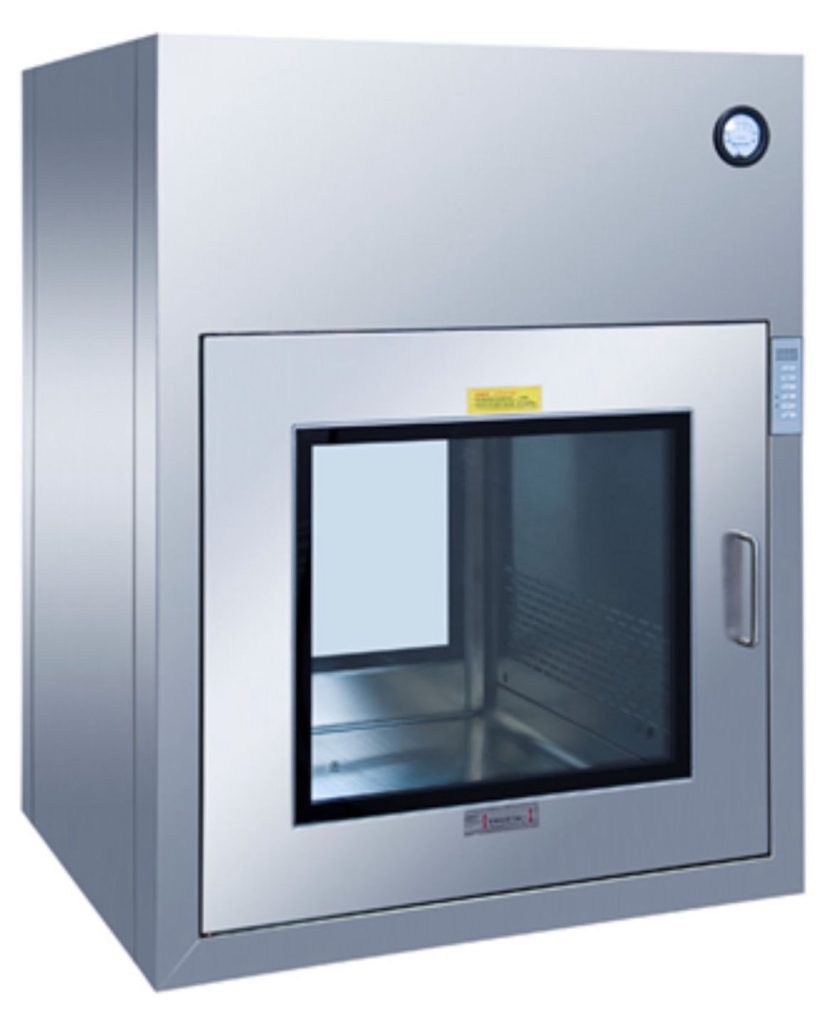
A pass box — also called a transfer hatch, transfer box, or pass-through chamber — is exactly what it sounds like. It’s an enclosed chamber installed in the wall between two areas of different cleanliness classifications, allowing materials to be transferred without either person opening a door that connects the two environments.
Think about what happens without one. Someone in a Grade D corridor needs to pass a component into a Grade B filling area. Without a pass box, they either open a connecting door (immediately compromising both environments’ pressure differential and particulate status) or they go through a full gowning procedure just to hand something over. Neither option is acceptable in a serious GMP facility.
The pass box solves this by creating a controlled intermediate space. You put material in from one side, close and seal that door, then the person on the other side opens their door to retrieve it. In a properly designed unit, both doors cannot be open simultaneously — that’s the interlock function, and it’s what separates a genuine contamination control solution from a fancy cupboard.
Types of Pass Boxes: Understanding Your Options
Before you decide to buy pass box equipment, you need to understand that not all units are the same. There’s a meaningful spectrum here.
Static Pass Box
The most basic version. No active airflow, no HEPA filtration. Materials pass through a static chamber with mechanical or electronic interlocks preventing simultaneous door opening.
Best for:
- Transfer between lower classification areas
- Non-critical materials that don’t require particulate-free transfer
- Areas where budget is a primary constraint
Not suitable for:
- Aseptic zones
- Any area with ISO 5 (Grade A) requirements
- Transfer of open product or exposed containers
Dynamic Pass Box
This is the one with active HEPA-filtered airflow. A blower unit circulates air through a HEPA filter (typically H14 grade, 99.995% efficient), creating a clean air environment inside the transfer chamber itself.
Best for:
- Transfer into Grade A/B cleanrooms
- Pharmaceutical aseptic manufacturing
- Medical device assembly in ISO Class 5-7 environments
- Any situation where the materials being transferred could be compromised by particle contamination
When most pharmaceutical companies and serious cleanroom operators say they want to buy pass box equipment, they’re usually talking about dynamic units.
Pass Box with UV Sterilization
Some units include UV-C germicidal lamps inside the chamber. These are used to decontaminate the surface of materials during the transfer dwell time. They’re common in microbiology labs, sterility testing areas, and biological safety cabinet adjacency zones.
Important caveat: UV light decontaminates surfaces only. It doesn’t penetrate packaging materials and it requires adequate exposure time to be effective. It’s a supplement to, not a replacement for, proper material decontamination procedures.
Shower Pass Box
For particularly contamination-sensitive applications, air shower pass boxes use high-velocity HEPA-filtered air jets to blow particulates off personnel or materials before they enter the cleanroom. More commonly seen in semiconductor manufacturing but used in some pharmaceutical settings too.
Electronic Interlock Systems: Why They Matter So Much
The interlock system is honestly the most critical feature to evaluate when you buy pass box equipment. Let me explain why.
The entire contamination control purpose of a pass box rests on one principle: the two doors must never be open at the same time. If both doors can open simultaneously, you have a direct breach between your two environments. Pressure differentials equalize, air (and particles, and microorganisms) flows freely, and your cleanroom classification is meaningless at that moment.
Mechanical Interlocks
These use a physical mechanism — typically a sliding bar or lever system — that physically prevents one door from opening when the other is already open. Simple, reliable, no electronics required.
Advantages: Works without power, simple to understand, hard to defeat accidentally
Disadvantages: Can be forced by determined or careless users, no data logging capability, no alarm function, can wear over time
Electronic Interlocks
Electronic systems use sensors (magnetic reed switches or proximity sensors) to detect door status, and electromagnetic locks or solenoid bolts to control door operation.
A properly designed electronic interlock system will:
- Detect when Door A is open and electronically lock Door B
- Release Door B’s lock only after Door A is confirmed closed
- Include a fail-safe mode (most commonly fail-locked — doors lock on power failure)
- Generate an audible and/or visual alarm if someone attempts to defeat the interlock
- Optionally log door opening events with timestamps
For GMP pharmaceutical facilities, the data logging capability of electronic interlocks becomes particularly important. Regulatory inspectors from DRAP (in Pakistan), FDA, or EU GMP auditors may ask for evidence that transfer procedures are being followed consistently. A pass box with electronic interlock and logging capability gives you that evidence.
PLC-Controlled Interlock Systems
High-end pass boxes include programmable logic controllers that manage the interlock function along with other features — UV lamp cycle timers, HEPA filter differential pressure monitoring, air shower timing, and alarm management. If you’re operating in a highly regulated environment and looking to buy pass box systems that will survive an FDA inspection without comments, PLC-controlled units are worth the additional investment.
Customization: Why Standard Sizes Often Don’t Work
This is something that surprises first-time buyers. They find a standard pass box online, think it looks about right, order it, and then discover it doesn’t fit their wall thickness, the door swings in the wrong direction, or the dimensions create an ergonomic problem in their specific corridor layout.
The reality is that most serious cleanroom installations require some degree of customization. Here’s what typically needs to be specified:
External Dimensions and Wall Thickness
Pass boxes are installed through walls, and walls vary in thickness from 100mm to 300mm or more depending on construction type. The unit needs to be specified to match your wall thickness, or you’ll need adaptor frames that complicate installation and potentially create contamination pathways at the seams.
Opening Dimensions
How big does the internal chamber actually need to be? Think about the largest item you’ll regularly transfer and design around that. A chamber that’s just barely large enough for your current workflow becomes a problem when your process changes.
Door Swing Direction
Left-hand or right-hand? Inward or outward opening? Sliding? This depends entirely on your space layout and traffic flow patterns on both sides of the wall.
Surface Finish and Material
Standard units are typically 304 stainless steel inside with powder-coated exteriors. For more aggressive cleaning regimes or higher-grade cleanrooms, you might want 316L stainless steel throughout, electropolished internal surfaces, or specific gasket materials that are compatible with your sanitization agents.
Electrical Specifications
In Pakistan, power supply is 220V/50Hz, but you also need to specify control voltage, alarm output requirements, and whether you need the unit wired for integration with your building management system.
Pass-Through Orientation
Wall-to-wall is standard, but floor-mounted, ceiling-to-wall, and corner installations all exist and are sometimes the right solution for unusual room layouts.
TOPTEC PVT. LTD: Custom Pass Box Manufacturing in Pakistan
If you’re looking to buy pass box equipment in Pakistan without going through a lengthy import process, dealing with customs delays, or paying the significant premium that imported equipment carries, TOPTEC PVT. LTD is a manufacturer worth knowing about.
TOPTEC manufactures laboratory furniture and cleanroom equipment right here in Pakistan. Not assembled from imported kits — actually manufactured locally. And for pass boxes specifically, local manufacturing offers advantages that are genuinely meaningful for Pakistani buyers.
What TOPTEC Offers for Pass Box Requirements:
Static Pass Boxes
- Available in multiple size options
- Stainless steel 304 construction standard
- Mechanical and electronic interlock options
- Custom dimensions available
Dynamic Pass Boxes with HEPA Filtration
- H14 HEPA filter as standard
- Variable speed blower option
- Differential pressure gauge for filter monitoring
- UV-C lamp option available
- Electronic interlock with alarm
Custom-Fabricated Units
This is where TOPTEC genuinely distinguishes itself. If your cleanroom has non-standard wall thickness, unusual opening requirements, or specific material requirements, TOPTEC can design and fabricate accordingly. You’re talking to the people who will actually build the unit — not a sales representative who has to relay specifications to a factory in another country.
Why Local Manufacturing Matters in Pakistan
Lead Time
Imported pass boxes from European or Chinese manufacturers can take 8-16 weeks after order placement, accounting for manufacturing time, shipping, port clearance, and inland transportation. For a facility under construction or a cleanroom upgrade project with a deadline, that timeline can be a serious problem.
TOPTEC manufactures locally, which dramatically compresses lead times. Standard units can often be delivered in 2-4 weeks; custom fabrications in 4-8 weeks depending on complexity.
Currency Exposure
In Pakistan’s current economic environment, purchasing imported capital equipment means exposure to PKR/USD or PKR/EUR exchange rate fluctuations between order and delivery. A locally manufactured product priced in PKR eliminates this risk.
After-Sales Support
If something goes wrong with an imported unit — an interlock malfunction, a blower failure, a door seal that needs replacement — you’re waiting for imported spare parts or working with a third-party service company that may not have deep knowledge of the specific unit. TOPTEC supports what they build, locally.
Customs and Import Duties
Importing cleanroom equipment attracts customs duties that add meaningfully to the landed cost. Buying locally manufactured equipment avoids this entirely.
Regulatory Requirements for Pass Boxes in Pakistan
If you’re purchasing pass boxes for a pharmaceutical facility in Pakistan, DRAP (Drug Regulatory Authority of Pakistan) guidelines — which align closely with WHO GMP guidelines — have specific expectations for transfer airlocks and pass-through chambers.
Key regulatory considerations:
EU GMP Annex 1 (2022 revision) — Highly influential in Pakistan’s pharmaceutical sector. The updated Annex 1 has detailed requirements for pass boxes in sterile manufacturing facilities, including specifications for airflow, interlock function, and material design.
WHO TRS 961 Annex 6 — WHO’s good manufacturing practices for sterile pharmaceutical products, referenced by DRAP.
Specific requirements typically include:
- Documentation of HEPA filter integrity (DOP/PAO test results)
- Interlock function verification as part of commissioning qualification
- Cleaning and disinfection validation for internal surfaces
- Air velocity and particle count verification for dynamic units
- Regular preventive maintenance and re-qualification schedule
When you buy pass box equipment intended for a GMP facility, make sure your supplier can provide documentation to support your validation package: material certificates, filter test certificates, electrical schematics, dimensional drawings, and a recommended qualification protocol.
TOPTEC understands these requirements and can work with your validation team to provide the documentation package your facility needs.
How to Specify a Pass Box: A Step-by-Step Approach
Let me walk you through the specification process properly, because getting this right upfront saves a lot of back-and-forth.
Step 1: Define the Cleanliness Classifications on Each Side
What ISO class or EU GMP grade is on the dirtier side? What’s on the cleaner side? This determines whether you need a static or dynamic unit, and what filter specification is required.
Step 2: Determine the Type of Materials Being Transferred
- Sealed containers only? Static unit may suffice.
- Open containers, exposed product, or critical materials? Dynamic unit required.
- Materials that need surface decontamination? Include UV lamp option.
Step 3: Measure Your Wall
Wall thickness (overall). Wall construction material (drywall, blockwork, stainless steel panel system). Opening size available. Finished floor-to-ceiling height on both sides.
Step 4: Define Internal Chamber Dimensions
Based on the largest item you’ll transfer. Remember: bigger isn’t always better — a larger chamber means more air volume to maintain clean, longer UV exposure cycle times, and more internal surface to clean and validate.
Step 5: Specify Door Configuration
Which side gets which door direction? Do both open the same way? Is sliding door preferable to hinged? What handle type — flush pull or lever?
Step 6: Specify Interlock Type
Mechanical for low-criticality applications. Electronic for GMP environments. PLC-controlled for high-end aseptic facilities.
Step 7: Define Electrical and Data Requirements
Power input specification. Alarm output — buzzer only, or dry contact for BMS integration? Data logging required?
Step 8: Surface Finish
Standard 2B finish stainless steel, or electropolished? Internal corner radius specification (coved corners are easier to clean).
Step 9: Documentation Package Requirements
Material traceability certificates? Filter test certificates? Electrical schematics? Factory acceptance test (FAT) protocol?
Installation Considerations
Buying the right unit is only part of the job. Installation matters enormously for contamination control effectiveness.
Sealing at the Wall Interface
The joint between the pass box frame and the wall opening is a critical contamination control point. It must be completely sealed — no gaps, no voids. For cleanroom panel systems, the frame should be flush with and bonded to the panel surface. For traditional wall construction, this typically means a continuous bead of appropriate sealant (compatible with your cleaning agents) around the entire perimeter.
Pressure Differential Alignment
The pass box should be installed to maintain the correct pressure differential relationship between the two rooms it connects. The interlock system should be oriented so that the cleaner room’s door is the one that’s released after the pass-through chamber has been purged (in dynamic units).
Electrical Connections
The interlock system needs a reliable power supply. For critical applications, connection to the facility’s UPS or backed-up power circuit ensures the system operates during power fluctuations — common in Pakistan’s power environment.
Commissioning
After installation, before use:
- Test interlock function — verify both doors cannot open simultaneously
- For dynamic units, verify air velocity meets specification
- DOP/PAO test the HEPA filter in-situ
- Particle count inside the chamber under operational conditions
- Alarm test — verify alarms function correctly
Common Mistakes When Buying a Pass Box
I’ve seen these mistakes made enough times that they’re worth listing explicitly.
Mistake 1: Buying on External Dimensions Without Specifying Internal Dimensions
The transfer chamber inside a pass box is considerably smaller than the external footprint. Always specify and verify the usable internal dimensions.
Mistake 2: Choosing Static When Dynamic Is Needed
Trying to save money by getting a static pass box for an aseptic area is a false economy. Your cleanroom’s particle counts won’t support the classification you’re trying to maintain.
Mistake 3: Ignoring Wall Thickness
A pass box specified for a 150mm wall doesn’t fit a 200mm wall without modification. Always measure your wall thickness and communicate it when you buy pass box equipment.
Mistake 4: Not Requesting Documentation
If you’re in a regulated industry, documentation is part of the product. Asking for it after the fact — especially from an overseas supplier — can be genuinely difficult.
Mistake 5: Neglecting the Seal Design
Pass boxes with poor-quality door seals or frame gaskets lose their contamination control effectiveness quickly. Ask specifically about seal material and design.
Mistake 6: Not Thinking About Cleaning
Internal corners, internal edges, and door seal interfaces need to be cleaned regularly and often sanitized with aggressive agents. Make sure the design and materials are compatible with your cleaning regime.
Pass Box Maintenance: Keeping It Working Properly
Once you buy pass box equipment and it’s installed, it needs regular maintenance to continue functioning as intended.
Daily Checks:
- Visual inspection of door seals for damage or debris
- Interlock function test — attempt to open both doors simultaneously and verify the interlock prevents this
- For dynamic units: verify blower is running (differential pressure gauge check)
Weekly:
- Clean internal chamber surfaces with approved disinfectant
- Clean door seals and sealing surfaces
- Check UV lamp function (if fitted)
Monthly:
- Check interlock system sensor and actuator function in detail
- For dynamic units: check blower current draw (increasing current can indicate filter loading)
- Inspect all electrical connections
Quarterly/Annually:
- HEPA filter integrity test (DOP/PAO test in-situ)
- Air velocity measurement and comparison to baseline
- Particle count test inside chamber
- Interlock system calibration check
- Full documentation review
Keep all maintenance records — they form part of your equipment history file and will be reviewed during GMP audits.
Price Guide: What to Expect When You Buy Pass Box Equipment in Pakistan
Let me give you realistic numbers, because this is always the question people have and it’s rarely answered directly.
Static Pass Box (Basic, Mechanical Interlock):
- Small (300x300mm opening): PKR 35,000 – 65,000
- Medium (450x450mm opening): PKR 55,000 – 95,000
- Large (600x600mm opening): PKR 80,000 – 140,000
Static Pass Box with Electronic Interlock:
- Add approximately PKR 20,000 – 40,000 to above prices for electronic interlock system
Dynamic Pass Box with HEPA Filtration + Electronic Interlock:
- Small: PKR 120,000 – 200,000
- Medium: PKR 160,000 – 280,000
- Large: PKR 220,000 – 400,000
Dynamic Pass Box with HEPA + UV + PLC Interlock:
- PKR 250,000 – 600,000+ depending on size and specification
Custom fabrications are priced based on specific requirements — contact TOPTEC PVT. LTD directly for custom quotations.
These are approximate market ranges. Imported equipment from European manufacturers can cost 3-5x these figures after import duties and shipping. That’s one of the primary reasons it makes sense to buy pass box equipment from a local Pakistani manufacturer like TOPTEC when your requirements can be met domestically.
Why More Pakistani Labs Are Choosing Locally Manufactured Pass Boxes
The trend is real. A few years ago, the default assumption in Pakistan’s pharmaceutical industry was that critical cleanroom equipment had to be imported. That assumption is changing — and for good reason.
Local manufacturers like TOPTEC have invested in manufacturing capability, materials quality, and understanding of regulatory requirements. The output quality has improved significantly. And the practical advantages of local procurement — shorter lead times, PKR pricing, local technical support, and the ability to visit the manufacturer during fabrication — are compelling.
When a pharmaceutical company in Karachi, Lahore, or Islamabad decides to buy pass box equipment today, locally manufactured options are increasingly their first consideration rather than an afterthought.
Getting a Quote from TOPTEC PVT. LTD
If you’ve read this far and you’re ready to move forward, here’s how to approach getting a quotation from TOPTEC that will actually be useful:
What to have ready:
- Cleanliness classification on each side of the wall
- Wall thickness at the installation point
- Required internal chamber dimensions (or the largest item you need to transfer)
- Type of materials being transferred (sealed? Open? Requires UV?)
- Interlock type preference (mechanical, electronic, PLC)
- Any specific documentation requirements
- Quantity required
- Project timeline
With this information, TOPTEC can provide a quotation that’s actually specific to your needs rather than a vague range. And because they manufacture locally, if you need to discuss modifications or ask questions about the design, you’re talking to the team that will actually build it.
Summary: Key Points Before You Buy
Let me pull the most important things together:
- A pass box is a contamination control device, not just a transfer window — the interlock is the critical feature
- Static units for lower classifications, dynamic with HEPA for Grade A/B and ISO Class 5-7
- Always specify based on your actual wall thickness and required internal dimensions
- Electronic interlocks are the minimum standard for GMP pharmaceutical facilities
- Documentation package is part of the product if you’re in a regulated industry
- Local manufacturing in Pakistan offers genuine practical advantages — lead time, pricing, support
- TOPTEC PVT. LTD manufactures custom pass boxes in Pakistan to GMP-relevant standards
Whether you’re outfitting a new pharmaceutical facility, upgrading an existing cleanroom, or setting up a research laboratory with contamination control requirements — taking the time to specify your pass box correctly and work with a manufacturer who understands your requirements will pay dividends for the operational lifetime of the equipment.
If you’re ready to buy pass box equipment that’s built to your actual requirements, manufactured locally, and supported by a team that understands the Pakistani pharmaceutical and research laboratory environment — TOPTEC PVT. LTD is the conversation to start.
Contact TOPTEC PVT. LTD
TOPTEC PVT. LTD is a Pakistan-based manufacturer of laboratory furniture and cleanroom equipment, including static and dynamic pass boxes, laboratory workbenches, fume hoods, biosafety cabinets, and complete laboratory fit-out solutions.
All products are manufactured in Pakistan, offering competitive pricing, shorter lead times, and local technical support compared to imported alternatives.
Get in touch with TOPTEC to discuss your specific requirements and receive a customized quotation for your project.
