

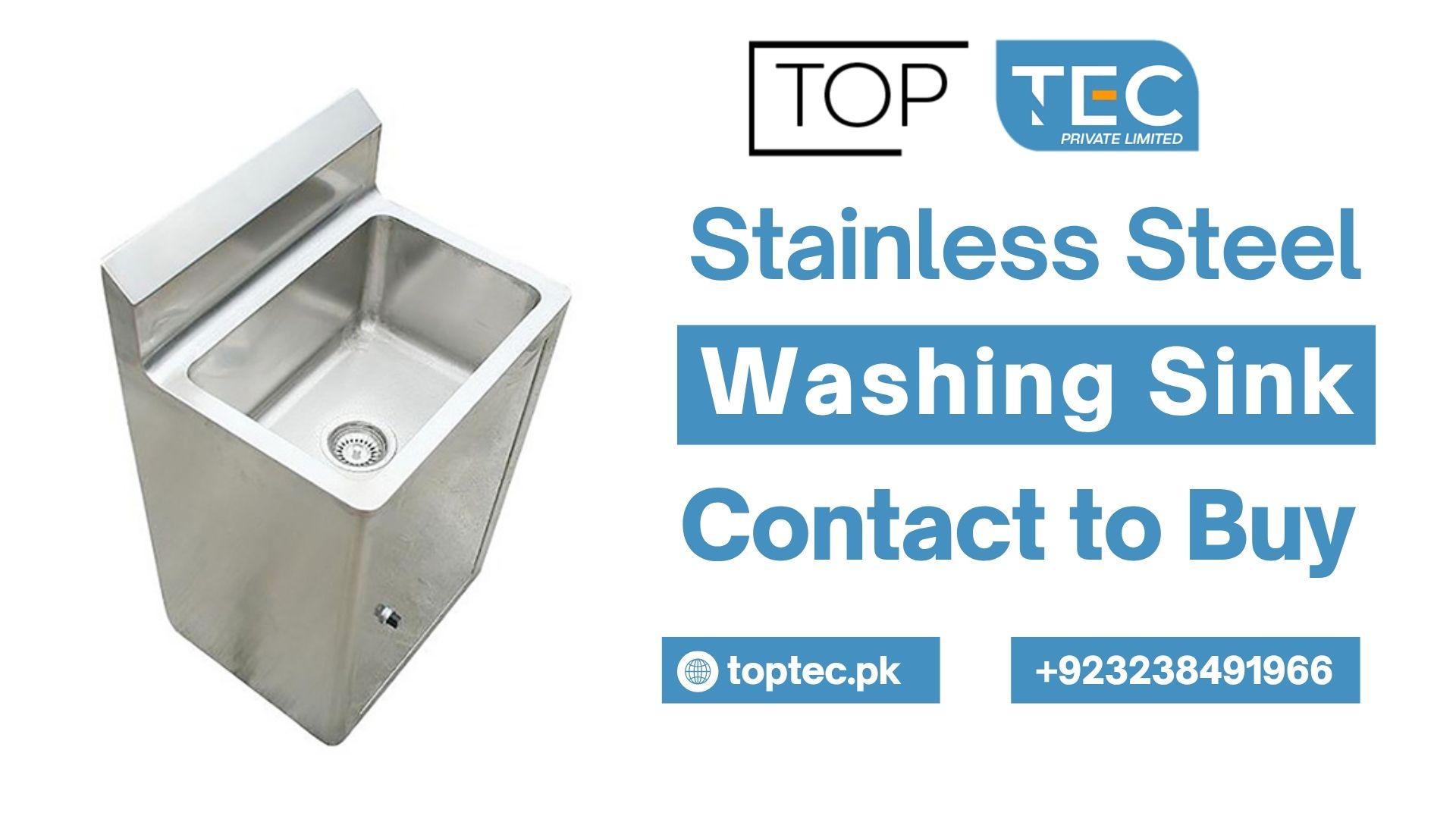
Nobody gets excited about buying a Stainless Steel Washing Sink. I get it. But here’s the thing—pick the wrong one, and you’ll deal with corrosion, drainage headaches, and replacement costs that could’ve been avoided with thirty minutes of research upfront. That’s what this guide is for.
Whether you’re outfitting a chemistry lab, renovating a commercial kitchen, or setting up a hospital scrub station, this article covers what you actually need to know before you buy Stainless Steel Washing Sink units. No fluff, no filler—just the practical stuff.
And if you’re shopping in Pakistan, stick around. We’ll talk about TOPTEC PVT. LTD, a local manufacturer of laboratory furniture that fabricates these sinks domestically, which changes the game on lead times and customization.
So Why Stainless Steel? Can’t I Just Use Ceramic?
You can. But you probably shouldn’t—at least not in a professional setting.
Ceramic cracks. Not right away, and not dramatically, but over time, repeated thermal shock from hot water creates hairline fractures that trap bacteria. Good luck passing a hygiene audit with invisible cracks harboring who-knows-what.
Stainless steel doesn’t have that problem. It’s non-porous, so nothing gets absorbed into the surface. Wipe it down, and it’s clean. Actually clean, not “looks clean but isn’t” clean. That’s the main reason hospitals, labs, and food processors almost exclusively buy Stainless Steel Washing Sink fixtures. Hygiene isn’t optional in those environments—it’s the whole point.
There’s also the durability factor. Drop a heavy beaker into a ceramic basin and you’ve got a chip. Drop it into stainless steel and you’ve got… a loud noise. Maybe a small dent. But the sink keeps working fine.
And then there’s the money angle. A decent stainless sink lasts fifteen to twenty years without much fuss. Spread the cost over that lifespan and it’s honestly hard to justify anything else for professional use.
Steel Grades — What You Need to Know (Without the Metallurgy Lecture)
There are dozens of stainless steel alloys out there. You don’t need to know most of them. For sinks, three grades cover about 95% of real-world situations.
304 stainless is your default. About 18% chromium, 8% nickel. Handles water, mild detergents, and normal atmospheric exposure without breaking a sweat. Teaching labs, restaurant kitchens, general workshops—304 does the job and doesn’t overcharge you for it. When most people buy Stainless Steel Washing Sink units, they’re buying 304 whether they realize it or not.
316 stainless is 304’s tougher sibling. The addition of molybdenum (2-3%) gives it serious resistance to chlorides and aggressive chemicals. If your lab works with hydrochloric acid, saline solutions, or anything that would pit ordinary steel, you want 316. Coastal facilities should lean this way too—salt air eats through lesser grades surprisingly fast. Yes, it costs 20-30% more. But replacing a corroded sink costs a lot more than that.
430 stainless is the budget option. Less nickel, lower corrosion resistance, and it’s magnetic (which bugs some people for reasons I’ve never fully understood). Fine for a bathroom vanity or a utility closet sink. Not fine for labs or kitchens. Don’t let a tight budget talk you into 430 for a chemical environment. You’ll regret it within two years.
My honest advice? Start with 304. Move to 316 if chemicals or salt are part of the picture. Avoid 430 for anything serious.
Sink Types — Matching the Shape to the Job
Here’s where things get interesting. Sinks come in more configurations than most people expect, and choosing the right one makes daily work noticeably easier.
Single-bowl sinks are exactly what they sound like. One basin, one drain, minimal footprint. They work great in tight spots—a sample prep corner, a hallway handwash station, a small clinic room. If space is your biggest constraint and you need to buy Stainless Steel Washing Sink equipment that still performs properly, single-bowl is your starting point.
Double-bowl sinks separate washing from rinsing. This matters more than you’d think. In food service, HACCP guidelines often require distinct wash and rinse stages. In labs, keeping dirty glassware away from rinsed glassware prevents cross-contamination. Two bowls, one workflow. It just works.
Triple-bowl sinks take the wash-rinse-sanitize sequence and give each step its own dedicated space. Hospital sterilization departments use these. So do large cafeteria kitchens and industrial labs processing high volumes of equipment daily.
Trough sinks are the odd ones out—long, shallow, and designed for oversized items that won’t fit in a standard bowl. Surgical instrument trays, large machine parts, veterinary equipment. They’re specialized, but when you need one, nothing else substitutes.
Integrated bench sinks are a personal favorite for lab settings. The sink bowl is fabricated directly into the benchtop as one continuous piece of steel. No seam between counter and sink means no gap for contaminants to hide in. Labs that buy Stainless Steel Washing Sink assemblies as part of a full bench package save installation time and get a far more hygienic result.
The Small Details That Make or Break a Sink
I’ve seen procurement teams obsess over brand names and ignore the spec sheet details that actually affect daily use. Don’t be those people.
Bowl depth is huge. A 250mm deep bowl handles standard lab glassware comfortably. Kitchens dealing with stockpots and sheet pans should go 300mm or deeper. Anything under 200mm is only acceptable for handwash stations—you’ll splash water everywhere trying to wash anything substantial in a shallow basin.
Internal corner radius might sound trivial, but it’s not. Sharp square corners where the walls meet the bottom look sleek in photos. In real life, they collect grime that’s nearly impossible to scrub out completely. A radius of 25mm or more makes cleaning genuinely easier. Every infection control officer I’ve spoken to insists on rounded corners, and they’re right.
Surface finish comes down to two practical options for most buyers. Brushed satin (#4 finish) hides scratches from daily abuse—dropped utensils, scrubbing pads, general wear. Mirror polish (#8 finish) sanitizes more easily but shows every single mark. Pick based on your reality, not your aesthetics.
Gauge thickness is where cheap sinks reveal themselves. Thin 22-gauge bowls flex when you press on them, boom like a drum when water hits them, and dent if you look at them wrong. Spend the extra money on 16 or 18 gauge. Seriously. This is not the place to cut costs.
Drainage slope is the one everyone forgets. A flat-bottomed sink that doesn’t drain completely leaves standing water. Standing water breeds bacteria. Insist on a proper fall toward the drain outlet. It’s a small thing that prevents a big headache.

Where These Sinks Actually Get Used
Laboratories
Lab sinks deal with chemical residues, biological materials, and constant water exposure. Grade 316 is common in chemistry and pharmaceutical labs. Accessories like drip cups, pegboard drying racks, and gooseneck faucets with serrated nozzles make daily work smoother. Research institutions that routinely buy Stainless Steel Washing Sink models for lab use often spec integrated drainage channels and deionized water inlets as standard features.
Hospitals and Clinics
Scrub sinks before surgery. Utility sinks for cleaning bedpans. Instrument wash stations in sterilization departments. Healthcare sinks need hands-free operation—foot pedals, knee levers, or sensor taps—because touching a faucet handle with contaminated gloves defeats the purpose. Deep bowls are essential for soaking and rinsing large items like surgical trays.
Restaurants and Food Processing
Health codes in most countries require separate sinks for handwashing, food preparation, and equipment cleaning. That’s three sinks minimum, and many operations need more. When restaurant owners buy Stainless Steel Washing Sink products, gauge thickness should be near the top of their priority list. A busy kitchen is brutal on fixtures.
Schools and Universities
Student labs are rough on everything. Sinks need to survive careless handling, the occasional acid spill, and heavy rotation across multiple class periods daily. Durability wins over aesthetics here, every time.
Industrial Facilities
Parts washing, solvent rinsing, coolant reclamation—industrial sinks handle substances that would destroy lesser materials. Oversized trough designs with built-in sediment traps and chemical-resistant drain fittings are common. If your facility needs to buy Stainless Steel Washing Sink equipment for harsh solvent exposure, check that every component—gaskets, fittings, drain assemblies—is chemically compatible. The bowl being stainless doesn’t help if the rubber gasket dissolves.
Why Buying Locally in Pakistan Makes Sense
I’ll be blunt. Importing sinks into Pakistan is expensive and slow. You’re paying ocean freight, customs duties, handling charges, and currency conversion premiums. And if the unit arrives and doesn’t fit your countertop cutout? Good luck getting a timely resolution from a supplier on another continent.
Local manufacturing flips all of that. A Pakistani fabricator can visit your facility, take actual measurements, and build sinks that fit without field modifications. Lead times drop from months to weeks. If something needs adjustment after installation, a local team shows up in days instead of opening an international support ticket that goes nowhere for three weeks.
More buyers across Pakistan now prefer to buy Stainless Steel Washing Sink products domestically, and the reasons are practical, not patriotic. Faster delivery, easier communication, lower total cost, and actual accountability.
TOPTEC PVT. LTD — A Local Option Worth Knowing About
TOPTEC PVT. LTD manufactures laboratory furniture in Pakistan, including stainless steel washing sinks built for lab, healthcare, and commercial specifications. Their product range covers lab benches, fume hoods, storage cabinets, and the full spectrum of sink configurations discussed in this guide.
The real advantage with a company like TOPTEC is customization that doesn’t blow up your timeline or budget. Need a triple-bowl sink with extra depth, an integrated drip tray, and pre-drilled holes for sensor taps in a non-standard pattern? They can do that on a normal production schedule. Try getting that level of customization from an import catalogue.
Organizations looking to buy Stainless Steel Washing Sink assemblies alongside matching benches and cabinetry benefit from single-source coordination—consistent finishes, aligned dimensions, and one delivery schedule instead of juggling multiple vendors.
TOPTEC also handles after-sales support locally. Replacement parts, warranty claims, and technical consultation happen in-country, which removes the delays that make imported equipment so frustrating to maintain.
A Practical Checklist Before You Order
Before you commit any budget to buy Stainless Steel Washing Sink equipment, run through these questions. I’ve watched too many procurement teams skip this step and pay for it later.
What’s going in the sink? Water and soap is a different requirement than acetone and hydrochloric acid. This single question determines your steel grade.
How many workflow steps need separation? That tells you whether you need single, double, or triple bowls.
Have you measured the space? Not just the countertop opening, but the clearance underneath for plumbing and the wall height for splashbacks. Measure twice. Seriously.
What accessories do you need? Drains, overflow fittings, strainer baskets, taps, soap dispensers, drying racks. List them all before requesting a quote so you’re comparing apples to apples between suppliers.
What certifications apply to your industry? ISO, GLP, HACCP, NSF—figure this out early and confirm your manufacturer can provide documentation.
What’s the warranty? Get it in writing. Pay attention to what’s specifically covered—welds, finish degradation, hardware—and what’s excluded.
Wrapping Up
A washing sink isn’t the most exciting line item on a furniture requisition. But get it wrong, and it creates problems that don’t go away—corrosion that compromises hygiene, drainage issues that slow down workflows, undersized bowls that frustrate every person who uses them.
The good news is that getting it right isn’t complicated. Understand your grade options, match the sink type to your actual daily tasks, and don’t cheap out on gauge thickness. If you’re operating in Pakistan, working with a domestic manufacturer like TOPTEC PVT. LTD gives you customization, speed, and local support that imports simply can’t match.
When you’re ready to buy Stainless Steel Washing Sink products, bring your checklist, ask hard questions, and invest in quality that’ll still be working long after you’ve forgotten the purchase date. That’s really all there is to it.
