


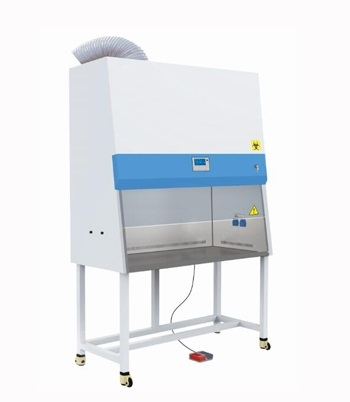
Class II Biosafety Cabinet – Laboratory safety involves calculated risk management. Researchers working with infectious agents, cell cultures, or hazardous biological materials face exposure risks that casual precautions cannot address. Personal protective equipment provides one defence layer. Facility design contributes another. However, the primary engineering control protecting both personnel and experimental materials remains the biosafety cabinet—a specialised enclosure creating controlled airflow barriers between hazardous materials and the laboratory environment.
Among biological safety cabinets, Class II designs dominate modern laboratory applications. These units provide simultaneous protection in three directions: shielding personnel from cabinet contents, protecting experimental materials from environmental contamination, and preventing cross-contamination between materials within the workspace. This triple protection makes Class II units suitable for the broadest range of biological work.
Within the Class II category, Type A2 and Type B2 configurations represent the most commonly installed variants. Each addresses specific application requirements through distinct airflow management approaches. Understanding their differences enables informed selection matching cabinet capabilities to actual laboratory needs.
This examination explores Class II Biosafety Cabinet technology comprehensively, comparing Type A2 and Type B2 configurations while addressing selection criteria, operational requirements, and maintenance considerations essential for safe, effective use.
Understanding Biosafety Cabinet Classification
Biosafety cabinet classification follows internationally recognised standards establishing performance requirements for different protection levels. Understanding this classification system provides context for evaluating specific cabinet types.
Class I Cabinets
Class I cabinets provide personnel and environmental protection but offer no product protection. Room air enters the cabinet front opening, passes over the work surface, and exhausts through HEPA filtration. This airflow pattern prevents aerosols generated within the cabinet from reaching the operator.
However, unfiltered room air contacting work materials introduces contamination risk. Class I cabinets suit applications where product sterility concerns do not exist—certain chemical procedures, some equipment enclosures, and specific decontamination applications.
Class II Cabinets
The Class II Biosafety Cabinet addresses the Class I limitation by filtering air before it contacts work materials. HEPA-filtered downflow air creates a particle-free environment within the workspace. Simultaneously, air curtains at the front opening prevent escape of cabinet atmosphere while blocking room air entry.
This dual filtration—supply air and exhaust air both passing through HEPA filters—enables simultaneous personnel, product, and environmental protection. Most microbiological work occurs in Class II cabinets because this triple protection matches typical laboratory requirements.
Class III Cabinets
Class III cabinets provide maximum containment through complete enclosure. Glove ports enable manipulation of materials without direct access. Negative pressure prevents any leakage from reaching the laboratory. These Class II Biosafety Cabinet suit work with the most dangerous pathogens where any exposure presents unacceptable risk.
Class III cabinets impose significant operational constraints. Glove port manipulation limits dexterity. Material transfer requires airlocks or decontamination procedures. Most laboratories find Class II protection adequate, reserving Class III cabinets for specialised high-containment facilities.
Class II Cabinet Type Designations
Class II cabinets subdivide into types based on airflow patterns, recirculation percentages, and exhaust configurations. Types A1, A2, B1, and B2 represent the primary designations, with A2 and B2 being most prevalent in current installations.
Type A1 Configuration
Type A1 cabinets recirculate approximately 70 percent of cabinet air while exhausting 30 percent through HEPA filtration. Exhaust may discharge into the laboratory or connect to building exhaust systems. Positive pressure contaminated plenums may exist within the cabinet structure.
Type A1 designs have largely been superseded by Type A2 configurations offering improved safety characteristics. New installations rarely specify Type A1 cabinets, though existing units remain in service.
Type A2 Configuration
Type A2 cabinets represent the most commonly installed Class II Biosafety Cabinet configuration. These units recirculate approximately 70 percent of air within the cabinet while exhausting 30 percent through HEPA filtration.
Critical design features distinguish Type A2 from Type A1. Contaminated plenums must be under negative pressure or surrounded by negative pressure plenums, preventing leakage into laboratory spaces. This requirement addresses a significant safety improvement over earlier designs.
Type A2 cabinets may exhaust directly into the laboratory through cabinet-mounted HEPA filters or connect to building exhaust systems through thimble connections or canopy hoods. Flexibility in exhaust configuration suits varied installation requirements.
Type B1 Configuration
Type B1 cabinets exhaust approximately 70 percent of air while recirculating 30 percent. Higher exhaust percentages suit applications involving volatile chemicals or radionuclides where recirculation would concentrate hazardous vapours.
Dedicated duct connections to building exhaust systems are required for Type B1 operation. Hard-ducted exhaust prevents any possibility of laboratory air contamination from cabinet contents.
Type B2 Configuration
Type B2 cabinets exhaust 100 percent of air with no recirculation. All supply air comes from the laboratory, passes through intake HEPA filtration, flows down through the workspace, and exhausts through HEPA filtration to building exhaust systems.
This total exhaust configuration suits applications involving significant volatile chemical or radionuclide quantities. No possibility of concentration buildup through recirculation exists. However, substantial building exhaust capacity is required to support Type B2 operation.
Type A2 Cabinets: Detailed Examination
Type A2 cabinets serve the majority of biological research applications. Understanding their operation, capabilities, and limitations informs appropriate application.
Airflow Dynamics
A Class II Biosafety Cabinet Type A2 creates protective airflow through carefully balanced fan systems. Supply fans draw air through HEPA filters, directing filtered air downward across the work surface in laminar flow patterns. Exhaust fans remove air from the cabinet interior, maintaining negative pressure that draws room air inward through the front opening.
The air curtain at the front opening represents critical protection for personnel. Inward airflow velocity—typically specified between 0.38 and 0.51 metres per second at the sash opening—prevents escape of aerosols generated within the Class II Biosafety Cabinet. This inward flow must overcome disturbances from operator arm movements and laboratory air currents.
Downflow air velocity—typically around 0.33 metres per second—maintains product protection by sweeping particles away from work materials. Laminar flow patterns prevent turbulence that would compromise protection.
Split airflow at the work surface level directs air toward front and rear grilles. Approximately 70 percent of this air recirculates through supply HEPA filters for continued workspace supply. Approximately 30 percent exhausts through exhaust HEPA filters.
Recirculation Considerations
Recirculating air offers energy efficiency advantages. Conditioned laboratory air passing through the cabinet multiple times reduces heating and cooling loads compared to exhausting all cabinet air from the building.
However, recirculation limits Type A2 applications. Volatile chemicals released within the cabinet may concentrate through repeated recirculation. Radionuclides similarly accumulate. Type A2 cabinets suit work involving minimal volatile chemicals—quantities insufficient to create hazardous concentrations through recirculation.
Standard guidance permits use of minute quantities of volatile toxic chemicals in Type A2 cabinets. Larger quantities or continuous use of volatile materials requires Type B1 or B2 cabinets with higher exhaust ratios or total exhaust configurations.
Exhaust Options
Type A2 cabinets offer exhaust flexibility accommodating various installation requirements. Three primary exhaust configurations exist.
Room exhaust discharges filtered air directly into the laboratory. Cabinet-mounted HEPA filters remove particulate contamination before release. This configuration suits applications without volatile chemical concerns and facilities where ducted exhaust connection proves impractical.
Canopy hood connection positions an exhaust hood above the cabinet exhaust outlet. Building exhaust draws air from this hood without direct duct connection to the cabinet. Air gaps between cabinet and canopy hood allow room air mixing. This configuration enables Class II Biosafety Cabinet relocation without duct modification while providing some volatile removal capability.
Thimble connection provides direct duct connection while maintaining air gaps. Class II Biosafety Cabinet exhaust enters ducting through an annular gap allowing room air to enter the duct alongside cabinet exhaust. This configuration prevents building exhaust fluctuations from affecting cabinet airflow balance while enabling volatile removal.
Hard-duct connection directly couples cabinet exhaust to building ductwork without air gaps. This configuration requires careful balancing between cabinet exhaust fans and building exhaust to maintain proper cabinet airflow. Pressure fluctuations in building exhaust systems may affect Class II Biosafety Cabinet performance without proper design.
Application Suitability
The Class II Biosafety Cabinet Type A2 suits most microbiological work including cell culture, diagnostic microbiology, clinical specimen processing, and research involving Biosafety Level 1, 2, or 3 agents not involving volatile chemicals or radionuclides.
Pharmaceutical sterility testing, quality control microbiology, and biotechnology research commonly employ Type A2 cabinets. The combination of personnel protection, product protection, and operational flexibility addresses typical requirements effectively.
Type A2 cabinets should not be used for work involving significant volatile toxic chemicals, volatile radionuclides, or volatile carcinogens. These applications require Type B1 or B2 cabinets with appropriate exhaust configurations.
Type B2 Cabinets: Detailed Examination
Type B2 cabinets represent the highest airflow specification within Class II designs. Total exhaust without recirculation addresses applications beyond Type A2 capabilities.
Total Exhaust Operation
A Type B2 Class II Biosafety Cabinet exhausts 100 percent of cabinet air through HEPA filtration to building exhaust systems. No recirculation occurs. All supply air originates from the laboratory, passes through supply HEPA filters, and flows downward through the workspace.
This configuration prevents any accumulation of volatile materials through recirculation. Chemicals volatilising within the cabinet pass through exhaust filtration and building exhaust without opportunity to concentrate. Single-pass airflow provides maximum volatile material handling capability within Class II designs.
Building Exhaust Requirements
Total exhaust operation imposes significant demands on building exhaust systems. Type B2 cabinets typically require 1,000 to 1,400 cubic feet per minute of exhaust capacity depending on cabinet size. Building systems must provide this capacity continuously whenever the cabinet operates.
Exhaust capacity must remain stable despite building system fluctuations. Variable air volume systems serving multiple exhaust points may not provide consistent flow for Type B2 cabinet support. Dedicated exhaust capacity or sophisticated controls ensuring consistent flow may be required.
Backup exhaust capability addresses primary system failures. Type B2 cabinets without exhaust lose containment capability immediately—no recirculation maintains any protection. Critical applications may require redundant exhaust systems ensuring continued operation during primary system maintenance or failure.
Energy Implications
Total exhaust configurations consume more energy than recirculating designs. Conditioned laboratory air exhausted from the building requires replacement with outdoor air requiring heating or cooling to laboratory temperature.
Annual energy costs for Type B2 operation significantly exceed Type A2 operation depending on climate conditions. Facilities in extreme climates face substantial heating or cooling loads replacing exhausted air. Life cycle cost analysis should include energy expenses when comparing cabinet types.
Energy recovery systems can offset some Type B2 energy penalty. Heat exchangers transferring energy from exhaust air to incoming supply air reduce net conditioning loads. However, additional equipment costs and maintenance requirements accompany energy recovery implementation.
Application Requirements
Type B2 cabinets suit applications involving volatile toxic chemicals, volatile radionuclides, or volatile carcinogens in quantities exceeding Type A2 limitations. Chemotherapy drug preparation commonly employs Type B2 cabinets due to drug volatility and toxicity concerns.
Research combining biological agents with volatile chemicals may require Type B2 protection. Radioisotope labelling procedures involving volatile compounds similarly benefit from total exhaust configurations.
The Class II Biosafety Cabinet Type B2 also suits applications where recirculation concerns exist regardless of volatile material presence. Some facilities specify Type B2 for high-consequence pathogens where any possibility of concentration through recirculation presents unacceptable risk.
However, Type B2 cabinets should not be specified unnecessarily. Higher costs, greater energy consumption, and dependence on building exhaust systems represent disadvantages when Type A2 capabilities suffice.
Comparing Type A2 and Type B2 Performance
Direct comparison clarifies selection between Type A2 and Type B2 configurations for specific applications.
Personnel Protection
Both Type A2 and Type B2 provide equivalent personnel protection through inward airflow at the front opening. Air curtain velocities and front opening configurations follow identical specifications. Personnel protection represents a constant across Class II types rather than a differentiating factor.
Product Protection
Both configurations provide HEPA-filtered downflow air creating sterile work environments. Product protection equivalence exists across both types when properly operated.
However, Type B2 single-pass air may theoretically provide marginally superior product protection compared to Type A2 recirculated air. Any particles escaping downflow HEPA filtration would not recirculate in Type B2 configurations. Practical significance of this difference remains minimal given HEPA filter efficiency specifications.
Environmental Protection
Both types exhaust through HEPA filtration providing equivalent particulate removal. Environmental protection from biological aerosols remains equivalent.
Volatile material handling differs significantly. Type A2 recirculation may concentrate volatiles to hazardous levels. Type B2 total exhaust prevents concentration. For applications involving volatile materials, Type B2 provides superior environmental protection.
Installation Complexity
Type A2 cabinets offer installation flexibility including room exhaust options not requiring ductwork. Installation in existing facilities without extensive modification remains practical.
Type B2 cabinets require dedicated exhaust ductwork and adequate building exhaust capacity. Installation complexity and cost exceed Type A2 requirements. Retrofit installation in existing buildings may prove impractical without significant facility modification.
Operational Reliability
Type A2 cabinets with recirculating airflow continue providing protection during building exhaust system failures when configured for room exhaust. Cabinet-mounted fans maintain airflow independently.
A Class II Biosafety Cabinet Type B2 depends entirely on building exhaust. System failures immediately compromise cabinet function. Redundant exhaust systems or rigorous maintenance programs address reliability concerns but add cost and complexity.
Operating Cost
Type A2 energy consumption remains relatively modest. Recirculated air requires no replacement conditioning. Energy costs primarily reflect fan motor operation.
Type B2 energy consumption significantly exceeds Type A2 due to exhausting conditioned air from the building. Climate-dependent heating or cooling loads for replacement air dominate operating costs in many installations.
Selection Criteria for Laboratory Applications
Selecting between Type A2 and Type B2 configurations requires systematic evaluation of application requirements, facility capabilities, and operational factors.
Hazard Assessment
Biological hazard assessment determines biosafety level requirements. Both Type A2 and Type B2 suit Biosafety Level 1, 2, and 3 applications when properly configured and operated. Biosafety level alone does not dictate cabinet type selection.
Chemical hazard assessment differentiates between types. Volatile chemical quantities, exposure frequencies, and toxicity characteristics determine whether Type A2 limitations prove acceptable or Type B2 total exhaust becomes necessary.
Radiological hazard assessment similarly guides selection. Volatile radionuclide work requires Type B2 configurations. Sealed source work without volatilisation risk may suit Type A2 cabinets.
Risk assessment should involve qualified safety professionals. Institutional biosafety officers, radiation safety officers, and chemical hygiene officers contribute expertise to cabinet selection decisions.
Facility Evaluation
Existing exhaust capacity determines feasibility of Type B2 installation. Building systems lacking adequate capacity cannot support Type B2 operation without expansion. Capacity assessment should consider current demands plus proposed cabinet requirements.
Ductwork routing affects installation practicality and cost. Direct routes from cabinet location to building exhaust enable economical installation. Circuitous routes involving extensive ductwork increase costs significantly.
Laboratory space constraints influence cabinet selection. Type B2 installations may require additional space for ductwork and exhaust connections. Compact laboratory spaces may accommodate Type A2 more readily.
Operational Considerations
Workflow patterns affect cabinet selection. Applications requiring frequent volatile chemical use favour Type B2 despite higher costs. Occasional volatile use may suit Type A2 with appropriate procedural controls.
The selected Class II Biosafety Cabinet must integrate with laboratory workflows efficiently. Cabinet location, exhaust configuration, and operational requirements should support rather than impede research activities.
Maintenance capabilities influence selection. Type B2 dependence on building systems requires coordination between laboratory and facility management. Organisations with limited facility management resources may find Type A2 independence advantageous.
Economic Factors
Capital costs differ between types. Type B2 cabinets typically cost more than Type A2 equivalents. Installation costs including ductwork amplify differences.
Operating costs favour Type A2 configurations. Energy savings over cabinet lifetime may exceed initial cost differences.
Total cost of ownership analysis comparing capital and operating costs over expected cabinet life provides rational economic comparison. Discount rate assumptions and energy cost projections affect analysis outcomes.
Installation Requirements
Proper installation ensures cabinet performance meets specifications. Installation errors compromise safety regardless of cabinet quality.
Location Selection
Cabinet location affects performance and usability. Traffic patterns near cabinet fronts create air disturbances disrupting protective airflow. Locations away from high-traffic areas maintain cabinet effectiveness.
Supply air diffusers directing airflow toward cabinet fronts similarly disrupt air curtains. Diffuser repositioning or cabinet relocation addresses this concern.
Windows and doors near cabinets create drafts during opening and closing. Distance from these openings maintains stable airflow conditions.
A Class II Biosafety Cabinet should be positioned allowing adequate clearance behind, beside, and above the unit. Manufacturer specifications indicate minimum clearances for proper airflow and maintenance access.
Exhaust System Connections
Type A2 cabinets with canopy or thimble connections require proper hood positioning and duct sizing. Air gaps must fall within specified dimensions to maintain proper cabinet balance while enabling volatile removal.
Type B2 hard-duct connections require careful balancing. Exhaust system flow must match cabinet exhaust fan output precisely. Imbalance in either direction affects cabinet airflow patterns, potentially compromising protection.
Exhaust ductwork material must suit exhausted materials. Standard galvanised steel suits most biological applications. Chemical-resistant materials may be required for specific volatile chemical applications.
Electrical Requirements
Cabinet electrical requirements include main power for fans and lighting plus receptacles for equipment used within cabinets. Dedicated circuits prevent interference from other equipment.
Uninterruptible power supplies maintain cabinet operation during brief power interruptions. Extended outages may require generator backup for critical applications.
Electrical installations must comply with applicable codes and standards. Qualified electricians should perform installations with appropriate inspections.
Certification Testing
Initial certification testing verifies installed cabinet performance meets specifications. Testing should occur before research use begins.
Certification testing includes downflow velocity measurement, inflow velocity measurement, HEPA filter integrity testing, and airflow smoke pattern visualisation. Failed tests indicate installation problems requiring correction.
Annual recertification maintains performance assurance. Testing frequencies may increase for high-hazard applications or following repairs affecting airflow.
Operational Best Practices
Cabinet performance depends on proper operation. User training and procedural compliance ensure protection realisation.
Work Surface Organisation
Materials should be placed within cabinets before beginning work. Repeated arm movements through air curtains disrupt protective airflow. Minimising movements through the opening maintains protection.
Work organisation should position clean materials upstream and contaminated materials downstream within the cabinet airflow pattern. This arrangement prevents cross-contamination from airflow carrying particles from contaminated to clean materials.
The Class II Biosafety Cabinet work surface should remain uncluttered. Excessive materials within the cabinet disrupt airflow patterns, creating turbulence that compromises protection.
Proper Technique
Arms should enter cabinets slowly, allowing air curtain stabilisation before beginning work. Rapid movements create turbulence disrupting protection.
Work should occur at least four inches inside the front opening. Closer proximity to the opening places materials near the air curtain mixing zone where protection diminishes.
Bunsen burners should not be used within biosafety cabinets. Flames disrupt airflow patterns and may damage HEPA filters. Electric microincinerators or disposable loops provide alternatives for sterilisation needs.
Decontamination Procedures
Work surface decontamination should occur before and after each use. Appropriate disinfectants for materials handled ensure biological decontamination.
UV lights, if present, supplement but do not replace chemical decontamination. UV effectiveness depends on exposure time, intensity, and surface characteristics. Shadow areas receive no UV exposure regardless of duration.
Spill response procedures should address containment within the cabinet, surface decontamination, and determination of whether cabinet contamination requires professional decontamination services.
Sash Position
Proper sash position maintains specified airflow velocities. Operating with sashes too high reduces inflow velocity, compromising personnel protection. Operating with sashes too low increases inflow velocity, potentially disrupting downflow patterns.
Sash position indicators or alarms alert operators to improper positions. Responding to these indicators maintains protection.
Sashes should remain at operating position during work and may be lowered during non-use periods if cabinet continues running. Completely closing sashes may create excessive negative pressure affecting cabinet balance.
Maintenance Requirements
Ongoing maintenance preserves cabinet protection capability. Deferred maintenance compromises safety regardless of initial cabinet quality.
Daily Maintenance
Work surface cleaning after each use prevents material accumulation. Removable work surfaces enable thorough cleaning.
Grille inspection ensures airflow paths remain unobstructed. Debris accumulation on grilles restricts airflow, affecting cabinet balance.
Visual inspection identifies obvious problems—damaged sashes, unusual sounds, or visible filter damage. Prompt reporting enables timely correction.
Periodic Maintenance
The Class II Biosafety Cabinet requires regular filter inspection and eventual replacement. Pre-filter replacement prevents premature HEPA filter loading. HEPA filter replacement timing depends on operating conditions and loading rates.
Motor and blower maintenance includes bearing lubrication where applicable and belt inspection for belt-driven designs. Modern direct-drive systems require less mechanical maintenance.
Electrical component inspection identifies deteriorating connections, damaged cords, or failing indicator lights. Electrical problems may create safety hazards beyond cabinet function concerns.
Certification Frequency
Annual certification represents minimum testing frequency. More frequent testing suits high-hazard applications, heavily used cabinets, or cabinets with history of problems.
Certification should follow any service affecting airflow—filter replacement, motor service, or repairs to cabinet structure. Post-service certification confirms repair success.
Certification records document cabinet performance history. Trends indicating declining performance enable proactive maintenance preventing protection failures.
Decontamination Before Service
Service involving potential exposure to contaminated surfaces requires prior decontamination. Formaldehyde fumigation or alternative decontamination methods render cabinets safe for service personnel.
A Class II Biosafety Cabinet should be decontaminated before relocation, filter changes, or any internal service. Documentation of decontamination completion protects service personnel and demonstrates institutional responsibility.
Decontamination procedures should follow established protocols appropriate for biological materials handled in the cabinet. Generic decontamination may prove inadequate for specific high-hazard agents.
Laminar Flow Technology Fundamentals
Understanding laminar flow principles illuminates cabinet operation and proper technique.
Laminar Versus Turbulent Flow
Laminar flow describes fluid movement in parallel layers without mixing between layers. Particles within laminar flow travel in predictable straight paths.
Turbulent flow involves chaotic mixing between fluid regions. Particles within turbulent flow follow unpredictable paths potentially moving in any direction.
Biosafety cabinets establish laminar downflow within the work zone. HEPA-filtered air emerges from diffusers designed to create parallel flow patterns. This laminar flow sweeps particles downward away from work materials and operator breathing zones.
Flow Disruption Sources
Obstacles within airflow create turbulence downstream. Large equipment, material containers, or hands and arms within the cabinet disrupt laminar patterns.
Rapid movements generate turbulence extending beyond immediate disturbance locations. Slow, deliberate movements minimise turbulence creation.
External air currents entering through the front opening may disrupt internal laminar patterns. Maintaining proper inflow velocity prevents external air penetration while minimising disruption.
Flow Visualisation
Smoke testing during certification demonstrates airflow patterns visually. Smoke tubes release visible smoke enabling observation of air movement within and around cabinets.
Smoke testing reveals protection zone boundaries, air curtain effectiveness, and flow pattern disruption from obstacles. Understanding these patterns informs proper work technique.
Operators may observe smoke testing during certification to visualise actual protection patterns. This observation reinforces training on proper technique and cabinet limitations.
Pakistani Manufacturing Excellence
Pakistan’s scientific equipment manufacturing sector has matured substantially, enabling domestic production of sophisticated laboratory equipment meeting international standards. Local manufacturing provides advantages benefiting Pakistani research institutions while demonstrating national industrial capability.
TOPTEC PVT. LTD exemplifies Pakistani manufacturing excellence, producing laboratory furniture and related equipment within Pakistan. Domestic manufacturing reduces dependence on imported equipment while supporting local employment and industrial development.
The Class II Biosafety Cabinet represents exactly the type of critical laboratory equipment that domestic manufacturing capability addresses. Pakistani research institutions, clinical laboratories, and pharmaceutical manufacturers can source essential safety equipment locally, benefiting from reduced lead times, accessible technical support, and elimination of international shipping complexities.
Growing pharmaceutical and biotechnology sectors within Pakistan generate expanding demand for biosafety cabinets. Domestic manufacturers responding to this demand strengthen national capability while serving market needs efficiently. Investment in local manufacturing infrastructure creates lasting benefit extending beyond individual equipment purchases.
Quality assurance in local manufacturing ensures equipment meets performance specifications essential for biosafety applications. Pakistani manufacturers can achieve international standards while providing service and support advantages impossible for distant international suppliers to match.
Regulatory and Standards Framework
Biosafety cabinet selection and use occur within regulatory and standards frameworks establishing minimum requirements.
NSF/ANSI 49 Standard
NSF/ANSI 49 establishes design, construction, and performance requirements for Class II biosafety cabinets in the United States and internationally. Compliance with NSF/ANSI 49 indicates cabinet design meets recognised safety standards.
The standard specifies airflow velocities, filter efficiency requirements, construction materials, and performance testing protocols. Manufacturers certify compliance through independent testing laboratory evaluation.
Specifying NSF/ANSI 49 compliant cabinets ensures baseline performance regardless of manufacturer. A Class II Biosafety Cabinet meeting this standard satisfies internationally recognised requirements.
EN 12469 Standard
European standard EN 12469 establishes similar requirements for the European market. Some specification differences exist between NSF/ANSI 49 and EN 12469, though fundamental performance requirements align.
Equipment manufactured for global markets may comply with both standards. Specification documents should indicate applicable standards and certification status.
Biosafety Guidelines
Institutional biosafety committees establish cabinet requirements for specific applications. These requirements may exceed standard minimums based on institutional risk assessment.
CDC/NIH guidelines in the United States and equivalent guidelines internationally provide biosafety level-specific cabinet recommendations. These guidelines inform cabinet selection for various biological agents.
Regulatory agencies may impose specific requirements for certain applications. Pharmaceutical manufacturing, clinical laboratory, and research applications face varying regulatory oversight affecting cabinet specifications.
Future Technology Developments
Biosafety cabinet technology continues evolving, with emerging developments addressing current limitations and expanding capabilities.
Energy Efficiency Improvements
Motor technology advances reduce energy consumption while maintaining airflow performance. Electronically commutated motors provide efficiency improvements over traditional motor designs.
Variable speed drives enable energy-saving operation during reduced-demand periods. Setback modes reducing airflow when cabinets are unoccupied conserve energy without compromising protection during active use.
Heat recovery integration transfers energy from exhaust air to building supply air, reducing net conditioning loads for Type B2 installations.
Monitoring Enhancements
Continuous monitoring systems track airflow parameters, filter loading, and operational status in real time. Data logging enables performance trending and predictive maintenance.
Network connectivity allows remote monitoring of cabinet status. Facility managers can verify cabinet operation without visiting individual laboratory locations.
Alarm systems provide immediate notification of parameter deviations. Integration with building management systems enables coordinated response to cabinet problems.
Ergonomic Developments
Adjustable working heights accommodate users of varying stature. Electric height adjustment enables individual positioning without tools.
Improved sash designs provide better visibility while maintaining protection. Anti-fatigue features support extended work sessions.
Lighting improvements including LED systems provide superior illumination with reduced heat generation and longer service life.
Conclusion
The Class II Biosafety Cabinet remains essential infrastructure for laboratories conducting biological research, clinical diagnostics, pharmaceutical manufacturing, and related activities. Type A2 and Type B2 configurations address distinct application requirements through different airflow management approaches.
Type A2 cabinets suit the majority of biological work, providing personnel, product, and environmental protection through efficient recirculating airflow design. Installation flexibility and moderate operating costs make Type A2 the default selection for applications not involving significant volatile materials.
Type B2 cabinets address applications involving volatile toxic chemicals, radionuclides, or situations requiring total exhaust for other reasons. Higher installation complexity and operating costs limit Type B2 selection to applications genuinely requiring total exhaust capability.
Selection between types requires systematic evaluation of hazards, facility capabilities, operational requirements, and economic factors. Neither type universally outperforms the other—appropriate selection matches cabinet capabilities to actual application requirements.
Pakistani manufacturing capability through companies like TOPTEC PVT. LTD enables domestic sourcing of critical laboratory safety equipment. Local manufacturing provides advantages including accessible support, reduced lead times, and contribution to national industrial development.
Proper installation, operation, and maintenance ensure Class II Biosafety Cabinet equipment delivers intended protection throughout service life. Investment in quality equipment and operational excellence creates laboratory environments where research proceeds safely and effectively.
