

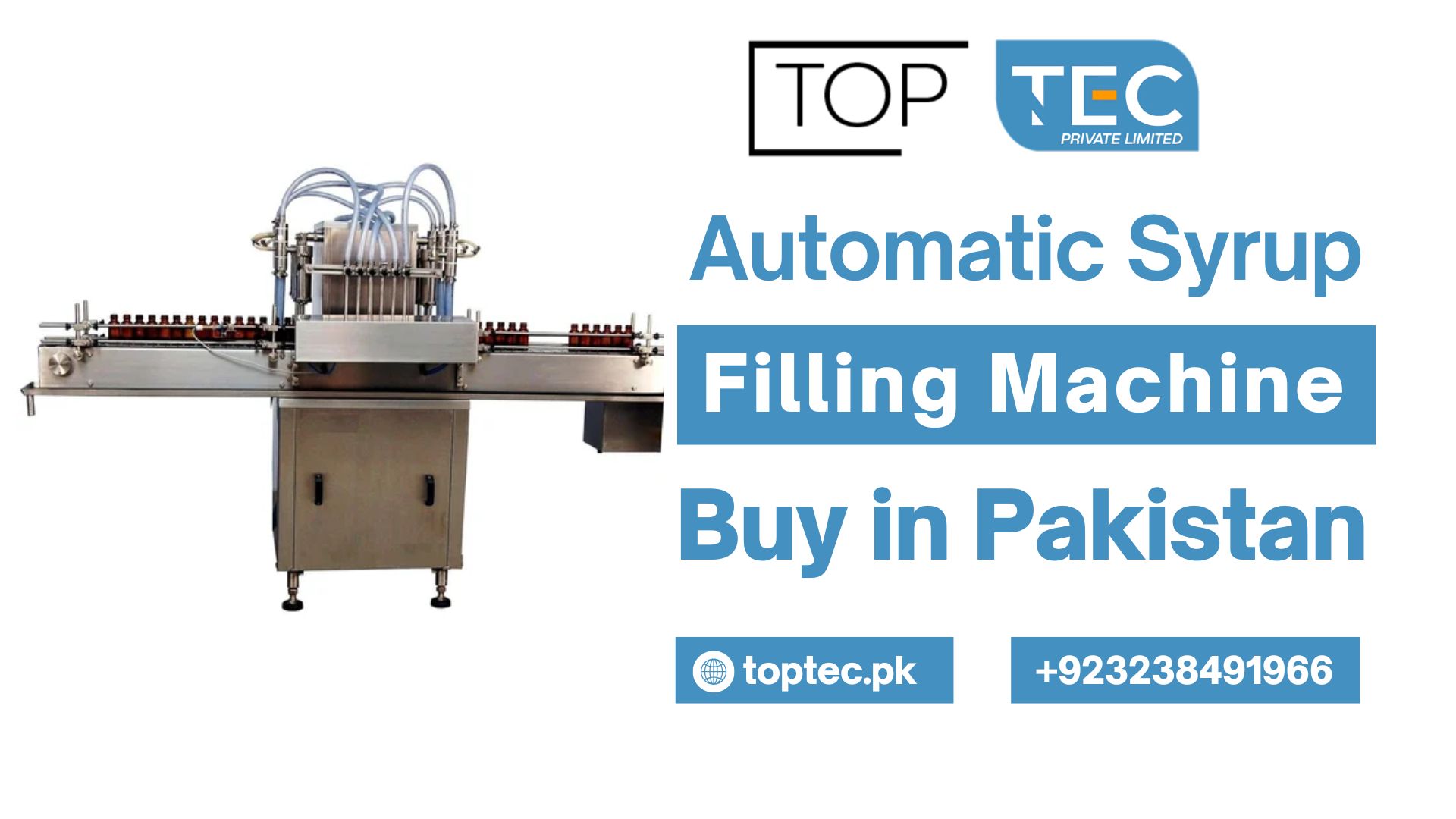
If you’ve worked in pharmaceutical manufacturing for any length of time, you know that filling syrup products isn’t just a packaging step — it’s a critical quality operation. Whether you’re filling liquid syrups, suspensions, or dry powders that get reconstituted later, the filling machine you choose directly affects dosage accuracy, batch release timelines, regulatory compliance, and ultimately patient safety.
That’s why more and more manufacturers across Pakistan are making the decision to buy syrup filling machine equipment that’s specifically designed for GMP (Good Manufacturing Practice) environments. The right machine doesn’t just fill bottles faster; it gives your quality team confidence that every bottle leaving your line meets the required specifications and can stand up to a DRAP inspection or any international audit.
In this article, I’ll walk you through what makes a pharmaceutical syrup filling machine truly GMP-compliant, explain the differences between liquid and powder filling approaches, and discuss what to look for when you buy syrup filling machine systems for regulated pharmaceutical production. I’ll also cover why working with a local manufacturer like TOPTEC PVT. LTD can simplify everything from procurement to validation to long-term support.
What Is a Pharmaceutical Syrup Filling Machine?
A pharmaceutical syrup filling machine is a specialized piece of equipment designed to dispense precise volumes of liquid syrups, oral suspensions, or pharmaceutical powders into containers — typically bottles, vials, or jars — under controlled, validated conditions. Unlike general-purpose liquid fillers used in food or cosmetic production, pharmaceutical syrup filling machines are built with GMP compliance as a core design principle.
This means the machine needs to deliver more than just mechanical performance. It needs to support:
- Accurate and reproducible dosing — consistent fill volumes across every bottle in a batch, with documented verification.
- Product-contact material compliance — all surfaces that touch the product must be constructed from pharmaceutical-grade materials (typically 316L stainless steel) with appropriate surface finishes and FDA-compliant seals.
- Cleanability and changeover capability — easy disassembly for cleaning, minimal dead legs where product can accumulate, and documentation to support cleaning validation.
- Traceability and documentation — calibration records, batch records, and data that supports your quality management system.
- Contamination control — design features that minimize the risk of cross-contamination between products or batches.
If you’re in the process of expanding your pharmaceutical production capacity, the decision to buy syrup filling machine equipment should start with these GMP requirements, not just throughput numbers.
Liquid Syrup Filling vs. Powder Filling — Different Challenges, Different Solutions
Pharmaceutical syrup production isn’t one-size-fits-all. Some products are ready-to-use liquid syrups. Others are dry powders intended for reconstitution by the patient or pharmacist. Each requires a different filling approach, and the machine you choose needs to match the specific product type.
Liquid Syrup Filling
Liquid syrup filling involves dispensing viscous liquids — cough syrups, antacid suspensions, multivitamin syrups, herbal formulations, and similar products — into bottles. The main challenges here are viscosity management, air entrapment, dripping or stringing at the nozzle, and maintaining fill accuracy across a range of temperatures and product formulations.
For liquid syrups, the most common filling technologies are:
- Piston fillers: Excellent for viscous liquids and suspensions with particulates. Provide high volumetric accuracy and are well-suited for pharmaceutical applications. Many manufacturers choose to buy syrup filling machine systems based on piston technology when accuracy and viscosity handling are top priorities.
- Peristaltic fillers: Ideal when cleanability and rapid product changeover are critical. The product only contacts the disposable or cleanable tube, which simplifies cleaning validation. This is often the preferred choice when you need to buy syrup filling machine equipment for facilities producing multiple syrup formulations.
- Gravity fillers: Simpler and less expensive, but generally less suitable for viscous pharmaceutical syrups where accuracy and consistency matter. They’re more common in food applications than in regulated pharmaceutical production.
Powder Filling for Reconstitutable Syrups
Some pharmaceutical syrups are produced as dry powders that the end user mixes with water before consumption. Powder filling presents a different set of challenges: flowability of the powder, uniformity of fill weight, dust control, and segregation of blended components.
Powder filling solutions for pharmaceutical applications typically use:
- Auger fillers: An auger screw dispenses a controlled amount of powder into each container. Auger fillers can achieve good weight accuracy for free-flowing to moderately cohesive powders and are widely used in pharmaceutical powder filling.
- Volumetric cup fillers: Measure powder by volume using a series of cups. Simpler but generally less accurate than auger fillers for pharmaceutical applications.
- Vacuum or pressure-based fillers: Used for specific powder types, though less common in standard syrup powder filling.
Many modern pharmaceutical production lines need the flexibility to handle both liquid and powder products. Some manufacturers choose to buy syrup filling machine systems that can be configured for either liquid or powder filling, or they invest in separate dedicated lines depending on production volume and product mix.
What Makes a Syrup Filling Machine GMP-Compliant?
When you’re evaluating options to buy syrup filling machine equipment for pharmaceutical use, “GMP-compliant” shouldn’t be a vague marketing claim — it needs to translate into specific, verifiable design and documentation features.
1. Materials of Construction
All product-contact surfaces should be 316L stainless steel with appropriate surface finish (often electropolished to minimize product adhesion and make cleaning easier). Seals, gaskets, and tubing must be made from pharmaceutical-grade materials like EPDM, PTFE, or silicone that are compatible with your specific product formulations and cleaning agents. Material certificates should be available for every product-contact component.
2. Cleanability and Design for Cleaning
GMP-compliant machines are designed to be easily disassembled for cleaning and inspection. There should be minimal dead legs, no sharp internal corners where product can accumulate, and clear access to all product-contact areas. If you’re planning to buy syrup filling machine equipment for a facility that produces multiple products, this is one of the most important factors to evaluate.
3. Fill Accuracy and Verification
Pharmaceutical filling requires documented fill accuracy. Look for machines that offer:
- Precise volumetric or gravimetric dosing
- Calibration capability with traceable standards
- In-line check weighing or fill volume verification options
- Data logging for batch records
4. Contamination Control
Features that support contamination control include:
- Enclosed filling areas or laminar flow integration options
- Tool-less disassembly to prevent contamination during maintenance
- Separate product paths to prevent cross-contamination
- CIP (Clean-in-Place) or SIP (Sterilize-in-Place) capability for higher-risk products
5. Documentation Package
A proper GMP-compliant machine comes with comprehensive documentation, including:
- User requirement specifications (URS)
- Design qualification (DQ)
- Installation qualification (IQ) and operational qualification (OQ) support
- Material certificates and surface finish reports
- Maintenance manuals and spare parts lists
- Calibration procedures
When you buy syrup filling machine equipment for a regulated pharmaceutical facility, this documentation package is just as important as the mechanical specifications.
Semi-Automatic vs. Fully Automatic — Choosing the Right Level of Automation
Another key decision when you buy syrup filling machine systems is whether you need semi-automatic or fully automatic operation.
Semi-Automatic Syrup Filling Machines
Semi-automatic machines require an operator to place bottles under the filling nozzle and initiate each fill cycle (often via a foot pedal or button). They’re well-suited for:
- Small to medium batch sizes
- Startups and growing pharmaceutical manufacturers
- Facilities with frequent product changeovers
- Pilot-scale production or clinical trial manufacturing
Advantages: Lower capital investment, smaller footprint, easier validation for small batches, more flexible for varied container sizes.
Limitations: Lower throughput, more labor-dependent, potential for operator variability.
Fully Automatic Syrup Filling Machines
Fully automatic lines integrate bottle feeding, positioning, filling, capping, and sometimes labeling into a continuous operation. They make sense for:
- High-volume production
- Large pharmaceutical manufacturers
- Products with stable demand and standardized packaging
Advantages: Higher throughput, consistent performance, lower labor cost per unit, better for large-scale commercial production.
Limitations: Higher upfront cost, larger space requirements, more complex installation and validation.
Many pharmaceutical manufacturers start by choosing to buy syrup filling machine equipment in a semi-automatic configuration, then upgrade to fully automatic as production volumes grow. This approach manages capital investment while allowing the business to scale.
Validation and Regulatory Considerations in Pakistan
For pharmaceutical manufacturers in Pakistan, DRAP compliance is a central concern. When you buy syrup filling machine equipment, you need to think about how the machine will fit into your overall validation and quality management system.
Installation Qualification (IQ)
IQ confirms that the machine was delivered and installed according to specifications. This includes verifying model numbers, serial numbers, utility connections, and that all components are present as per the purchase order.
Operational Qualification (OQ)
OQ demonstrates that the machine operates within its specified parameters. For a syrup filling machine, this typically includes:
- Fill accuracy testing across the operating range (minimum and maximum fill volumes)
- Speed and throughput verification
- Temperature control verification (if the machine includes heating or cooling for viscous products)
- Alarm and interlock testing
- Cleaning cycle verification (if CIP is included)
Performance Qualification (PQ)
PQ proves that the machine performs acceptably with your actual products under normal operating conditions. This involves running multiple production batches, documenting fill accuracy, checking for drips or stringing, verifying cleaning effectiveness, and confirming that the finished product meets all quality specifications.
TOPTEC PVT. LTD provides the technical documentation and support needed to complete these validation activities. When you buy syrup filling machine equipment from a manufacturer that understands pharmaceutical validation requirements, the qualification process is far smoother and less stressful.
Key Features to Look for When You Buy Syrup Filling Machine Equipment
If you’re actively evaluating options to buy syrup filling machine systems, here are the features that matter most in real-world pharmaceutical production:
- Adjustable fill volume: The ability to quickly and accurately adjust fill volumes for different container sizes and product formulations.
- No-drip nozzles: Specialized nozzle designs that prevent dripping and stringing, which is critical for maintaining fill accuracy and keeping the line clean.
- Easy disassembly for cleaning: Tool-less or minimal-tool disassembly makes cleaning faster and reduces the risk of damage during maintenance.
- Calibration capability: Built-in or easily implemented calibration procedures with traceable standards.
- Data logging: The ability to record fill data for batch documentation and trend analysis.
- Compatibility with CIP/SIP: For products requiring higher levels of sterility assurance, CIP or SIP capability can be essential.
- Multiple filling heads: For higher throughput, machines with multiple filling heads can significantly increase production speed while maintaining accuracy.
- Integration capability: The ability to integrate with conveyors, cappers, labelers, and check weighers to create a complete packaging line.
Common Pitfalls to Avoid
Before you buy syrup filling machine equipment, watch out for these common mistakes:
Focusing only on price: A low-cost machine that can’t meet GMP requirements will cost far more in the long run through rejected batches, extended validation timelines, and regulatory compliance issues.
Not testing with your actual product: Every syrup formulation behaves differently. Viscosity, particulates, temperature sensitivity, and foaming characteristics all affect filling performance. Always request a product trial with your actual formulation.
Underestimating cleaning validation: Cleaning validation is time-consuming and expensive. Choose a machine design that makes cleaning straightforward and minimizes hard-to-clean areas.
Ignoring future capacity needs: It’s usually more cost-effective to buy syrup filling machine equipment with some headroom for growth than to replace a machine too soon.
Overlooking documentation: In pharmaceutical manufacturing, missing or inadequate documentation can be just as problematic as mechanical issues during an inspection.
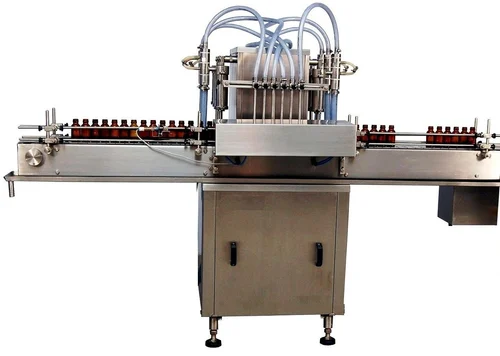
Why Choose TOPTEC PVT. LTD When You Buy Syrup Filling Machine Equipment
For pharmaceutical manufacturers in Pakistan, sourcing equipment locally offers real advantages that imported machinery often can’t match. TOPTEC PVT. LTD is a Pakistan-based manufacturer of laboratory furniture and industrial equipment, and they understand the specific needs of pharmaceutical production facilities in the local regulatory environment.
When you buy syrup filling machine equipment from TOPTEC, you benefit from:
- Local manufacturing and shorter lead times: Weeks instead of months for delivery, which can be critical when you’re expanding production or replacing aging equipment.
- Competitive pricing: No import duties, international freight charges, or currency fluctuation markups. Local manufacturing keeps costs predictable.
- Customization for your specific needs: TOPTEC can work with you to configure the machine for your specific product range, container sizes, and production requirements.
- Accessible technical support: Local support means faster response times and easier communication when you need assistance with installation, validation, or maintenance.
- Comprehensive documentation: TOPTEC provides the material certificates, design documentation, and validation support that pharmaceutical manufacturers need for regulatory compliance.
- Complete facility solutions: Beyond filling machines, TOPTEC manufactures laboratory workbenches, fume hoods, clean room furniture, storage cabinets, and other equipment you might need for a complete pharmaceutical production facility.
Working with a single local supplier for multiple pieces of equipment can simplify procurement, ensure compatibility, and make long-term support much easier to manage.
