

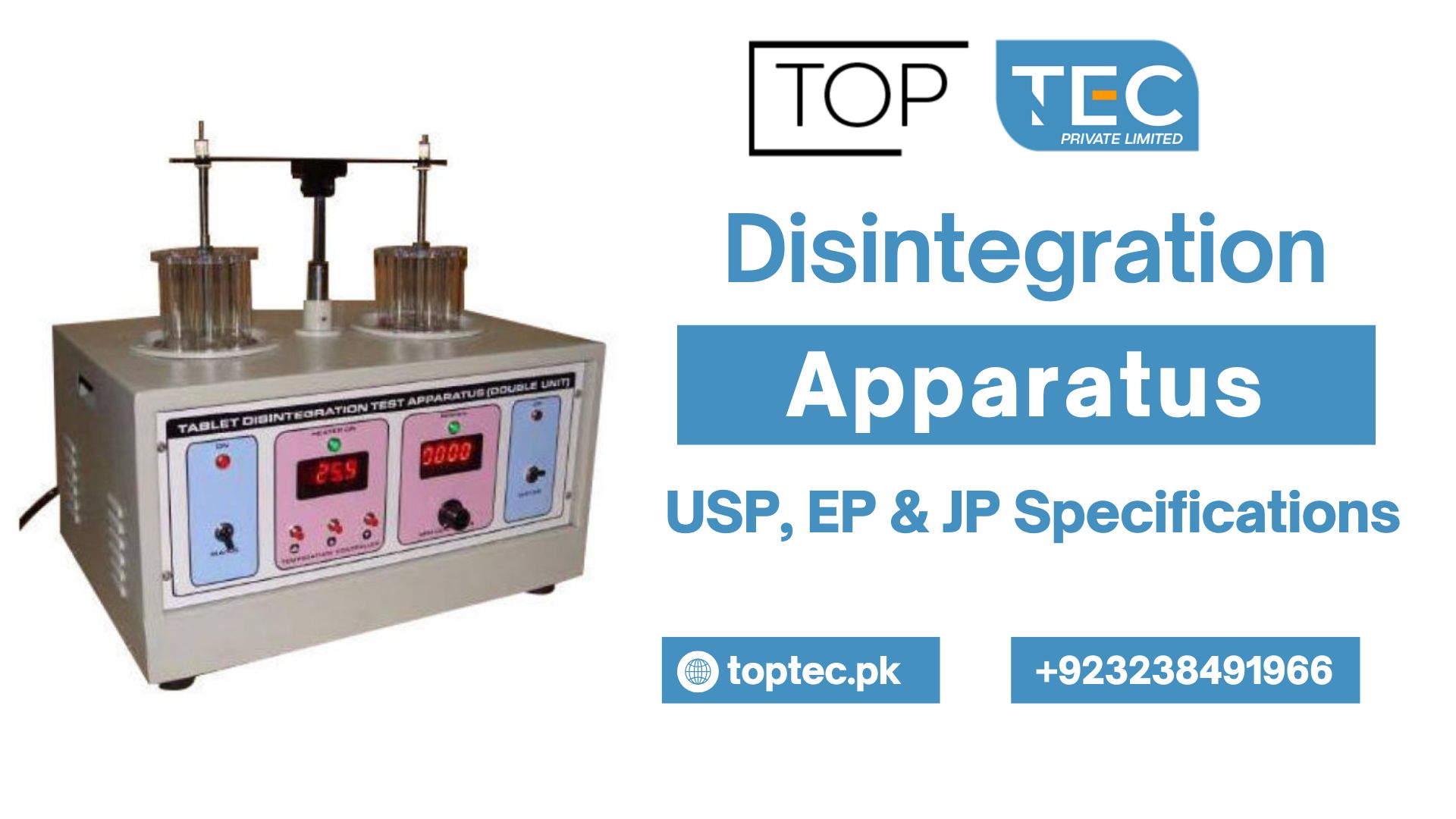
How Does a Disintegration Apparatus Work? There’s a moment in every pharmaceutical science education where someone holds up a disintegration tester and says “this is one of the most important pieces of equipment in this lab” — and half the students in the room look mildly skeptical. It’s not glamorous. It’s essentially a machine that bobs tablets up and down in warm water. How complicated can it be?
Quite complicated, actually. And far more consequential than it looks.
The disintegration apparatus sits at the intersection of pharmacopoeial compliance, patient safety, and daily batch release decisions in pharmaceutical manufacturing. Getting it right — understanding how it works, what specifications it must meet, and how those specifications vary across international pharmacopoeias — is something every pharmaceutical scientist, QC analyst, and lab manager should genuinely understand rather than just work around.
This article covers all of it. How the apparatus actually functions mechanically, what USP, EP, and JP each require, where those specifications differ, and practical guidance for laboratories in Pakistan looking to buy disintegration apparatus equipment that genuinely meets the mark. TOPTEC PVT. LTD gets a mention too — because for Pakistani laboratories, local manufacturing makes a real difference that’s worth understanding.
Starting From the Beginning — Why Disintegration Testing Exists
Before explaining how the apparatus works, it’s worth being clear about what problem it’s solving.
When a patient swallows a tablet, the tablet has to physically break apart in digestive fluids before the drug substance can dissolve and eventually be absorbed into the bloodstream. A tablet that doesn’t break apart — or breaks apart too slowly — simply passes through without delivering its therapeutic benefit. That’s not a hypothetical risk. It’s a real formulation problem that occurred historically, particularly with compressed tablets where excessive compression force or incompatible excipients prevented proper disintegration.
Disintegration testing was developed as a standardized, reproducible way to check whether tablets and capsules will physically break apart within an acceptable time frame under controlled conditions. The apparatus simulates the mechanical action of the gastrointestinal tract — not perfectly, because nothing in a laboratory perfectly replicates the complexity of the human digestive system, but reproducibly enough that the test has genuine predictive and comparative value.
Pharmacopoeias around the world — starting with the United States Pharmacopeia in the early 20th century — established disintegration as an official test, defined exactly how the test must be performed, and specified acceptable time limits for different dosage form categories.
The result is a global network of pharmaceutical quality standards that all reference disintegration testing, all have their own specific apparatus requirements, and all need to be understood by laboratories working across international markets.
If you’re looking to buy disintegration apparatus equipment, understanding this regulatory context tells you exactly why getting the specifications right is non-negotiable rather than optional.
The Mechanical Principle — How the Apparatus Actually Works
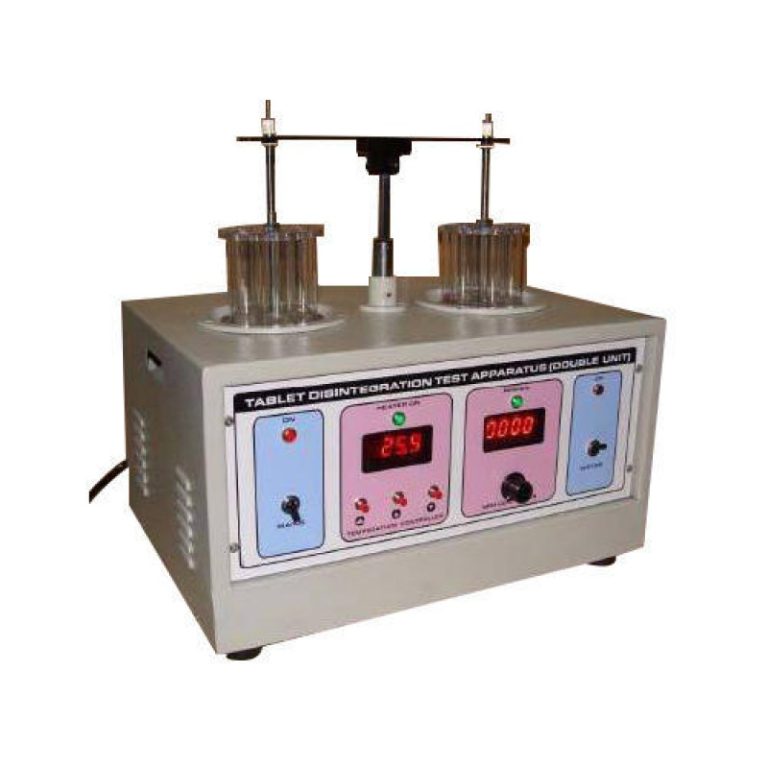
Let’s walk through the mechanical operation of a standard disintegration apparatus. Strip away the pharmacopoeial language and the compliance requirements, and the core mechanism is actually elegant in its simplicity.
The Water Bath
The foundation of the apparatus is a temperature-controlled water bath. This maintains the test medium at a specified temperature — 37°C being the standard for most tests, simulating physiological temperature. The bath uses a heating element and temperature sensor working together through a control system to maintain consistent temperature throughout the test.
The consistency of this temperature matters more than it might seem. Dissolution kinetics — including the physical breakdown of tablet binders and coatings — are temperature-dependent. A tablet tested at 35°C will behave differently than the same tablet tested at 37°C. This is why pharmacopoeial specifications include tight temperature tolerances rather than just a target value.
Modern disintegration testers use PID (Proportional-Integral-Derivative) control algorithms for temperature regulation. PID systems anticipate temperature drift and make corrective adjustments proactively, maintaining tighter control than simple on/off thermostat systems. When you’re evaluating instruments before you buy disintegration apparatus equipment, asking specifically whether temperature control uses PID regulation is a meaningful quality indicator.
The Basket-Rack Assembly
This is the part of the apparatus that actually holds the tablets. The basket-rack assembly consists of:
The rack structure: A rigid frame that holds six cylindrical tubes in vertical orientation, equally spaced.
The tubes: Open-ended cylinders, each sized to hold one tablet or capsule. The pharmacopoeial specifications define exact internal diameter and length.
The wire mesh: A stainless steel screen at the bottom of each tube. Tablets sit on this mesh. As the tablet breaks down, fragments fall through or collect on the mesh. The test endpoint is when no residue remains on the mesh — or only a soft mass without a firm core (for certain test types).
The disks: Cylindrical plastic pieces that sit on top of tablets in certain test configurations. They add a gentle downward force and help keep tablets submerged. Not all disintegration tests require disks — pharmacopoeial methods specify when they’re used.
The entire basket-rack assembly is designed to be removable for cleaning between test runs. This matters practically because cleaning and reassembling between tests is something analysts do multiple times every working day.
The Drive Mechanism
The drive mechanism moves the basket-rack assembly up and down through the test medium in a controlled, reciprocating motion. This simulates the mechanical agitation of the gastrointestinal environment — not precisely, but in a standardized way that produces reproducible results.
The drive motor connects to the basket-rack assembly through a cam or eccentric mechanism that converts rotational motion into vertical reciprocating motion. The specifications that pharmacopoeias set for this motion — stroke length and stroke frequency — are what they are because they produce consistent results, not because they perfectly mimic intestinal motility.
The drive mechanism is the mechanical heart of the apparatus. Its precision — maintaining exactly the specified stroke length and frequency over thousands of cycles — is what separates a reliable pharmacopoeial instrument from a piece of equipment that looks similar but produces inconsistent results.
The Timing System
The timer starts when the drive mechanism begins and stops when the analyst calls the endpoint. Modern instruments have digital timers with clear displays. Some include automated endpoint detection using optical sensors that detect when the tablet has fully disintegrated. Others rely on visual observation by a trained analyst.
For pharmacopoeial testing, the timer accuracy must be sufficient to reliably measure endpoints to within the required precision — typically to the nearest second for tests where the time limit is in minutes.
The Test Process — Step by Step
Here’s how a standard disintegration test actually runs in practice.
Preparation: Fill the water bath with the specified test medium — usually water, simulated gastric fluid, or simulated intestinal fluid depending on the pharmacopoeial method. Bring the temperature to 37°C and allow it to stabilize before testing begins.
Loading: Place one tablet or capsule in each of the six tubes in the basket-rack assembly. If the method requires disks, place one disk in each tube on top of the tablet.
Positioning: Lower the loaded basket-rack assembly into the test medium so that the wire mesh at the bottom of each tube is at least 2.5 cm below the surface at the lowest point of travel, and the rack rises to just below the surface at the highest point of travel.
Test start: Activate the drive mechanism and timer simultaneously. The basket-rack assembly begins moving up and down at the specified frequency.
Observation: Watch each tube. The test continues until either the endpoint is reached (complete disintegration) or the time limit specified in the pharmacopoeial method is exceeded.
Endpoint determination: For most tablets, the endpoint is reached when no residue — or only a soft mass without a palpable firm core — remains on the wire mesh. For capsules, the endpoint is when the capsule shell has ruptured and its contents have dispersed.
Recording: Note the time at which each tablet disintegrated. If any tablet fails to disintegrate within the specified time limit, the batch has failed the test (subject to provisions for repeat testing with additional tablets in some pharmacopoeial methods).
Cleaning: Remove the basket-rack assembly, disassemble, clean thoroughly, and reassemble for the next test.
This process repeats dozens of times per day in an active pharmaceutical QC laboratory. The reliability and ease of this workflow is one reason why it’s worth being thoughtful when you buy disintegration apparatus equipment — instruments that are difficult to clean or reassemble create practical problems that accumulate quickly.
USP Specifications — Chapter <701> Disintegration
The United States Pharmacopeia is the reference standard for pharmaceutical products sold in the United States and one of the most widely cited pharmacopoeias internationally. Chapter <701> defines disintegration test requirements.
USP Apparatus Specifications
Tube dimensions:
- Length: 77.5mm ± 2.5mm
- Inside diameter: 21.85mm ± 1.15mm
- Six tubes per basket-rack assembly
- Tubes are open at the top and fitted with a 10-mesh wire screen at the bottom
Disk specifications (when used):
- Diameter: 20.7mm ± 0.15mm
- Thickness: 9.5mm ± 0.15mm
- Material: transparent plastic with specific density (1.18 to 1.20 g/cm³)
- Five holes: one central (2mm diameter) and four peripheral (2mm diameter) at 90-degree intervals on a 6mm radius
Drive mechanism:
- Stroke length: 55mm ± 2mm
- Stroke frequency: 29 to 32 cycles per minute
- The stroke is measured from the highest to lowest position of the basket-rack assembly
Water bath:
- Temperature maintained at 37°C ± 2°C
- Volume sufficient to allow basket to move freely and remain submerged
USP Time Limits by Dosage Form
Uncoated tablets: 30 minutes — though many products are tested against their own registered specifications, which may be tighter
Plain-coated tablets: 30 minutes
Enteric-coated tablets: Must NOT disintegrate in acid medium (simulated gastric fluid pH 1.2) within 60 minutes, then must disintegrate in buffer medium (simulated intestinal fluid pH 6.8) within 60 minutes
Hard gelatin capsules: 30 minutes
Soft gelatin capsules: 30 minutes
Delayed-release capsules: Similar two-stage approach as enteric-coated tablets
Buccal tablets: 4 hours
Sublingual tablets: Typically tested against product-specific specifications
These time limits represent maximum acceptable disintegration times. Products can certainly disintegrate faster — and typically should. The time limit defines the outer boundary of acceptable performance.
When you’re sourcing instruments and want to buy disintegration apparatus that meets USP <701>, confirm that the stroke length, stroke frequency, tube dimensions, and temperature control specifications match these values precisely.
EP Specifications — European Pharmacopoeia 2.9.1
The European Pharmacopoeia (EP) is the reference standard for pharmaceutical products across European Union member states and a growing list of other countries that have adopted it. The EP disintegration test is described in section 2.9.1.
EP Apparatus Specifications
The EP apparatus is functionally similar to the USP apparatus but has some dimensional differences that matter:
Tube dimensions:
- Length: 77.5mm ± 2.5mm (same as USP)
- Inside diameter: 21.85mm ± 1.15mm (same as USP)
- Six tubes per basket-rack assembly
Disk specifications (when used):
- Similar design to USP but with subtle dimensional specifications — confirm against current EP edition
Drive mechanism:
- Stroke length: 55mm ± 2mm (same as USP)
- Stroke frequency: 29 to 32 cycles per minute (same as USP)
Water bath:
- Temperature: 37°C ± 1°C — this is TIGHTER than USP’s ±2°C tolerance
- This difference is important. An instrument that maintains 37°C ± 2°C meets USP but may not meet EP requirements
EP Time Limits
Uncoated tablets: 15 minutes (this is tighter than USP’s 30 minutes for many products)
Film-coated tablets: 30 minutes
Enteric-coated tablets: Two-stage test — no disintegration in 0.1M hydrochloric acid within 60 minutes, disintegration in pH 6.8 phosphate buffer within 60 minutes
Hard capsules: 30 minutes
Soft capsules: 30 minutes
Key Difference Between USP and EP
The most practically significant difference for laboratories that need to buy disintegration apparatus for multi-pharmacopoeial compliance is the temperature tolerance:
- USP: 37°C ± 2°C (range 35°C to 39°C)
- EP: 37°C ± 1°C (range 36°C to 38°C)
An instrument that only meets USP temperature tolerance will not comply with EP requirements during the full extent of the USP allowable range. If your laboratory tests products against EP methods, verify that the instrument you purchase maintains 37°C ± 1°C — the tighter specification.
The other notable difference is the 15-minute time limit for uncoated tablets in EP versus 30 minutes in USP. Products registered against EP must meet this tighter time requirement, which influences formulation development decisions as much as testing equipment selection.
JP Specifications — Japanese Pharmacopoeia
The Japanese Pharmacopoeia (JP) is the official pharmacopoeial standard for Japan, one of the world’s largest pharmaceutical markets. JP disintegration testing is defined in the general tests section.
JP Apparatus Specifications
Tube dimensions:
- Length: 77.5mm ± 2.5mm
- Inside diameter: 21.85mm ± 1.15mm
- Six tubes per basket-rack assembly
The JP basket-rack dimensions align with USP and EP, which is helpful for manufacturers using the same apparatus for multiple pharmacopoeial markets.
Drive mechanism:
- Stroke length: 55mm ± 2mm
- Stroke frequency: 29 to 32 cycles per minute
Water bath:
- Temperature: 37°C ± 2°C (same as USP)
JP Time Limits
Uncoated tablets: 30 minutes
Film-coated tablets: 30 minutes
Enteric-coated tablets: Two-stage test with similar approach to USP and EP
Hard capsules: 30 minutes
Soft capsules: 30 minutes
JP-Specific Considerations
Japan’s pharmaceutical regulatory environment — managed by the Pharmaceuticals and Medical Devices Agency (PMDA) — is thorough in its documentation requirements. For products registered in Japan, JP compliance needs to be demonstrated with appropriate test data and instrument qualification records.
The JP specifications for the disintegration apparatus largely align with USP, which simplifies instrument qualification for manufacturers targeting both US and Japanese markets simultaneously.
Comparison Table — USP vs. EP vs. JP Specifications
Let me put the key specifications side by side for quick reference:
| Parameter | USP <701> | EP 2.9.1 | JP |
|---|---|---|---|
| Tube Length | 77.5mm ± 2.5mm | 77.5mm ± 2.5mm | 77.5mm ± 2.5mm |
| Tube Inside Diameter | 21.85mm ± 1.15mm | 21.85mm ± 1.15mm | 21.85mm ± 1.15mm |
| Tubes Per Assembly | 6 | 6 | 6 |
| Stroke Length | 55mm ± 2mm | 55mm ± 2mm | 55mm ± 2mm |
| Stroke Frequency | 29-32 cpm | 29-32 cpm | 29-32 cpm |
| Temperature | 37°C ± 2°C | 37°C ± 1°C | 37°C ± 2°C |
| Uncoated Tablet Limit | 30 min | 15 min | 30 min |
| Hard Capsule Limit | 30 min | 30 min | 30 min |
| Enteric-Coated | Two-stage | Two-stage | Two-stage |
The clear takeaway: EP has the tightest temperature requirement (±1°C) and the tightest time limit for uncoated tablets (15 minutes). Instruments purchased for EP compliance must meet the ±1°C temperature specification. If you’re planning to buy disintegration apparatus for testing against EP methods, this is the critical specification to verify.
Special Test Configurations — Beyond the Standard Test
Standard disintegration testing with tablets and capsules in water at 37°C is the baseline. But pharmacopoeial methods include several variations for specific dosage form categories.
Enteric-Coated Tablets — The Two-Stage Test
This is one of the most commonly encountered special configurations. Enteric-coated tablets are specifically designed NOT to disintegrate in the acidic environment of the stomach — they’re meant to survive gastric passage and release drug in the more alkaline intestinal environment.
Testing reflects this:
Stage 1 (Acid resistance): Place tablets in the basket-rack assembly. Test medium is 0.1M hydrochloric acid (USP) or 0.1M hydrochloric acid equivalent. Run the test for 60 minutes. After 60 minutes, examine each tablet — none should show any signs of disintegration, cracking, or softening that would allow drug release.
Stage 2 (Intestinal disintegration): Without washing, transfer the basket assembly to a fresh vessel containing phosphate buffer at pH 6.8. Run for an additional 60 minutes. Each tablet must completely disintegrate within this period.
Failure at either stage is a test failure. A tablet that starts disintegrating during Stage 1 means the enteric coating isn’t providing adequate acid resistance. A tablet that doesn’t complete disintegration during Stage 2 means the coating isn’t releasing properly at intestinal pH.
This test requires two separate vessels — one containing acid medium, one containing buffer — and careful transfer of the basket assembly between stages without washing or disturbing the tablets.
Suppositories and Pessaries
Suppositories are tested for disintegration in a similar apparatus but with a modified approach. The test medium temperature is maintained at 37°C ± 0.5°C — tighter than standard tablet testing. The endpoint definition differs because suppositories liquefy or soften rather than break into fragments.
Chewable Tablets
Chewable tablets have modified disintegration test requirements that acknowledge the tablets are intended to be chewed rather than swallowed whole. Methods may use different media or modified apparatus configurations.
Orodispersible Tablets
These are designed to disintegrate rapidly in the mouth when placed on the tongue. Testing methods reflect this — typically using a small volume of liquid at room temperature rather than immersion in a full test medium volume. Time limits are typically very short (30 to 60 seconds in some methods).
Effervescent Tablets
Effervescent tablets are tested without a basket-rack assembly because they disintegrate through a chemical reaction with water rather than through mechanical agitation. One tablet is placed in a specified volume of water at room temperature and observed for complete dissolution of effervescence. The standard time limit in most pharmacopoeias is 5 minutes.
Understanding which test configuration applies to your dosage forms is important context when you buy disintegration apparatus — some of these special configurations require specific vessel types or accessory components that not all instruments provide as standard.
Disintegration Test Media — Not Always Just Water
The choice of test medium affects results significantly, and pharmacopoeial methods are specific about which medium to use for different dosage forms.
Water
The simplest medium. Used for many standard tablet and capsule tests. The water should be purified water (meeting pharmacopoeial specifications for purified water) at the specified temperature. Ordinary tap water is not appropriate for pharmacopoeial testing.
Simulated Gastric Fluid (SGF)
A dilute hydrochloric acid solution, sometimes with added pepsin, at approximately pH 1.2. Used to simulate stomach conditions — particularly for Stage 1 of enteric coating resistance tests.
USP Simulated Gastric Fluid (without enzyme): 2.0g NaCl in 7.0 mL HCl diluted to 1000 mL with water.
Simulated Intestinal Fluid (SIF)
A phosphate buffer at approximately pH 6.8, sometimes with added pancreatin, simulating small intestinal conditions. Used for Stage 2 of enteric coating tests and for some other dosage form categories.
pH 4.5 Acetate Buffer
Used in some EP methods for specific dosage form categories.
0.1M Hydrochloric Acid
Used in the EP enteric coating test.
The selection of test medium is defined in the pharmacopoeial method for each dosage form type. Using the wrong medium — even if the apparatus is perfectly calibrated — produces results that don’t reflect pharmacopoeial compliance. Labs must prepare media using appropriate-grade reagents and verify pH where applicable.
Qualification of a Disintegration Apparatus — What It Involves
For pharmaceutical QC laboratories, purchasing an instrument is just the beginning. Before it goes into service for regulated testing, the instrument must be qualified. This means demonstrating formally that it was installed correctly, operates within specification, and performs reliably for its intended use.
Installation Qualification (IQ)
IQ verifies that the instrument arrived with all components intact as specified, was installed in an appropriate environment, and all utilities (power, water) are connected properly.
IQ documentation typically includes:
- Confirmation of model and serial number against purchase records
- Verification of all accessories and components
- Confirmation of environmental conditions (temperature, humidity)
- Confirmation of electrical supply specifications
- Calibration certificate from the manufacturer
Operational Qualification (OQ)
OQ verifies that the instrument operates within its specified parameters. For a disintegration apparatus, OQ testing includes:
Stroke length verification: Using a calibrated ruler or dial indicator, measure the actual distance traveled by the basket-rack assembly from its highest to lowest position. Must be 55mm ± 2mm.
Stroke frequency verification: Using a calibrated stopwatch, count the number of complete up-and-down cycles per minute. Must be 29 to 32 cycles per minute.
Temperature accuracy verification: Using a calibrated NIST-traceable thermometer (not the instrument’s own temperature sensor), measure the actual temperature of the test medium at the level of the basket assembly. Must be within pharmacopoeial tolerance — 37°C ± 2°C for USP/JP, 37°C ± 1°C for EP.
Temperature uniformity: Measure temperature at multiple positions within the water bath to confirm uniform temperature distribution.
Timer accuracy: Using a calibrated reference stopwatch, verify that the instrument’s timer accurately measures elapsed time.
All OQ measurements should be documented with actual values, acceptance criteria, and pass/fail determination.
Performance Qualification (PQ)
PQ demonstrates that the qualified instrument produces acceptable results when used for actual testing with real samples. For a disintegration apparatus, PQ typically involves testing a product of known disintegration characteristics — either a commercial product with established specifications or a specially prepared reference material — and confirming that results are consistent with expected values.
PQ provides confidence that the instrument’s calibrated parameters translate to reliable test performance in practice.
When you’re ready to buy disintegration apparatus equipment, ask the manufacturer specifically what documentation they provide to support IQ/OQ/PQ activities. A manufacturer that provides comprehensive specifications, calibration data, and installation documentation makes your qualification process straightforward. One that provides minimal documentation creates extra work for your QC team.
Calibration Schedule and Maintenance
Once qualified, the disintegration apparatus needs a defined calibration and maintenance schedule to maintain its qualified status.
Recommended Calibration Frequency
Temperature calibration: Every 6 months minimum, or more frequently if the bath is in continuous heavy use. Temperature should be verified against a calibrated reference thermometer.
Stroke length and frequency: Annually, or following any repair to the drive mechanism.
Timer accuracy: Annually, or whenever the timing system is serviced.
Any time the instrument is repaired, relocated, or has components replaced, recalibration is required before returning to service.
Daily Operational Checks
Before starting testing each day:
- Verify water bath temperature against a reference thermometer
- Confirm drive mechanism operates smoothly without unusual noise or vibration
- Check basket-rack assembly for damage — bent tubes, damaged wire mesh, compromised disk surfaces
- Confirm timer is functioning correctly
These daily checks take only a few minutes but catch problems that could invalidate test runs if discovered after results are already recorded.
Cleaning Protocol
Between test runs:
- Remove basket-rack assembly from water bath
- Disassemble tubes, disks, and wire mesh screens
- Clean all components thoroughly with appropriate cleaning agent — remove any tablet fragments, starch or binder residues, or coating debris
- Rinse with purified water
- Allow to dry or dry with clean, lint-free cloth
- Inspect wire mesh for damage before reassembly
- Reassemble and verify assembly integrity before next use
Between different products or test media:
- More thorough cleaning is required when switching from one product to another or changing test media
- Change water bath medium completely
- Confirm no cross-contamination of test media
Out-of-Specification Results — Handling Them Correctly
When a tablet fails to disintegrate within the pharmacopoeial time limit, the result is out-of-specification (OOS). How this is handled matters for regulatory compliance.
Initial Investigation
First question: is the OOS result real, or is there a testing error?
Review the test conditions:
- Was water bath temperature within specification throughout the test?
- Was stroke length and frequency correct?
- Was the correct test medium used?
- Were disks used when required?
- Was the basket-rack assembly properly assembled?
If a clear assignable cause for testing error is identified and documented, the test can be invalidated and repeated. If no testing error is identified, the result stands as a genuine OOS.
Pharmacopoeial Repeat Testing Provisions
Some pharmacopoeial methods include provisions for repeat testing when initial results fail. For example, USP <701> specifies: if 1 or 2 tablets fail to disintegrate, repeat using 12 additional tablets — the requirement is then that not more than 2 of the total 18 tablets tested fail to disintegrate.
These provisions exist because disintegration testing has some inherent variability at the individual tablet level. They don’t provide cover for consistently poor batch performance.
Batch Disposition
If OOS results are confirmed after investigation and appropriate repeat testing, the batch cannot be released. The root cause of the disintegration failure needs to be investigated — was it a formulation issue? A compression force issue? A granulation problem? — and addressed before subsequent batches can be released.
TOPTEC PVT. LTD — Local Manufacturing for Pakistani Laboratories
Pharmaceutical laboratories in Pakistan face a practical challenge that doesn’t get discussed often enough. International pharmacopoeial compliance requires international-quality instruments. But acquiring those instruments from international manufacturers involves costs, delays, and support challenges that accumulate into real operational burden.
TOPTEC PVT. LTD is a Pakistan-based manufacturer that makes pharmaceutical testing equipment — including disintegration testers — locally. When you buy disintegration apparatus from TOPTEC, the difference shows up in several genuinely practical ways.
Price — The Real Number, Not the Import-Inflated Number
Imported laboratory instruments carry costs beyond the manufacturer’s price: international freight, import duties, clearing charges, distributor margins, and currency exchange effects. Each of these adds a percentage to the final price you pay.
Local manufacturing eliminates most of these costs. When you buy disintegration apparatus from TOPTEC, you’re paying manufacturing cost plus reasonable local margin — not an international cost chain.
Delivery — Weeks, Not Months
A typical international equipment order takes 8 to 16 weeks from order confirmation to delivery in Pakistan. Customs clearance can add further uncertainty. TOPTEC’s local manufacturing means delivery in weeks. For laboratories with testing backlogs, regulatory deadlines, or equipment that has suddenly failed, this difference matters enormously.
Technical Support That’s Actually Accessible
When you have a calibration question, a technical issue, or need a spare part, working with a local manufacturer means getting a response from people who are geographically present, available during Pakistani business hours, and familiar with local regulatory requirements and laboratory conditions.
Compare this to submitting a support ticket to an international manufacturer’s helpdesk and waiting for a response that may come from a support center that doesn’t understand local context. The difference is significant when your production schedule depends on getting the answer quickly.
Qualification Documentation in Usable Form
TOPTEC provides technical documentation that supports IQ/OQ/PQ activities — the specifications, calibration data, and installation guidance that pharmaceutical QC departments need to formally qualify instruments for regulated use. This documentation is provided in formats that Pakistani QC teams can work with directly.
A Full Product Range for Complete Laboratory Setup
TOPTEC doesn’t only manufacture disintegration testers. Their product range includes:
- Laboratory workbenches and benching systems
- Chemical fume hoods
- Biological safety cabinets
- Laminar flow hoods
- Pass boxes for sterile transfer
- Clean room furniture
- Storage cabinets
- Dissolution apparatus
- And additional pharmaceutical testing equipment
For laboratories equipping a complete QC or research facility, sourcing multiple items from a single local manufacturer simplifies procurement considerably — one vendor relationship, consistent quality standards, and a single point of contact for support and documentation.
Common Questions When Buying a Disintegration Apparatus
Since this article is partly intended to help laboratories make good purchasing decisions when they buy disintegration apparatus equipment, let me address the questions that come up most frequently.
“Do I need single-drive or dual-drive?”
A single-drive apparatus has one basket-rack assembly — it tests six tablets simultaneously. A dual-drive apparatus has two independent basket-rack assemblies — it tests twelve tablets (or two different formulations) simultaneously.
For any laboratory with regular testing volume, the dual-drive configuration provides nearly double the throughput without requiring double the bench space. The additional cost of a dual-drive unit is usually recovered quickly in productivity terms.
“Does stroke frequency matter as much as stroke length?”
Both matter. Stroke frequency determines how many mechanical cycles per minute the tablets experience. Stroke length determines how far through the test medium the basket travels on each cycle. Both parameters affect the mechanical energy imparted to the tablets and the fluid dynamics around them. Instruments that can’t maintain both parameters consistently produce results that may not reflect true pharmacopoeial performance.
“Can I use the same apparatus for USP and EP testing?”
Mostly yes — with an important caveat. The apparatus dimensions and drive parameters are the same between USP and EP. The critical difference is temperature tolerance: EP requires ±1°C versus USP’s ±2°C. Your apparatus must maintain the tighter EP temperature specification. Verify this specifically before assuming your instrument is EP-compliant.
“How often do I need to replace the basket-rack assembly?”
The basket-rack assembly is a wear item. Wire mesh screens can develop holes or distortions over time. Tube dimensions can change with mechanical stress. Disks become scratched and pitted. Inspect after every test. Replace any component showing damage. Full basket-rack replacement typically becomes necessary after 1 to 3 years of regular use depending on testing frequency.
“What’s the difference between USP <701> and USP <2040>?”
USP <701> is the standard disintegration test for tablets and capsules. USP <2040> covers disintegration and dissolution of dietary supplements — a different chapter with some different specifications and considerations. If your laboratory tests dietary supplements, confirm which chapter applies.
Setting Up Your Disintegration Testing Area — Practical Considerations
Where and how you set up your disintegration testing area affects day-to-day usability significantly.
Bench height and stability: Disintegration testers have moving parts that create vibration. Position on a stable, level bench that minimizes vibration transmission. Some labs use anti-vibration mats under instruments.
Water supply and drainage: The water bath needs regular filling and draining. Positioning near a sink or with convenient access to water supply and drainage simplifies daily operation.
Temperature environment: The ambient temperature of the room affects how hard the water bath thermostat works to maintain 37°C. Very cold labs make the system work harder and can affect temperature stability. Very warm labs can stress the control system in the opposite direction. Ideally, lab ambient temperature should be reasonably consistent — 20°C to 25°C is comfortable for both the equipment and the analysts.
Lighting: Disintegration endpoint observation is a visual task. Good lighting above and around the apparatus makes endpoint determination more reliable and less tiring for analysts.
Recording space: Analysts need space to record results during the test — a bench area adjacent to the apparatus for worksheets or a terminal for electronic data entry.
Access for cleaning: The basket-rack assembly needs to be removed and cleaned regularly. Ensure there’s adjacent space to work when disassembling and reassembling.
Integrating Disintegration Testing Into Your QC Workflow
Disintegration testing doesn’t happen in isolation — it’s one test within a broader batch release workflow. Thinking about how it integrates with your overall QC process helps ensure testing is efficient and compliant.
Batch release sequence: Typically, disintegration testing is performed as part of a series of QC release tests — alongside assay, content uniformity, hardness, friability, and dissolution (where applicable). Sequence these tests efficiently so that the disintegration apparatus is in continuous productive use during testing days rather than idle while waiting for other tests to complete.
Method validation: Disintegration test methods used for commercial batch release should be validated as part of your quality management system. For pharmacopoeial methods, compendial conformance demonstrates suitability — you’re following a pharmacopoeial method using a qualified instrument. Method validation documentation should reflect this.
Analyst training: All analysts performing disintegration testing should receive training on the apparatus operation, pharmacopoeial method requirements, endpoint determination, and OOS procedures. Training records should be maintained as part of your quality management documentation.
Environmental monitoring: The water bath temperature should be logged during each test run. In computerized systems, temperature logging can be automated. In manual systems, analysts should record water bath temperature at the start, midpoint, and end of each test run.
Final Thoughts — Making the Right Investment
A disintegration apparatus is one of those instruments where the difference between a properly specified unit and an inadequate one shows up every single day. Stroke length that drifts outside specification. Temperature that can’t hold the tight EP tolerance. Drive mechanisms that wear quickly and start introducing variability. These problems don’t announce themselves dramatically — they quietly undermine the reliability of test results over time.
When you’re ready to buy disintegration apparatus equipment for your pharmaceutical QC laboratory, the investment in a properly specified instrument from a manufacturer that provides genuine compliance documentation is an investment in the reliability of your testing program. The cheapest option that can’t genuinely demonstrate pharmacopoeial compliance isn’t actually a saving — it’s a deferred cost in the form of eventual compliance problems.
For laboratories in Pakistan, TOPTEC PVT. LTD represents a genuinely practical option — locally manufactured equipment at pricing that reflects local cost structures, delivered in weeks rather than months, supported by people who are accessible and understand your regulatory environment.
Whether you buy disintegration apparatus equipment for a basic tablet testing program or as part of a comprehensive pharmaceutical QC laboratory setup, the principles are the same: verify pharmacopoeial compliance parameters specifically, insist on proper qualification documentation, and work with manufacturers who stand behind their specifications.
Your QC team runs these tests every day. Your patients depend on the results being right. Both deserve equipment that genuinely delivers what pharmacopoeias require.
