

I’ll never forget the first time I walked into a pharmaceutical cleanroom and saw a particle counter in action. The facility manager pointed to a small device mounted on the wall, quietly sampling air and sending data to a central computer. “That thing,” he said, “is basically our insurance policy. It tells us if we’re making safe medicine or expensive garbage.”
That’s when I realized how critical these instruments are. But here’s what nobody tells you when you’re first learning about cleanrooms: there’s not just one type of cleanroom particle counter. There’s portable, remote, handheld—each designed for completely different situations. And picking the wrong type? That’s an expensive mistake that can derail your entire monitoring program.
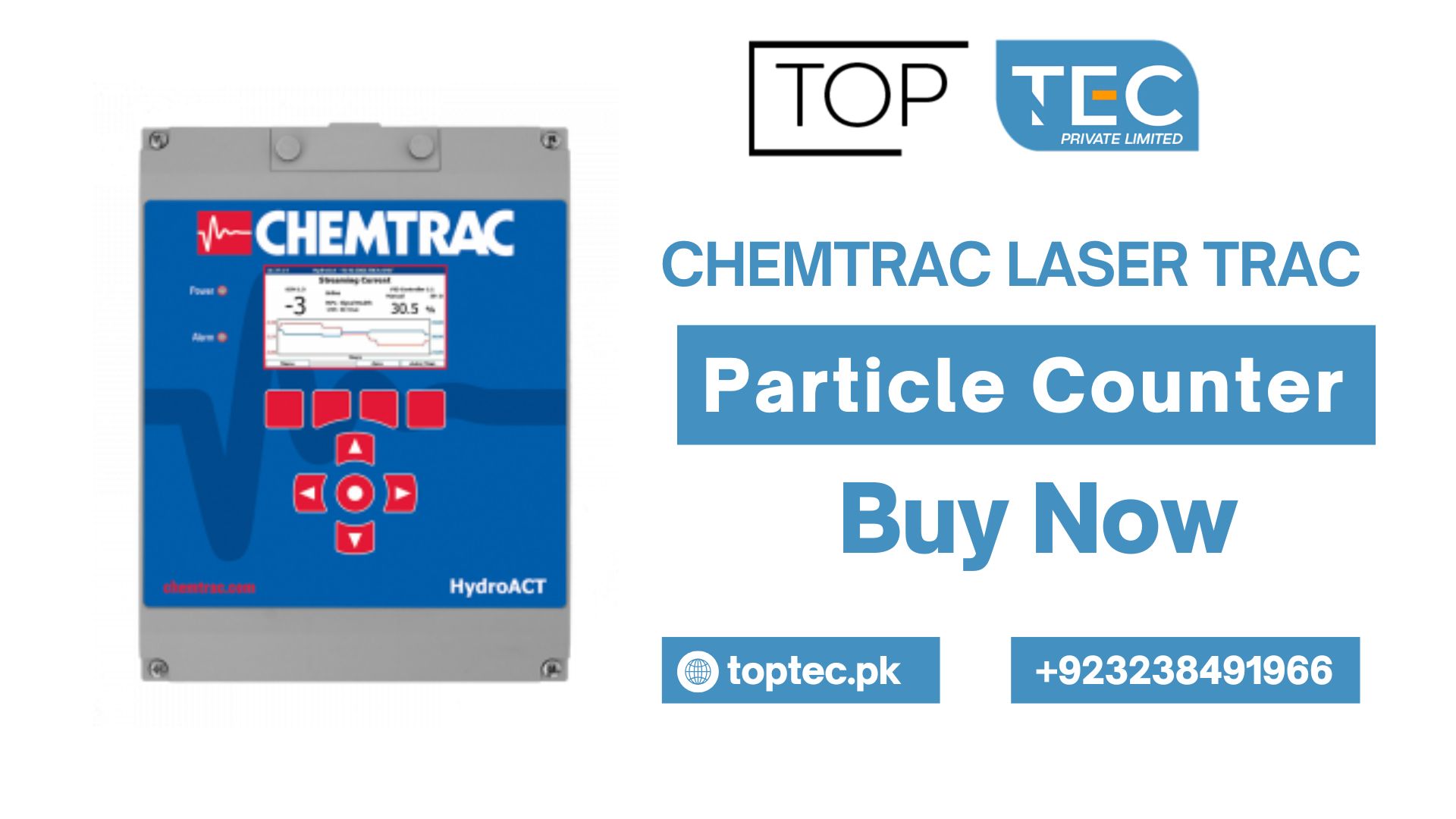
So let’s talk about what these instruments actually do, the real differences between types, and how to figure out which one your facility actually needs. And if you’re specifically researching whether to Buy CHEMTRAC LASER TRAC PC2400 PARTICLE COUNTER equipment, I’ll give you the straight story on that too.
What Exactly Is a Cleanroom Particle Counter?
Let’s start with basics. A cleanroom particle counter is an instrument that measures and counts airborne particles of specific sizes in a controlled environment.
Why does this matter? Because cleanrooms are all about controlling contamination. Pharmaceutical manufacturing, semiconductor fabrication, medical device assembly, biotechnology research—these all require environments with extremely low particle counts. The cleanroom particle counter is how you prove your environment is actually clean.
Here’s how they work in simple terms:
Air gets pulled into the instrument at a controlled flow rate (usually 0.1 or 1 cubic foot per minute). Inside, there’s a laser beam. As particles pass through this beam, they scatter light. Sensors detect this scattered light and, based on how much light scatters and at what angles, determine the particle size.
The instrument counts how many particles of each size it detects, typically in channels like:
- 0.3 microns
- 0.5 microns
- 1.0 microns
- 5.0 microns
- 10.0 microns
(Some models have more channels, some fewer.)
This count gets expressed as particles per cubic meter (or cubic foot) of air. ISO cleanroom classifications are based on these counts. An ISO 5 cleanroom, for example, allows maximum 3,520 particles of 0.5 microns or larger per cubic meter.
No particles counted within spec? Your cleanroom is performing correctly. Counts too high? Something’s wrong—filter leak, process contamination, improper gowning, whatever. Time to investigate.
The Three Main Types: What’s the Actual Difference?
Here’s where things get confusing for most people. The terms “portable,” “remote,” and “handheld” get thrown around like everyone knows what they mean. Let me clear this up.
Handheld Cleanroom Particle Counters
Think of these as the multimeters of the particle counting world—portable, battery-operated, and designed to go wherever you go.
Physical description: Small enough to carry in one hand (hence “handheld”). Usually weigh 2-5 pounds. Battery-powered. Built-in display showing real-time counts.
What they’re good for:
- Spot checking problem areas
- Pre-certification testing before official validation
- Filter leak testing
- Troubleshooting contamination events
- Quick verification after maintenance
- HVAC system testing
Limitations:
- Limited data logging (though modern ones have improved)
- Need manual operation (someone has to hold it and record data)
- Flow rates are usually lower (0.1 CFM typical)
- Battery life limits continuous use
I watched an HVAC contractor use a handheld cleanroom particle counter to track down a contamination source in a compounding pharmacy. Walked around the room, found particle counts spiking near one return air grille. Turned out the filter frame had a gap. Twenty minutes of testing saved days of investigation.
That’s what handhelds excel at—flexibility and quick troubleshooting.
Portable Cleanroom Particle Counters
This is where terminology gets messy because “portable” and “handheld” sometimes get used interchangeably. But there’s a real distinction.
Physical description: Larger than handheld units. Often built into a carrying case or have a handle. Might weigh 10-20 pounds. Can be battery-operated but often also AC-powered. More sophisticated than handhelds.
What makes them different:
- Higher flow rates (often 1.0 CFM)
- Better data logging and storage
- More particle size channels
- Can sometimes be used for both portable and fixed applications
- Usually have more extensive sampling programs and automation
Best uses:
- ISO classification testing
- Formal cleanroom certification
- Moving between multiple rooms or facilities
- Detailed investigations requiring extensive data
- Applications needing both portability and sophistication
Limitations:
- Less convenient than handhelds for quick spot checks
- Still require manual setup and operation
- Not suitable for permanent installation
Think of portable cleanroom particle counter units as the professional-grade tools. When you need serious data and official documentation, this is your tier.
Remote (Fixed/Installed) Cleanroom Particle Counters
Now we’re talking about permanent installations. These are the workhorses of continuous monitoring systems.
Physical description: Designed to be mounted in a fixed location—wall-mounted, ceiling-mounted, or integrated into the HVAC system. Connected to power and network. Usually no display on the unit itself (all data goes to a central system).
Key characteristics:
- Continuous, automated monitoring
- Network connectivity for central data collection
- Can be part of a multi-point monitoring system
- Often include alarm outputs to alert when limits are exceeded
- Designed for 24/7 operation
Applications:
- Pharmaceutical manufacturing (required for sterile compounding)
- Semiconductor fabs
- Aerospace cleanrooms
- Medical device manufacturing
- Any application requiring continuous documentation
Considerations:
- Significant upfront cost
- Installation complexity
- Requires network infrastructure
- Ongoing calibration and maintenance
- Software/database requirements
A pharmaceutical facility I visited had 12 remote cleanroom particle counter units throughout their sterile manufacturing suite, all feeding data to a central monitoring system. The QA manager could see real-time data from her desk, historical trends, and got immediate alerts if any room exceeded limits.
That’s the power of remote systems—continuous visibility and documentation without manual intervention.
So Which Type Do You Actually Need?
This is the question that matters. Before you Buy CHEMTRAC LASER TRAC PC2400 PARTICLE COUNTER equipment or any other model, figure out your actual requirements.
Go handheld if:
- You’re doing HVAC testing and troubleshooting
- Budget is limited
- You need flexibility to test various locations
- Quick spot checks are your primary need
- You don’t need extensive data logging
Go portable if:
- You’re doing formal cleanroom classification
- You need professional-grade data for compliance
- You test multiple rooms or facilities
- You need better documentation than handhelds provide
- You want flexibility but also sophistication
Go remote/fixed if:
- Continuous monitoring is required (or heavily recommended)
- You have critical manufacturing processes
- Regulatory requirements demand continuous documentation
- You manage multiple cleanrooms
- You can justify the investment in infrastructure
Many facilities end up with a combination. Remote systems for continuous monitoring of critical areas, plus a portable cleanroom particle counter for troubleshooting and periodic verification.
Understanding the CHEMTRAC LASER TRAC PC2400
Since you’re researching whether to Buy CHEMTRAC LASER TRAC PC2400 PARTICLE COUNTER systems, let’s talk specifically about this model.
The CHEMTRAC LASER TRAC PC2400 is a liquid particle counter, which is different from what we’ve been discussing. It’s designed for monitoring particles in water and other liquid systems, not air.
Key applications:
- Ultra-pure water systems
- Process water monitoring
- Pharmaceutical water systems (WFI, purified water)
- Semiconductor manufacturing water
- Power generation water quality
Wait—why am I mentioning this in an article about cleanroom particle counters?
Because many facilities need both. Your cleanroom needs air particle monitoring, but if you’re manufacturing pharmaceuticals or semiconductors, you also need liquid particle monitoring for your water systems.
CHEMTRAC LASER TRAC PC2400 features:
- Real-time liquid particle counting
- Multiple size channels
- Continuous monitoring capability
- Can be integrated into automated systems
- Designed for critical applications
If you’re setting up a comprehensive contamination control program and you Buy CHEMTRAC LASER TRAC PC2400 PARTICLE COUNTER equipment, you’re addressing the liquid side of particle control. You’d still need air particle counters for the cleanroom itself.
I’ve seen facilities make the mistake of thinking one type of particle counter handles everything. Air and liquid particle counting are separate (though complementary) needs.
Key Features to Consider When Buying
Whether you’re looking at air or liquid particle counters, certain features separate adequate equipment from excellent equipment.
Flow Rate
For air particle counters, this is critical. Higher flow rate means faster data collection and better statistical sampling.
Common flow rates:
- 0.1 CFM (2.83 LPM): Handheld units
- 1.0 CFM (28.3 LPM): Professional portable and remote units
Particle Size Channels
More channels give you better visibility into your particle size distribution. Minimum for cleanroom work is usually 0.3, 0.5, and 5.0 microns.
Better units measure 0.3, 0.5, 1.0, 3.0, 5.0, and 10.0 microns (or similar).
Data Logging and Connectivity
Modern cleanroom particle counter equipment should have:
- Internal memory for thousands of records
- USB or network connectivity
- Software for data analysis
- Export capability (Excel, PDF, etc.)
- Real-time display and reporting
Calibration and Certification
This is huge. Make sure any cleanroom particle counter you buy:
- Comes with calibration certificate
- Has clear calibration intervals documented
- Can be recalibrated by accredited labs
- Meets relevant standards (ISO 21501-4 for air particle counters)
Environmental Ratings
Where will you use it? Some counters are rated for specific temperature and humidity ranges. If you’re monitoring refrigerated areas or high-humidity environments, verify compatibility.
The Buying Decision: New vs. Used, Local vs. Import
When you’re ready to Buy CHEMTRAC LASER TRAC PC2400 PARTICLE COUNTER units or any particle counting equipment, you face several purchasing decisions.
New Equipment
Advantages:
- Full warranty
- Latest features
- Calibration certificate included
- Known history
- Support from manufacturer
Disadvantages:
- Higher cost
- May include features you don’t need
- Delivery time if not in stock
Used/Refurbished Equipment
Advantages:
- Significant cost savings (30-60% off new)
- Immediate availability sometimes
- Same functionality if properly maintained
Disadvantages:
- Unknown history potentially
- Warranty may be limited or absent
- May need immediate calibration
- Parts availability questions
Red flags for used equipment:
- No recent calibration certificate
- Can’t demonstrate it working properly
- Physical damage visible
- Vague seller descriptions
- Price too good to be true
Import vs. Local Purchase
Importing directly:
Could save money upfront, but consider:
- Shipping costs (particle counters are delicate)
- Import duties (can add 25-40%)
- Customs delays and hassle
- No local support
- Warranty claims complexity
Buying locally in Pakistan:
- Faster delivery
- Local support and service
- Easier warranty claims
- Can inspect before buying
- Avoid import complications
For most facilities, the convenience and support of buying locally outweigh any price difference. When you Buy CHEMTRAC LASER TRAC PC2400 PARTICLE COUNTER equipment through local distributors, you get someone you can actually call when you need help.
Setting Up Your Monitoring Station: The TOPTEC Advantage
Here’s something most people don’t consider when they Buy CHEMTRAC LASER TRAC PC2400 PARTICLE COUNTER systems or any particle monitoring equipment: where are you actually going to set up your monitoring and data analysis station?
If you’re using portable or handheld cleanroom particle counter units, you need somewhere to:
- Download and analyze data
- Perform routine maintenance
- Store equipment when not in use
- Generate reports
- Keep calibration certificates and documentation
And if you’re installing remote particle counters, you need a monitoring station where data is collected, displayed, and analyzed.
This requires proper laboratory furniture. I’ve watched too many facilities set up expensive particle monitoring systems, then stick the data collection computer on a cheap desk that wobbles every time someone types.
This is where TOPTEC PVT. LTD makes a real difference.
TOPTEC manufactures laboratory furniture in Pakistan specifically designed for technical and analytical work. When you’re building out a cleanroom monitoring program, their solutions provide the foundation everything else depends on.
Why TOPTEC for your particle monitoring setup:
Stable, Vibration-Free Surfaces: When you’re working with sensitive equipment, performing calibration checks, or just need a steady surface for data analysis, TOPTEC’s benches provide proper stability. No wobbling, no vibration transfer.
Chemical-Resistant Materials: Cleanroom work involves various cleaning agents and solvents. TOPTEC’s countertops resist these chemicals without degrading, protecting your investment in furniture and preventing contamination.
Customized Solutions: Every monitoring setup is different. TOPTEC can design furniture specifically for your space, workflow, and equipment. Need a bench that fits your specific room dimensions? Storage for multiple particle counters? Integrated cable management for networked remote units? They can build it.
Local Manufacturing: Because TOPTEC manufactures in Pakistan:
- Delivery is faster than importing furniture
- Costs are more reasonable than international options
- Communication is direct and clear
- Modifications and support are readily available
- You support local industry
Cleanroom-Appropriate Design: TOPTEC understands cleanroom requirements. They can provide furniture with appropriate surface finishes, minimal particle generation, and easy-to-clean designs that won’t compromise your controlled environment.
A pharmaceutical facility manager in Lahore told me: “We spent significant money on our cleanroom particle counter system—both portable and remote units. Initially, we used whatever furniture we had lying around for our monitoring station. After setting up a proper workstation with TOPTEC furniture, the whole operation became more professional and efficient. We should have done it from the start.”
When you’re investing in equipment to Buy CHEMTRAC LASER TRAC PC2400 PARTICLE COUNTER systems or cleanroom air particle counters, don’t undermine that investment with inadequate workspace infrastructure.
Maintenance and Calibration Reality
Buying the equipment is just step one. Keeping it accurate requires ongoing attention.
Calibration Frequency
Industry standard for cleanroom particle counter calibration is annually. Some critical applications require semi-annual calibration.
This isn’t optional. Uncalibrated data is unreliable data, which means your cleanroom classification is questionable and regulatory compliance is at risk.
Calibration costs:
- Handheld units: $200-$400 typically
- Portable units: $300-$600
- Remote units: $400-$800 each
For liquid particle counters like when you Buy CHEMTRAC LASER TRAC PC2400 PARTICLE COUNTER equipment, calibration is equally critical and similarly priced.
Routine Maintenance
Between calibrations, basic maintenance keeps instruments running:
- Clean optical components per manufacturer schedule
- Verify zero counts periodically (for air particle counters)
- Check flow rates
- Update software as needed
- Inspect tubing and connections (for liquid particle counters)
- Battery maintenance for portable units
Performance Verification
Many facilities do weekly or monthly performance checks between annual calibrations:
- Zero count verification
- Flow rate check
- Side-by-side comparison with another unit
- Standard particle challenge (if available)
This catches problems before they invalidate weeks of data.
Common Mistakes People Make
Let me save you from errors I’ve seen repeatedly:
Mistake 1: Buying Based Only on Price
The cheapest cleanroom particle counter is rarely the most economical over time. Consider total cost of ownership: calibration costs, service availability, reliability, data management capabilities.
Mistake 2: Ignoring Data Management
How will you store, analyze, and report data? Some instruments have terrible software. Make sure data management fits your workflow before you Buy CHEMTRAC LASER TRAC PC2400 PARTICLE COUNTER or any monitoring equipment.
Mistake 3: Overlooking Support
When your particle counter fails the night before an audit, who do you call? Make sure your supplier provides actual support, not just sales.
Mistake 4: Wrong Type for Application
I’ve seen facilities buy handheld cleanroom particle counter units for applications requiring continuous monitoring. Or invest in expensive remote systems when a portable would suffice. Match the tool to the actual need.
Mistake 5: Skipping Training
Particle counters seem simple, but proper use requires training. Sampling location, technique, data interpretation—get your staff trained properly.
Making the Right Choice
If you’re trying to decide whether to Buy CHEMTRAC LASER TRAC PC2400 PARTICLE COUNTER equipment specifically, remember that’s for liquid systems. For cleanroom air monitoring, you need air particle counters.
Many facilities need both:
- Remote air particle counters for continuous cleanroom monitoring
- Portable air particle counter for classification and troubleshooting
- Liquid particle counter (like the CHEMTRAC PC2400) for water system monitoring
Understanding the differences between handheld, portable, and remote cleanroom particle counter types helps you build a complete monitoring program rather than just buying equipment.
Questions to ask yourself:
- What are you actually monitoring? (Air? Water? Both?)
- Is continuous monitoring required or just periodic verification?
- What’s your budget for equipment and ongoing calibration?
- Do you have in-house expertise or need extensive support?
- What are your regulatory requirements?
- How many locations need monitoring?
Honest answers guide you to the right equipment.
Final Thoughts
Cleanroom particle counters aren’t glamorous. They don’t cure diseases or make breakthrough discoveries. They just sit there, quietly counting invisible particles.
But they’re absolutely critical. They’re the objective proof that your controlled environment is actually controlled. They catch problems before they become disasters. They provide the data regulators demand and your processes require.
Whether you’re looking at handheld, portable, or remote cleanroom particle counter systems—or liquid monitoring when you Buy CHEMTRAC LASER TRAC PC2400 PARTICLE COUNTER equipment—choose based on your actual needs, not marketing hype or the lowest price.
And don’t forget the supporting infrastructure. Talk to TOPTEC PVT. LTD about proper laboratory furniture for your monitoring stations. Your expensive instruments deserve a proper home.
Your cleanroom monitoring program is only as good as your equipment, your procedures, and your commitment to maintaining both. Get it right, and you’ll sleep better knowing your environment is truly under control.
